Why Choose Flexible Wire for Your Applications?
A cable beside a moving machine faces a different life from one fixed inside a wall. It bends, twists, vibrates, and may rub against a metal guide hundreds of times each shift. Flexible Wire is designed to handle movement, but flexibility alone does not make a wire suitable for every application.
“Science is about knowing; engineering is about doing,” wrote engineer and author Henry Petroski. That idea fits wire selection well. A designer must look beyond a product label and consider the actual route, movement, load, and surroundings. Fine-stranded conductors can help a cable bend repeatedly. Insulation must also suit the operating temperature, oils, moisture, or abrasion it may encounter. In a robotic arm, for example, a tight bend near a joint can shorten service life, even when the wire itself is rated for motion.
This article explores why Flexible Wire can be a practical choice for equipment, vehicles, control panels, and other moving installations. It will examine conductor construction, bend radius, electrical capacity, insulation, and common selection mistakes. The details matter. A cable that feels supple in the hand may still resist repeated twisting. And a heavier cable is not automatically safer or more durable.
There is no perfect choice for every job. Even experienced teams can overlook routing or movement patterns during early design. A careful review of real operating conditions helps narrow the options—and leaves room to revise assumptions before installation.
What Flexible Wire Is and How It Is Made
Why Choose Flexible Wire for Your Applications?
What Flexible Wire Is and How It Is Made
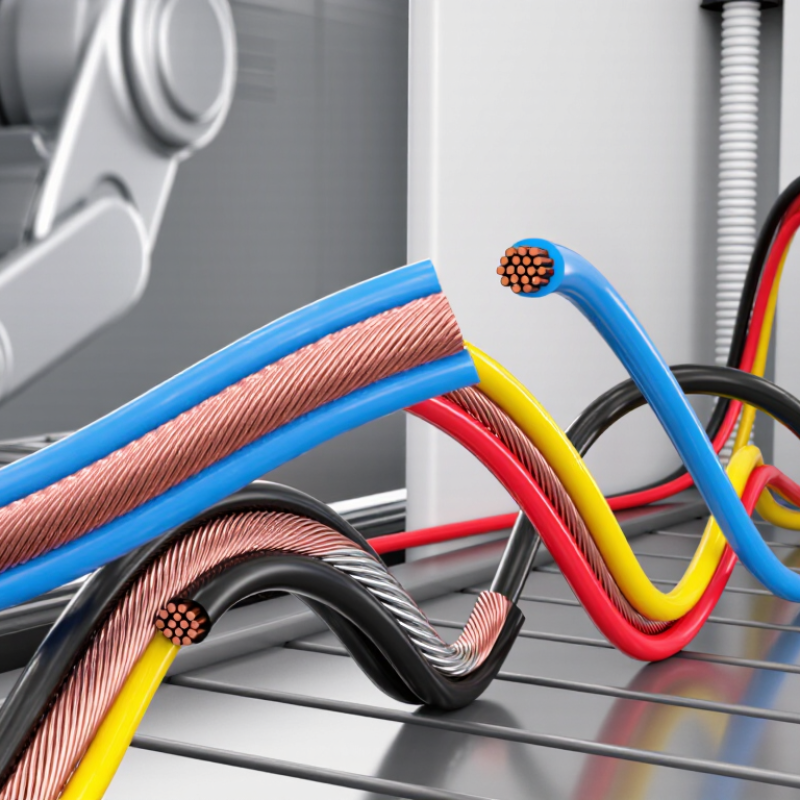
Flexible wire is made from multiple fine metal strands bundled into one conductor. Manufacturers draw copper or aluminum through progressively smaller dies, then anneal it to soften the metal. The strands are twisted or bunched together, and an insulating layer is commonly extruded around them. The result bends more readily than a solid conductor of the same cross-sectional area. Small details matter: strand diameter, lay length, and insulation material all affect handling and durability.
IEC 60228 classifies conductors into classes 1, 2, 5, and 6; classes 5 and 6 are intended for flexible use. The standard sets resistance limits by conductor size, giving engineers a measurable way to check performance. The Copper Development Association describes annealed copper as 100% IACS conductivity, approximately 58 MS/m at 20°C. That figure is a useful reference, not a guarantee for every finished wire. Stranding can improve flexibility, but it does not automatically make a cable suitable for repeated motion or tight bends. Real installations are messier than a drawing.
Tips: Check the wire’s conductor class, stated bend radius, and temperature rating against the application. Avoid sharp bends near terminals. If the wire will flex repeatedly, verify its cycle-life data with the supplier.
Why Choose Flexible Wire?
Flexible wire is typically made by twisting multiple fine copper strands together, then covering the conductor with insulation. The strands allow the wire to bend more readily than a comparable solid conductor. The chart shows standard nominal copper conductor areas by AWG size; it does not measure flexibility or bend life.
How to read it: A larger cross-sectional area means more copper in the conductor. Flexibility also depends on strand size, strand count, insulation, and wire construction.
How Wire Flexibility Improves Installation and Movement
Why Choose Flexible Wire for Your Applications?
Flexible wire can simplify installation when cables must pass through tight spaces or move with equipment. Its stranded conductor bends more readily than a solid conductor of similar size. That can help an installer route a cable around cabinet corners without forcing sharp turns. Leave enough space for the wire to follow its specified bend radius.
In a control cabinet, flexible wire can make connections to a door-mounted switch easier to arrange. A little slack lets the door open without pulling directly on the terminals. Keep the wire supported and clear of hinges, sharp edges, and hot components. Small details matter.
For moving machinery, select wire intended for repeated flexing; ordinary flexible wire is not automatically suitable for continuous motion. Check the product’s bend-radius and temperature ratings, and consider exposure to oil, abrasion, or vibration. These checks can prevent early wear, though real routing conditions are easy to underestimate.
Flexibility also helps during maintenance. A technician may be able to move a connected component aside without wrestling a stiff cable bundle. Still, extra slack can snag or crowd an enclosure if it is not secured neatly. I have seen tidy layouts become awkward after one small change. Plan the route, leave practical service access, and inspect moving sections periodically for scuffing or cracked insulation.
Key Performance Benefits of Flexible Wire
Flexible wire uses multiple fine strands rather than one solid conductor. This construction lets it bend more easily around tight corners and through crowded equipment. In a control cabinet, that can make routing cleaner and reduce strain at connection points. That matters.
The benefit is especially useful where vibration or occasional movement is expected. Fine strands can tolerate repeated bending better than a solid core, provided the wire is selected for the task. Flexibility does not mean unlimited flex life. The bend radius, strand construction, insulation, and movement frequency all affect performance. Check the specifications.
It is easy to overvalue flexibility. A very flexible wire may still be unsuitable if its insulation cannot handle nearby heat, abrasion, or the operating voltage. For moving machinery, use a wire rated for repeated flexing and protect it from sharp edges. For a fixed installation, a simpler wire may be enough. The right choice depends on the route and movement, not just how soft the wire feels in your hand.
How to Select Flexible Wire for Your Application
Why Choose Flexible Wire for Your Applications?
How to Select Flexible Wire for Your Application
Start with the motion, not the price. Will the wire bend occasionally, or travel repeatedly through a moving machine? A cable in a robot arm faces different stresses from one inside a stationary control cabinet. Note the bend radius, travel distance, speed, and expected operating cycles. One point is easy to miss: repeated flexing can fatigue conductors even when the wire’s current rating looks adequate.
IEC 60228 recognizes Class 5 and Class 6 flexible copper conductors, with Class 6 designed for greater flexibility. Treat that as a useful starting point, not a complete selection rule. Match conductor size to current and voltage drop, then check insulation temperature rating and resistance to oil, abrasion, or cleaning agents. For moving installations, confirm the specified minimum bend radius and flex-life test conditions. Those details matter.
The U.S. Department of Energy’s 2014 motor-systems sourcebook estimates that motor systems account for about 54% of electricity use in U.S. manufacturing. That figure does not dictate wire choice, but it shows why drive and machine connections deserve careful sizing. Verify shielding needs near variable-speed drives, and use suitable strain relief at terminals. A common planning blind spot is the connector: a flexible cable can still fail where it is clamped too tightly. I may be giving motion extra weight, but installation details are often underestimated.
Where Flexible Wire Is Commonly Used
Flexible wire is commonly used wherever movement, tight bends, or vibration can stress a rigid conductor. In robotics, it connects moving joints to sensors and motors, where repeated motion is routine. Inside appliances, flexible leads route around compact housings and moving doors. They also appear in vehicles, control panels, test equipment, and portable tools. A soft cable can follow a curved path more easily than a solid wire. That helps during installation and maintenance.
Tips: Match the wire’s conductor size and insulation to the current, temperature, and surroundings. Check its bend radius and movement rating. A cable that feels flexible may not be designed for continuous flexing. Small details matter.
Flexible wire is useful in machinery with vibrating motors, sliding sections, or hinged covers. For example, a cable may run through a cable carrier beside an automated machine, bending in a controlled path as the equipment moves. In buildings, it can connect components that need occasional repositioning, though fixed installations may have different requirements. The application should guide the choice, not flexibility alone. It is easy to overlook abrasion, heat, or chemicals near the route. I have seen a neat cable path become a weak point when it rubs against a sharp edge. Check the installation after movement begins.



 Find Your Solutions ▶