What Are the China Top 10 Fence Machine Manufacturers?
Choosing among China’s top 10 Fence Machine manufacturers takes more than comparing catalogues. Buyers need to assess output consistency, wire-size range, changeover time, control systems, spare-parts access, and commissioning support. A shiny machine is not enough. The welds must stay even, and the line must keep running.
Grand View Research estimated the global fencing market at USD 31.73 billion in 2023, with projected annual growth of 5.7% from 2024 to 2030. This is a fencing-products estimate, not a measure of machinery sales. It signals demand, but cannot rank equipment suppliers. That distinction matters. W. Edwards Deming, a manufacturing-quality expert rather than a fence-machine specialist, offered a useful principle: “Quality is everyone’s responsibility.” Applied here, quality includes machine design, operator training, and service after installation.
This overview compares manufacturers by observable factors: product scope, automation options, customization, documented experience, and customer support. Company claims should be checked against factory visits, sample runs, and references where possible. Some details may remain hard to verify. That is worth saying plainly. A ranking can guide a shortlist, but it cannot replace a technical review of the exact mesh, throughput, and operating conditions a buyer needs.
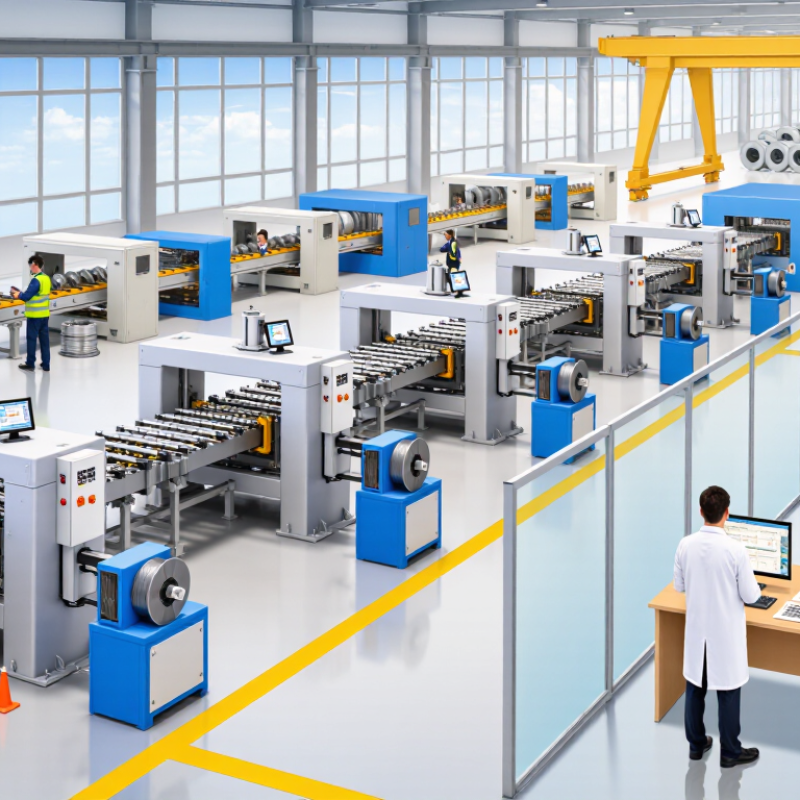
Fence-Machine Types in China: Welded-Mesh, Chain-Link, and Barbed-Wire Lines
What Are the China Top 10 Fence Machine Manufacturers?
China’s fence-making equipment market covers three distinct production needs: welded mesh, chain-link, and barbed-wire lines. The machines may share wire straightening and feeding components, but their output differs sharply. Welded-mesh lines place crossing wires on a grid, then weld each intersection. Buyers should check mesh accuracy, welding consistency, and changeover time. Small errors show up as uneven squares.
Chain-link lines weave wire into continuous diamond patterns. Their practical limits include mesh opening, wire diameter, and roll-handling capacity. Barbed-wire lines twist strands and form barbs at regular intervals; stable tension matters because a loose section can disrupt a whole coil. These lines are not interchangeable. A supplier’s broad product list says less than a test run using the buyer’s actual wire.
Material supply is part of the picture. World Steel Association’s World Steel in Figures 2025 reports that China produced about 1.005 billion tonnes of crude steel in 2024. That scale signals a substantial steel base, not a guarantee of machine quality or delivery reliability. When comparing China’s leading manufacturers, request sample output, operating-speed records, spare-parts details, and installation support. I would still verify those claims on the factory floor. Specifications can look neat on paper.
Compare Typical 3–8 mm Wire Capacity and Mesh Widths Up to 2.5 m
Comparing China’s fence-machine manufacturers, focus on the working range, not just the headline speed. A typical specification covers 3–8 mm wire and mesh widths up to 2.5 m. But those figures need context. Wire grade, mesh opening, and coil consistency can change the actual output. A 2.5 m panel also needs steady feeding and reliable alignment; otherwise, the edges may drift.
The World Steel Association’s World Steel in Figures 2025 reports 1,882.6 million tonnes of global crude steel production in 2024. That figure describes the wider steel industry, not fence-machine performance. For a fair comparison, ask suppliers for a tested sample using your wire diameter and mesh pattern. Request the production rate, changeover time, and rejection rate under those conditions. A small caveat: brochures rarely show every operating constraint.
Tips: Check whether the quoted 3–8 mm range applies to both line and cross wires. Confirm usable mesh width, not merely the machine frame width. Ask for a short trial with your actual wire. Record weld consistency and panel dimensions. One detail is easy to miss: smaller openings can reduce practical output, even when the wire remains within specification.
What Are the China Top 10 Fence Machine Manufacturers? — Compare Typical 3–8 mm Wire Capacity and Mesh Widths Up to 2.5 m | Anonymous Profile | Machine Configuration | Typical Wire Diameter | Typical Maximum Mesh Width | Common Mesh Opening Range | Typical Applications | Key Specification to Confirm |
| Profile 01 | Automatic welded wire mesh line | 3–6 mm | 2.0–2.5 m | 50–200 mm | General welded panels and light-to-medium fencing | Whether the quoted wire range applies to both line and cross wires |
| Profile 02 | Heavy-duty automatic mesh welding line | 4–8 mm | 2.0–2.5 m | 50–300 mm | Industrial fencing and heavier welded mesh panels | Transformer capacity and the maximum wire size at the selected mesh pitch |
| Profile 03 | Roll-fed fence mesh welding machine | 3–6 mm | 1.5–2.5 m | 50–200 mm | Mesh supplied in rolls for site installation | Supported roll diameter, winding arrangement, and finished-roll weight |
| Profile 04 | Panel-type welded mesh machine | 3–8 mm | 2.0–2.5 m | 50–250 mm | Flat fence panels and fabricated mesh products | Maximum panel length and the method used to feed cross wires |
| Profile 05 | Servo-controlled mesh welding line | 3–8 mm | 2.0–2.5 m | 50–300 mm | Production requiring repeatable mesh spacing and changeovers | Available mesh-pitch settings and changeover time for different specifications |
| Profile 06 | Compact automatic fence mesh machine | 3–5 mm | 1.2–2.0 m | 50–150 mm | Light fencing and smaller production facilities | Actual output at the required wire diameter and mesh opening |
| Profile 07 | Wide-format welded mesh line | 3–8 mm | Up to 2.5 m | 50–300 mm | Wide fence panels and general-purpose welded mesh | Usable welding width, not just the nominal maximum width |
| Profile 08 | Multi-spot resistance welding machine | 3–6 mm | 1.5–2.5 m | 50–200 mm | Regular-grid panels and repetitive fencing orders | Number of welding points and permitted duty cycle |
| Profile 09 | Reinforced mesh and fence panel line | 5–8 mm | 2.0–2.5 m | 75–300 mm | Heavier panels and applications requiring thicker wire | Wire strength, electrode design, and performance at the smallest mesh opening |
| Profile 10 | Configurable automatic mesh production line | 3–8 mm | 1.5–2.5 m | 50–300 mm | Mixed orders covering several fence mesh specifications | Confirmed machine setup for each requested combination of wire size and mesh pitch |
Note: The profiles above are anonymous examples of common machine configurations, not a verified ranking or manufacturer-specific product claims. Wire capacity, usable width, mesh opening, and production rate depend on the machine design, wire material, welding setup, and requested specification. Confirm the full operating range with the supplier before ordering.
Verify Certifications, After-Sales Support, and Total Cost of Ownership
What Are the China Top 10 Fence Machine Manufacturers?
Verify Certifications, After-Sales Support, and Total Cost of Ownership
When comparing fence machine manufacturers, treat certification as a document to verify, not a badge to admire. Check the issuing body, validity dates, and whether the certificate covers the exact machine model you plan to buy. Ask for a live demonstration using your wire diameter and mesh specifications. A smooth video is useful, but it cannot replace a production test. Record output speed, weld consistency, and setup time.
Tips: Request written warranty terms, technician response times, spare-parts lead times, and operator training details. Confirm what is excluded. A low purchase price may leave costly gaps.
Estimate total cost of ownership over several years. Include freight, installation, energy use, tooling, maintenance, consumables, and expected downtime. Ask for a parts list with prices, not just a general promise of support. Compare quotes using the same production assumptions. I might still overlook something: actual scrap rates often differ from showroom results. Leave room in your budget for that uncertainty, and ask the supplier how performance data was measured. A dependable choice is supported by verifiable paperwork, practical service arrangements, and costs you can explain to your team.
What Are the China Top 10 Fence Machine Manufacturers? Verify Certifications, After-Sales Support, and Total Cost of Ownership
A practical evidence checklist for comparing suppliers—without ranking or naming manufacturers.
The bars show suggested evidence items to request in each area, not market statistics or ratings of individual manufacturers. Verify certificate scope and validity, service commitments, and all purchase, operating, and maintenance costs before comparing quotes.



 Find Your Solutions ▶