
What Is a Lifting Bolt and How Is It Used?

Lifting Bolts are compact components, but their safety role is much larger than their size suggests. They create a controlled connection between a load and lifting equipment, such as slings, shackles, or hoists. A correctly selected bolt can support a machine frame, pump, mold, or fabricated steel assembly. A poorly selected one can bend, loosen, or fail without obvious warning.

Ross Moloney, former CEO of the Lifting Equipment Engineers Association, has emphasized that “competence, inspection, and correct use must work together.” That principle matters here. Lifting Bolts are not ordinary fasteners. Their working load limit depends on design, material, thread engagement, installation position, and loading direction. A shoulder eye bolt, for example, may require full contact with the load surface and proper tightening. Side loading can reduce its capacity sharply. The manufacturer’s instructions remain essential.

Look closely.

Before lifting, a competent person should inspect the threads, eye, shoulder, markings, and surrounding structure. Rust, cracks, distortion, or missing identification should stop the lift. The bolt should sit fully and align naturally with the load path. Never improvise with damaged hardware or a random replacement bolt.

This guide explains what Lifting Bolts are, how they work, and where mistakes commonly occur. It also considers inspection, installation, load angles, and practical limitations. Some situations are less clear than they appear. A clean-looking bolt may still be unsafe. Good lifting practice begins with measured judgment, not confidence.
What Is a Lifting Bolt and How Is It Used?

Definition and Basic Function of a Lifting Bolt

What Is a Lifting Bolt and How Is It Used?

Definition and Basic Function of a Lifting Bolt

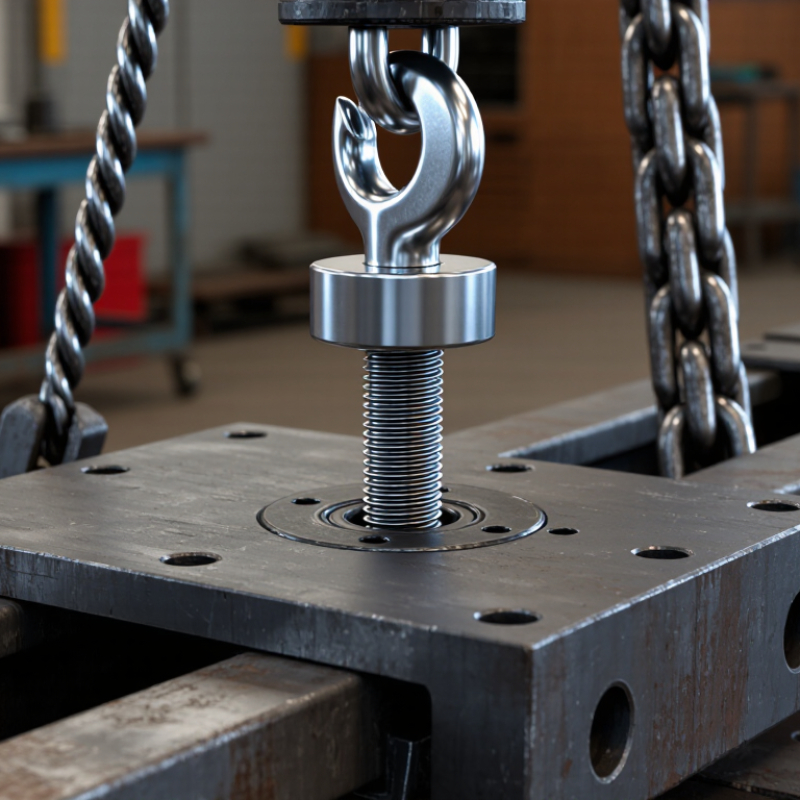
A lifting bolt is a threaded fastener designed to support controlled lifting or positioning. It usually has a bolt body and an integrated eye, loop, or lifting head. The eye gives a connection point for a hook, sling, or shackle. The threaded section secures the bolt to a tapped hole, nut, or prepared lifting plate.

Its basic function is to transfer a load from the lifted object to the lifting equipment. The bolt must remain aligned with the expected pulling direction. Straight, vertical loading is generally easier to control than angled loading. Side loading can reduce capacity and increase bending stress. Small detail, serious consequence.

Before use, a trained worker should check the marked working load limit, thread condition, shoulder contact, and surrounding material. The lifting point should sit firmly against a clean, flat surface. Loose threads, cracks, corrosion, or deformation require removal from service. Never judge safety by appearance alone.

The term “lifting bolt” is not always used consistently. Some suppliers may describe similar products as eye bolts or lifting points. Therefore, the product specification matters more than the name. Read the load table and installation instructions carefully. I would also inspect the connection after the first lift, because assumptions can fail under real movement, vibration, or an uneven load.

Key Components and Common Design Features

What Is a Lifting Bolt and How Is It Used?

A lifting bolt is a threaded lifting point designed to move machinery, frames, or fabricated components safely. Its main parts include a load-bearing head, threaded shank, shoulder, and contact surface. The head may contain an eye, loop, or specially shaped opening for a hook or sling. The shank transfers force into a tapped hole, while the shoulder helps seat the bolt firmly against the load.

A properly designed lifting bolt uses strong, fatigue-resistant material and clearly marked working load limits. Thread engagement must match the base material and lifting direction. Axial loading is usually preferred. Side loading can sharply reduce capacity, especially when the bolt is tilted or loosely seated. The shoulder should contact a flat, clean surface without gaps. Before each lift, check for bent metal, damaged threads, corrosion, or visible cracks. Small defects matter. A drawing may look complete, yet the real assembly can still have poor alignment.

Tips: Clean the hole before installation. Tighten the bolt according to the engineering specification. Keep slings centered in the lifting eye. Avoid shock loading and sudden starts. Never assume a larger bolt is automatically safer. Record inspections for frequently used lifting points. If the load angle changes, recalculate the forces instead of relying on habit. Some designs appear strong but perform poorly when the load is uneven.

How Lifting Bolts Differ from Standard Fasteners

A lifting bolt is a purpose-built attachment point for raising or positioning equipment. Unlike standard fasteners, it is designed to handle controlled lifting loads. A standard bolt mainly clamps parts together. Its strength depends on tension, thread engagement, and joint pressure. A lifting bolt transfers force through its head, shoulder, and threaded section. That difference matters.

Many lifting bolts include a forged eye or reinforced shoulder. The shoulder must sit firmly against a clean, flat surface. Load direction is critical. Pulling straight along the bolt’s axis is usually safer than applying a sideways force. Standard fasteners may bend, loosen, or fail under lifting stress. Never replace a rated lifting bolt with an ordinary hardware bolt. Capacity markings, thread size, material condition, and installation depth all require attention. The distinction seems simple, yet it is easy to misread on a busy worksite. Even experienced crews can overlook damaged threads or uneven contact.

Tips: Check the rated working load before every lift. Inspect for cracks, corrosion, bent sections, and stretched threads. Use compatible slings and keep the load balanced. Avoid shock loading and sudden starts. Do not exceed the marked angle limits. A second inspection helps. If the bolt feels loose or looks questionable, remove it from service. Clearance, surface condition, and alignment deserve careful review.

What Is a Lifting Bolt and How Is It Used? — How Lifting Bolts Differ from Standard Fasteners

Comparison Dimension Lifting Bolt Standard Fastener Practical Significance
Primary Purpose Designed to connect to lifting equipment, such as shackles, hooks, or lifting slings, while securing a load. Designed mainly to clamp or join components together in structural, mechanical, or general assembly applications. A lifting bolt serves both as a fastening point and as part of a lifting system.
Typical Head Design Usually includes an integral eye, ring, or lifting feature that provides a connection point. Common head styles include hexagonal, socket, button, countersunk, and flange heads. The lifting feature must be large and strong enough for the intended connector and load direction.
Load Direction May be rated for axial tension and, for some designs, specified angular loading. The permitted angle must be stated by the manufacturer or standard. Normally evaluated for clamp force, tension, shear, or a combination of these within a joint; not automatically rated for lifting. A lifting bolt must not be assumed suitable for side loading or off-axis lifting without a documented rating.
Working Load Limit A working load limit may be marked or specified for the complete lifting component, often with conditions for angle, installation, and inspection. Usually supplied with mechanical property or proof-load information rather than a lifting working load limit. The lowest rated component in the lifting arrangement determines the safe working capacity.
Safety Factor Lifting hardware is commonly designed and tested with a safety factor specified by the applicable lifting standard or product documentation. Mechanical fastener grades and proof loads address joint performance, not necessarily repeated overhead lifting. A fastener grade alone does not establish that a bolt is safe for lifting personnel or loads.
Material and Strength Often manufactured from alloy steel or other materials selected for controlled strength, toughness, and fatigue performance. May be carbon steel, alloy steel, stainless steel, or other materials selected for the joint environment. Material selection should account for load cycles, corrosion, temperature, and possible shock loading.
Thread Form May use metric or inch threads, but the thread size, pitch, engagement length, and mounting arrangement must match the specified design. Uses a defined thread system selected for the joint, with strength generally based on the bolt, nut, and engagement conditions. A correctly sized thread does not compensate for an unsuitable lifting eye or an improperly prepared mounting hole.
Installation Requirement Must be fully seated, correctly aligned, and installed according to the documented orientation and torque or tightening requirements. Typically installed with a specified tightening method to achieve the required joint preload. Misalignment, incomplete thread engagement, or contact with adjacent parts can reduce lifting capacity.
Rotation During Lifting Some lifting designs are intended to rotate under load, while others must remain fixed. The product design determines this capability. Generally not designed to rotate or swivel while carrying a suspended load. A non-rotating lifting point should not be substituted for a swivel lifting point where load movement is expected.
Inspection Required before use
Check for cracks, deformation, thread damage, corrosion, wear, illegible markings, and evidence of overload.
Joint inspection
Inspection usually focuses on preload, loosening, corrosion, damage, and overall joint condition.
Lifting hardware should be removed from service when damage or untraceable condition affects its rated use.
Use with Accessories Can be used with compatible shackles, hooks, slings, or other rated lifting accessories. Normally used with nuts, washers, spacers, and joint components rather than lifting accessories. All connected accessories must be compatible in size, geometry, capacity, and load direction.
Marking and Traceability May include rated capacity, size, material or grade, manufacturer identification, and traceability markings required by the applicable standard. Often marked with nominal size, manufacturer identification, and strength or property class. Missing or unreadable lifting markings make capacity verification difficult and may require removal from service.
Typical Applications Lifting machinery, fixtures, molds, dies, access covers, equipment assemblies, and removable components. Machine frames, structural joints, flanges, brackets, enclosures, and general mechanical assemblies. The application must match the bolt’s documented rating and the applicable workplace lifting requirements.
Can It Replace the Other? Not automatically
A lifting bolt should not replace a standard fastener unless its joint performance and installation requirements are suitable.
Not for lifting
A standard fastener should not be used as a lifting point unless it has a documented and applicable lifting design.
Selection must be based on the complete engineering and lifting requirements, not on appearance alone.
Safety note: The information in this table is a general comparison. Always follow the applicable lifting standard, installation instructions, inspection procedures, and the documented working load limit for the specific lifting component and complete lifting arrangement.

Step-by-Step Guide to Using a Lifting Bolt Safely

What Is a Lifting Bolt and How Is It Used?

A lifting bolt is a threaded lifting point designed to connect a load to approved lifting equipment. Some types include an eye, while others use a shoulder or specialized head. Its safe capacity depends on design, thread engagement, material, and loading direction. Never judge capacity by appearance alone.

Step-by-Step Guide to Using a Lifting Bolt Safely

Check the bolt before use. Look for cracks, bent sections, damaged threads, heavy corrosion, or unreadable markings. Remove it from service if anything seems questionable. Confirm its rated capacity exceeds the load, including possible shock forces. The supplier’s instructions should control the selection and installation.

Prepare the load on stable ground. Clean the threaded hole and install the bolt fully, using the specified washer, spacer, and tightening method. Do not force damaged threads. Align the lifting bolt with the expected pull. Side loading can reduce capacity and cause sudden movement. Attach compatible slings or shackles, keeping the connection centered.

Keep people outside the lifting area. Wear suitable protective equipment and keep hands away from pinch points. Raise the load only a few centimeters for a controlled test. Watch for tilting, slipping, unusual noise, or bolt movement. Lower it immediately if anything changes. This check is easy to rush, even for experienced workers. I still treat it as a separate step. Never stand beneath a suspended load, and never exceed the marked capacity. A trained person should direct the lift and stop operations when conditions become uncertain.

Load Ratings, Installation Limits, and Safety Precautions

What Is a Lifting Bolt and How Is It Used?

A lifting bolt is a threaded fastener with an eye or lifting head. It transfers a load into a prepared threaded hole. Its working load limit depends on bolt grade, thread engagement, orientation, and the supporting material. A vertical lift is usually the reference condition. Side loading can reduce capacity sharply. ASME B30.26-2020 requires marked identification and inspection controls for below-the-hook hardware. Never treat the stamped rating as universal.

Install the bolt fully and squarely. The shoulder should contact the surface without gaps, paint, or debris. Use the specified thread size and engagement depth. Do not place washers under a shoulder eye bolt unless the manufacturer permits them. Keep the sling aligned with the bolt axis. Avoid shock loading, prying, damaged threads, and improvised extensions. Some designs prohibit angular loading entirely. Check the manufacturer’s load chart, not memory.

Inspect before every lift. Look for bending, cracks, corrosion, thread wear, and distorted eyes. Remove questionable hardware immediately. HSE’s 2023/24 statistics recorded 138 fatal worker injuries in Great Britain, showing why small lifting details deserve serious attention. That figure is not bolt-specific, but it challenges casual assumptions. In practice, crews may focus on the crane and overlook the thread. I have found that mistake easy to make. A qualified person should verify the load path, center of gravity, lifting angle, and supporting structure before applying force. The safest rating is the one confirmed for the actual installation.

What Is a Lifting Bolt and How Is It Used?

A lifting bolt is a threaded lifting point used to attach slings, shackles, or hoisting equipment to a load. The chart shows the calculated tension in each leg of a symmetrical two-leg sling lifting a 1,000 kg load at different included angles. As the angle increases, sling tension rises sharply, so the lifting bolt and rigging must be rated for the actual loading condition.

Values are based on the static relationship T = W ÷ [2 × sin(θ ÷ 2)], where W is the 1,000 kg load and θ is the included sling angle. Keep lifting bolts aligned with the direction of pull, use full thread engagement, tighten them against a clean bearing surface, and never exceed the marked working load limit. Do not use a standard lifting bolt for side loading, shock loading, damaged threads, or unapproved angular lifts; always follow the applicable manufacturer instructions and lifting standard.

Certified Quality System

© North Easton Machine Company, Inc. All rights reserved. • Site: Blog
NORTH EASTON MACHINE • 218 Elm Street • North Easton, MA 02356 • 508-238-6219