China Top Wheel Carrier Casting Supplier?
Choosing a China Top Wheel Carrier Casting Supplier requires more than comparing unit prices. It demands evidence, process knowledge, and consistent communication.
Wheel Carrier Casting supports steering, suspension, and wheel alignment. Small dimensional errors can affect handling, bearing life, and assembly fit. A capable supplier should understand these risks before production begins. Look for documented alloy control, mold design experience, heat treatment records, and inspection discipline. Ask how the foundry manages porosity near mounting holes and uneven wall thickness around load-bearing sections. These details reveal practical experience.
Casting authority John Campbell wrote, “The quality of a casting is determined by the quality of the liquid metal.” His principle remains highly relevant today. Reliable manufacturers monitor melt temperature, chemical composition, pouring time, and filtration. They also use CMM inspection, X-ray testing, or process sampling when the application requires deeper verification. Clear material certificates and traceability should follow every production batch.
The best supplier is not always the largest. It is the one that explains limitations honestly and improves weak points openly. That matters. A factory may provide excellent samples but struggle with volume consistency. Another may offer advanced equipment but weak engineering support. Buyers should review tooling ownership, prototype feedback, corrective-action reports, and delivery performance. Factory visits can expose practical conditions, such as worn dies, unclear labeling, or poor storage. These observations are often more valuable than polished brochures.
This guide examines how to evaluate a China Wheel Carrier Casting partner through technical capability, quality evidence, and long-term reliability. No supplier is perfect. The stronger choice is transparent, measurable, and willing to improve.
What Is a Wheel Carrier Casting?
What Is a Wheel Carrier Casting?
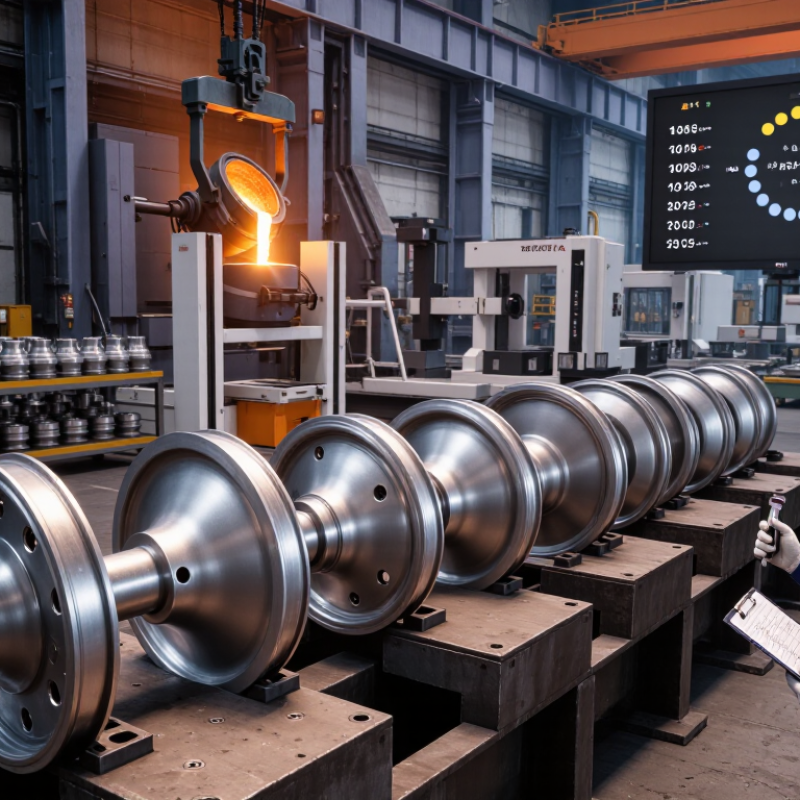
A wheel carrier casting is a structural vehicle component that supports the wheel hub, bearing, and related suspension parts. It connects the wheel assembly to the suspension and helps maintain accurate wheel movement. In steering applications, it may also link with the steering knuckle or control arms. The exact name can vary by vehicle design. Its job remains critical.
The component begins when molten metal fills a prepared mold and forms the required shape. After cooling, workers remove excess material and machine important surfaces. Bearing seats, bolt holes, and mounting faces need controlled dimensions. These areas must resist road shocks, vibration, and repeated braking forces. Strong, but not oversized. That balance affects vehicle weight and durability.
A reliable wheel carrier casting supplier checks the metal grade, mold condition, filling behavior, and heat treatment records. Professional inspection may include dimensional testing, visual checks, and non-destructive examination for hidden porosity or cracks. A drawing can look complete and still hide a difficult corner. For this reason, experienced engineers review wall thickness, draft angles, and machining allowances before production. The process is not perfect. Small variations can appear between batches, so traceable records and corrective action matter. Practical casting knowledge also helps reduce distortion and improve consistency, especially around thick-to-thin transition areas.
Key Materials and Manufacturing Processes in China
China’s wheel carrier casting sector benefits from deep foundry capacity and mature machining networks. The 2023 World Casting Census reported about 51.9 million tonnes of castings from China in 2022. This scale supports stable sourcing, but capacity alone does not prove quality.
Wheel carriers commonly use ductile iron or aluminum alloys. Ductile iron offers strength and fatigue resistance for heavy-duty platforms. Aluminum reduces unsprung mass and supports corrosion protection. Material selection should match load paths, impact requirements, and heat exposure. Common processes include resin sand casting, gravity die casting, and low-pressure casting. CNC machining then controls bearing seats, bolt holes, and steering interfaces. In my experience, dimensional drift often appears after heat treatment, not during initial casting. That detail deserves more attention.
Tips: Ask suppliers for melt chemistry records, tensile results, hardness data, and process capability studies. Request first-article samples and inspect them with coordinate measuring equipment. The 2024 ISO Survey recorded over 1.2 million ISO 9001 certificates worldwide, showing broad quality-system adoption, but certification alone cannot replace process evidence. Review radiographic or ultrasonic inspection where safety-critical sections require it. Also check traceability from furnace charge to final inspection. A practical audit should examine scrap rates, mold control, machining compensation, and corrective-action records. Some supplier claims may sound precise, yet the data can remain incomplete. That is a warning sign.
How to Evaluate a Top Wheel Carrier Casting Supplier
Choosing a top wheel carrier casting supplier requires more than comparing prices. Start with casting experience, engineering depth, and process control. Ask for samples of similar wheel carrier parts, not generic components. Inspect machining surfaces, rib transitions, mounting holes, and wall thickness. These areas often reveal porosity, distortion, or weak process discipline. A capable supplier should explain alloy selection, mold design, heat treatment, and dimensional inspection clearly.
Tips: Request material certificates, inspection reports, and traceability records for each batch. Check whether the supplier uses coordinate measuring machines, X-ray inspection, and documented process audits. Review production capacity carefully. A large workshop may still struggle with stable quality. Speak with technical staff, not only sales representatives.
Practical experience also shows the value of a controlled trial order. Evaluate first-article accuracy, packaging protection, delivery consistency, and response speed. Ask how nonconforming castings are isolated and corrected. Reliable suppliers provide evidence, not confident promises. Their corrective-action reports should identify root causes and measurable improvements. I once placed too much trust in a polished presentation. That was a mistake. Factory cleanliness matters, but records matter more. Some suppliers may hesitate to disclose weaknesses, yet honest answers often indicate stronger management. Review tooling ownership, engineering change procedures, and after-sales communication before approving long-term production.
Quality Standards and Testing Requirements
China Top Wheel Carrier Casting Supplier?
Quality Standards and Testing Requirements
Choosing a wheel carrier casting supplier requires more than comparing prices. The casting must support steering loads, braking forces, and repeated road impacts. An experienced supplier should control furnace temperature, alloy chemistry, mold design, and heat treatment records. Material certificates should identify the melt number and production date. That traceability matters when a defect appears months later. It is not glamorous work.
Testing should match the drawing and application risk. Common checks include chemical analysis, tensile strength, hardness, dimensional inspection, and metallographic review. Non-destructive testing can reveal cracks or porosity near mounting holes. Radiographic or CT inspection may be suitable for critical sections. Fatigue testing provides stronger evidence than a single static load test. However, test frequency must be agreed clearly. A report without sampling details can create false confidence. Even good suppliers sometimes rely too heavily on paperwork.
Tips: Request a control plan, inspection standard, and sample test report before approval. Check datum points with calibrated CMM equipment. Ask how rejected castings are isolated and recorded. Review heat treatment charts, not only final certificates. Small surface marks deserve attention. They may indicate deeper process instability. An on-site audit is useful, but it cannot replace independent verification. The best decision combines production experience, measurable evidence, and honest discussion of remaining risks.
Applications, Customization, and Supplier Selection Factors
China Top Wheel Carrier Casting Supplier?
Wheel carrier castings support hubs, bearings, and steering loads in many vehicle systems. They appear in off-road equipment, agricultural machines, trailers, and industrial transport carts. Each application demands a different balance of strength, weight, corrosion resistance, and dimensional stability. A casting that works on a light utility vehicle may fail under repeated impact.
Customization should begin with service conditions, not only a drawing. Share load data, mounting dimensions, bearing seats, surface requirements, and expected production volume. A capable supplier can review alloy selection, wall thickness, draft angles, and machining allowances.
Sand casting may suit larger parts, while investment or permanent mold casting can improve detail and repeatability. The final choice depends on cost and risk. I have learned that a perfect computer model can still hide a weak transition or difficult machining area.
Supplier evaluation needs practical evidence.
Ask for material certificates, inspection records, sample reports, and traceability from melt to shipment. Check whether the factory controls mold making, heat treatment, CNC machining, and non-destructive testing. Measure critical bores and mounting faces with calibrated equipment. Request a trial batch before approving mass production.
Communication matters too. Clear engineering feedback often prevents expensive changes later. A low quotation may look attractive, but unstable tolerances can consume the savings quickly. Some suppliers promise broad customization, yet struggle with small revisions. That weakness should be tested early.

 Find Your Solutions ▶