
7 Best Tunnel Kiln Manufacturers for Global Buyers
Choosing a Tunnel Kiln manufacturer is a major investment, not simply a search for the lowest quoted price. The right system must match your products, production volume, fuel supply, and site conditions. A kiln designed for bricks may not suit ceramics or advanced materials. Details matter.
A well-specified line should offer stable temperature control, dependable kiln cars, efficient insulation, and controls operators can understand. Ask manufacturers for reference projects involving similar products and operating conditions. Review installation plans, commissioning support, spare-parts availability, and service response times. These details can shape daily output long after delivery. That matters.
Global buyers also need to compare more than headline specifications. Confirm what the quotation includes, such as burners, automation, training, and performance testing. Request clear documentation for energy consumption and production capacity, and check how each figure was measured. Claims can vary.
This guide introduces seven Tunnel Kiln manufacturers for buyers weighing technical capability, project experience, customization, and after-sales support. The comparison is intended as a starting point, not a substitute for factory visits, reference checks, or independent engineering review. No single supplier fits every project. Consider your product, operating costs, local service needs, and expansion plans before making a shortlist. A careful comparison may take longer, but rushed assumptions can be costly.
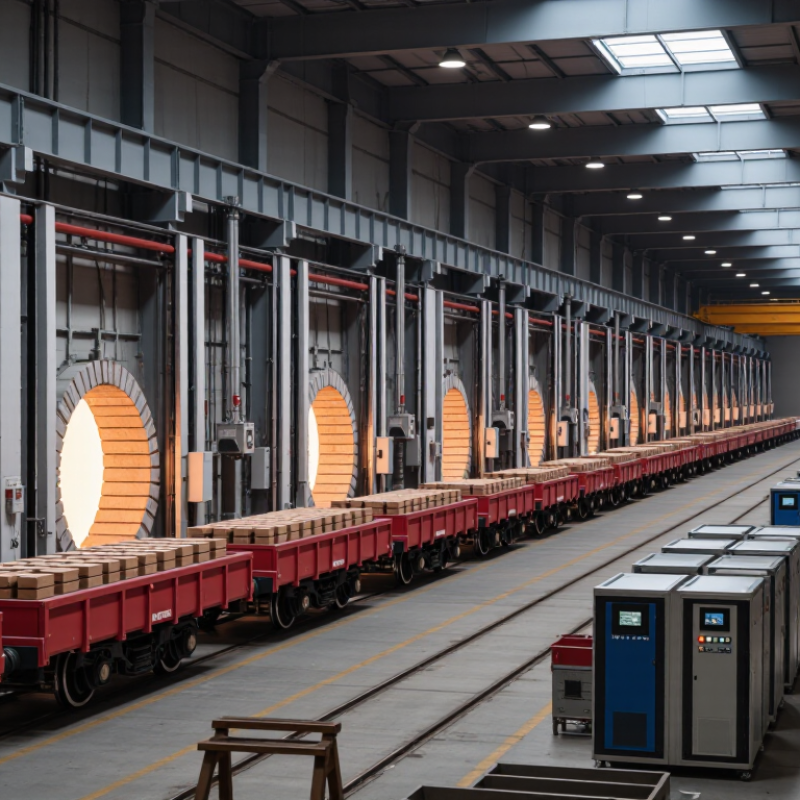
Tunnel Kiln Basics: Continuous Ceramic Firing at 900–1,300°C
A tunnel kiln moves ceramic ware continuously through preheating, firing, and cooling zones. Depending on its design, products travel on kiln cars or rollers. The long, controlled path helps maintain steady production, but it does not guarantee identical results for every clay body.
Firing temperatures commonly fall between 900°C and 1,300°C. The right setpoint depends on the body, glaze, product thickness, and desired maturity. Too little heat can leave ware porous; excessive heat may cause bloating, warping, or sticking. Small test tiles reveal problems early. They are useful.
Operators monitor thermocouples, kiln pressure, atmosphere, and the time each piece spends in the hot zone. A thick tile and a thin cup may not heat evenly at the same speed. Kiln cars, burners, and insulation also affect temperature consistency and fuel use. Heat recovered from cooling zones can support preheating, though performance varies with the line and operating schedule. The first firing profile is rarely the final one. Even a neat temperature chart can hide uneven loading or a slow sensor; actual ware results deserve careful review.

Core Technologies: Heating Zones, Kiln Cars, and Heat Recovery
A tunnel kiln’s heating zones should match the product, not just the target firing temperature. Buyers can ask how independently each zone is controlled and how temperature is measured across the kiln width. For example, uneven readings near the kiln car edges may reveal airflow or loading problems. A gradual temperature profile helps reduce thermal stress, but the right curve depends on the material and production rate. More zones are not automatically better.
Kiln cars also shape firing consistency. Check the car-top insulation, sealing between cars, and the method used to limit heat leakage beneath the load. Ask for maintenance intervals and operating data from comparable applications. Heat recovery deserves the same scrutiny: recovered exhaust heat may preheat combustion air or supply drying equipment, but its value depends on process demand and system design. Real operating figures matter more than a theoretical efficiency estimate. There is no universal setup.
Tips: Request zone-by-zone temperature records, car-seal inspection details, and heat-recovery performance data. Compare these with your own product tests. A supplier’s proposal may still leave unanswered questions, so record assumptions about fuel, output, and maintenance before comparing offers.
How to Evaluate Manufacturers: Capacity, Fuel Options, and ISO 9001:2015
When comparing tunnel kiln manufacturers, check usable output, not just nameplate capacity. Ask for tonnes per day using your exact product size, moisture level, and firing schedule. A line rated for 100 tonnes daily may deliver less when frequent color changes or long cooling cycles are required. Request operating records from a similar installation, including yield, downtime, and energy use per tonne. Numbers can mislead.
Fuel flexibility matters when supply or prices change. Ask whether burners support your available fuels and whether switching requires hardware changes. IEA’s Energy Efficiency 2023 report estimates that industry accounts for about 37% of global energy demand, underscoring why buyers should compare measured energy consumption. Request fuel-consumption figures at stated production rates, plus details on temperature uniformity and emissions monitoring. ISO 9001:2015 can indicate controlled quality processes, but it does not certify kiln efficiency or product results. Check that the certificate’s scope covers relevant manufacturing and service activities.
Tips: Ask for a sample quality plan, calibration records, and corrective-action examples. Then verify them during a factory visit or reference call. One detail is easy to overlook: confirm who provides commissioning, operator training, and spare parts after installation.
7 Best Tunnel Kiln Manufacturers for Global Buyers: Products and Markets
Global buyers comparing seven tunnel kiln manufacturers should start with the product, not the brochure capacity. Tunnel kilns serve brick, roof-tile, ceramic-tile, sanitaryware, and technical-ceramic production. Their designs vary: roller-hearth systems suit some fast, uniform lines, while car or pusher systems handle different loads and firing cycles. A kiln built for heavy clay bricks may not suit delicate sanitaryware. Fit matters more.
Markets differ in fuel access, electricity reliability, labor costs, and local product standards. The International Energy Agency’s 2023 industry analysis estimates that industry uses about 37% of global final energy. That broader figure makes kiln efficiency a serious purchasing factor, though it does not predict one plant’s savings. Ask suppliers for measured fuel use, firing uniformity, uptime, and emissions-control specifications under comparable operating conditions. A claimed capacity is less useful without the product mix and firing curve behind it.
For export-oriented tile and sanitaryware plants, automation, recipe control, and consistent color can matter as much as peak output. Brick producers may prioritize robust handling and flexible fuel options. Request references from facilities making similar products in comparable climates, then verify service coverage and spare-parts lead times. Not always. A high-capacity line can become an expensive idle asset when demand shifts or commissioning takes longer than planned. I would also treat projected energy savings cautiously unless the baseline, fuel price, and test method are clear.
Buyer Checklist: Match Throughput, Firing Temperature, and Service to Your Plant
Before comparing tunnel kiln manufacturers, define your plant’s real output target. Calculate saleable product per day, not just the kiln’s nameplate capacity. Include loading gaps, planned maintenance, and the rejects your process can tolerate. Numbers can mislead. A kiln sized for peak production may run inefficiently during slower shifts, so check whether controls support practical turndown.
Match the firing temperature and curve to the product, not a generic catalogue range. Ask for temperature-uniformity data across the kiln width and length, including at your expected loading density. A test firing with representative pieces can reveal edge-to-center differences, surface defects, or uneven cores. Confirm how quickly the kiln can change recipes; frequent product changes may need more flexibility than a high maximum temperature.
Service matters after installation. Request a clear commissioning plan, operator training, spare-parts availability, and typical response times for technical support. Ask which components require local maintenance skills and how long common replacements take to arrive. Check references from plants with similar products and operating hours. A supplier’s estimate may assume ideal fuel quality or steady production; challenge those assumptions, because your site may not match them exactly. Include floor space, exhaust connections, and utility demand in the comparison.
7 Best Tunnel Kiln Manufacturers for Global Buyers - Buyer Checklist: Match Throughput, Firing Temperature, and Service to Your Plant
Use this checklist to compare suppliers without relying on brand claims. Temperature ranges below are indicative firing ranges for common applications, not equipment guarantees; actual requirements depend on the product, kiln design, atmosphere, and firing schedule.
| No. | Buyer evaluation dimension | What to verify | Useful comparison data | Evidence to request |
|---|---|---|---|---|
| 1 | Throughput and product mix | Confirm capacity for your product dimensions, loading pattern, and operating hours—not just a headline maximum. | Saleable tonnes or pieces per 24 hours; product size and mass; kiln-car loading; planned operating days. | A capacity calculation using your product data, plus references for comparable products and firing schedules. |
| 2 | Firing temperature and schedule | Check that the operating temperature, soaking time, heating rate, and cooling profile suit the body and glaze. | Indicative ranges: common structural clay products about 900–1,100°C; many porcelain and stoneware products about 1,200–1,300°C. Specialized technical ceramics can require higher temperatures. | A proposed temperature profile, measurement locations, control accuracy, and documented test results for the intended product. |
| 3 | Kiln size and residence time | Match kiln width, height, length, and car spacing to the product envelope and target output. | Usable firing-channel dimensions; kiln-car dimensions; car pitch; total cycle and residence time in hours. | A layout drawing and cycle-time calculation showing preheating, firing, and cooling zones. |
| 4 | Fuel, energy, and emissions | Compare options against local fuel availability, energy prices, emissions rules, and required exhaust treatment. | Specified fuel and quality; expected energy consumption per tonne or unit; flue-gas temperature and emissions design basis. | An energy-balance estimate with stated assumptions, utility loads, and emissions-control scope. |
| 5 | Temperature uniformity and controls | Assess how the design manages temperature differences across the kiln and through the product load. | Control-zone count and arrangement; thermocouple locations; agreed temperature-uniformity tolerance at defined test conditions. | Instrumentation list, control-system description, and a commissioning test method with acceptance limits. |
| 6 | Installation and commissioning | Clarify site preparation, utilities, installation responsibilities, operator training, and performance testing. | Scope split; required foundations and utilities; commissioning duration; training hours; performance-test conditions. | A written responsibility matrix, project schedule, commissioning plan, and acceptance-test protocol. |
| 7 | After-sales service and spare parts | Confirm support arrangements for your country, time zone, language, and expected equipment life. | Warranty terms; service contact hours; response-time commitment; spare-parts lead times; remote and on-site support scope. | Written service-level terms, recommended spare-parts list, warranty exclusions, and customer references. |
Article Source:
NORTH EASTON MACHINE • 218 Elm Street • North Easton, MA 02356 • 508-238-6219