Top Power Transmission Parts Suppliers Worldwide?
Power transmission systems rarely fail because of one dramatic defect. More often, a worn bearing, misaligned coupling, or stretched belt quietly reduces output. That is why selecting reliable Power Transmission Parts suppliers requires more than comparing catalog prices.
This guide examines leading suppliers worldwide through practical and verifiable criteria. These include manufacturing experience, product consistency, material control, testing procedures, and technical support. We consider suppliers of gears, bearings, chains, belts, pulleys, couplings, and related components. A strong supplier should provide clear dimensions, load ratings, tolerances, and installation guidance. Traceable batches matter when a replacement must match equipment already running on a factory floor. So does delivery reliability. A perfect part that arrives late can still stop production.
Certifications offer useful evidence, but they are not the whole story. Field performance, customer feedback, warranty handling, and engineering responsiveness deserve equal attention. Some suppliers excel in heavy industrial applications, while others serve agricultural machines or compact automation systems. No universal winner exists. That point is easy to overlook.
The comparison also recognizes practical uncertainty. Supplier websites may present polished claims, while regional service quality can vary. Independent testing is not always available. Therefore, buyers should confirm specifications, request samples when possible, and review maintenance records before committing. These steps help separate dependable partners from attractive but unproven options. Real-world fit matters most.
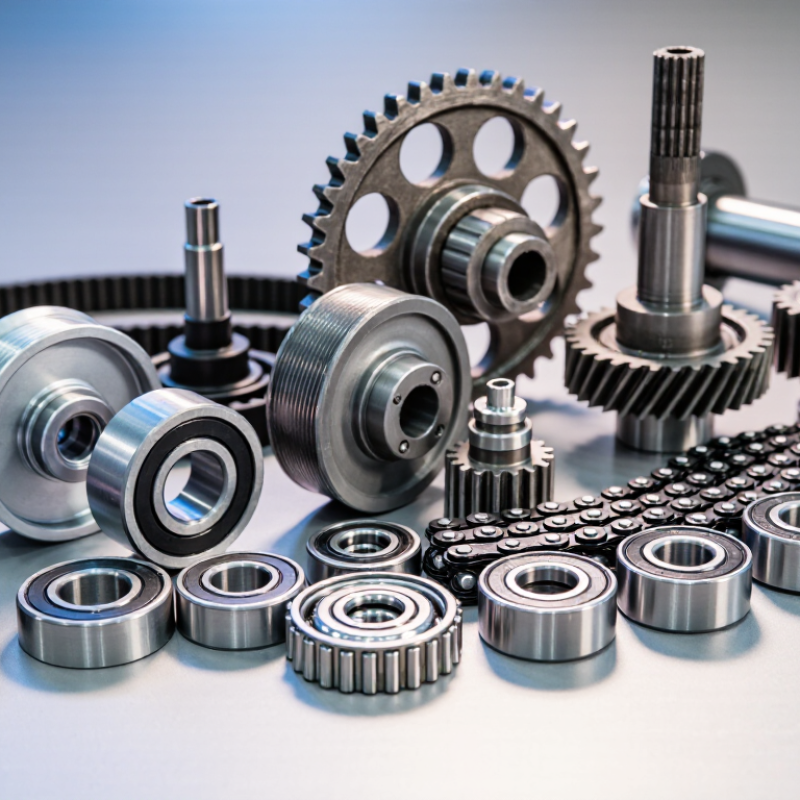
Global Power Transmission Market: 2024 Demand, Growth, and Product Scope
Top Power Transmission Parts Suppliers Worldwide?
Global Power Transmission Market: 2024 Demand, Growth, and Product Scope
In 2024, power transmission demand is growing across factories, warehouses, renewable energy sites, and transport systems. Electrification is changing equipment layouts. Automation is increasing the need for accurate, durable motion control.
The product scope is broad. It includes gears, bearings, couplings, chains, belts, pulleys, gearboxes, motors, and variable-speed drives. Each part affects uptime. A worn bearing can raise vibration, heat, and maintenance costs within hours. In a packaging line, even small alignment errors may damage several connected components.
Supplier evaluation requires more than comparing prices. Buyers should check material certificates, dimensional inspection records, load ratings, and traceability procedures. Sample testing can reveal noise, surface damage, or poor fit before large orders begin. Regional inventory also matters when a replacement part must arrive quickly. Technical support is valuable, especially during installation and failure analysis.
Market forecasts help with planning, but they are not exact. Demand can shift with energy prices, construction cycles, and factory investment. Some suppliers appear strong online yet provide weak documentation. That gap deserves attention. A practical audit should review production capacity, quality controls, delivery history, and after-sales response. In my experience, clear drawings and honest tolerances often prevent more problems than impressive sales claims. Reliability is built through repeatable details.
Global Electricity Demand Growth
A demand-side indicator for the global power transmission equipment market
Global electricity demand growth is projected to accelerate from 2.5% in 2023 to around 4% in both 2024 and 2025. Rising electricity use supports continued investment in transmission networks and related equipment. 2024 and 2025 figures are forecasts.
Source: International Energy Agency (IEA), Electricity 2024.
Supplier Categories: Bearings, Gears, Belts, Chains, and Couplings
Top Power Transmission Parts Suppliers Worldwide?
Choosing power transmission suppliers requires more than comparing prices. In factory maintenance, small material differences can change service life, noise, and downtime. Experienced buyers inspect load ratings, operating temperatures, tolerances, and documented test procedures. Clear technical drawings also matter. A supplier that answers questions quickly is usually easier to manage during urgent repairs.
Bearing suppliers should provide accurate dimensions, sealing options, lubrication guidance, and fatigue data. Gear suppliers need to explain tooth profiles, hardness, backlash, and machining accuracy. Belt suppliers should match profile, length, tension range, and resistance to oil or heat. Chains require careful review of pitch, roller construction, tensile strength, and lubrication needs. Coupling suppliers should confirm torque capacity, misalignment limits, bore sizes, and vibration performance.
Details matter most.
A practical supplier audit includes sample inspection, batch traceability, delivery records, and failure analysis support. Ask whether replacement parts remain consistent after several production runs, not just during the first order. I have seen technically acceptable components fail because installation instructions were vague. That weakness belongs in the evaluation. No audit is perfect. Buyers should compare laboratory data with actual field results, then revise specifications when operating conditions change. A dependable supplier communicates limitations honestly instead of promising unlimited performance.
Benchmarking Suppliers with ISO 9001, IEC 60034, and ASME B29.1
Top Power Transmission Parts Suppliers Worldwide?
Benchmarking Suppliers with ISO 9001, IEC 60034, and ASME B29.1
Comparing power transmission suppliers takes more than reviewing prices and catalog dimensions. ISO 9001 can indicate a documented quality management system, but it does not guarantee that every part will perform well in your application. Ask how the supplier controls material certificates, heat treatment records, dimensional checks, and corrective actions. Look for evidence, not just a certificate on a wall. A sample inspection report can reveal how carefully critical tolerances are measured.
Tips: Match each standard to the product. IEC 60034 applies to rotating electrical machines, so it is relevant when motors are part of the supply scope. ASME B29.1 addresses precision power transmission roller chains. Check the applicable edition and request test or inspection records. Keep the request specific.
A useful benchmark also examines traceability, delivery consistency, and technical support after installation. Ask suppliers to explain how they investigate chain wear, alignment problems, or motor temperature changes. Clear answers matter. Still, a tidy audit score cannot predict every operating condition. Share real loads, speeds, duty cycles, and maintenance limits before comparing quotations. If those details are incomplete, the comparison may look precise while resting on assumptions. Revisit the assumptions.
Regional Leaders: China, Germany, Japan, and the United States
Power transmission parts are rarely interchangeable by region alone; fit, load, speed, and operating environment matter more than a supplier’s address. China has a broad manufacturing base for gears, chains, shafts, and standard components. Buyers may find many production options and varied order sizes. However, supplier capability differs, so check material certificates, dimensional reports, and sample parts rather than relying on a catalogue. Fit matters.
Germany is known for precision engineering and process control, particularly in demanding industrial applications. Japanese suppliers often emphasize consistency, compact designs, and careful production tolerances. These are useful tendencies, not guarantees. A factory audit or clear inspection plan can reveal more than regional reputation.
In the United States, suppliers serve diverse sectors, including agriculture, energy, and material handling. Local machining and repair capacity can help when downtime is costly or replacement parts need adjustment. Ask about lead times, heat treatment, surface finish, and support for worn equipment. Details count. The best comparison uses the same drawings, duty cycle, and acceptance criteria for every quotation. Even then, real operating conditions can expose assumptions that looked sound on paper.
Top Power Transmission Parts Suppliers Worldwide? - Regional Leaders: China, Germany, Japan, and the United States | Region | Commonly Supplied Transmission Products | Regional Supply-Chain Characteristics | Standards Often Encountered | Buyer Considerations |
| China | Power transformers, overhead-line conductors, insulators, substation fittings, surge arresters, and high-voltage switchgear. | A broad electrical-equipment manufacturing base serves domestic grid projects and export markets. Product range and technical capability vary by manufacturer and voltage class. | GB and GB/T national standards; IEC standards are also used in many export specifications. | Verify the exact voltage rating, type-test documentation, material traceability, export requirements, and compatibility with the project’s grid specifications. |
| Germany | High- and medium-voltage switchgear, transformers, power-system components, cable accessories, and precision electrical equipment. | Suppliers operate within the European technical and regulatory environment, with strong emphasis on engineered equipment and industrial applications. | EN and IEC standards are widely relevant; applicable EU legislation depends on the product and its intended use. | Check the applicable conformity-assessment requirements, environmental conditions, maintenance needs, and whether the equipment is designed for the required network frequency and voltage. |
| Japan | Transformers, switchgear, insulators, power cables and accessories, and substation equipment. | The market includes equipment for domestic utility networks and export projects. Specifications may reflect Japan’s regional grid conditions and project requirements. | JIS standards and IEC standards are commonly relevant, depending on the product and procurement specification. | Confirm frequency compatibility: Japan operates at 50 Hz in eastern regions and 60 Hz in western regions. Review the project’s required ratings and test records. |
| United States | Power transformers, overhead conductors, insulators, line hardware, surge arresters, and transmission and distribution switchgear. | A substantial utility and industrial equipment market uses specifications shaped by North American grid practices and project-specific utility requirements. | IEEE and ANSI standards are commonly referenced; ASTM standards may apply to materials and testing. | Check utility qualification requirements, applicable IEEE/ANSI specifications, domestic project rules, and compatibility with the system’s rated voltage and frequency. |
Note: This is a regional market overview, not a ranked supplier list. Standards listed are examples commonly encountered in procurement; the applicable edition and certification requirements depend on the product, destination, and project specification.
Buyer Metrics: 94–98% Gearbox Efficiency, Lead Time, and Total Cost
Top Power Transmission Parts Suppliers Worldwide?
Buyer Metrics: 94–98% Gearbox Efficiency, Lead Time, and Total Cost
Selecting a power transmission supplier requires more than comparing catalog prices. Gearbox efficiency between 94% and 98% can change energy costs across thousands of operating hours. Ask for test data at your actual speed, torque, temperature, and load pattern. Peak efficiency figures may look impressive but rarely represent continuous plant conditions. Small losses become heat, noise, and maintenance pressure.
Lead time also needs careful checking. A supplier may quote four weeks for production, yet testing, export preparation, and spare-part approval can add another ten days. Request a dated manufacturing schedule and confirmation of critical component availability. Experienced buyers should inspect quality records, dimensional reports, material certificates, and failure-response procedures. Reliable documentation often reveals more than polished sales language.
Total cost includes installation, alignment, lubrication, energy use, downtime, and future repairs. A lower purchase price can become expensive after one unexpected shutdown. Compare five-year operating estimates, not only the invoice. I have seen spreadsheets miss commissioning labor and emergency freight. That mistake is common. It deserves a second review.
A practical evaluation can score efficiency, delivery confidence, documentation quality, service response, and lifecycle cost. Keep the scoring transparent. Ask technical questions early, before procurement pressure begins.



 Find Your Solutions ▶