
Top 10 Types of Mining Loaders for Global Buyers

Choosing the right Mining Loaders can shape an entire mine’s productivity, safety, and operating cost. Global buyers face a crowded market. The differences are not always obvious.

This guide, “Top 10 Types of Mining Loaders for Global Buyers,” compares equipment by application, capacity, power source, mobility, and maintenance demand. It examines underground load-haul-dump machines, front-end loaders, wheel loaders, electric loaders, articulated loaders, compact models, and other specialized designs. Each type behaves differently beside a blasted face, on a steep ramp, or under a low tunnel roof.

Dr. Håkan Schunnesson, a respected mining engineering researcher, has stated, “Equipment selection must follow the mining system, not lead it.” That principle remains practical. A large loader may move more material per pass, yet its size can restrict turning space. An electric model can reduce local emissions, but battery charging may interrupt a tightly scheduled shift. Small details matter. Tire wear, bucket shape, operator visibility, and service access can change the real production result.

Experienced buyers should compare verified specifications with mine-specific evidence. Manufacturer brochures are useful, but they rarely tell the whole story. Ask for cycle-time data, availability records, parts support, and field references from similar sites. Consider the ground conditions, haul distance, ventilation limits, climate, and workforce skills. No loader wins everywhere. That assumption deserves correction.

Some selections will still involve uncertainty. Production estimates can miss delays, uneven rock, or changing ore conditions. Careful buyers should allow room for those imperfections. The best Mining Loaders choice is not simply the strongest machine. It is the machine that performs reliably within the complete mining system.
Top 10 Types of Mining Loaders for Global Buyers

Mining Loader Basics and Their Role in Modern Operations

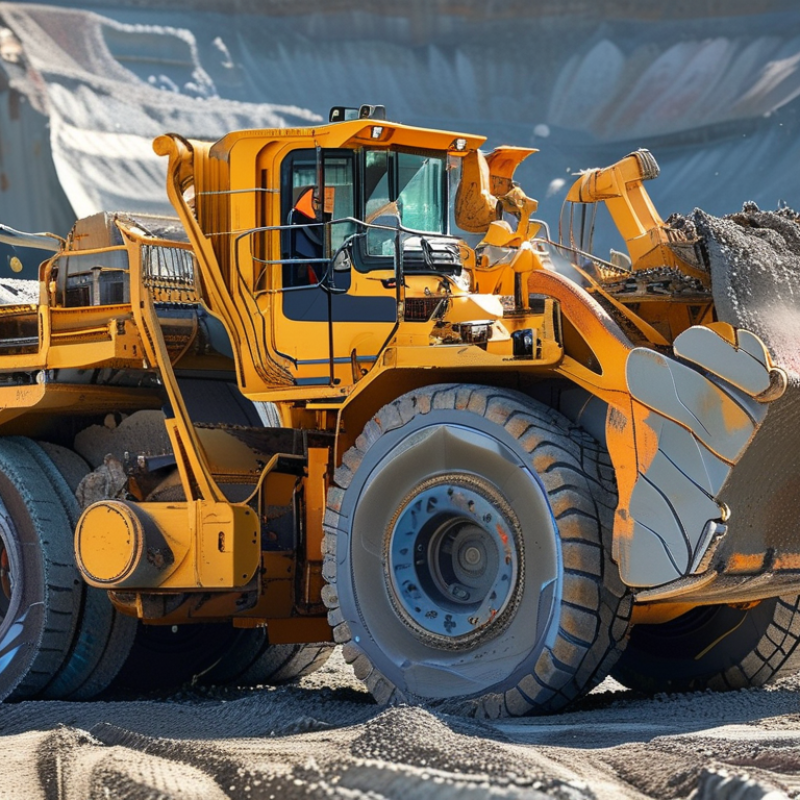
Mining loaders are mobile machines designed to collect, carry, and discharge broken rock. Their basic layout includes a bucket, hydraulic arms, a power system, and a reinforced frame. Underground operations commonly use load-haul-dump loaders, compact loaders, articulated loaders, and remote-controlled units. Surface mines often select wheel loaders, track loaders, front-end loaders, high-lift loaders, and electric loaders.

The right machine depends on more than bucket capacity. Engineers assess haul distance, tunnel width, floor strength, ventilation, slope, and expected material density. A compact loader may turn safely in a narrow drift. A larger loader can move more rock, but it needs wider access and stronger ground support. Electric models can reduce underground exhaust and heat. Diesel models may offer longer operating cycles where charging access remains limited.

Daily reliability comes from practical details. Operators check tire or track condition, hydraulic leaks, brake response, bucket edges, and warning systems before work begins. Load balance also matters. An overloaded bucket can increase stopping distance and accelerate component wear. Remote operation improves separation from unstable areas, but it does not remove the need for trained supervision. In field assessments, specifications sometimes look impressive on paper. They can fail when maintenance access, operator visibility, or local skills receive little attention. A loader should fit the whole production system, not just the loading face.

Ten Main Mining Loader Types by Design and Application

Mining loaders differ by structure, powertrain, and working environment. The ten main types include conventional wheel loaders, rigid-frame quarry loaders, underground LHDs, diesel LHDs, battery-electric LHDs, compact articulated loaders, high-lift loaders, side-dump loaders, remote-controlled loaders, and shovel loaders.

Wheel loaders suit open pits and stockpiles, where fast travel and large buckets matter. Rigid-frame loaders handle hard quarry floors and repeated loading cycles. Underground LHDs use short, articulated bodies in narrow headings. Diesel LHDs offer long operating endurance, while battery-electric LHDs reduce underground exhaust and heat. Compact articulated loaders fit restricted tunnels. High-lift models load taller trucks. Side-dump designs work beside walls or in confined drifts. Remote-controlled loaders improve access after unstable ground events. Shovel loaders combine digging and loading, but their performance depends heavily on material breakage.

USGS Mineral Commodity Summaries 2024 estimated global iron-ore mine production near 2.5 billion metric tons in 2023. It also reported about 22 million metric tons of mined copper. IEA’s Global Critical Minerals Outlook 2024 projects lithium demand could rise ninefold by 2040 under its stated-policies scenario. Fleet flexibility will matter. The boundaries are not clean, and one classification cannot fit every mine.

Tips: Match bucket size with haul-truck payload, not appearance. Check ventilation needs for diesel units. Compare battery charging time with shift length. Measure ground pressure before choosing compact equipment. Remote operation sounds ideal, but connectivity failures still require planning.

Top 10 Types of Mining Loaders for Global Buyers

Typical bucket capacity by loader design and mining application. Values are indicative midpoints of commonly published operating ranges and are intended for initial equipment comparison.

Underground loaders generally prioritize compact dimensions and maneuverability, while surface and high-lift loaders typically provide larger bucket capacities for higher-volume material handling.

How to Compare Loader Capacity, Power, Mobility, and Safety

Comparing the top ten mining loader types starts with payload, not brochure size. Underground LHDs, wheel loaders, articulated loaders, and electric loaders serve different production needs. Check rated payload, bucket capacity, fill factor, and cycle time together. A 10-ton bucket means little if the haul route limits travel speed. Measure tonnes moved per operating hour. Also record fuel or electricity use per tonne. The International Energy Agency reported strong growth in critical-mineral demand in its Global Critical Minerals Outlook 2024, increasing pressure for efficient equipment. Bigger is not always better.

Power must match the mine’s slope, rock conditions, and ventilation limits. Compare engine or motor output, torque, gradeability, and cooling performance. Diesel units may offer longer duty cycles, while battery-electric models can reduce underground exhaust exposure. However, charging time can interrupt production. That detail is often underestimated. Mobility requires more than maximum speed. Review turning radius, articulation angle, tire or track performance, ground clearance, and braking on wet gradients. A compact loader may outperform a larger machine in narrow headings.

Safety deserves equal weight with capacity. The International Standard ISO 19296:2018 addresses safety requirements for mobile underground mining machines. Buyers should verify operator visibility, emergency stopping, rollover and falling-object protection, proximity detection, remote-control reliability, and maintenance access. The U.S. Mine Safety and Health Administration’s 2023 fatality summary again identifies powered haulage as a serious hazard area. A practical comparison uses site trials, not claims alone. Dust, heat, uneven floors, and tired operators expose weaknesses quickly. No scoring table is perfect; real duty-cycle data should challenge the first decision.

Selecting the Right Mining Loader for Different Global Conditions

Top 10 Types of Mining Loaders for Global Buyers

Selecting the right mining loader starts with the site, not the brochure. Open-pit iron operations often need high-capacity wheel loaders for wide haul roads and rapid truck loading. Underground hard-rock mines need compact loaders with short turning radii, strong articulation, and remote-control options. The USGS Mineral Commodity Summaries 2025 estimates global iron ore production reached about 2.5 billion metric tons in 2024. That scale increases pressure on loading cycle time.

Climate and infrastructure change the decision. In tropical mines, sealed electrical systems, corrosion protection, and reliable cooling matter. Arctic sites demand cold-start capability, insulated cabins, and hydraulic fluids rated for low temperatures. High-altitude mines may require engine derating checks. The IEA’s Global Critical Minerals Outlook 2024 projects clean-energy mineral demand could double by 2040 under stated policies. Electric or battery loaders may therefore reduce ventilation demand underground, but charging access remains a practical weakness.

Payload is only one measure. A smaller loader may outperform a larger unit in narrow headings with frequent turns. It can also reduce tire damage and ground pressure. I would not assume automation solves every problem. Dust, poor connectivity, and uneven operator training still affect results. Buyers should compare bucket fill factors, cycle times, maintenance access, local parts supply, and measured fuel or energy use under real site conditions. A trial period often reveals uncomfortable gaps in the original specification.

Top 10 Types of Mining Loaders for Global Buyers - Selecting the Right Mining Loader for Different Global Conditions

No. Mining Loader Type Typical Operating Environment Typical Bucket Capacity Typical Rated Payload Typical Power Source Key Advantages Best-Fit Global Conditions Main Buying Consideration
1 Underground Load-Haul-Dump (LHD) Loader Hard-rock underground mines, room-and-pillar mines, stopes and development headings 0.8–14 m³ 1.5–21 tonnes Diesel or battery-electric Low profile, articulated steering, high breakout force and efficient loading-hauling-dumping cycles Narrow drifts, steep underground access routes and mines requiring low overall machine height Match the loader height, bucket width and turning radius to the mine opening
2 Underground Wheel Loader Underground construction, limestone, salt, potash and larger tunnel headings 1.5–6 m³ 2.5–10 tonnes Diesel or electric Good mobility, fast loading cycles and easier transfer between underground work areas Moderate-to-large headings with adequate ventilation and relatively firm floor conditions Check emissions, ventilation demand, ground clearance and service access
3 Battery-Electric Underground Loader Underground hard-rock mines, deep mines and areas with strict air-quality requirements 1.0–14 m³ 2–21 tonnes Rechargeable battery-electric drive Zero tailpipe emissions at the work face, lower heat output and reduced diesel particulate exposure Deep or poorly ventilated mines, mines with decarbonization targets and high electricity availability Evaluate battery chemistry, charging infrastructure, duty-cycle duration and replacement cost
4 Compact Underground Loader Small-vein mines, narrow-vein operations, utility tunnels and confined excavation areas 0.3–2.5 m³ 0.5–4 tonnes Diesel, electric or battery-electric Very small turning envelope, low machine height and access to restricted working areas Narrow tunnels, low roof heights, small shafts and mines with limited underground logistics Prioritize machine width, operator visibility, articulation angle and transport dimensions
5 Heavy-Duty Underground Hard-Rock Loader Large-scale metal mines, block-cave mines and high-production underground stopes 6–14 m³ 10–21 tonnes High-power diesel or battery-electric High productivity, strong structures and large bucket options for continuous production loading Large underground infrastructure, long haul distances and high-volume ore production Compare payload-to-weight ratio, structural durability, tire life and maintenance support
6 Surface Articulated Wheel Loader Open-pit mines, quarry stockpiles, aggregate yards and mine-site material handling areas 2–20 m³ 3–35 tonnes Diesel, with some electric or hybrid configurations High travel speed, excellent maneuverability and efficient truck loading on prepared surfaces Open areas with short-to-medium loading distances and relatively stable haul-road conditions Select bucket type, tire specification, breakout force and hydraulic cycle speed for the material
7 Track Loader Soft ground, overburden removal, mine construction, reclamation and difficult terrain 0.8–4.5 m³ 1.5–8 tonnes Diesel-hydraulic Low ground pressure, strong traction and the ability to work on uneven or weak surfaces Wet, muddy, unstable or sloped ground where wheeled loaders may lose traction Consider undercarriage wear, travel speed, ground pressure and site transport requirements
8 Compact Multi-Purpose Mining Loader Small quarries, underground service work, mine maintenance and material handling support 0.2–1.5 m³ 0.4–2.5 tonnes Diesel, electric or battery-electric Small footprint, attachment versatility and suitability for cleaning, loading and utility tasks Small operations, confined sites and projects requiring one machine for several low-volume duties Review attachment compatibility, hydraulic flow, parts availability and operator protection
9 Remote-Controlled Mining Loader Rockburst zones, unstable stopes, drawpoints and areas exposed to falling ground 1–14 m³ 2–21 tonnes Diesel or battery-electric with remote-control systems Allows loading and mucking from a safer distance while reducing operator exposure to hazards Seismic mines, unsupported openings and operations with strict personnel-exclusion zones Assess control range, camera visibility, wireless reliability and remote-operation training
10 Telematics-Enabled or Semi-Autonomous Loader Large underground and surface mines with repetitive loading cycles and digital fleet systems 2–14 m³ 4–21 tonnes Diesel, battery-electric or hybrid drive Improved cycle monitoring, production tracking, operator assistance and potential reduction in idle time Large mines with reliable communications, standardized work areas and mature maintenance systems Verify network coverage, software integration, cybersecurity and local technical expertise
Note: Specifications are representative industry ranges rather than manufacturer-specific ratings. Actual performance varies with loader configuration, bucket type, material density, altitude, mine geometry, haul distance, tire or track selection, ventilation and local operating regulations.

Ownership, Maintenance, and Compliance Factors for International Buyers

Top 10 Types of Mining Loaders for Global Buyers

Choosing among wheel loaders, track loaders, underground load-haul-dump units, electric loaders, compact loaders, remote-controlled loaders, autonomous loaders, telescopic loaders, articulated loaders, and high-capacity front-end loaders requires more than comparing purchase prices. Ownership cost includes tires, batteries, hydraulic components, operator training, software, transport, and downtime. The 2024 Mining Equipment Market Report by Off-Highway Research indicates continued demand for machinery that improves productivity while reducing fuel and maintenance exposure. Electric models can lower ventilation costs underground, but battery replacement remains a serious budget question.

Maintenance planning should match site conditions. Dusty haul roads need frequent air-filter inspections. Wet headings demand stronger corrosion controls. Remote operations also require reliable connectivity and trained technicians. According to the International Council on Mining and Metals’ 2023 safety performance report, member companies recorded 287 occupational fatalities during the reporting period. The figure reinforces a practical point: safety systems must cover machine access, visibility, isolation, and emergency recovery, not only operator behavior.

Compliance is operational.

International buyers should verify emissions rules, noise limits, electrical certifications, machine guarding, and local inspection duties before shipment. The International Energy Agency’s Global Critical Minerals Outlook 2024 reports strong growth in demand for batteries and related minerals, increasing pressure for efficient equipment. However, “green” does not automatically mean suitable. A battery loader may struggle in extreme cold, steep ramps, or remote sites without charging infrastructure. Buyers should request service records, spare-parts lead times, lifecycle assumptions, and independent testing results. Some procurement decisions still rely on optimistic vendor estimates. That deserves closer review.

Article Source:

Certified Quality System

© North Easton Machine Company, Inc. All rights reserved. • Site: Blog
NORTH EASTON MACHINE • 218 Elm Street • North Easton, MA 02356 • 508-238-6219