What Are the Top Industrial Cutting Machines in 2026?
Choosing the top Industrial Cutting Machine in 2026 is not simply a matter of comparing speed or price. A laser cutter may produce clean edges on thin sheet metal, while a waterjet can handle heat-sensitive materials without a hot cutting zone. Plasma systems remain practical for thicker conductive metals, and CNC routers suit many wood, plastic, and composite jobs. The right choice depends on the material, thickness, tolerance, workload, and available floor space.
Manufacturing quality expert W. Edwards Deming offered a useful principle: “It is not enough to do your best; you must know what to do, and then do your best.” That idea applies to equipment selection. A fast machine can still be a poor fit if setup takes too long, consumables cost more than expected, or operators struggle to keep cuts consistent. Small details matter. Think of nozzle wear, extraction requirements, software, and the time needed to change materials.
This guide compares leading cutting technologies and the factors that shape their real-world performance in 2026. It considers precision, throughput, operating costs, automation, maintenance, and material range. No machine wins everywhere. Even published specifications may not reflect daily production conditions, so treat rankings as a starting point—not a substitute for testing your own materials. A sample cut can reveal rough edges, heat distortion, or unexpected setup delays. Those details are easy to overlook. They can also change the buying decision.
Fiber Laser Cutters: 1.06 μm Wavelengths for Precision Metal Processing
In 2026, fiber laser cutters are widely used for precise metal processing. Their output typically sits near a 1.06 μm wavelength. This wavelength is absorbed efficiently by many metals, helping create a narrow, controlled cut. Small details matter. Beam focus, nozzle alignment, and sheet flatness can all affect edge quality.
A well-tuned machine can cut thin stainless steel with a clean, narrow kerf and limited heat distortion. Assist gas clears molten material from the cut; the correct gas and pressure depend on the metal and thickness. On a shop floor, even a slightly damaged nozzle may leave rough edges or small burrs. There is a catch. Reflective metals such as copper and aluminum can demand careful setup, suitable equipment, and close attention to operating guidance.
Cutting speed alone does not define precision. Operators also check focus position, acceleration at corners, and how the material is held. A tiny shift in focus can change the edge, especially on thicker plate. Results vary with the machine, material, and settings, so sample cuts and inspection remain useful. Honestly, setup takes longer than many people expect. A practical evaluation should examine repeatability, kerf consistency, and edge condition across the actual parts being produced.
What Are the Top Industrial Cutting Machines in 2026? Fiber Laser Cutters: 1.06 μm Wavelengths for Precision Metal Processing
Typical wavelengths of common industrial laser sources
Fiber lasers commonly operate near 1.06 μm, a wavelength well suited to precision metal processing. Wavelength is one factor in cutting performance; laser power, material, thickness, assist gas, and machine setup also matter.
CO₂ Laser Cutters: 10.6 μm Beams for Nonmetals and Thin Metals
CO₂ laser cutters remain useful where clean edges matter more than maximum metal speed. Their 10.6 μm wavelength is strongly absorbed by many nonmetals, including acrylic, wood, paper, and textiles. Acrylic can leave a polished edge; wood may char if settings or focus are off. That difference matters. Fortune Business Insights estimated the global laser-cutting-machine market at USD 6.21 billion in 2023, with a forecast of USD 10.91 billion by 2032 and a 6.5% compound annual growth rate. This is market-sizing data, not a promise of machine performance.
CO₂ systems can also process some thin metals, but results depend on material, thickness, power, and assist gas. They are not a universal metal-cutting choice. Operators should test a small coupon before production, checking the kerf, edge discoloration, and heat distortion. A shiny metal sheet can reflect energy, while a tiny focus error may widen the cut. Easy to miss.
Tips: Match the lens and focal length to the material thickness. Keep the bed level, clear residues from the optics, and use suitable extraction. Record tested settings by material and thickness. One caveat: published settings may not transfer cleanly between machines, so verify them on your own setup.
Plasma Cutters: Arcs Reaching 20,000°C for Conductive Metals
Plasma cutters earn their place in industrial shops by concentrating heat into a narrow, controllable arc.
TWI’s technical guidance puts plasma-jet temperatures near 20,000°C. The arc melts conductive metal, while a high-speed gas stream pushes molten material from the cut. That is intense. But temperature alone does not guarantee a clean edge. Amperage, gas selection, torch height, and travel speed all shape the result, especially on thicker plate.
On the shop floor, a steady arc can cut carbon steel, stainless steel, and aluminum, leaving a bright kerf and occasional dross that needs cleanup.
OSHA’s welding, cutting, and brazing guidance warns that these processes can produce hazardous fumes, so ventilation belongs in the setup plan, not as an afterthought. Operators should inspect torch consumables, grounding, and airflow before a production run.
Small adjustments matter. A test cut on scrap helps reveal rough edges or excess heat before valuable stock is involved.
The 20,000°C figure is useful, but it can distract from the practical truth: consistent cuts depend on setup, material, and operator judgment.
Waterjet Cutters: 60,000 psi Streams for Heat-Free Cutting
A 60,000 psi waterjet turns pressurized water into a narrow, fast-moving cutting stream. For tougher materials, abrasive particles are added at the nozzle. The process cuts metals, stone, glass, and composites without the intense heat of plasma or laser cutting. That can help preserve temper and reduce heat-affected edges. No thermal plume. Yet “heat-free” describes the cutting method, not a promise of perfect parts: edge taper, nozzle wear, and material thickness still affect accuracy.
The practical appeal is reflected in market forecasts. Grand View Research estimated the global waterjet cutting machine market at about $1.2 billion in 2023 and projected a 7.2% compound annual growth rate from 2024 to 2030. A market forecast signals investment, not guaranteed savings for every shop. Operators must also manage abrasive use, pump maintenance, and slurry disposal. Watch the cut edge. On thick plate, a slower feed may improve finish, while a worn orifice can quietly widen tolerances. That detail is easy to miss.
How to Choose a 2026 Cutter by Material, Thickness, and Tolerance
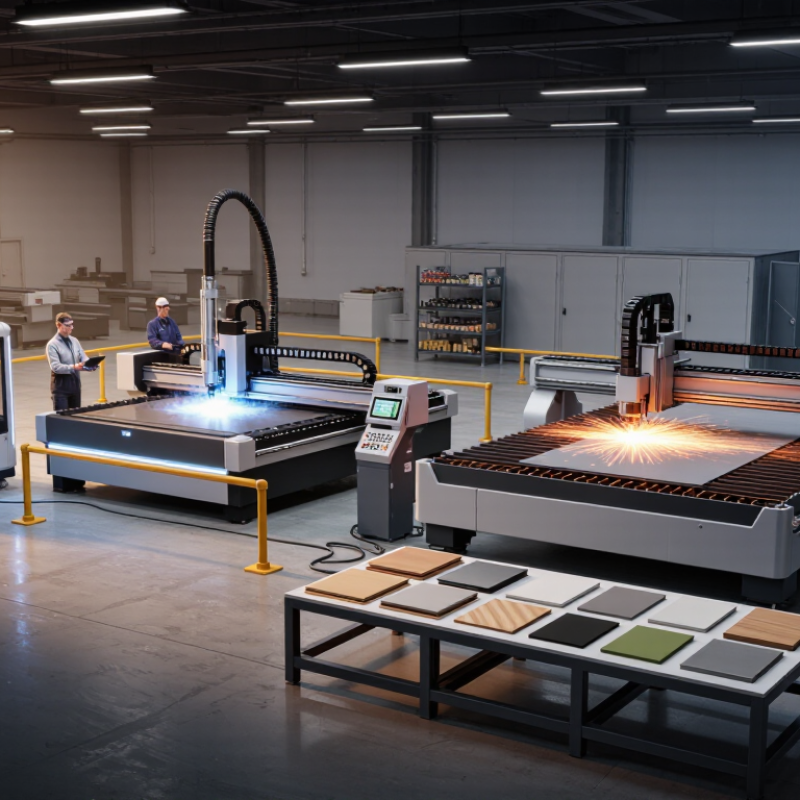
Choose the cutter from the job backward: identify the material, actual thickness range, and tightest required tolerance. A fiber laser suits many thin-to-medium metal parts and fast, clean profiles. Waterjet cutting avoids a heat-affected edge, useful for heat-sensitive materials and thicker stock. Plasma is often practical for thicker conductive plate when edge finish requirements are less demanding. For sheet goods, a knife cutter may prevent melting or fraying. Thin sheet warps. Support, fixturing, and heat input matter as much as the machine.
Translate the drawing tolerance into a shop-floor test. Cut a sample from the same material and thickness, then measure the edge, kerf, hole size, and part flatness. A nominal machine accuracy does not guarantee the finished part will hold tolerance. Check the full process, including material variation and tool wear. Not always. That is where selection can go wrong.
Grand View Research’s 2024 laser-cutting-machine market report estimated a 2023 market value of about USD 5.2 billion and projected 5.5% annual growth through 2030. That points to continued investment, not one universally best cutter. Compare operating cost, throughput, and tolerance capability using your own parts. ISO 9013:2017 provides a framework for assessing thermal-cut edge quality; waterjet and mechanical cutting need suitable process-specific criteria. A spreadsheet helps. It cannot feel a burr.



 Find Your Solutions ▶