
What Are the Top Heavy Machinery Spare Parts Suppliers in China?
China has become a major sourcing center for Heavy Machinery Spare Parts, serving excavators, loaders, cranes, bulldozers, and mining equipment. Its supplier network ranges from established manufacturers to smaller trading companies. That variety creates opportunity, but it also makes selection more difficult.
A reliable supplier should offer clear product specifications, consistent materials, and traceable quality procedures. Buyers may need engine components, hydraulic pumps, undercarriage parts, filters, or transmission assemblies. Each part requires different technical checks. For example, a hydraulic pump should match pressure ratings, displacement, port dimensions, and machine compatibility. A low price means little if the seal fails after a few working hours.
This guide examines leading Chinese suppliers through practical purchasing criteria. These include manufacturing experience, OEM or replacement-part capabilities, export records, inspection systems, warranty terms, and technical support. Factory photographs are helpful. They are not proof by themselves. Sample testing, serial-number verification, and document reviews provide stronger evidence. Some suppliers communicate quickly but provide weak after-sales support. Others have excellent factories but slow customization processes. No supplier is perfect.
Real purchasing decisions also depend on equipment age, operating conditions, delivery schedules, and maintenance budgets. A quarry fleet may need reinforced undercarriage parts, while a construction contractor may prioritize fast delivery and common models. Supplier rankings can guide research, but they cannot replace careful verification. The following overview highlights companies that appear suitable for different buyer requirements, while recognizing that performance should be judged through current evidence, not reputation alone.
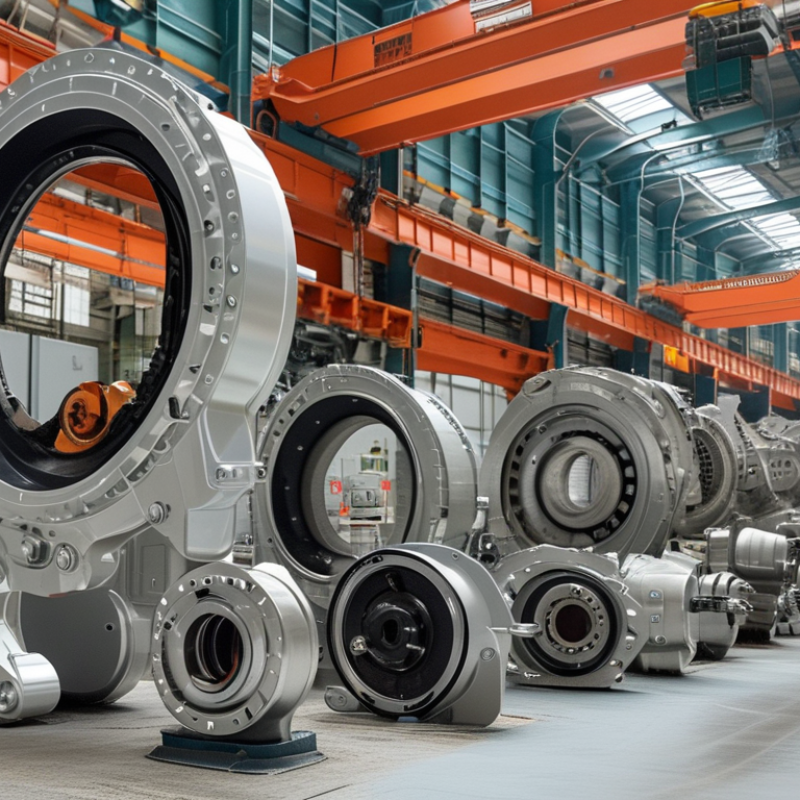
What Defines a Reliable Heavy Machinery Spare Parts Supplier in China?
Reliable heavy machinery spare parts suppliers in China are defined by evidence, not polished catalogs. In field maintenance, I look for suppliers that identify parts by equipment model, serial range, dimensions, material, and operating conditions. A correct-looking component can still fail when its hardness or tolerance is wrong. Experienced suppliers ask for photos, drawings, and failure history before quoting. They should also explain compatibility limits instead of promising that every part fits.
Technical credibility appears in inspection records, traceable batch numbers, and clear testing procedures. Ask whether the supplier checks casting quality, heat treatment, surface hardness, and final dimensions. For hydraulic, drivetrain, and wear components, request relevant performance data and sampling rules. A dependable supplier keeps revision-controlled drawings and records corrective actions after defects. I value practical communication, too. A fast reply is useful, but a precise reply is safer. Some suppliers answer confidently before checking; that is a warning sign, and I have made that mistake myself.
Tips: Compare three written quotations, but do not choose by price alone. Request a sample inspection report, packaging photos, warranty terms, and estimated lead time. Confirm export documents and after-sales contacts before payment. Start with a small trial order when the part is critical. Keep installation measurements and operating notes; these details help resolve disputes. Reliability is built through repeatable checks, honest limitations, and evidence that survives real workshop conditions.

Which Heavy Machinery Spare Parts Are Commonly Supplied?
Chinese heavy machinery spare parts suppliers commonly provide components for excavators, loaders, cranes, bulldozers, and mining equipment. Their catalogues often include engine filters, pistons, cylinder liners, gaskets, water pumps, radiators, and starter motors. These parts support routine maintenance and reduce downtime on active job sites.
Hydraulic parts are also widely supplied. Common items include hydraulic pumps, control valves, cylinders, hoses, seals, and oil coolers. A damaged seal can leave a thin oil trail beneath a machine. That small leak may quickly reduce lifting power. Suppliers usually offer undercarriage parts, including track chains, rollers, idlers, sprockets, and track shoes. Bucket teeth, adapters, cutting edges, and pin-and-bushing sets are frequently requested for excavators and loaders.
Electrical and filtration parts deserve careful checking. Buyers often source sensors, relays, wiring connectors, air filters, fuel filters, and hydraulic filters. Experienced suppliers normally ask for the machine model, serial number, part number, operating conditions, and required quantity before quoting. Measurements matter too. A roller with the wrong width may fit poorly and wear unevenly. It is easy to overlook this detail. Some replacement parts appear identical but use different materials or heat treatments. Reliable suppliers should provide drawings, inspection records, material information, and clear warranty terms. In practice, even a strong-looking component can fail early when storage, installation, or lubrication is neglected.
Commonly Supplied Heavy Machinery Spare Parts
The chart uses a relative supply-frequency index, with filters set as the 100-point benchmark. Filters, undercarriage components, hydraulic parts, engine parts, electrical components, and drivetrain parts are among the most routinely supplied categories for construction and mining equipment.
Note: The index indicates typical replacement-demand frequency and is not a company or brand market-share measurement.
How to Compare China’s Leading Heavy Machinery Parts Suppliers
Comparing China’s heavy machinery spare-parts suppliers requires more than checking quoted prices. KHL’s Yellow Table 2024 estimated global construction equipment sales at about $238 billion in 2023. That scale creates many capable factories, but documentation quality remains uneven. Ask each supplier for machine-model compatibility tables, drawings, material grades, and batch traceability. A low price means little if a hydraulic seal leaks after 300 operating hours.
Use a weighted scorecard. Give quality 30%, fitment 20%, delivery 15%, technical support 15%, and total cost 20%. Request inspection records for hardness, dimensional tolerance, coating thickness, and pressure testing.
ISO’s 2023 survey recorded more than 1.8 million ISO 9001 certificates in China. Certification helps, yet it does not replace component-level evidence. Ask for a current certificate, audit scope, and corrective-action record. Some suppliers present excellent certificates. The actual test file may be thin.
Compare landed cost, not unit price. Include tooling, packaging, sampling, freight, duties, warranty handling, and emergency shipments. For critical parts, order a small pilot batch and install samples under documented conditions. Measure leakage, wear, temperature response, and service hours. A reliable supplier should explain failure analysis, not only offer replacement parts. Check lead time against your maintenance schedule and confirm whether safety stock is physically available. Independent pre-shipment inspection adds cost, but one avoided shutdown can justify it. Reassess performance after six months; early results can mislead.
What Quality and Compatibility Checks Should Buyers Make?
When comparing heavy machinery spare parts suppliers in China, buyers should test evidence, not promises. ISO’s 2023 Survey recorded more than 1.2 million ISO 9001 certificates worldwide. Certification shows process control, but it does not guarantee every component will fit. Request the certificate number, current scope, and recent audit status.
Compatibility begins with the machine’s exact model, serial range, and operating conditions. Check drawing revisions, shaft diameter, bolt spacing, seal material, electrical ratings, and hydraulic pressure limits. Ask for material certificates, hardness results, dimensional inspection reports, and batch traceability. A reputable supplier should provide a first-article sample before mass production. The sample should be measured with calibrated tools, not a quick visual check. That small shortcut causes expensive failures.
Intertek’s 2023 Quality Assurance Market Report highlights the growing role of testing and inspection in global supply chains. Buyers can apply the same discipline to replacement parts. Use independent testing for critical pins, gears, cylinders, and lifting components. Compare measured tolerances against the equipment manual, not only a supplier’s catalogue. Field trials also matter. A part may pass laboratory checks yet fail under dust, vibration, or heat. No checklist is perfect. I would still document every deviation, because an overlooked two-millimetre difference can damage nearby assemblies. Suppliers should also explain warranty limits, sampling plans, and corrective-action procedures in writing.
How to Choose the Right Chinese Spare Parts Supplier
Choosing a Chinese heavy machinery spare parts supplier requires more than comparing prices. The right partner should understand your equipment, operating conditions, and maintenance schedule. Ask for production records, material certificates, inspection reports, and clear dimensional drawings. A serious supplier can explain tolerances, hardness, heat treatment, and expected service life without avoiding technical questions.
Request samples before placing a large order. Check fitting accuracy, surface finish, weld quality, and packaging protection. If possible, arrange a factory audit or use an independent inspection company. Review the supplier’s quality system, testing equipment, export experience, and traceability process. Each part should have a batch number or inspection record. Small details matter.
Communication also reveals reliability. Notice how quickly the supplier answers difficult questions. Do they admit limitations? I once saw a low quotation hide weak packaging and expensive replacement delays. That mistake changed how I evaluate total cost. Confirm lead times, warranty terms, payment conditions, spare stock, and after-sales support in writing. Ask whether replacement parts can remain consistent across future batches. A supplier may offer excellent samples but perform poorly under pressure. Regular inspections are still necessary. Forecasts can be wrong. Your own specifications may need revision after field testing. The best relationship allows both sides to correct problems openly, without hiding them.
| Evaluation Dimension | What to Verify | Practical Benchmark | Recommended Evidence | Procurement Importance |
|---|---|---|---|---|
| Manufacturing Quality System | Whether the supplier operates a documented quality management system covering incoming inspection, process control, final inspection, and nonconformity handling. | An independently audited ISO 9001 quality management system is a strong baseline for general mechanical spare parts. | Current certificate, certification scope, issuing body, audit status, and sample inspection records. | Very High |
| Material Traceability | Whether raw materials and heat-treatment batches can be traced from the finished part back to the material certificate and production record. | Each production batch should have a traceable lot number, material grade, supplier record, and inspection result. | Mill test certificate, heat-treatment report, batch number, and traceability procedure. | Very High |
| Dimensional Accuracy | Whether the supplier can manufacture parts according to approved drawings, tolerances, geometric requirements, and surface-finish specifications. | Inspection equipment should be calibrated, and critical dimensions should be verified against the drawing before shipment. | Calibration certificates, inspection reports, coordinate-measuring-machine records, and approved samples. | Very High |
| Part Compatibility | Whether the replacement part matches the machine model, assembly position, material requirement, interface dimensions, and operating conditions. | Compatibility should be confirmed using the original part number, technical drawing, machine serial range, or a verified sample. | Cross-reference sheet, dimensional comparison, technical drawing, photographs, and sample approval record. | Very High |
| Material and Performance Testing | Whether the supplier tests hardness, tensile properties, chemical composition, coating thickness, sealing performance, or other requirements relevant to the part. | Testing requirements should be defined by the part specification and supported by documented results from calibrated equipment or qualified laboratories. | Material test report, hardness report, coating report, seal test result, and laboratory accreditation details when applicable. | High |
| Production Capacity | Whether available machining, forging, casting, heat-treatment, rubber, hydraulic, and assembly capacity is suitable for the required volume. | The supplier should demonstrate stable capacity for both initial samples and repeat orders without relying entirely on undocumented subcontracting. | Equipment list, monthly capacity statement, production-flow chart, factory audit, and subcontractor-control procedure. | High |
| Lead-Time Control | Whether the supplier can provide reliable timelines for sampling, production, inspection, packing, and export documentation. | Lead time should be stated separately for prototype approval, mass production, and transportation; emergency availability should be confirmed in writing. | Formal quotation, production schedule, order-confirmation procedure, and historical on-time-delivery records. | High |
| Minimum Order Quantity | Whether the supplier’s minimum order quantity is suitable for maintenance demand, trial orders, and aftermarket inventory planning. | Custom cast, forged, or molded parts may require higher minimum quantities than standard machined or stocked items. | Quotation with minimum order quantity, tooling charges, sample policy, and small-batch pricing. | Medium |
| Packaging and Corrosion Protection | Whether parts are protected against impact, moisture, contamination, and corrosion during storage and international transport. | Packaging should match the part’s weight, surface condition, storage period, and transport environment; metal parts commonly require suitable rust-prevention measures. | Packaging specification, photographs of packed goods, preservation method, packing list, and shipping-mark sample. | High |
| Documentation Capability | Whether the supplier can provide consistent commercial and technical documents required for customs clearance and quality approval. | Core documents normally include commercial invoice, packing list, certificate of origin when required, inspection report, and product identification details. | Document templates, sample export documents, inspection certificate, and product data sheet. | High |
| After-Sales Support | Whether the supplier has a defined process for handling defects, technical questions, replacement requests, and warranty claims. | A written corrective-action process should identify the cause, containment action, corrective action, and verification of effectiveness. | Warranty terms, return procedure, response-time commitment, corrective-action report, and service contacts. | High |
| Supplier Verification | Whether the legal entity, factory location, production capability, export history, and bank-account information have been independently checked. | Important orders should be preceded by document verification, video or on-site factory assessment, sample approval, and a controlled payment process. | Business registration record, factory audit report, approved sample, third-party inspection, and verified contract details. | Very High |
| Total Cost of Ownership | Whether the evaluation includes unit price, tooling, inspection, packaging, freight, import charges, downtime risk, and expected service life. | The lowest quotation is not necessarily the lowest cost when premature failure, poor fit, rework, or machine downtime is considered. | Comparative landed-cost calculation, failure-rate history, warranty terms, service-life data, and replacement-cost estimate. | Very High |
| Supplier Selection Score | Whether quality, compatibility, delivery, documentation, communication, and total cost are assessed using the same scoring method. | Use a weighted scorecard and require a documented corrective-action plan for any critical category rated below the purchasing threshold. | Completed supplier questionnaire, weighted evaluation matrix, sample-approval form, and final supplier-review record. | Very High |
Article Source:
NORTH EASTON MACHINE • 218 Elm Street • North Easton, MA 02356 • 508-238-6219