
Top 10 Heat Pump Water Tank Manufacturers in China
Selecting a Heat Pump Water Tank manufacturer involves more than comparing catalogue prices. Tank capacity, inner-liner material, insulation, coil design, operating pressure, and warranty terms all affect performance and service life. In China, manufacturers may offer standard models alongside custom configurations, so buyers should confirm that published specifications match the product being quoted. Details matter. A poorly explained warranty or vague material description deserves a follow-up question.
This guide introduces ten Chinese manufacturers and offers a practical starting point for supplier research. It considers product range, manufacturing focus, available technical information, and the clarity of each company’s public materials. These are useful signals, not proof of factory quality. Ask for current test reports, installation requirements, spare-parts arrangements, and references for comparable projects where available. Compare like with like: a 200-litre tank with one insulation thickness cannot be judged fairly against a different configuration. A ranking can never capture every factory nuance, and some information may change between model versions. That limitation should be kept in mind. Use the list to narrow your search, then verify specifications and service commitments directly before making a purchasing decision.
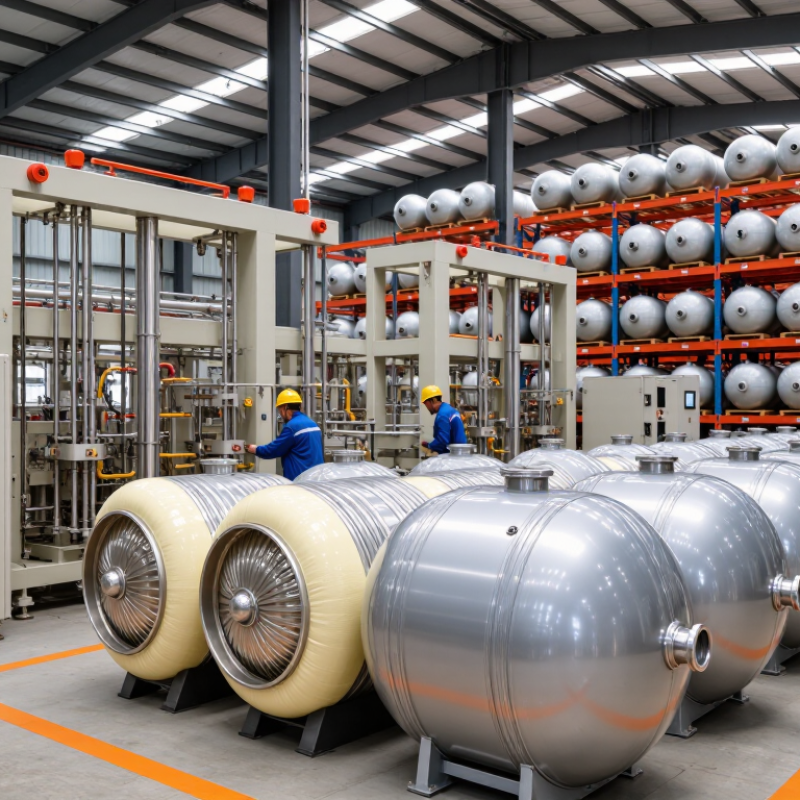
Understanding Heat Pump Water Tanks and Their Role
A heat pump water tank stores domestic hot water while the heat pump moves heat from the surrounding air into the water. It is not merely a larger version of a conventional tank. Its insulation, internal heat exchanger, and usable capacity affect how efficiently the system can meet daily demand. A well-matched tank helps maintain hot water through showers, laundry, and kitchen use. Small details matter.
Tank design varies. Some units combine the tank and heat pump; others connect a separate tank to an outdoor or indoor heat pump. In either arrangement, the tank must suit the system’s heating output and the household’s usage pattern. A family that uses several showers close together may need more stored water than a smaller household. Recovery time matters, too. Check the rated capacity, insulation quality, and compatibility with the heat pump before comparing equipment.
Sizing is not always neat. A calculation may not reflect guests, cold inlet water, or a changed routine. Oversizing can occupy valuable floor space, while undersizing may leave the last person waiting for hot water. Installation details also count: pipe layout, drainage access, and room for maintenance can affect day-to-day performance. These practical factors help explain why manufacturers offer different tank designs and capacities.
How to Assess Heat Pump Water Tank Manufacturers in China
Assessing a heat pump water tank manufacturer means checking how published performance holds up under real operating conditions. The IEA’s The Future of Heat Pumps (2022) estimates that heat pumps could reduce global CO₂ emissions by at least 500 million tonnes annually by 2030. That potential makes efficiency claims worth verifying, not simply accepting. Request test conditions for the stated coefficient of performance, including inlet-water temperature and ambient temperature. Compare the figures under the same conditions. Numbers need context.
Inspect the tank itself. Ask for evidence of corrosion testing, insulation thickness, standing heat-loss results, and pressure testing. A neat weld and a clean factory floor are useful signs, but they do not prove long-term reliability. Review sample test records, component traceability, and how defects are handled after shipment. Also check whether the manufacturer can explain refrigerant choice and provide clear installation and maintenance instructions. A technically strong unit may still disappoint if local service is slow.
Factory audits should include a running unit, not only finished-product displays. Listen for vibration, check water-temperature recovery, and ask how performance changes in cold conditions. Compare warranty terms with the actual service network and spare-parts lead times. Even a detailed audit can miss problems that appear after months of use; that uncertainty deserves attention. I would treat unusually high efficiency claims cautiously unless independent test data supports them.
Profiles of 10 Chinese Heat Pump Water Tank Manufacturers
A practical profile of a Chinese heat pump water tank manufacturer should look beyond production capacity. The tank’s inner lining, weld quality, insulation thickness, and coil layout affect durability and heat transfer. Ask how each unit is pressure-tested, and whether test records can be traced to its production batch. Small details matter.
Industry growth gives this comparison context. The IEA’s The Future of Heat Pumps (2022) reported that global heat pump sales rose nearly 11% in 2022. The European Heat Pump Association’s 2023 market report recorded about three million units sold across 21 European countries that year, a 38% increase. These figures show demand expanding, but they do not prove that every tank supplier meets the same performance standard.
When profiling ten Chinese manufacturers, compare their tank materials, available capacities, insulation options, and support for custom connections. Look for clear test procedures and consistent technical documentation, not just impressive factory photographs. Export experience can help with communication and packaging, though it is not a substitute for product verification. That comparison is imperfect. A polished catalogue cannot reveal how a tank performs after years of temperature cycling; buyers should request specific evidence and treat unsupported claims cautiously.
Top 10 Heat Pump Water Tank Manufacturers in China - Profiles of 10 Chinese Heat Pump Water Tank Manufacturers
The profiles below are anonymized market archetypes, not a verified company ranking. Capacity ranges and product details are indicative examples of common market offerings; specifications vary by model and should be confirmed with the manufacturer.
| Profile | Typical Product Focus | Indicative Tank Capacity | Common System Format | Common Tank Construction | Typical Application |
|---|---|---|---|---|---|
| Profile 01 | Residential all-in-one heat pump water heaters | 150–300 L | Integrated heat pump and storage tank | Enamel-lined steel or stainless steel, depending on model | Houses and apartments |
| Profile 02 | Split-system domestic water heaters | 150–500 L | Separate outdoor heat pump and indoor tank | Typically insulated enamel-lined steel or stainless steel | Homes with limited indoor installation space |
| Profile 03 | Compact residential units | 100–200 L | Compact integrated or wall-adjacent configuration | Insulated steel tank; material varies by product line | Small households and renovation projects |
| Profile 04 | Large-capacity domestic hot-water systems | 300–500 L | Split system or tank paired with an external heat pump | Enamel-lined steel or stainless steel | Large households and multi-bathroom homes |
| Profile 05 | Commercial hot-water storage tanks and systems | 500 L and above; system-dependent | Central heat pump with one or more storage tanks | Commercial-grade insulated steel or stainless steel | Hotels, schools, and residential buildings |
| Profile 06 | Modular commercial hot-water solutions | Tank size configured for the project | Multiple heat-pump units connected to shared storage | Project-specified insulated tank construction | High-demand sites and larger buildings |
| Profile 07 | Low-ambient-temperature product lines | Commonly 150–500 L for domestic systems | Integrated or split; operating range is model-specific | Insulated enamel-lined steel or stainless steel | Regions with colder seasonal conditions |
| Profile 08 | Products designed for export-market requirements | Varies by destination and model | Integrated and split configurations may be offered | Tank specification varies by market and product | Residential and light-commercial projects |
| Profile 09 | Heat-pump systems paired with solar thermal or photovoltaic installations | Typically selected according to household demand | Storage tank with heat-pump and optional solar integration | Insulated steel or stainless steel, model-dependent | Homes and projects combining renewable-energy systems |
| Profile 10 | OEM and project-specific tank production | Specified by customer or project requirements | Tank supplied for integration with a compatible heat-pump system | Material, insulation, and connections are order-specific | Equipment brands, installers, and building projects |
Before purchase, request the exact model datasheet and confirm tank capacity, operating-temperature range, refrigerant, electrical requirements, applicable certifications, warranty terms, and local service availability.
Comparing Products, Performance, and Manufacturing Capabilities
Comparing heat-pump water-tank manufacturers in China takes more than checking headline efficiency. Examine rated heating capacity, tank volume, recovery time, insulation thickness, operating noise, and performance at low air temperatures. The U.S. Department of Energy’s Energy Saver guidance says heat-pump water heaters can be two to three times more energy efficient than conventional electric-resistance models. That benchmark is useful, but test conditions matter. A polished COP figure may not reflect a cold installation or heavy evening demand.
Manufacturing capability is visible in process control. Ask whether tank welding, coil assembly, pressure testing, and final leak checks are performed in-house. Review inspection records, production traceability, sample aging results, and monthly output—not just factory floor size. Export experience and access to replacement parts also affect long-term serviceability. One limitation: supplier data can be difficult to compare when test methods differ. Details matter.
Tips: Request performance data at the same ambient temperature and water-heating setting. Check recovery time with a partly depleted tank, and ask for noise measurements at a stated distance. A short factory audit can reveal whether quality checks are routine or merely prepared for visitors.
Typical Heat Pump Water Tank Capacities
Common nominal storage-volume options relevant to product comparisons across the Chinese market. Values are tank capacities, not manufacturer-specific performance claims.
Tank sizes vary by model and supplier; the chart presents commonly encountered nominal capacities rather than a ranking of manufacturers.
Selecting a Manufacturer for Your Project Requirements
Selecting a Chinese heat pump water tank manufacturer starts with the project’s operating conditions, not catalogue capacity. Match daily water use, peak demand, inlet temperature, and available space. A 200-litre tank may suit an apartment but fall short in a hotel laundry. Request heating capacity, standby loss, recovery time, and COP measured at conditions close to your site. The International Energy Agency’s 2022 report, The Future of Heat Pumps, notes that heat pumps can provide three to five units of heat per unit of electricity. Actual performance varies with operating conditions. That matters. Compare test conditions, not headline COP alone.
Then verify production controls and field evidence. Request independent test reports, component traceability, tank corrosion-protection details, and separate warranty terms for the tank, compressor, and controls. For coastal or hard-water sites, ask how the vessel and anode are specified, plus the recommended maintenance interval. A factory audit should cover pressure testing, insulation checks, and serial-number records. Inspect a finished sample, not just a presentation. Check parts availability and technical support in your destination market. A low quotation may omit commissioning guidance or export packaging. Ask for evidence. Test data cannot predict every installation, so seek references from similar climates and usage patterns. Select a supplier willing to document assumptions and revise sizing when site data changes.
Article Source:
NORTH EASTON MACHINE • 218 Elm Street • North Easton, MA 02356 • 508-238-6219