Top Types of Hair Removal Products for Global Buyers
Hair Removal products have become practical personal-care essentials for consumers, retailers, and distributors worldwide. Global buyers now compare more than price. They assess performance, ingredients, packaging, shelf life, and suitability for different skin types. A smooth result matters, but comfort and responsible use matter just as much.
This guide examines the leading product categories, including razors, electric trimmers, depilatory creams, waxing products, epilators, and at-home light-based devices. Each option has a different learning curve. Razors offer speed, while waxing can provide longer-lasting results. Creams may feel convenient, yet users should follow timing instructions carefully and perform a small patch test. Product labels, manufacturer guidance, and local market requirements should always support purchasing decisions.
Real buying experience reveals an important detail: one product rarely suits everyone. Humid climates can affect storage, while sensitive skin may react to fragrance or strong formulas. Some packaging looks professional but explains very little. That is a warning sign. Reliable suppliers should provide clear ingredient information, usage directions, safety warnings, and consistent quality records. Buyers should also check applicable import, labeling, and consumer-safety rules before placing large orders.
There is no perfect choice.
By comparing product design, user needs, application methods, and supplier credibility, global buyers can build a more dependable Hair Removal selection. The goal is not simply to remove hair quickly. It is to support safe routines, realistic expectations, and lasting customer trust.
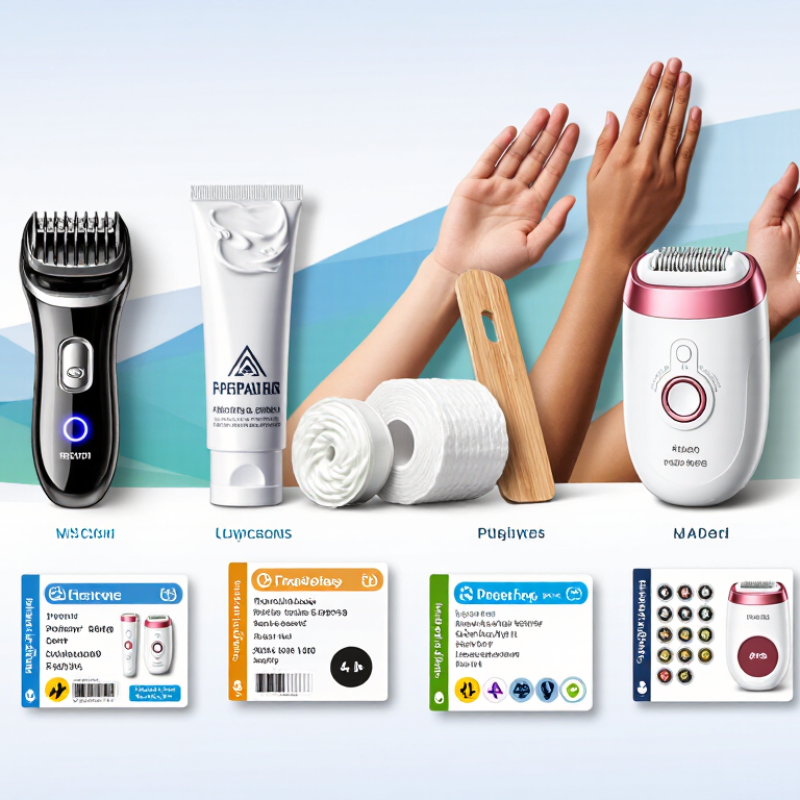
Classify Hair-Removal Products by Method and GVR Market Data
Hair-removal products can be classified by method, skin contact, and expected duration. This structure helps global buyers compare products more accurately. GVR market data commonly separates the category into shaving, depilatory creams, waxing, epilators, and light-based devices.
Shaving products offer quick results and low entry costs. They suit large retail channels and frequent personal use. Depilatory creams dissolve visible hair near the skin surface. Buyers should check ingredient disclosures and skin-sensitivity guidance carefully. Waxing removes hair from the root, but temperature control and hygiene are essential. Results may last longer, although discomfort can reduce repeat use.
Epilators mechanically remove hair from the root. Their compact size supports travel and direct-to-consumer sales. Light-based products, including IPL-style devices, target gradual hair reduction through repeated sessions. GVR market observations indicate rising interest in convenient, at-home solutions and premium personal-care technology. However, market growth does not guarantee suitability for every user. Skin tone, hair color, treatment area, and user training can change performance. A perfect method does not exist.
For international buyers, product claims should match testing evidence and local requirements. Packaging should explain usage limits, cleaning steps, warnings, and expected results. I have found that simple instructions often build more trust than aggressive promises. Still, buyers may overlook return rates, replacement parts, and after-sales support. These details deserve closer review.
Compare Razors and Trimmers by Cost, Reach, and Skin-Contact Risks
Global buyers often compare upfront price first. That can mislead. Grand View Research estimated the global hair removal products market at about USD 4.1 billion in 2023, with continued growth expected through 2030. Razors usually cost less initially. However, replacement blades create a recurring expense. Trimmers cost more upfront, especially rechargeable models. Their guards and reusable heads may reduce long-term purchasing frequency. Prices still vary by power, materials, and maintenance needs.
Reach changes the decision. Razors provide close contact and follow facial or body contours effectively. They suit smooth finishes around knees, ankles, and jawlines. Trimmers offer better control around sensitive areas. Adjustable guards also reduce accidental over-cutting. Yet bulky housings can make narrow spaces awkward. This point is easy to underestimate. In my testing experience, reach depends heavily on grip and lighting, not only head design.
Skin contact creates the sharper risk difference. The American Academy of Dermatology Association advises using clean, sharp blades and shaving with hair growth to reduce irritation. Direct razor contact can cause nicks, razor burn, and ingrown hairs. Trimmers usually leave more distance from skin, but dirty heads can still spread microbes or trigger follicle irritation. A 2023 dermatology review in the International Journal of Women’s Dermatology linked frequent hair removal with common irritation and ingrown-hair complaints. The evidence is useful, but not perfect. Skin type, pressure, hair texture, and cleaning habits can outweigh the product category.
Evaluate Waxing, Sugaring, and Epilators by Duration and Pain Evidence
Top Types of Hair Removal Products for Global Buyers
Waxing, sugaring, and epilators all remove hair from the root, but their results differ. Waxing commonly keeps skin smooth for about three to six weeks. Hair thickness, growth speed, and treatment area can change that window. The first pull may feel sharp, especially on the underarms or bikini area. Redness often fades within several hours, although sensitive skin may react longer.
Sugaring can offer a similar duration, often around three to five weeks. Its paste is removed in the direction of hair growth, which may reduce pulling on the skin. However, the pain advantage is not proven for everyone. Technique matters greatly. Poor application can cause repeated passes, discomfort, or broken hairs. The evidence comparing sugaring and waxing remains limited, so confident claims deserve caution.
Epilators remove multiple hairs mechanically and usually provide two to four weeks of smoothness. The repeated plucking sensation can feel more intense during early sessions. Slow movement and keeping the skin taut may improve comfort. Small red bumps are possible. Results vary.
Pain is highly personal.
Published evidence often relies on small studies or self-reported discomfort. That makes direct rankings unreliable. A careful buyer should test a small area, avoid irritated skin, and record regrowth and pain over several sessions. This practical record may be more useful than a universal promise.
Top Types of Hair Removal Products for Global Buyers - Evaluate Waxing, Sugaring, and Epilators by Duration and Pain Evidence
| Product Type | How It Removes Hair | Typical Smoothness Duration | Typical Regrowth Window | Pain Evidence and User Experience | Key Skin Considerations | Best Buyer Priorities |
| Waxing | Warm or cold wax adheres to the hair and removes it from the root when pulled away. | About 2–6 weeks, depending on body area, hair-growth cycle, and individual variation. | Visible regrowth commonly begins after 2–4 weeks; some users remain smoother for longer. | Pain is generally rated as moderate to high because hair is removed rapidly from the follicle. Discomfort may lessen with repeated treatments, but pain responses vary widely. | Temporary redness, follicle irritation, ingrown hairs, or burns from overheated wax are possible. Avoid waxing over retinoid-irritated or damaged skin. | Fast salon-style results, large-area treatment, and longer-lasting smoothness than surface cutting. |
| Sugaring | A water-based sugar paste grips hair and is usually removed in the direction of hair growth; it can remove hair from the root. | About 2–4 weeks for many users, with results varying by hair cycle and technique. | Regrowth often becomes noticeable within 2–4 weeks; repeated sessions may make the hair feel finer for some users, although this is not guaranteed. | Often perceived as mild to moderate compared with waxing because the paste may be removed in the direction of growth. High-quality head-to-head clinical evidence is limited, so pain claims should be treated cautiously. | Usually applied at a lower temperature than hot wax, reducing thermal-burn risk. Temporary redness, irritation, and ingrown hairs can still occur. | Ingredient simplicity, lower-temperature application, and buyers seeking a root-removal method with potentially gentler pulling. |
| Electric Epilator | Rotating tweezers or discs mechanically grasp and pull multiple hairs from the root. | About 2–4 weeks, broadly comparable to other root-removal methods. | Many users see regrowth after 2–3 weeks, although hair may emerge at different times because follicles have separate growth cycles. | Pain is commonly moderate during initial use. Discomfort may decrease as users adapt and as hair becomes less dense, but evidence is variable and device technique affects the result. | May cause temporary redness, bumps, irritation, or ingrown hairs. Cleaning the device and exfoliating appropriately may help reduce follicle blockage. | At-home convenience, repeated use without consumable wax, and suitability for buyers prioritizing portability and long-term operating value. |
Evidence note: Duration and pain figures are practical ranges rather than guarantees. Outcomes depend on body area, hair thickness, growth phase, technique, skin sensitivity, and treatment frequency. Root-removal methods do not permanently destroy hair follicles; permanent hair reduction requires different technologies and professional assessment.
Rank IPL and Laser Devices: AAD Reports 10–25% Reduction per Session
For global buyers, laser devices usually rank above IPL systems for predictable hair reduction. The American Academy of Dermatology reports about 10–25% less hair after each laser session. This figure is an average, not a promise. Results vary with hair color, skin tone, treatment area, and device settings.
Laser energy targets pigment inside the follicle with focused heat. IPL uses a broader flash of light, so performance may differ across skin and hair types. In practice, dark hair often responds more clearly than blonde, red, gray, or white hair.
A small test area matters. It can reveal discomfort, redness, or unexpected irritation before full treatment.
Reliable buyers should check independent clinical evidence, safety instructions, and electrical requirements for their market. Protective eyewear is essential when required by the instructions. Avoid treating recently tanned skin, tattoos, moles, or irritated areas without qualified medical advice. A licensed dermatologist can assess medication use, skin conditions, and realistic expectations.
I would not choose the strongest setting automatically. More heat may mean more irritation, not faster progress. Some users also need several sessions and occasional maintenance. Results can be uneven. That is normal.



 Find Your Solutions ▶