Top 10 DTF Transfer Film Rolls for Custom Printing
Choosing among the Top 10 DTF Transfer Film Rolls for Custom Printing requires more than comparing prices. Film affects ink absorption, powder bonding, peeling behavior, color strength, and final hand feel. A roll may look excellent during a small test, then fail during a long production run. That difference matters when printing detailed logos, cotton hoodies, polyester jerseys, or dark garments.
Mark Coudray, an experienced apparel-printing educator, often stresses, “Consistency begins with controlling the process.” This principle applies directly to DTF Transfer Film Rolls (DTF Film). Reliable film should support stable printing across different designs and temperatures. It should also release cleanly without lifting fine lettering or leaving excessive adhesive residue. In practical testing, examine the film under a bright work lamp. Check for coating uniformity, edge curling, static, and visible surface defects. Small flaws can become repeated waste.
This guide compares ten leading roll options through practical criteria, including print clarity, drying response, powder compatibility, peel performance, storage needs, and production efficiency. The list is useful, but it is not absolute. Printer settings, ink brands, curing equipment, and humidity can change the result. That part is easy to underestimate. A premium roll may perform poorly in an unstable workspace, while a mid-range option may deliver dependable results after careful calibration. The strongest choice is the film that matches your workflow, garment mix, and quality expectations—not simply the one with the highest marketing claims.
What Is DTF Transfer Film and How Does It Work?
Top 10 DTF Transfer Film Rolls for Custom Printing
What Is DTF Transfer Film and How Does It Work?
DTF transfer film is a coated, heat-resistant sheet used to carry printed designs onto fabric. It works with a direct-to-film printer, adhesive powder, and a heat press. First, the printer places white and colored inks on the film’s coated side. While the ink remains wet, fine adhesive powder covers the design. Excess powder must be removed carefully. The film is then heated, allowing the powder to bond with the ink.
After curing, the printed film is positioned on a garment. Heat and pressure activate the adhesive, transferring the design into the fabric surface. The result can feel soft and flexible when temperature, pressure, and curing time are balanced. Cotton, polyester, blends, and some treated textiles may accept the transfer, but testing remains essential. Fabric texture changes everything.
In my experience, film rolls improve production consistency because they reduce frequent material changes. Still, a wider roll is not automatically better. Poor coating can cause ink spreading, weak adhesion, or uneven peeling. Humidity also affects powder flow and storage quality. Small errors become obvious after pressing, so record settings for each fabric type.
Tips: Keep film in a dry, dust-free area. Touch only the edges. Check coating direction before printing. Cure a small sample first. If the design peels, review pressure, heat, and powder coverage instead of blaming the film immediately. Some problems are operator mistakes. That is worth remembering.
Top 10 DTF Transfer Film Rolls for Custom Printing
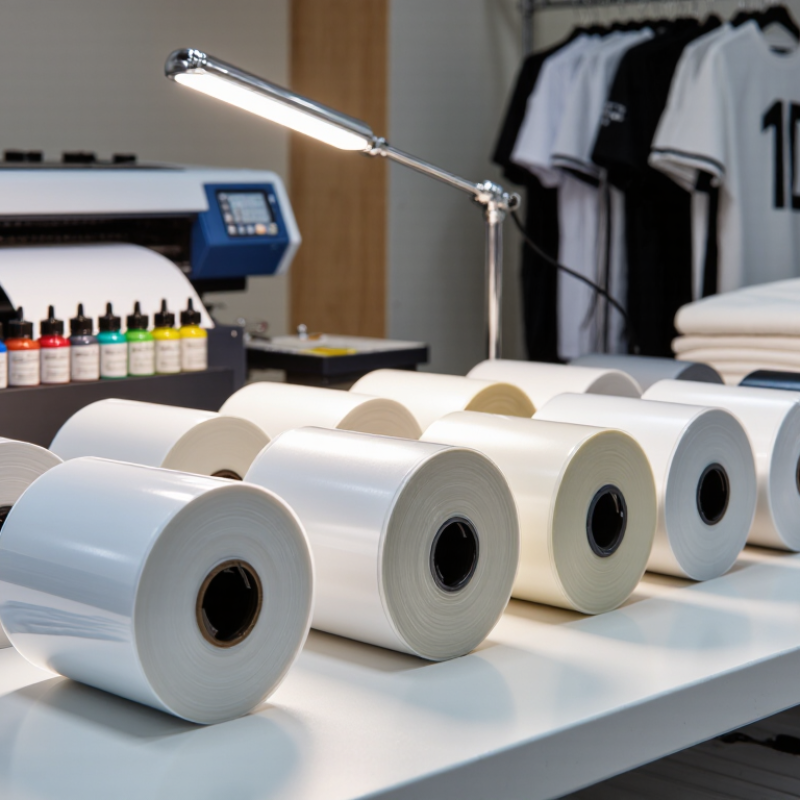
DTF transfer film is a coated PET film used to receive printed ink and hot-melt adhesive powder. During heat pressing, the design transfers from the film onto the garment.
The chart compares common DTF roll widths by the printable surface area of a 100-meter roll. The area is calculated as roll width multiplied by roll length; actual usable area may vary because of edge trimming, printer settings, and material waste.
Key Features to Compare in DTF Film Rolls
When comparing DTF film rolls, examine the coating before judging the price. A smooth, even coating supports consistent ink placement and powder adhesion. Film thickness also matters. Thicker films may feel stable, while thinner films can reduce material use and improve flexibility. However, thin film can wrinkle more easily during printing. Feel the surface. Static control deserves attention, especially in dry rooms. Excessive static can attract dust and disturb film alignment.
Check release behavior at the printer’s working temperature. A film that releases too early may cause edge lifting. A film that releases too slowly can leave residue on the transfer. Cold-peel and hot-peel performance should match your production process. Follow the technical data sheet, but verify it with a small test run. I once trusted a stated peel range without testing humidity changes. The result was uneven release. That mistake was avoidable.
Opacity is critical when printing on dark garments. Place a white test image over black fabric and inspect the edges closely. Ink absorption should remain controlled, not leave dull or wet-looking areas. Excessive absorption can weaken color brightness. Ask for batch information and storage guidance. Rolls should stay protected from heat, moisture, and dust. Check winding quality as well. Loose edges create feeding problems. Keep records of temperature, humidity, curing time, and peel results for each roll. These details reveal performance differences that a quick visual check can miss.
Top 10 DTF Transfer Film Rolls for Custom Printing
Top 10 DTF Transfer Film Rolls for Custom Printing
Choosing among the top 10 DTF transfer film rolls requires more than checking price. Film thickness, coating uniformity, peel temperature, and powder release directly affect production stability. I would prioritize rolls with consistent 60-centimeter widths, clean edges, and reliable ink absorption. Matte film usually reduces glare during alignment, while glossy film can produce stronger visual depth on dark garments.
Grand View Research reported that the global digital textile printing market was valued at approximately 2.82 billion dollars in 2022, with strong projected growth through 2030. This expansion increases demand for dependable DTF consumables. In practical testing, a quality roll should handle fine lettering, curved logos, and solid color blocks without bleeding. A 75-micron film can feel easier to control, but thickness alone proves little. Coating chemistry matters more.
Small details matter.
The best ten roll options should cover hot-peel, cold-peel, single-sided, double-sided, matte, glossy, anti-static, and low-temperature applications. They should also perform across cotton, polyester, blends, and textured fabrics. A 2023 Smithers report on digital textile printing highlighted productivity and shorter production runs as major industry drivers. That makes rapid peeling and stable feeding valuable for custom orders. My first shortlist favored bright transfer results too heavily. After repeated wash testing, some films showed edge lifting. That changed my evaluation. Wash durability, storage humidity, and powder compatibility deserve equal weight. Test samples for 24 hours before larger production runs.
How to Choose the Right Film Roll for Your Printer
Choosing a DTF transfer film roll starts with your printer, not the product label. Measure the usable print width and leave a small edge margin. A roll that barely fits may wrinkle near the platen. Check the feed direction, core size, and maximum roll diameter. These details are easy to overlook. I learned that the hard way. Run a short test.
Film coating matters more than a glossy appearance. Choose a hot-peel or cold-peel surface that matches your powder and curing routine. The coating should hold fine ink droplets without feathering. It should also release the cured image cleanly, without lifting small letters. Confirm compatibility with water-based pigment inks. Store the film sealed and dry. Humidity can affect feeding, powder adhesion, and release performance.
Before comparing ten film rolls, print a small color chart and a detailed logo. Check white ink coverage, powder adhesion, edge sharpness, and transfer consistency. Record temperature, pressure, and curing time. Do not trust one successful shirt. A roll may work well on cotton but perform poorly on other fabrics. Test twice. If edges curl, adjust humidity or pressure before rejecting the film. Reliable rolls should offer stable quality, clear specifications, batch traceability, and practical technical support. Perfect results are not always immediate. That is useful evidence.


 Find Your Solutions ▶