
China Top Engine Control System Parts Suppliers?
China has become an important sourcing base for Engine Control System Parts, serving passenger cars, commercial vehicles, agricultural equipment, and industrial engines. Its supplier network includes manufacturers of engine control units, wiring connectors, pressure sensors, temperature sensors, relays, and related electronic modules. However, “top” should not mean the largest factory alone. It should reflect engineering capability, production consistency, documentation, and after-sales support.
A dependable supplier can explain its testing process clearly. Look for supplier quality records, component traceability, electrical testing, and controlled calibration procedures. Certifications such as IATF 16949 or ISO 9001 can support confidence, but certificates should never replace practical verification. Request samples, inspection reports, connector drawings, operating-temperature data, and warranty terms before placing a larger order. Small details matter. A loose terminal, incomplete pin definition, or unstable sensor signal can create costly field problems.
This guide examines leading Chinese suppliers through a practical purchasing lens. It considers product range, customization ability, manufacturing experience, export communication, delivery performance, and technical responsiveness. Factory visits, video inspections, and independent sample testing may reveal differences that online catalogs hide. No supplier is perfect. Even experienced manufacturers may face material changes, tooling delays, or communication gaps. That reality deserves attention rather than polished promises. Buyers should compare evidence, not just quotations, and maintain clear specifications throughout the project. The strongest partnership usually develops through transparent feedback, documented corrective action, and steady performance over time.
Define Engine Control Parts Within China’s 2023 Vehicle Base of 30.16M Units
China’s 2023 vehicle market reached 30.16 million units, creating a broad demand base for engine control components. These parts regulate fuel delivery, air intake, ignition, emissions, and engine protection. The main group includes electronic control units, sensors, actuators, throttle modules, fuel injectors, wiring harnesses, and sealed connectors.
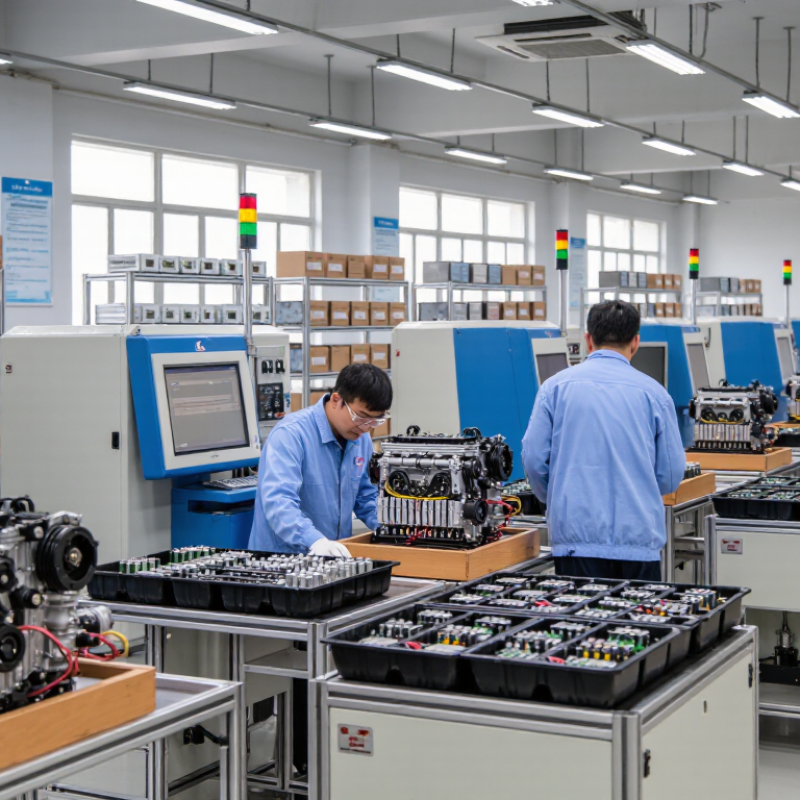
A reliable supplier should provide stable output across high production volumes. During a factory visit, buyers may inspect automated soldering lines, connector sealing tests, and traceability labels. Practical checks also include cold-start testing, vibration testing, heat exposure, and communication testing between the control unit and sensors. Quality systems such as IATF 16949 can support consistency, but certificates alone are not enough. Real process records matter.
Look closely at failure data. A sensor may work on a clean laboratory bench but drift after months of heat and engine vibration. That detail is easy to miss. Suppliers should explain calibration control, software version management, material changes, and warranty analysis. They should also provide clear inspection reports and sample approval records. “Top” should not mean the largest factory. It should mean dependable performance, responsive engineering, and traceable production. No checklist is perfect, and buyers should review field results before approving long-term supply.
China Top Engine Control System Parts Suppliers? - Define Engine Control Parts Within China’s 2023 Vehicle Base of 30.16M Units
| Part Family | Definition Within an Engine Control System | Primary Vehicle Applicability | 2023 China Market Context | Typical Technical Requirements | Supplier Evaluation Metrics |
|---|---|---|---|---|---|
| Engine Control Unit (ECU) | Embedded controller that processes sensor signals and commands fuel, ignition, air, emissions and protection functions. | Gasoline, diesel, plug-in hybrid and other vehicles using an internal-combustion engine. | Relevant mainly to the non-new-energy portion of China’s vehicle market; new-energy vehicles represented 31.6% of 2023 vehicle sales, based on official annual sales data. | Automotive-grade electronics, real-time processing, functional safety capability, cybersecurity support and diagnostic communication. | Software maturity, hardware traceability, failure-rate data, cybersecurity process, validation coverage and production capacity. |
| Crankshaft and Camshaft Position Sensors | Provide rotational position and speed information required for injection timing, ignition timing and engine synchronization. | Most electronically controlled gasoline and diesel engines. | Part of the control architecture for internal-combustion engines within China’s 2023 production base of 30.161 million vehicles. | Stable pulse output, resistance to heat and vibration, accurate air-gap tolerance and reliable sealing. | Signal accuracy, thermal cycling performance, vibration durability, ingress protection and end-of-line testing. |
| Air, Pressure and Temperature Sensors | Measure intake air mass or pressure, manifold pressure, intake temperature, coolant temperature and related operating conditions. | Gasoline, diesel and hybrid powertrains with electronically managed air-fuel control. | Supports fuel-efficiency and emissions control across the internal-combustion segment; exact installed volume is not separately reported in national vehicle statistics. | Accurate measurement over wide temperature and pressure ranges, fast response and resistance to oil, moisture and chemical exposure. | Calibration stability, drift rate, response time, environmental durability and consistency between production lots. |
| Oxygen and Exhaust-Gas Sensors | Monitor exhaust oxygen or gas composition so the controller can adjust combustion and verify emissions-system performance. | Gasoline and diesel vehicles equipped with closed-loop combustion or emissions control. | Important for vehicles subject to China VI emission requirements; applicability depends on engine type and exhaust architecture. | Fast activation, measurement accuracy, high-temperature endurance and contamination resistance. | Response time, aging performance, heater reliability, exhaust durability and conformity-test results. |
| Electronic Throttle and Air-Control Actuators | Regulate airflow into the engine and support torque management, idle control and safety fallback functions. | Primarily gasoline and hybrid engines using electronic throttle control. | Directly linked to electronically controlled passenger-car and light-commercial powertrains produced in China during 2023. | Position sensing redundancy where required, precise motor control, low friction and fail-safe operation. | Position accuracy, response time, duty-cycle endurance, return-to-safe-state behavior and diagnostic capability. |
| Fuel Injectors and Fuel-Metering Modules | Meter and deliver fuel according to ECU commands to achieve the required air-fuel ratio and engine torque. | Gasoline direct injection, port injection and diesel engine systems. | Applicable to the internal-combustion and hybrid portion of China’s 2023 vehicle base; battery-electric vehicles do not use engine fuel injectors. | Flow uniformity, spray pattern consistency, pressure resistance, chemical compatibility and low leakage. | Flow deviation, response repeatability, durability testing, cleanliness control and batch traceability. |
| Ignition Coils and Spark-Control Components | Convert low-voltage electrical energy into the high-voltage spark required for gasoline-engine combustion. | Gasoline and gasoline-electric hybrid vehicles. | Relevant to gasoline-powered vehicles within the non-new-energy and hybrid market; not used by battery-electric vehicles. | High-voltage insulation, electromagnetic compatibility, thermal endurance and reliable spark energy. | Secondary-voltage stability, misfire performance, heat-cycle durability, insulation resistance and EMC results. |
| Exhaust-Gas Recirculation and Variable-Valve Actuators | Control exhaust recirculation, valve timing or valve lift to improve efficiency, torque and emissions performance. | Modern gasoline, diesel and hybrid engines, depending on engine design. | Increasingly relevant to engines designed for lower emissions and improved fuel economy under China’s current emission framework. | Position control, resistance to soot and oil deposits, thermal durability and accurate response under changing load. | Actuation accuracy, deposit tolerance, cycle life, leakage control and calibration compatibility. |
| Wiring, Connectors and Communication Interfaces | Transmit power and sensor/actuator signals between the ECU, engine components and vehicle networks. | All electronically controlled internal-combustion and hybrid vehicles. | Required across the engine-control supply chain, although national vehicle statistics do not separately disclose connector or harness volumes. | Low contact resistance, terminal retention, sealing, heat resistance, vibration durability and electromagnetic compatibility. | Crimp quality, pull-out force, continuity testing, water ingress protection, material consistency and delivery reliability. |
| Diagnostics, Calibration and Software Services | Provide fault detection, parameter calibration, service diagnostics, functional monitoring and software updates. | All vehicles using electronically controlled engines, including hybrids. | Supports compliance, warranty analysis and lifecycle maintenance for the engine-equipped portion of the 2023 market. | Diagnostic communication, data integrity, secure updates, fault coverage and documented calibration control. | Defect-detection rate, software release control, cybersecurity governance, test coverage and after-sales support capability. |

Certified Quality System

 Find Your Solutions ▶
NORTH EASTON MACHINE • 218 Elm Street • North Easton, MA 02356 • 508-238-6219