Top 10 Benefits of a Packaging Line for Global Buyers?
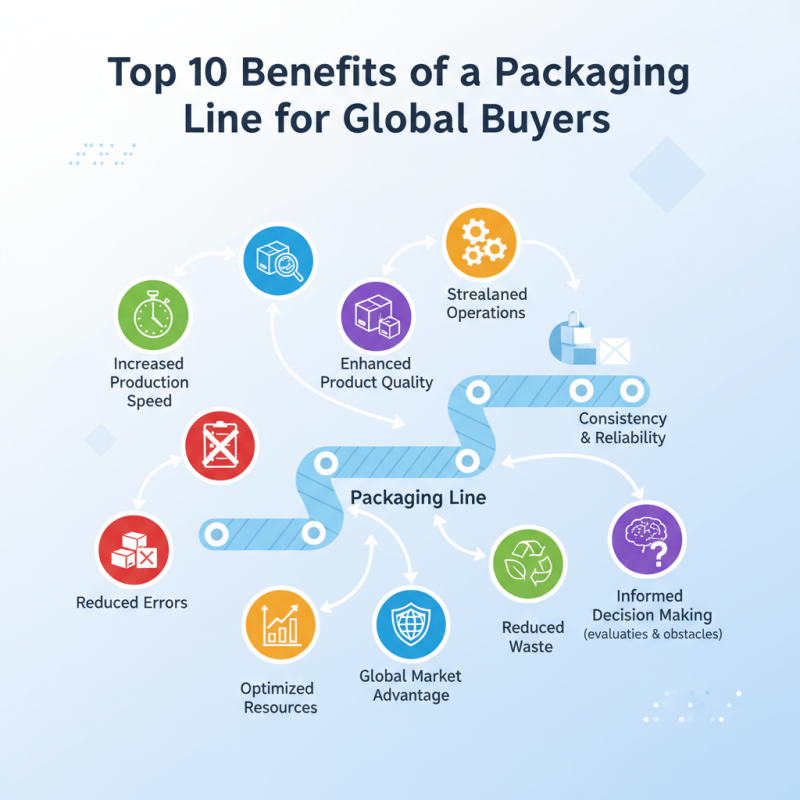
In today's fast-paced global market, efficiency is key for buyers and manufacturers alike. A well-structured Packaging Line can revolutionize how products are processed and delivered. This system enhances production speed and boosts product quality, meeting the high demands of consumers.
Global buyers face challenges such as fluctuating supply chains and varying consumer preferences. Implementing a robust Packaging Line addresses these issues effectively. It streamlines packaging operations, ensuring consistency and reliability. Companies experience fewer errors, which can be costly.
Moreover, a Packaging Line supports sustainability goals, an increasingly critical concern. By optimizing resources and reducing waste, businesses gain an edge in eco-conscious markets. Despite these benefits, companies must evaluate their unique needs and potential obstacles in adopting such technology. Understanding these factors will lead to a successful integration of a Packaging Line into their operations.
Advantages of Streamlined Packaging Processes for Global Buyers
Streamlined packaging processes offer numerous advantages for global buyers. Efficiency is a major factor. A well-designed packaging line reduces production time. This leads to quicker turnaround and faster delivery. Customers appreciate prompt service, and it boosts brand reputation. Additionally, an efficient process minimizes material waste. Less waste means lower costs and improved sustainability.
Quality control is another key benefit. Automated systems can monitor product integrity. They help reduce errors associated with manual handling. Consistent packaging also ensures that products meet international standards. This is critical for maintaining buyer trust. However, it’s important to remember that not all systems are perfect. Sometimes, unexpected issues can arise during implementation, requiring adjustments.
Moreover, a streamlined packaging line can enhance flexibility. Companies can adapt to changing market demands. New product lines can be introduced with relative ease. But companies must remain vigilant. Oversights in training or system updates can lead to disruptions. Continuous improvement is essential in maintaining these advantages.
Enhancing Product Freshness and Shelf Life through Efficient Packaging
Efficient packaging plays a crucial role in maintaining product freshness and extending shelf life. Modern packaging lines utilize advanced technology to ensure that products are sealed in a way that prevents exposure to air and moisture. This protection helps preserve taste and nutrients, crucial for perishable items like food and pharmaceuticals.
However, not all packaging solutions are equal. Some materials provide better barriers against spoilage than others. Additionally, specific sealing methods can impact the freshness of products differently. Companies must carefully evaluate options based on their unique products. They often face challenges in balancing cost, sustainability, and effectiveness.
In a fast-paced global market, ensuring product integrity is essential for customer satisfaction. Packaging that fails to protect a product can lead to waste and loss of reputation. Hence, continual assessment and improvement of packaging processes is necessary. Insights gained from quality checks and customer feedback can guide these enhancements. This ongoing reflection is key to achieving reliable and fresh products on the shelves.
Cost-Effectiveness of Automated Packaging Lines for Global Supply Chains
Automated packaging lines are reshaping global supply chains. They significantly enhance cost-effectiveness while improving efficiency. By automating repetitive tasks, companies reduce labor costs and minimize human error. This creates a more streamlined process, speeding up production time.
Investing in these systems can lower operational expenses in the long run. The initial setup cost might seem high, leading to concerns about return on investment. However, as production scales, these automated lines can drastically reduce per-unit costs. Additionally, they provide consistent quality, ensuring that products meet high standards.
Adaptability is another crucial factor in automated lines. They can be modified to package various products, catering to diverse market needs. Nevertheless, not every business model fits this setup perfectly. Some may find challenges in integrating new technology. Regular reassessment and adjustments are vital for optimization. Balancing costs with benefits takes time and reflection.
Improved Product Presentation and Branding through Packaging Solutions
Effective packaging is essential for capturing consumer attention. According to a study by Packaging Strategies, 72% of consumers make purchasing decisions based solely on packaging. A well-designed packaging line can enhance product presentation significantly, making items more appealing on store shelves. This improved visibility leads to increased sales and strengthens brand identity.
Incorporating high-quality materials can elevate the perception of products. A survey by Mintel found that nearly 50% of consumers associate premium packaging with higher quality products. Companies investing in custom packaging solutions can differentiate themselves in saturated markets. However, focusing only on aesthetic appeal can be misleading. It’s important to balance sustainability and functionality with design.
Furthermore, brands must consider their audience's preferences. For instance, younger consumers tend to favor eco-friendly packaging, reflecting a broader shift in consumer values. Research from Nielsen indicates that 66% of global consumers are willing to pay more for sustainable products. Brands should align their packaging strategies with these insights to foster loyalty and drive repeat purchases. A thoughtful approach can create a lasting impact and resonate more deeply with customers.
Top 10 Benefits of a Packaging Line for Global Buyers
Flexibility and Customization in Packaging for Diverse Market Needs
In today’s fast-paced global market, packaging needs are incredibly diverse. Brands increasingly demand flexibility in their packaging lines to meet specific requirements. Customization is key. It allows for tailored solutions that cater to various consumer preferences. Different markets have unique cultural influences and trends, which can change rapidly.
With a flexible packaging line, businesses can easily adapt their offerings. This means resizing packaging or adjusting design elements without needing extensive downtime. The ability to pivot quickly reflects not just efficiency but also a company's commitment to customer satisfaction. Yet, this flexibility can be a double-edged sword. Some companies might struggle with over-customization, resulting in inefficiencies.
Concurrently, the emphasis on customization should not sacrifice quality. Maintaining consistency while adapting to various needs is critical. Brands may face challenges in balancing the two. However, the potential for enhanced customer loyalty is worth the effort. Ultimately, flexibility and customization create a dynamic landscape for packaging solutions, allowing companies to respond effectively to market changes.



 Find Your Solutions ▶