
China Top 10 Reciprocating Compressor Manufacturers?
China’s reciprocating compressor industry supports refrigeration, petrochemicals, natural gas, manufacturing, and industrial maintenance. These machines convert piston movement into pressure, often under demanding conditions involving heat, vibration, and continuous loading. A useful shortlist must examine more than sales claims. It should consider pressure range, displacement, energy efficiency, materials, service coverage, certifications, and proven operating records.
Market research indicates strong demand for industrial compression equipment. Grand View Research’s Industrial Refrigeration Market Size, Share & Trends Analysis Report, 2024–2030, identifies expanding cold-chain infrastructure and food-processing capacity as major growth drivers. The International Energy Agency also emphasizes industrial efficiency, where compressor design and system control can significantly affect electricity consumption. Meanwhile, MarketsandMarkets’ Air Compressor Market report highlights demand for reliable equipment in manufacturing, energy, and process industries. These findings provide useful context for evaluating Chinese suppliers, although they do not create an official manufacturer ranking.
This guide reviews ten prominent China-based manufacturers associated with Reciprocating Compressor production or supply. It focuses on engineering capability, product range, customization, export experience, quality systems, and after-sales support. Practical details matter. A compressor may look impressive in a catalogue, yet fail under poor lubrication or unstable cooling water. That matters.
The list should therefore be treated as a structured market reference, not a final purchasing decision. Company information, model availability, and certifications can change. Buyers should verify factory data, test reports, maintenance records, and local service resources before signing a contract. Some rankings remain subjective. That limitation deserves attention.
Scope and Criteria for Ranking China’s Reciprocating Compressor Manufacturers
China Top 10 Reciprocating Compressor Manufacturers?
Scope and Criteria for Ranking China’s Reciprocating Compressor Manufacturers
This ranking examines manufacturers producing industrial reciprocating compressors in China. It excludes trading companies, workshop-only assemblers, and firms without verifiable production records. The assessment covers oil-free and lubricated models used in gas processing, chemical plants, refrigeration, and general manufacturing. Small details matter, such as cylinder bore accuracy, valve design, vibration control, and oil carryover.
Each manufacturer is reviewed through technical documents, factory evidence, installation records, and feedback from equipment operators. We compare rated pressure, flow stability, energy consumption, noise levels, and service response. A serious evaluation also checks machining capacity, pressure testing procedures, material traceability, and spare-parts availability. Independent certifications can support credibility, but certificates alone cannot prove field performance. Real operating data matters more.
The ranking gives weight to engineering capability, product reliability, manufacturing consistency, customization, and after-sales support. Delivery history and export experience are considered, but they should not outweigh safety or performance. Site visits, where possible, help verify testing equipment and assembly practices. Still, public information is often incomplete, and some technical figures are difficult to compare fairly. Weighting can also favor one application over another. A compressor suited to high-pressure gas service may not be ideal for refrigeration duty. Buyers should therefore treat the ranking as a structured reference, not an absolute verdict.

Overview of China’s Reciprocating Compressor Industry
China Top 10 Reciprocating Compressor Manufacturers?
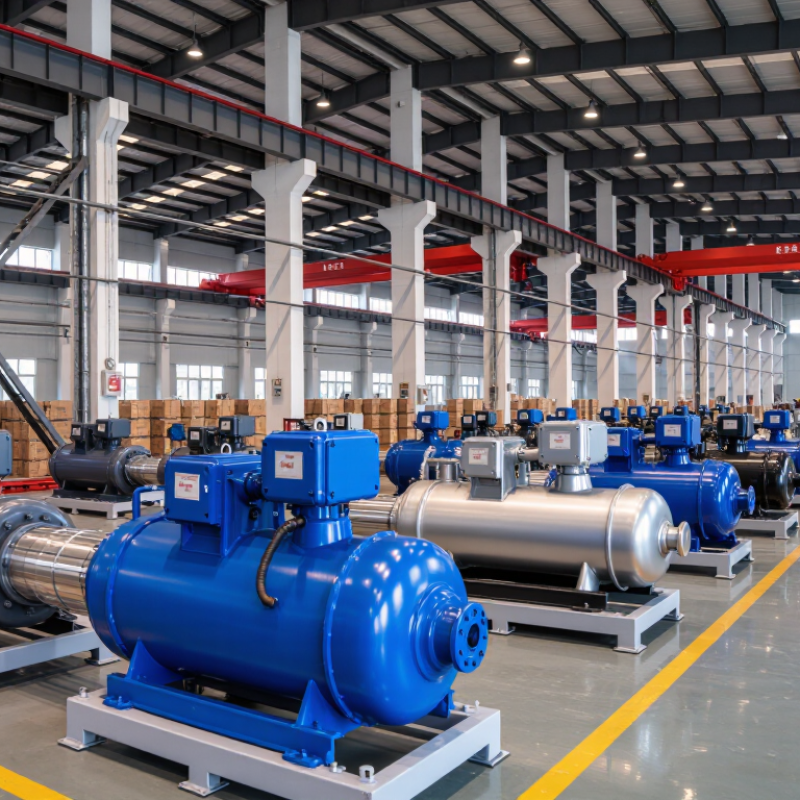
China’s reciprocating compressor industry serves oil and gas, chemical processing, refrigeration, and industrial gas projects. Many manufacturers now combine casting, machining, assembly, and testing under one production system. This control can improve consistency, but factory capability still varies widely.
A reliable manufacturer should demonstrate piston design expertise, pressure-vessel awareness, vibration control, and clear maintenance procedures. Experienced teams inspect crankshafts, cylinder surfaces, valves, and sealing components before assembly. Test records should include discharge pressure, temperature, oil consumption, noise, and vibration readings. Small details matter. A loose fitting can become an expensive shutdown.
The country’s leading manufacturers are not always identified by production volume alone. A practical top-ten evaluation should examine engineering experience, delivery history, customization ability, energy efficiency, and after-sales support. Documentation quality also reveals professional maturity. Some suppliers offer impressive specifications but provide limited field data. That weakness deserves attention. Buyers should request factory audit access, sample inspection reports, spare-parts plans, and realistic performance curves. Local manufacturing can shorten lead times and support customized configurations, yet quality control may differ between product lines. The ranking is never perfect. It should be reviewed against project conditions, operating hours, gas composition, and service expectations.
Profiles of the Top 10 Chinese Reciprocating Compressor Manufacturers
China’s leading reciprocating compressor manufacturers serve oil and gas, chemical processing, mining, food, and general industry. A reliable profile should examine engineering records, factory capacity, service coverage, and verified customer references. Ranking alone is not enough.
One northern manufacturer focuses on large, low-speed compressors for refineries and gas transmission. An eastern specialist builds compact units for workshops and utility systems. A coastal supplier supports petrochemical projects with corrosion-resistant materials. A Jiangsu-based producer emphasizes precision machining and customized cylinders. A Zhejiang manufacturer develops energy-saving packages for process plants. A Shandong builder is known for oilfield and natural-gas applications. A central China factory serves mining sites where dust, vibration, and limited maintenance are serious concerns. A Guangdong producer designs cleaner systems for food and pharmaceutical facilities. A Sichuan equipment maker concentrates on high-pressure energy projects. An export-oriented manufacturer provides private-label production, spare parts, and remote technical support.
Technical buyers should inspect crankshaft balance, valve durability, lubrication design, noise control, and cooling performance. Test reports should match the delivered configuration. Ask for operating data, not only brochures. Site acceptance records can reveal more than impressive specifications.
No ranking is perfect. Some market claims remain difficult to verify. I would also compare five-year maintenance costs, because a cheaper purchase can become expensive later. Factory audits, operator training, and response times deserve equal attention. A strong supplier explains limitations clearly and documents every major performance promise.
Product Types, Technologies, and Industries Served
China’s top reciprocating compressor manufacturers typically offer several product families for different operating conditions. Oil-lubricated models suit general plant air and industrial gas service. Oil-free designs support food processing, pharmaceuticals, and sensitive instrumentation. Diaphragm compressors handle high-purity gases where contamination must remain extremely low.
Process compressors often use multiple cylinders, staged compression, and interstage cooling. These features reduce discharge temperature and improve efficiency during continuous operation. High-pressure units may include reinforced crankcases, special valve materials, and carefully selected sealing systems. Some manufacturers also provide hydrogen, nitrogen, carbon dioxide, and natural gas configurations. However, gas composition changes everything. A compressor designed for nitrogen may perform poorly with wet or reactive gas.
Modern systems increasingly combine variable-frequency drives, PLC controls, vibration sensors, and remote data collection. Operators can track pressure, oil temperature, valve activity, and running hours from a control room. In practical installations, this information helps identify unusual vibration before a shutdown occurs. It does not replace inspection. Dust, poor alignment, and incorrect lubrication still cause avoidable failures.
The main industries served include petrochemicals, gas processing, refrigeration, power generation, metallurgy, and general manufacturing. Food and pharmaceutical plants usually demand cleaner air systems and stricter documentation. Energy projects often require customized cooling, redundant units, and extended service support. A catalogue rating is not enough. Buyers should verify flow at actual pressure, ambient temperature, gas purity, noise limits, and maintenance access. Even experienced engineers can underestimate installation conditions.
China Top 10 Reciprocating Compressor Manufacturers? - Product Types, Technologies, and Industries Served
| Rank | Anonymized Manufacturer Profile | Primary Product Types | Typical Technologies | Common Gas Applications | Industries Served | Typical Capacity Range | Typical Pressure Range |
|---|---|---|---|---|---|---|---|
| 1 | Profile A: Industrial Process Specialist | Horizontal reciprocating compressors; process gas packages | Oil-lubricated cylinders, multi-stage compression, intercooling, PLC control | Hydrogen, nitrogen, natural gas, refinery gases | Petrochemical, chemical processing, gas treatment | 100–10,000 Nm³/h | 10–350 bar |
| 2 | Profile B: Oil-Free Gas Compression Specialist | Oil-free reciprocating compressors; booster units | Non-lubricated piston rings, dry-running packing, contamination control | Hydrogen, oxygen, carbon dioxide, instrument air | Electronics, food processing, medical gas, energy | 50–5,000 Nm³/h | 5–300 bar |
| 3 | Profile C: Natural Gas Compression Specialist | Gas-engine-driven compressors; skid-mounted packages | Variable-speed drive, suction-pressure control, anti-surge protection | Natural gas, associated gas, biogas | Gas transmission, gas gathering, power generation | 500–20,000 Nm³/h | 10–250 bar |
| 4 | Profile D: High-Pressure Booster Manufacturer | High-pressure reciprocating boosters; cascade filling systems | Multi-stage compression, forged-steel cylinders, automatic shutdown systems | Hydrogen, nitrogen, helium, compressed natural gas | Hydrogen refueling, gas storage, research laboratories | 10–2,000 Nm³/h | 100–1,000 bar |
| 5 | Profile E: Refrigeration Compressor Manufacturer | Semi-hermetic reciprocating compressors; condensing units | Suction-valve optimization, capacity modulation, thermal overload protection | Ammonia, carbon dioxide, HFC and HFO refrigerants | Cold storage, food processing, commercial refrigeration | 10–500 kW cooling duty per unit | Refrigeration-system dependent |
| 6 | Profile F: Marine and Offshore Compressor Supplier | Marine compressors; offshore gas packages; air compressors | Compact skid design, vibration isolation, corrosion-resistant materials | Starting air, instrument air, natural gas, inert gas | Shipbuilding, offshore platforms, marine engineering | 100–5,000 Nm³/h | 7–350 bar |
| 7 | Profile G: Chemical and Petrochemical Package Builder | Process compressors; recycle-gas units; packaged compression systems | Multi-stage cylinders, pulsation dampers, hazardous-area instrumentation | Hydrogen, synthesis gas, ethylene, propane, methane | Refining, fertilizer, petrochemical production | 300–15,000 Nm³/h | 20–400 bar |
| 8 | Profile H: General Industrial Compressor Manufacturer | Piston air compressors; industrial reciprocating units | Belt or direct drive, air receivers, automatic drain and control systems | Compressed air, nitrogen, carbon dioxide | Manufacturing, workshops, construction, maintenance | 20–2,000 m³/h | 7–40 bar |
| 9 | Profile I: Energy and Hydrogen Equipment Supplier | Hydrogen compressors; refueling and storage packages | Oil-free compression, staged cooling, leak monitoring, remote diagnostics | Hydrogen, oxygen, renewable gases | Hydrogen mobility, electrolyzer systems, energy storage | 20–3,000 Nm³/h | 100–900 bar |
| 10 | Profile J: Customized OEM Compressor Integrator | Custom reciprocating compressor systems; OEM replacement packages | Application-specific cylinder design, VFD control, remote monitoring | Process gases, refrigerants, air, hydrogen and natural gas | Industrial automation, energy, chemical processing, utilities | Project-specific | Project-specific |
Note: The table uses anonymized manufacturer profiles and representative engineering ranges. Actual capacity, pressure, gas compatibility, certifications, and configuration depend on the selected model and project requirements.
How to Compare and Select a Chinese Reciprocating Compressor Manufacturer
A credible comparison begins with operating conditions, not a glossy product list. Define gas composition, suction pressure, discharge pressure, capacity, duty cycle, ambient temperature, and required noise limits. The compressor must match your process, not merely a catalog range. The IEA Energy Efficiency 2023 report states that industry uses about 37% of global final energy. Efficiency deserves serious attention. Request measured power consumption, capacity, oil carryover, vibration, and discharge temperature at defined conditions. Testing should follow recognized requirements, such as API 618 or ISO 1217, where applicable. Ask for complete test records, calibration dates, and deviation notes. A missing record is a warning.
Factory evaluation should examine machining, crankshaft inspection, cylinder finishing, assembly cleanliness, and pressure testing. Review spare-parts availability for at least five years. Ask how quickly engineers respond to seal failures or abnormal vibration. U.S. Department of Energy guidance notes that poorly maintained compressed-air systems can lose 20–30% of compressor output through leaks. Controls and maintenance therefore affect real operating cost. Compare lifecycle cost, not only purchase price. A cheaper unit can become expensive after repeated shutdowns. I would still challenge every claimed efficiency figure. Independent witnessing is wiser than trust. Also check export references, documentation quality, warranty exclusions, cybersecurity practices, and local service capability. A supplier may look technically strong, yet weak communication can delay commissioning.
Article Source:
NORTH EASTON MACHINE • 218 Elm Street • North Easton, MA 02356 • 508-238-6219