
Top 10 Types of Industrial Rigging Equipment
Industrial Rigging is the quiet discipline behind controlled lifting, positioning, and securing operations. A shackle may look small, but its condition, angle, and working load limit can determine an entire lift’s outcome. Slings, wire rope, chain blocks, spreader beams, hoists, and lifting clamps each solve different site problems. They also create different failure points.
Industry data shows why equipment selection deserves careful attention. The U.S. Bureau of Labor Statistics reported 1,069 fatal work injuries in transportation and material-moving occupations during 2023. This figure does not represent rigging incidents alone, but it highlights the risks surrounding material handling. Grand View Research also identifies continued growth in the global lifting equipment market, driven by construction, manufacturing, ports, and energy projects. More equipment means more decisions.
Lifting-industry educator Mike Parnell puts the human factor plainly: “Rigging is a team sport.” That idea matters beside a steel beam, where one person checks the sling and another watches clearance. This guide examines the top 10 types of Industrial Rigging Equipment, including their applications, strengths, limitations, and inspection concerns. It follows practical principles from OSHA requirements and ASME B30 standards. Still, no equipment list fits every site perfectly. Load geometry, sharp edges, temperature, headroom, and operator judgment can change the safest choice. A catalog rating is not a lift plan. That distinction is easy to overlook. It should not be.
Industrial Rigging Equipment: Purpose, Components, and Applications
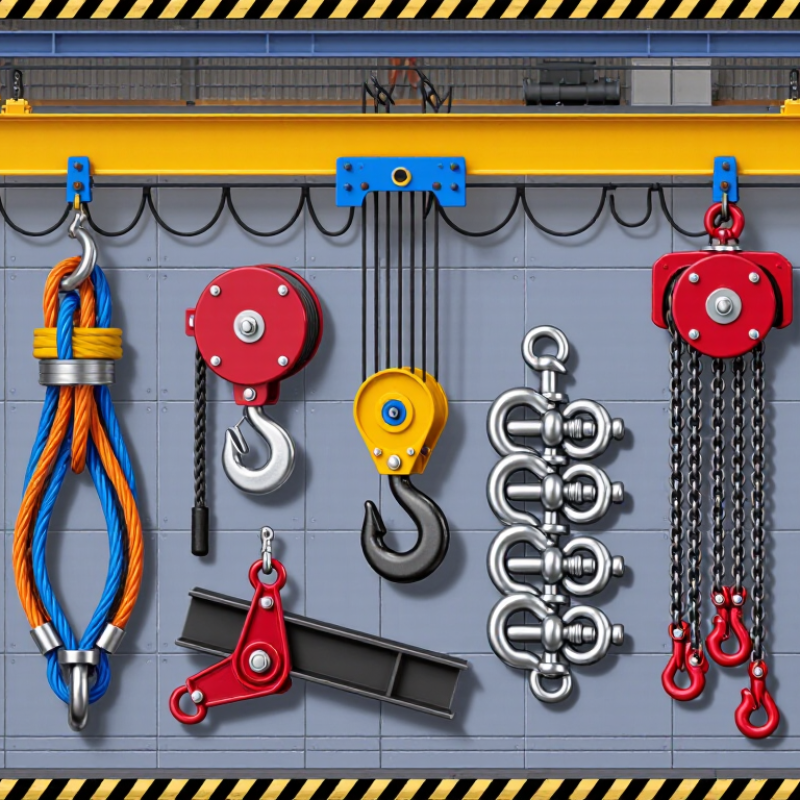
Industrial rigging equipment transfers heavy loads safely between lifting points, vehicles, and work areas. Its purpose is simple: control force, balance, and movement. The main components include wire-rope slings, chain slings, synthetic web slings, round slings, shackles, hooks, lifting beams, spreader beams, hoists, and winches. Each item has a rated capacity, connection method, and inspection requirement. A hook carries the load. A shackle joins components. A beam distributes pressure across wider loads.
Applications differ by load shape and working environment. Shipyards often use spreader beams for long steel sections. Warehouses rely on hoists and web slings for machinery placement. Construction crews may combine shackles, chain slings, and lifting beams when loads have uneven centers of gravity. The U.S. Bureau of Labor Statistics reported 1,069 fatal injuries in transportation and material-moving occupations during 2023. That figure reinforces the need for controlled lifting practices, not improvised connections.
Standards such as OSHA 29 CFR 1910.184 and ASME B30.9 emphasize identification, inspection, and removal of damaged slings. The International Labour Organization estimated 2.93 million work-related deaths annually in its 2023 global report. Ratings alone cannot prevent failure. Operators must check abrasion, cuts, bent hooks, stretched links, and distorted fittings before use. A clean tag is not enough. Human judgment still matters, and it can be inconsistent. Load angles are frequently underestimated. Better training, clearer lift plans, and honest pre-use inspections reduce that weakness.

Wire Rope Slings and Chain Slings for Heavy Load Handling
Wire rope slings and chain slings are essential for controlled heavy-load handling.
Each type has a distinct working behavior. Wire rope slings are flexible, relatively light, and suitable for many lifting configurations. Chain slings tolerate abrasion, heat, and repeated handling better in demanding environments. Small details matter. The sling’s working load limit must match the load, hitch type, and lifting angle. Never guess the load.
Before use, a qualified worker should inspect the sling, identification tag, fittings, and connection points. Look for broken wires, crushed sections, corrosion, stretched links, bent hooks, or damaged safety latches. A clean appearance does not prove safe condition. This step is often rushed, especially during busy shifts. That is a mistake worth correcting. Remove questionable equipment from service and record the inspection decision clearly.
Load control also depends on edge protection and balanced rigging. Sharp corners can cut wire rope or damage chain links, even when the sling looks strong. Keep personnel away from suspended loads and avoid sudden starts, side pulls, or shock loading.
Angles change everything.
A wider sling angle increases tension in each leg, so the rated capacity must be checked carefully. Practical training, manufacturer data, and applicable lifting standards should guide every selection. Improvisation has no place in heavy lifting.
Synthetic Slings, Shackles, and Hoists for Versatile Lifting
Industrial rigging depends on choosing the right equipment for each lifting condition. Synthetic slings are lightweight, flexible, and gentle on painted or polished surfaces. They work well around uneven loads, but sharp edges can cut the webbing quickly. Use edge protection whenever contact points feel rough.
Shackles connect slings, hooks, and lifting points with dependable strength. Their rated capacity must match the load and the lifting angle. Never replace a proper shackle pin with a bolt or improvised hardware. Hoists provide controlled vertical movement in workshops, warehouses, and installation areas. Before operation, inspect the chain, wire rope, hooks, brake, and control system. Small defects can become serious under load. Not every lift goes as planned.
Tips: Confirm the load weight before selecting equipment. Keep people outside the suspended-load area. Check sling stitching, abrasion, deformation, and chemical damage. Lift slowly first, then pause and observe balance. A test lift of only a few inches can reveal shifting or poor alignment. Weather, temperature, and limited visibility also deserve attention. Equipment ratings are not suggestions. They require careful interpretation by trained personnel. When uncertain, stop and ask a qualified lifting professional to review the plan.
Cranes, Spreader Beams, and Lifting Clamps in Industrial Work
Top 10 Types of Industrial Rigging Equipment
Cranes, spreader beams, and lifting clamps handle very different lifting problems. A crane provides controlled vertical movement across a work area. Its rated capacity, travel path, and load chart must match the planned lift.
A spreader beam supports long or flexible loads and reduces inward force on lifting points. This helps protect pipes, panels, and structural sections from bending. Lifting clamps grip steel plates, beams, or rails without requiring a hole. They need the correct jaw type, plate thickness, and working angle.
The other common equipment types include wire rope slings, chain slings, synthetic slings, shackles, hoists, winches, turnbuckles, and load cells. Each item has a working load limit, inspection requirement, and suitable application.
Never judge capacity by appearance. A clean sling may still contain hidden damage. Rust, stretched links, bent pins, sharp edges, and slipping clamps deserve immediate attention.
Before lifting, crews should confirm the load weight, center of gravity, attachment points, and communication method.
I have learned that small details create the largest risks. A beam can look balanced while shifting several centimeters during tensioning. A rushed clamp check is worse than a delayed lift.
Sometimes the plan needs revision after the first low-height test. That is not failure; it is useful evidence. Experienced operators still review assumptions, because real loads rarely behave exactly like drawings.
Equipment Selection, Inspection, and Safe Rigging Practices
Top 10 Types of Industrial Rigging Equipment
Selecting rigging equipment starts with the load, not the catalog. Common choices include wire rope slings, chain slings, web slings, round slings, shackles, hooks, eye bolts, hoists, lifting beams, and clamps. Confirm the load weight, center of gravity, lifting points, and required sling angle. A small angle can increase leg tension sharply. Never treat working load limit as breaking strength.
Inspection must happen before every lift. Look for broken wires, stretched links, cuts, chemical damage, bent hooks, missing latches, and unreadable tags. Run a gloved hand along a sling carefully. Hidden damage may not show from a distance. Remove defective equipment from service and report it clearly. Do not “use it just once more.” That shortcut has caused too many preventable failures.
Safe rigging depends on trained judgment and disciplined communication. Use a qualified person to verify the lift plan, equipment compatibility, and ground conditions. Keep hands away from pinch points. Establish an exclusion zone below suspended loads. Test the lift a few inches first, then stop and check balance. A clean sling can still be unsafe. I have learned that checklists help, but they cannot replace attention. Workers may miss an unusual load shape or a damaged lifting point when production pressure rises. Recheck the plan when conditions change.
Article Source:
NORTH EASTON MACHINE • 218 Elm Street • North Easton, MA 02356 • 508-238-6219