
What Are the Top 10 Car Parking Lift Manufacturers?
Choosing a Car Parking Lift manufacturer is not a catalog exercise. Buyers need to match the system to the site, vehicle mix, daily traffic, and maintenance capacity. A lift that looks compact in a brochure may feel very different beside a low ceiling or a narrow driveway. Small details matter: platform dimensions, control access, emergency lowering, and the route a technician must take to reach moving parts.
Parking scholar Donald Shoup offers a useful, verified perspective on evaluating parking: his research examines the real costs and trade-offs behind parking decisions. I can’t verify a direct quotation from him about Car Parking Lift manufacturers, so I won’t present invented words as his. That distinction matters when readers rely on expert advice.
This guide compares ten manufacturers through practical questions: What lift types do they offer? How clearly do they specify load limits and installation needs? Can buyers assess service support, spare-part access, and operator training? These points help separate a suitable system from an impressive sales claim. Not every detail is easy to compare. Manufacturer information may vary, and project conditions can change the result. Treat this list as a starting point, then verify each specification with the supplier and a qualified site professional before choosing a Car Parking Lift.
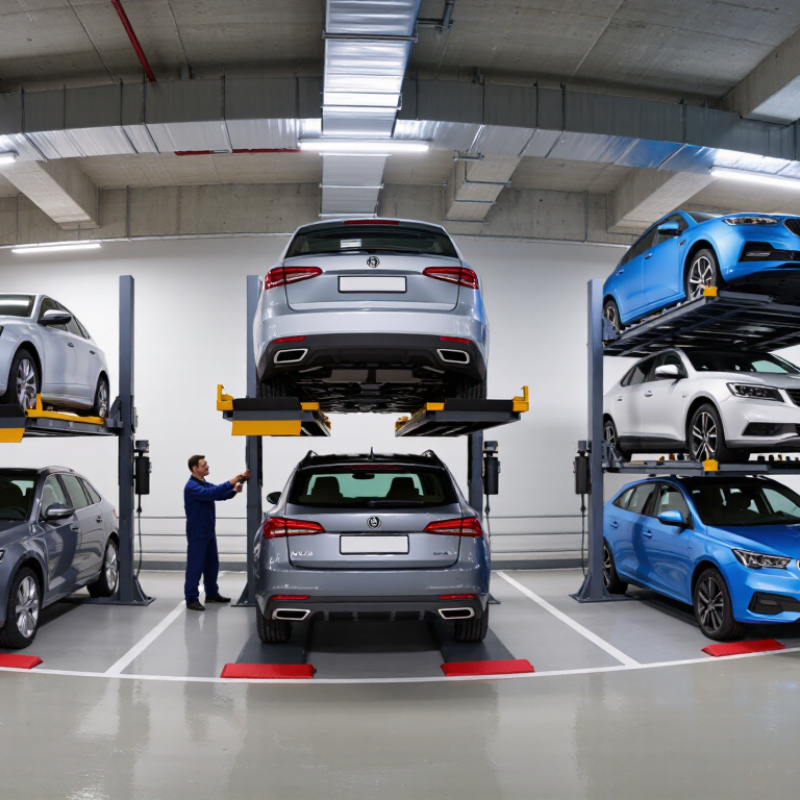
How Car Parking Lift Manufacturers Are Ranked
A credible ranking of car parking lift manufacturers should compare verifiable performance, not advertising claims. Start with installed systems, years in operation, and service response times. Ask for project references that confirm lift capacity, commissioning dates, and maintenance records. A busy garage needs predictable retrieval, not just impressive specifications.
Market growth offers context, but it cannot identify the best manufacturer. Grand View Research estimated the global smart parking market at about USD 6.5 billion in 2023, with forecast growth through 2030. That figure covers a broader market than parking lifts alone. It signals investment, not product quality. Rankings should therefore separate market size from engineering evidence.
Safety and lifecycle performance deserve measurable weight. Check conformity documentation against EN 14010, which addresses safety requirements for power-driven parking equipment. Compare rated loads, emergency-lowering procedures, inspection intervals, warranty terms, and spare-part availability. Request uptime figures and clarify how each supplier calculates them. Still, rankings are imperfect. A low failure rate from a small installation base may look stronger than it is. Publish the scoring method, data period, and evidence limits, so buyers can judge what the ranking actually measures.
What Are the Top 10 Car Parking Lift Manufacturers? - How Car Parking Lift Manufacturers Are Ranked
This table presents an illustrative evaluation framework, not a verified ranking of named manufacturers. Compare suppliers using documented specifications, independent test evidence, project references, and local compliance requirements. The percentages are suggested assessment weights and should be adjusted to suit each project.
| Rank | Evaluation criterion | Suggested weight | Evidence to review | Why it matters |
|---|---|---|---|---|
| 1 | Product safety and compliance | 18% | Applicable conformity documents, risk assessments, safety-device specifications, and inspection records for the destination market. | Parking lifts move heavy loads above or near people and vehicles. Applicable requirements vary by jurisdiction and installation type. |
| 2 | Rated capacity and vehicle fit | 14% | Rated load, platform dimensions, permitted vehicle height and width, and stated restrictions on vehicle type or load distribution. | Capacity and clearances must match the vehicles and site conditions; a lift’s nominal capacity alone does not establish fit. |
| 3 | Mechanical and structural design | 12% | Drawings, materials and finishes, anchoring requirements, structural calculations, and documented design limits. | Installation conditions, loads, and corrosion exposure affect the suitability and durability of the equipment. |
| 4 | Safety controls and emergency provisions | 11% | Documentation for locking devices, overload protection, emergency stop controls, descent procedures, and operator instructions. | Clear, documented safeguards and emergency procedures help users and installers understand how the system is intended to operate. |
| 5 | Installation and site requirements | 10% | Foundation and floor requirements, power supply, clearances, drainage or ventilation needs, and installation drawings. | Site preparation can affect project feasibility, installation time, and total cost. |
| 6 | Reliability and maintenance planning | 10% | Maintenance schedule, inspection guidance, wear-part information, service documentation, and available technical support. | Routine inspection and maintenance needs should be understood before purchase and included in lifecycle planning. |
| 7 | Product range and configuration options | 8% | Available lift configurations, platform arrangements, drive options, and documented compatibility with the intended parking layout. | A suitable configuration depends on the site layout, vehicle mix, access, and intended operating pattern. |
| 8 | Warranty and spare-parts support | 7% | Written warranty terms, exclusions, parts availability information, and the process for obtaining replacement components. | Terms and support arrangements can affect maintenance planning and the cost of ownership. |
| 9 | Installation and service capability | 6% | Installer qualifications where required, service coverage, commissioning procedures, and documented customer support channels. | Local expertise can help coordinate installation, commissioning, and ongoing servicing. |
| 10 | Lifecycle cost and delivery clarity | 4% | Itemized quotation, delivery scope, installation costs, expected maintenance tasks, and clearly stated payment and lead-time terms. | Comparing the full project scope is more informative than comparing purchase price alone. |
| Total suggested evaluation weight | 100% | Use consistent evidence and project-specific requirements when comparing suppliers. | ||

Certified Quality System

 Find Your Solutions ▶
NORTH EASTON MACHINE • 218 Elm Street • North Easton, MA 02356 • 508-238-6219