
Essential Tips for Using a Car Engine Stand Effectively?
Working on a car engine can be challenging. A car engine stand is essential for maximizing efficiency and safety. This tool allows you to securely mount an engine, providing better access to components. However, many users overlook its critical features and potential issues.
Choosing the right car engine stand is vital for your project. Ensure it can support the weight of your engine. A stand that tilts and swivels can improve your workflow significantly. Yet, some people forget to check weight limits, leading to accidents. If the stand tips over, it can damage both the engine and the vehicle.
Proper assembly and maintenance are crucial for an effective car engine stand experience. Follow the manufacturer’s instructions carefully. Inspecting bolts and fittings regularly helps prevent failures. Many users neglect this step, resulting in unnecessary frustrations. Taking a few minutes for regular checks can save hours of work later.
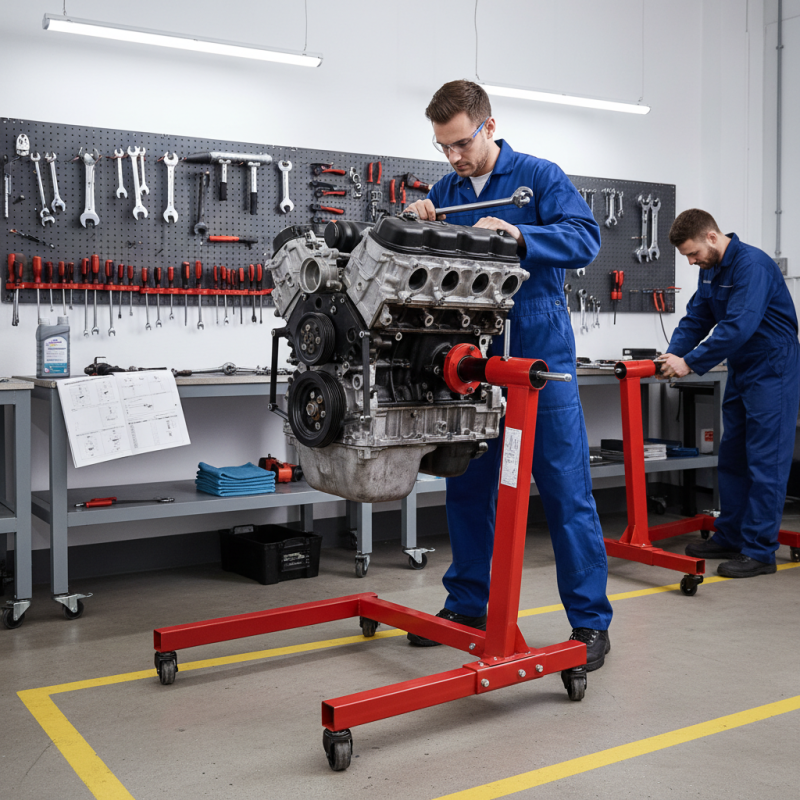
Understanding Car Engine Stands: Purpose and Types
When discussing car engine stands, it's crucial to understand their purpose and types. Engine stands provide support for engines, allowing mechanics to work on them comfortably. They come in various designs, including fixed and adjustable types. Fixed stands are stable but lack versatility. Adjustable stands offer flexibility, catering to different engine sizes.
According to industry reports, about 60% of automotive professionals prefer adjustable stands for their convenience. These stands can typically support weights ranging from 1,000 to 2,500 pounds. This flexibility allows users to work efficiently. However, if used improperly, issues may arise. For instance, a poorly secured engine can result in accidents. It’s vital to check the locking mechanisms before starting work.
Many users overlook these details in their rush. Neglecting to inspect the stand's stability can lead to significant issues. An unsteady engine stand can create unsafe conditions, leading to injuries or damage. Awareness of the stand’s capacity is also essential. Each stand has its limitations, which should not be ignored. Proper usage can prevent costly mistakes and promote safer working environments.

Choosing the Right Engine Stand for Your Vehicle
Choosing the right engine stand is crucial for safe and effective engine work. Consider the weight of your engine. Some stands can only hold light engines. Verify the weight limit before making a choice. A stand that is too weak can lead to accidents. Look for a model that provides stability and support.
Mobility is another key factor. A swivel base can help you position the engine easily. Think about your workspace. Limited space may require a compact stand that can fit in tight spots. Check if the stand has wheels. This feature allows for easier transport.
Finally, think about adjustability. Some stands offer multiple height settings. This can be useful depending on your workspace. Ensure that the stand aligns with your engine's mounting points. Misalignment can cause frustration. Take your time to make the right choice. A well-suited stand enhances safety and efficiency.
Setting Up Your Engine Stand: A Step-by-Step Guide
Setting up your engine stand correctly is crucial. Begin by selecting a stable, level surface. Ensure that the stand is suitable for the engine’s weight. Next, gather your tools: a socket set, wrenches, and safety goggles. With these, you will be well-prepared.
Position the engine on the stand carefully. Use the correct mounting bolts to secure it. Be cautious when lifting the engine; it can be heavy and awkward. Ensure everything is snug but not over-tightened. Checking the alignment is essential. Misalignment can lead to problems down the road.
If the stand feels unstable, reassess your setup. It's better to take a moment than to risk an accident. Ask for help if needed. Working alone can lead to mistakes. Remember, practice makes perfect. Sometimes, the first setup won't go as planned. Don't let that discourage you. Learn from any missteps for future projects.
Best Practices for Mounting and Dismounting an Engine
Mounting and dismounting an engine onto a stand requires precision and care. According to industry standards, improper techniques can lead to accidents or equipment damage. A staggering 30% of accidents in workshops stem from poor handling practices. Ensuring a firm grip on the engine is crucial. Use a high-quality hoist that can support the engine's weight. Most engines weigh between 300 to 600 pounds. Verify the weight ratio for safety.
When hoisting an engine, take a moment to assess the area. Clear clutter, ensuring there’s enough space. A safe zone prevents mishaps. Always have a partner nearby; two sets of hands reduce mistakes. Utilize engine stands with adjustable arms. These allow you to balance the engine securely. Consider the center of gravity; an imbalanced engine can topple over. This can happen even with experienced mechanics.
Dismounting needs equal attention. Lower the engine steadily. Avoid sudden movements. A sudden drop can damage not only the engine but also the stand. Use protective gear as flying bolts or loose parts can be hazardous. Remember, a little caution can prevent considerable trouble. It’s essential to reflect on each step. Continuous improvement leads to safer practices.
Safety Precautions When Using Car Engine Stands
When using a car engine stand, safety should always be a priority. Ensure the stand is on a flat, stable surface. An uneven surface can lead to accidents. Always check the weight capacity of the stand before placing the engine on it. Overloading can cause the stand to fail.
Wearing the right safety gear is essential. Use gloves to enhance grip and prevent cuts. Safety goggles protect your eyes from debris. You might be careful, but accidents can happen quickly. Inspect the engine stand for damages before each use. A cracked or bent stand can compromise safety.
Avoid distractions while using the engine stand. Focus fully on your task. Set aside your phone and eliminate noise. Little mistakes can lead to serious injuries. Lastly, keep your workspace tidy. A cluttered area increases the risk of accidents. Always remember, preparation is key to a safer experience.
Essential Tips for Using a Car Engine Stand Effectively - Safety Precautions When Using Car Engine Stands
| Tip | Description | Safety Precaution |
|---|---|---|
| Check Stability | Ensure the engine is properly seated and balanced on the stand to prevent tipping. | Always confirm that the engine is secure before working on it. |
| Use Proper Tools | Utilize appropriate tools designed for engine handling to ensure a safe operation. | Avoid makeshift tools that could lead to accidents. |
| Wear Safety Gear | Always wear gloves and safety glasses while working with an engine stand. | Use safety gear to protect against sudden movements and debris. |
| Avoid Overloading | Know the weight capacity of your engine stand and do not exceed it. | Exceeding the capacity can lead to structural failure of the stand. |
| Regular Inspection | Inspect the engine stand for wear and damage before use. | Do not use damaged equipment to ensure safe operation. |
Article Source:
NORTH EASTON MACHINE • 218 Elm Street • North Easton, MA 02356 • 508-238-6219