What is Shell Mold Casting Parts and Their Advantages?
In the world of manufacturing, Shell Mold Casting Parts have gained attention for their unique advantages. Industry expert Dr. Alice Chen states, "The precision and durability of shell mold casting are unmatched." This method uses a thin-shell process, allowing for intricate designs and tight tolerances.
However, while shell mold casting offers many benefits, it is not without its challenges. The setup time can be longer compared to other casting methods. Additionally, the cost of materials may deter some manufacturers. Despite these considerations, many continue to embrace Shell Mold Casting Parts for their remarkable performance in diverse applications.
This casting technique is particularly beneficial in industries requiring complex geometries. Automotive parts often utilize shell mold casting for its ability to produce lightweight yet strong components. As the market evolves, understanding both the merits and limitations of Shell Mold Casting Parts remains crucial for industry players.
Definition of Shell Mold Casting and Its Process
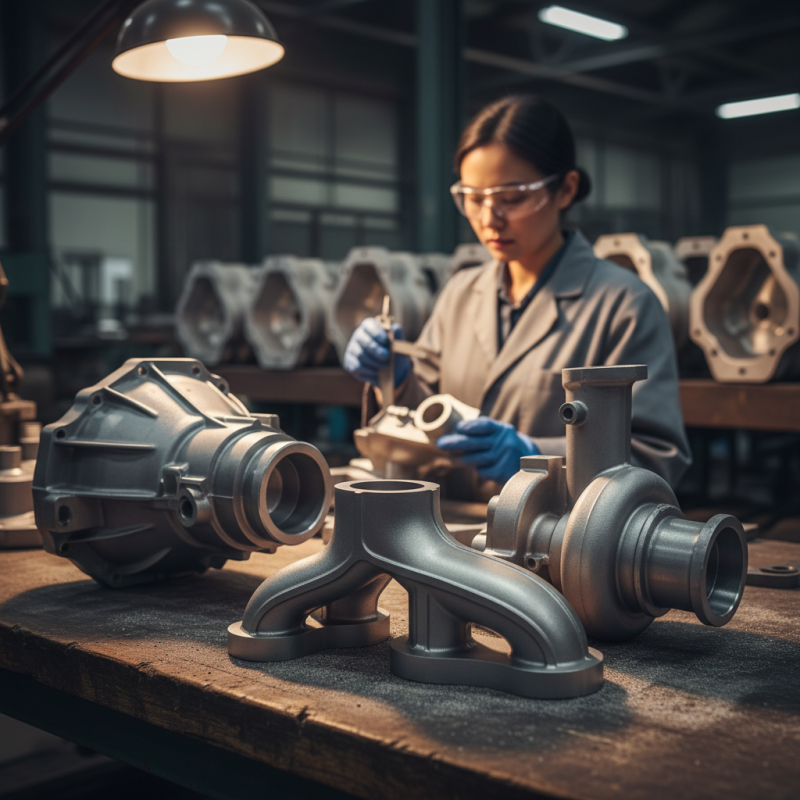
Shell mold casting is a precision manufacturing method that utilizes a shell of sand and resin to form intricate metal parts. The process begins with creating a pattern, typically made from metal, which is heated. After heating, a mixture of sand and thermosetting resin is pressed onto the pattern, forming a shell. This shell is then cured, removed from the pattern, and assembled for pouring molten metal.
This method offers several advantages, including high dimensional accuracy and excellent surface finish. The resulting parts often require minimal machining, saving time and resources. Shell mold casting can handle complex designs, making it ideal for various applications, including automotive and aerospace components.
Tips: Proper temperature control is vital. Too high can warp molds; too low can affect the finish. Always evaluate if your design truly benefits from shell mold casting, as not all shapes require this technique. This reflection can save materials and costs.
Key Materials Used in Shell Mold Casting
Shell mold casting is a precise process, but the materials used are crucial for its success. The primary material is high-quality sand. This sand is mixed with a thermosetting resin to form a mold. The mixture creates a shell that is durable and can capture intricate details. Silica sand is popular for its heat resistance. Its fine grains allow for smooth surfaces and sharp edges in the final product.
Another important material is the binder. Resins are often chosen for their excellent bonding properties. They ensure that the mold maintains its shape during the casting process. Additives can enhance these properties. These might include catalysts that help accelerate the hardening process. Proper selection of these materials impacts the quality of the castings significantly.
Metal alloys are also key components. These provide strength and corrosion resistance to finished products. Commonly used alloys include aluminum and steel. Each alloy has unique properties that could suit different applications. Certain combinations might not be ideal, leading to defects. Thus, careful consideration is necessary in selecting materials for shell mold casting to ensure optimal performance.
Advantages of Shell Mold Casting Parts
Shell mold casting offers several notable advantages that make it a preferred choice in manufacturing. This process utilizes a fine sand mixture and a resin binder, resulting in high precision molds. The molds can withstand high temperatures and can produce intricate shapes with excellent surface finish. This level of detail minimizes the need for extensive machining, saving both time and costs.
One major benefit of shell mold casting is its efficiency. The process allows for quick production cycles, which can significantly boost output. Additionally, the material use is optimized; less wastage occurs compared to other casting methods. However, it may have limitations in terms of the complexity of the parts that can be produced. Some designs may still require adjustments or simplifications.
Another advantage lies in the durability of the castings. Parts created through this method often exhibit superior mechanical properties. They can endure harsh environments, making them suitable for various applications. Yet, there may be challenges in achieving uniform thickness across larger components. This variability can affect performance, which deserves careful consideration during the design phase.
Advantages of Shell Mold Casting Parts
The bar chart above illustrates the key advantages of shell mold casting parts, highlighting their strengths in areas such as dimensional accuracy, surface finish, production speed, material variety, and cost efficiency. Each dimension reflects the potential percentage benefits of using shell mold casting in manufacturing processes.
Applications and Industries Utilizing Shell Mold Casting
Shell mold casting has found wide applications across various industries due to its unique benefits. This casting process utilizes a thin shell made of sand and resin, offering exceptional precision and surface finish. Industries such as aerospace, automotive, and medical rely on this technology. According to a recent report by the Market Research Future, the global shell mold casting market is expected to grow at a CAGR of 5.1% from 2022 to 2030. This growth is driven by the increasing demand for lightweight and durable components in these sectors.
In the aerospace industry, shell mold casting is critical for producing complex parts like turbine housings and engine brackets. These components require high strength and precise dimensions. The automotive sector benefits similarly. Components such as engine blocks and transmission cases are produced using shell mold casting, minimizing machining costs. Notably, the average production time for shell mold casting is about 15% faster than traditional sand casting processes.
Despite its advantages, companies must address some challenges. The initial tooling costs for shell molds can be high. Additionally, not all designs are suitable for this process. Continuous improvement in casting technologies is crucial. Industries must also be aware of the environmental impacts of resin use. Keeping these factors in mind will help companies optimize their casting strategies while maintaining sustainability.
Comparison with Other Casting Methods
Shell mold casting offers a unique method for producing high-precision parts. This process involves creating molds from fine sand mixed with resin. The molds are durable and can produce complex shapes. Compared to traditional sand casting, shell mold casting reduces the likelihood of defects, such as air pockets. This improves the overall quality of the finished products.
When compared to investment casting, shell mold casting shines in cost-effectiveness. It requires less time to produce the molds and allows for faster production rates. However, it might not achieve the same level of fine detail as investment casting. A notable drawback is the limited size of parts that can be produced. Large components might require different casting techniques.
In terms of flexibility, shell mold casting provides a good balance. It can handle various material types, including aluminum and iron. However, it may not be suitable for all applications, especially those needing high-volume production. Understanding these nuances helps manufacturers choose the right casting method for their specific needs.
What is Shell Mold Casting Parts and Their Advantages? - Comparison with Other Casting Methods
| Casting Method | Typical Applications | Advantages | Disadvantages |
| Shell Mold Casting | Automotive Parts, Precision Components | High Dimensional Accuracy, Smooth Surface Finish | Higher Cost, Limited to Smaller Parts |
| Sand Casting | Large Industrial Components, Art Castings | Low Cost, Versatile for Large Parts | Lower Surface Finish, Less Dimensionally Accurate |
| Die Casting | Electrical Housings, Automotive Parts | High Production Rates, Excellent Surface Finish | Higher Initial Tooling Costs, Limited to Non-ferrous Metals |
| Investment Casting | Aerospace Parts, Jewelry | Excellent Precision, Ability to Cast Complex Shapes | Expensive Process, Longer Lead Times |



 Find Your Solutions ▶