
What Does RCCB Mean and How Does It Work?

Rccb Meaning refers to the purpose of a Residual Current Circuit Breaker, often called an RCCB. This protective device monitors electrical current flowing through a circuit. Under normal conditions, current leaving through the live wire should closely match current returning through the neutral wire. The RCCB compares these values continuously. If some current escapes through an unintended path, such as a damaged cable or a person, the balance changes. The device can then disconnect the circuit.

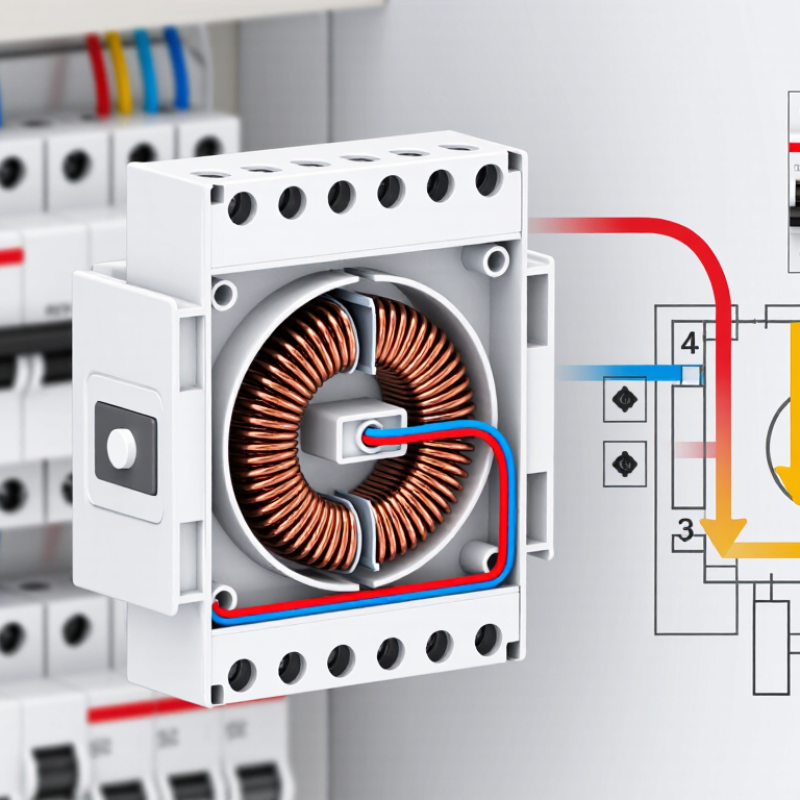
The mechanism is compact. Inside, a sensing transformer detects the difference between the live and neutral currents. If that difference reaches the device’s rated operating level, a trip mechanism opens its contacts. The supply stops. This rapid response can reduce the risk of serious electric shock and may help limit some electrical fire hazards. It cannot remove every danger, though. No device is perfect.

An RCCB generally does not provide protection against overloads or short circuits. Those faults usually require a correctly selected circuit breaker or fuse, unless protection is combined in an RCBO. That distinction matters when reading a panel label or choosing equipment. Ratings, wiring, and local installation requirements all affect safe operation. A tripping RCCB may signal leakage, a faulty appliance, or another wiring problem; repeatedly resetting it without finding the cause is unwise. A qualified electrician can test the circuit and confirm the device is suitable. The label can be confusing, and checking it carefully is worthwhile.
What Does RCCB Mean and How Does It Work?

What RCCB Means and Its Role in Electrical Safety

An RCCB, or residual current circuit breaker, monitors the electricity flowing through a circuit’s live and neutral wires. Under normal conditions, those currents are nearly equal. If some current escapes—perhaps through damaged insulation or a person touching a faulty appliance—the balance changes. The RCCB detects that difference and switches off the circuit.

It acts quickly. That matters. For example, a worn kettle cord in a damp kitchen could allow current to leak toward an earthed surface. An RCCB may disconnect the supply before the fault continues, reducing the risk of severe electric shock or electrical fire. It does not make contact with live parts safe, and it cannot guarantee injury prevention.

An RCCB has an important limit: a standard unit does not usually protect against overloads or short circuits. A separate overcurrent device, or a combined protective device, may be needed for those faults. The right arrangement depends on the circuit and installation. No setup is perfect; aging cables, loose connections, and incorrect wiring can still create hazards. A test button helps check the mechanism, but it does not replace proper inspection. If an RCCB trips repeatedly, avoid resetting it again and again. Have a qualified electrician investigate the cause.

The Main Components of an RCCB

The Main Components of an RCCB

An RCCB contains a toroidal current transformer, switching contacts, a trip mechanism, and a test circuit. Live and neutral conductors pass through the transformer’s core. When their currents differ, the core detects an imbalance and signals the trip mechanism. The contacts then open, interrupting the circuit. A test button and resistor create a small imbalance to check operation. Simple parts, precise timing.

IEC 61008-1 covers RCCBs without built-in overcurrent protection. This distinction matters: an RCCB detects earth-leakage current, but it does not replace a circuit breaker for overloads or short circuits. A 30 mA rated residual operating current is commonly used for additional personal protection, though the correct selection depends on the installation. NFPA’s Home Electrical Fires report estimated 46,700 U.S. home structure fires annually from electrical failure or malfunction during 2015–2019. An RCCB can help address some leakage hazards, but it cannot prevent every electrical fire.

Tips: Check the test button at the interval stated by the manufacturer, and have a qualified electrician investigate a device that fails to trip. The small button matters. A successful test does not prove every part of the installation is safe.

What Does RCCB Mean and How Does It Work?

An RCCB (Residual Current Circuit Breaker) detects a difference between the current flowing through the line and neutral conductors and disconnects the circuit when residual current reaches its rated operating level.

How to read the chart: These illustrative test points are for a 30 mA rated RCCB. Under standard test conditions, it must not trip at 15 mA (0.5 × IΔn) and must trip at its rated residual operating current, 30 mA.

Main components: A toroidal core surrounds the line and neutral conductors; a sensing coil detects an imbalance; the trip mechanism opens the contacts; and the test button and resistor create a test imbalance.

How an RCCB Detects Residual Current

An RCCB monitors the current flowing through the live and neutral conductors. Both pass through a sensing core inside the device. In a healthy circuit, the currents are nearly equal, so their magnetic effects cancel. The core detects little or no imbalance.

A leak changes that balance. For example, if current escapes through damaged insulation and reaches an earthed metal casing, less current returns through neutral. The sensing core registers the difference and produces a signal. That signal releases the trip mechanism, opening the contacts and disconnecting the circuit. It can happen quickly. That difference matters.

Detection depends on the type of residual current and the device’s design. An RCCB does not usually protect against overloads or short circuits, so suitable overcurrent protection is also needed. Real installations can be messy: long cables, connected equipment, and accumulated leakage may affect operation. A qualified electrician can select and test the correct device for the circuit. The test button checks the tripping mechanism, but it does not replace proper inspection or instrument testing. Even a small fault deserves attention.

What Does RCCB Mean and How Does It Work? - How an RCCB Detects Residual Current

Topic How It Works or What It Means Practical Detail
Meaning of RCCB RCCB stands for Residual Current Circuit Breaker. It disconnects a circuit when it detects a residual current above its specified operating threshold. It is designed to reduce the risk of electric shock and, in suitable applications, help limit fire risk from earth-leakage currents.
Current comparison In a typical single-phase circuit, the live and neutral conductors pass through a common sensing core. Under normal conditions, their currents are equal and opposite. The magnetic effects cancel when the current leaving through live returns through neutral.
Residual current detection If some current flows to earth or through another unintended path, the live and neutral currents no longer balance. The resulting difference is called residual current. An RCCB detects the imbalance; it does not need to measure current flowing in the protective earth conductor.
Sensing and tripping The imbalance produces a signal in the sensing transformer. If it reaches the device’s operating level, the trip mechanism opens the circuit contacts. The supply is disconnected to reduce the duration of exposure to a dangerous fault current.
Rated residual operating current The rated residual operating current, commonly marked IΔn, is the residual-current value associated with the device’s specified operation. For example, 30 mA devices are commonly used for additional protection in many installations. Selection and use depend on local electrical rules and the circuit.
Protection limits A standard RCCB detects residual current but generally does not provide overload or short-circuit protection. It is commonly used with a correctly rated fuse or circuit breaker, or as part of a combined protective device.
RCCB types Type AC detects sinusoidal alternating residual currents; Type A also detects pulsating direct residual currents. Types F and B are intended for additional residual-current waveforms, according to their specifications. The appropriate type depends on the connected equipment and installation requirements. Check the device markings and applicable regulations.
Test button The test button usually creates an internal imbalance so the trip function can be checked. Use the test button at the intervals and in the manner stated by the manufacturer or local guidance. It does not replace inspection or electrical testing.
After a trip A trip indicates that the RCCB detected a condition requiring disconnection, but it does not by itself identify the fault’s cause. Unplug or isolate suspected equipment if safe to do so. If the device trips repeatedly, have the circuit checked by a qualified electrician.

How an RCCB Trips to Interrupt a Circuit

An RCCB trips when the current leaving through the live conductor does not match the current returning through neutral. In normal operation, these currents balance. A small sensing core inside the device monitors them continuously. If some current escapes through an unintended path, such as a damp appliance casing, the balance shifts.

The difference creates a signal that releases the RCCB’s trip mechanism. A latch lets go, and spring-loaded contacts separate inside the unit. A sharp click. The open contacts interrupt the circuit, often within a fraction of a second. The exact response depends on the device and the fault conditions.

The important detail is that the RCCB responds to current imbalance, not simply to a circuit drawing too much current. A separate protective device may be needed for overload or short-circuit protection. It is easy to picture the RCCB as sensing danger directly, but it actually reacts to an electrical difference. The test button creates a small artificial imbalance to check that the mechanism can trip. Pressing it periodically is useful, though the button cannot confirm every part of the installation is safe.

Common Uses and Limitations of RCCBs

An RCCB, or residual current circuit breaker, is commonly used to reduce the risk of electric shock and electrical fires caused by leakage current. It compares the current flowing through the live and neutral wires. If some current escapes, perhaps through damaged insulation or a damp appliance, the device can disconnect the circuit. That distinction matters.

RCCBs are often installed on circuits serving bathrooms, kitchens, garages, and outdoor sockets, where moisture or damaged cables can raise the risk. In a real installation, correct sensitivity and wiring matter; an incorrectly connected device may not provide the intended protection. An RCCB alone does not protect against overloads or short circuits. Those faults need a suitable fuse or circuit breaker, or a combined protective device. Not a cure-all.

It may also trip unexpectedly when several appliances have small leakage currents, which can interrupt power and make fault-finding frustrating. And it cannot prevent every shock: contact between live and neutral may not create a detectable imbalance, while the outcome also depends on current and exposure time. The test button checks the mechanism, not the whole installation. Follow the device instructions and have a qualified electrician investigate repeated trips rather than simply resetting the switch.

Certified Quality System

© North Easton Machine Company, Inc. All rights reserved. • Site: Blog
NORTH EASTON MACHINE • 218 Elm Street • North Easton, MA 02356 • 508-238-6219