Why Are Position Sensors Essential in Modern Technology?
Position Sensors play a pivotal role in modern technology. They are vital for accurate measurement and control in various applications. From robotics to automotive systems, position sensors provide essential data for functionality.
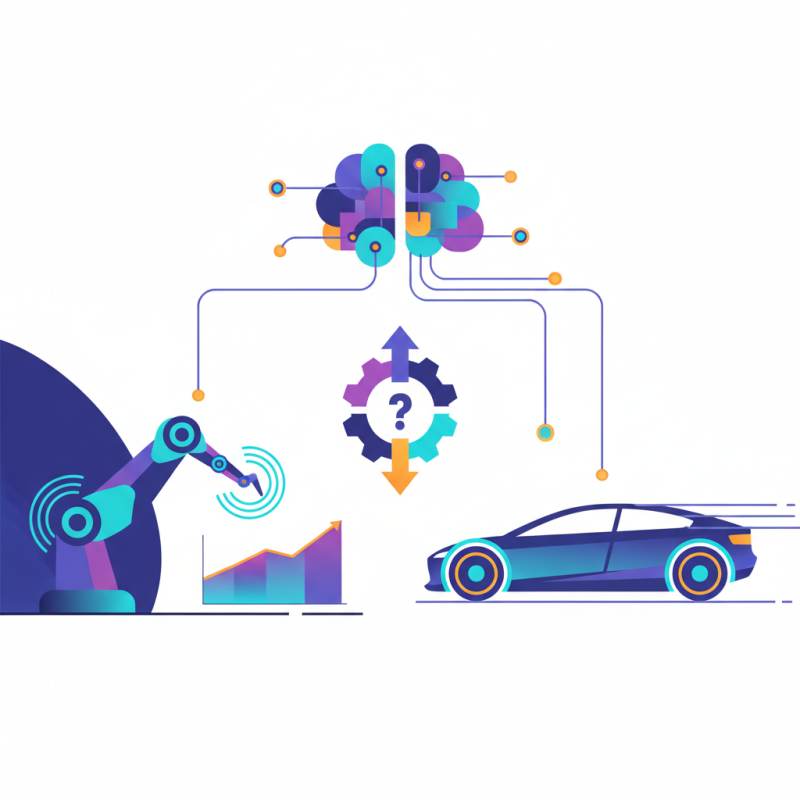
In robotics, position sensors enable precise movement and coordination. They allow robots to navigate complex environments, making tasks like assembly and surgery possible. However, issues with sensor calibration can lead to significant errors. This reality challenges engineers to innovate continually.
Automotive technology also relies heavily on position sensors. These sensors enhance safety features, such as anti-lock braking systems. Yet, with increasing reliance on automation, sensor failures could raise serious concerns. Thus, while position sensors are crucial, they present challenges that demand continuous improvement and reflection.
The Role of Position Sensors in Automation and Robotics
Position sensors play a crucial role in automation and robotics. These devices detect the position of objects and provide feedback to control systems. In factories, they guide robotic arms in assembling products. Imagine a robotic arm placing a glass bottle on a conveyor belt. A position sensor ensures it is correctly aligned to avoid breakage.
These sensors come in various forms. Some use magnetism, while others rely on light or mechanical systems. Each type has unique characteristics. However, not every application benefits from a specific sensor type. Sometimes, inaccuracies can occur, leading to production issues. Engineers must carefully select the right sensors for their tasks.
The integration of position sensors can be complex. Calibration is essential for accuracy. If sensors are misaligned, robots may misplace items. This can cause delays and increase costs. Continuous monitoring and adjustment are necessary. Hence, while position sensors are vital, they require ongoing attention to ensure optimal performance. Their impact on efficiency is significant, but reliance on them also invites challenges that need consideration.
Why Are Position Sensors Essential in Modern Technology? - The Role of Position Sensors in Automation and Robotics
| Sensor Type | Measurement Range | Accuracy | Application Area | Typical Use Cases |
| Linear Position Sensor | 0 - 1000 mm | ±0.1 mm | Industrial Automation | CNC Machines, Robotics |
| Rotary Position Sensor | 0 - 360° | ±0.5° | Automotive Industry | Steering Feedback, Throttle Control |
| Magnetic Position Sensor | 0 - 50 mm | ±1 mm | Consumer Electronics | Smartphones, Tablets |
| Optical Position Sensor | 0 - 100 mm | ±0.05 mm | Medical Devices | Surgical Equipment, Diagnostic Tools |
Key Industries Benefiting from Position Sensor Technology
Position sensors play a crucial role in several key industries today. In manufacturing, they enhance automation. These sensors help machines understand their exact positions, leading to precise movements and efficient operations. For instance, robotic arms rely on position sensors to perform tasks like assembly and packaging. Without this technology, errors would increase and productivity would suffer.
The automotive industry also benefits significantly. Position sensors ensure that components like throttle and brakes function correctly. They monitor the position of various parts, improving safety and performance. However, the reliance on sensors raises concerns. What if they fail? The consequences could be severe, leading to accidents or costly repairs.
In the aerospace sector, position sensors contribute to navigation systems. They provide vital data to pilots and auto-pilot systems. Yet, challenges remain in ensuring their accuracy under extreme conditions. The need for constant calibration and updates may be daunting. Still, the advantages of position sensors continue to overshadow potential drawbacks, driving innovation in these fields.
Types of Position Sensors and Their Applications in Modern Devices
Position sensors play a critical role in various modern devices. These sensors detect the position or displacement of an object, translating it into a readable format. There are several types of position sensors, including potentiometers, encoders, and inductive sensors. Each type has unique characteristics that cater to different applications. For instance, encoders are vital in robotics, providing precise feedback for movement control.
Consider an application in automation. In a manufacturing line, position sensors help maintain the correct alignment of parts. This ensures consistent production quality. Potentiometers often monitor the position of a robotic arm. Their simplicity makes them popular in many systems. Meanwhile, inductive sensors excel in detecting metallic objects without contact, which improves safety and efficiency.
However, reliance on these sensors can have drawbacks. They may fail under extreme conditions or heavy interference. This can disrupt operations and impact overall productivity. Each application requires careful consideration of sensor choice. Understanding the environment and specific needs is essential for optimal performance. By doing so, we can avoid potential pitfalls and enhance reliability in modern technology.
Market Trends and Growth Projections for Position Sensor Industry
The demand for position sensors has surged in recent years, driven by various technological advancements. Industries like automotive, aerospace, and robotics heavily rely on these sensors for precise measurement and control. As automation continues to grow, the need for accurate positioning becomes critical. Companies are investing more in sensor technology to enhance their products.
Market trends indicate a promising future for the position sensor industry. By 2025, the market is expected to reach unprecedented levels. Innovations in sensing technology are pivotal. Not only are sensors becoming more compact, but they are also improving in performance. However, manufacturers face challenges in keeping up with rapid developments. They must remain adaptable to stay relevant.
The integration of position sensors in IoT devices is noteworthy. More appliances are becoming interconnected. This shift requires robust sensing solutions to ensure reliability. Yet, some companies struggle with the complexity of these integrations. They need to rethink their strategies to maximize the technology's potential. Balancing innovation with practicality is essential for growth in this sector.
Challenges and Innovations in Position Sensor Development and Utilization
Position sensors are pivotal in various sectors, impacting automation, robotics, and IoT devices. However, challenges in their development persist. According to a recent industry report, the global market for position sensors is expected to grow significantly, reaching $3.2 billion by 2025. This growth indicates a demand for precise measurements in an increasingly automated world.
One challenge is sensor accuracy. Many traditional sensors struggle with calibration, leading to significant errors. Recent innovations include digital sensor technologies that enhance accuracy and response times. These advancements allow for real-time monitoring, crucial in robotics and automotive applications. Users must remain aware of the limitations of current technologies, as over-reliance can result in costly mistakes.
Tip: Regularly calibrate your sensors. This simple practice significantly improves their reliability and accuracy.
Another pressing issue is environmental adaptability. Many sensors falter in extreme conditions, such as high temperatures or humidity. The push for more robust sensors is ongoing, with new materials being explored. These innovations must be tested in real-world scenarios, not just controlled environments. A lack of field testing can lead to unforeseen failures, which can disrupt critical operations.
Tip: Test your sensors in the conditions they will operate. This ensures they meet performance expectations in diverse environments.



 Find Your Solutions ▶