
What Is Mild Steel Plate and What Is It Used For?
When people hear mild steel plate, they often imagine a flat, gray sheet of ordinary metal. In practice, it is a low-carbon steel product valued for its balance of strength, formability, weldability, and cost. It appears in construction frames, machine bases, storage tanks, brackets, platforms, and vehicle components.
Metallurgist and steel educator Dr. John D. Verhoeven writes, “Steel is an alloy of iron and carbon, with carbon content less than 2 percent.” That definition is useful, but incomplete. A Mild Steel Plate also depends on its thickness, grade, surface condition, manufacturing process, and delivery standard. A 10-millimeter plate may bend, cut, or weld differently from a thicker plate, even when both look identical in a warehouse.
Its applications are practical and visible. A fabricator may cut a plate with a plasma torch, drill bolt holes, then weld it into a support frame. Sparks fly. Edges become hot. Small decisions matter. Common references include ASTM A36 and EN 10025 S235JR, but these grades should not be treated as automatically interchangeable. Buyers must check certificates, dimensions, mechanical properties, and project requirements.
Engineers usually review yield strength, tensile strength, elongation, weldability, and impact toughness. Corrosion protection matters too. Paint, galvanizing, or controlled storage can extend service life, but no coating repairs poor material selection. The label “mild” can mislead. It does not mean weak, universal, or maintenance-free. Real experience shows that a suitable plate must match its environment, load, fabrication method, and expected service life. That is where careful specification becomes more important than appearance.
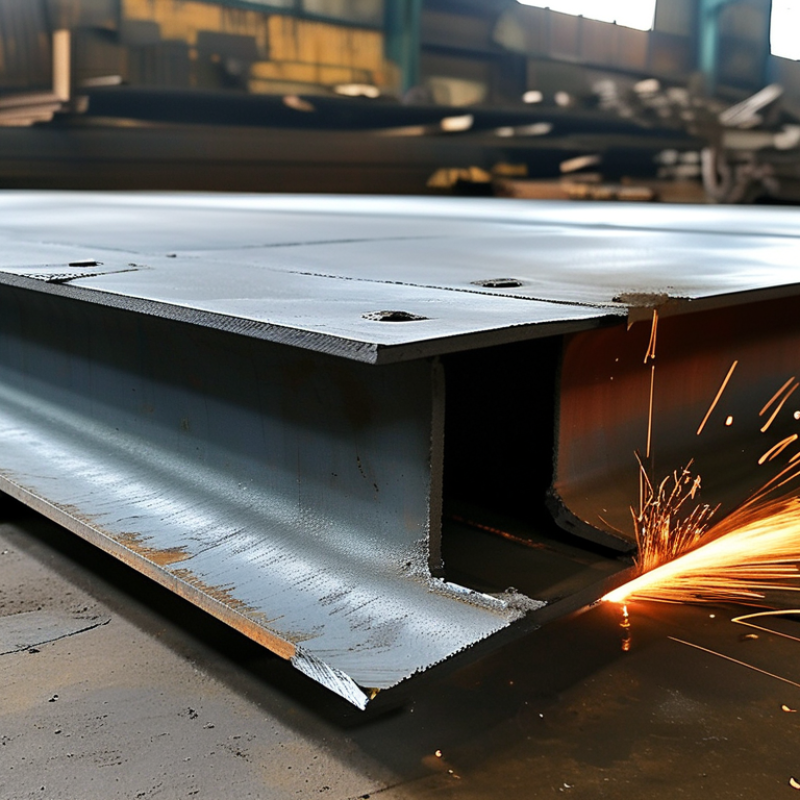
Defining Mild Steel Plate and Its Basic Composition
What Is Mild Steel Plate and What Is It Used For?
Mild steel plate is a flat, rolled product made mainly from iron and a small amount of carbon. Its carbon content commonly ranges from about 0.05% to 0.25%, depending on the specification. It may also contain manganese, silicon, sulfur, and phosphorus in controlled amounts. These elements affect strength, weldability, hardness, and forming performance. The term “mild” describes its relatively low carbon level. However, the label is broad and should not replace checking a material certificate or applicable grade standard.
Manufacturers produce mild steel plate in different thicknesses and surface conditions. It is often selected for brackets, storage tanks, machinery frames, construction supports, and general fabrication. It cuts and welds easily. Its balanced performance can reduce production difficulty. In practical inspections, plate edges, rust spots, dents, and uneven thickness deserve attention. A plate can look sound while containing defects beneath scale or coating. That is easy to overlook. Designers should also consider corrosion protection, loading conditions, temperature, and weld quality. Mild steel is versatile, but it is not automatically suitable for every environment.
Tips: Confirm the grade before cutting. Measure thickness at several points. Keep plates dry and supported above wet floors. Match welding procedures to the approved specification. When corrosion is expected, compare coating or surface-treatment options rather than relying on paint alone. Small checks prevent expensive mistakes.

Key Properties That Make Mild Steel Plate Useful
What Is Mild Steel Plate and What Is It Used For?
Key Properties That Make Mild Steel Plate Useful
Mild steel plate contains relatively little carbon, making it easier to cut, form, drill, and weld. In workshop practice, fabricators can shape it with standard equipment and moderate heat. This practical flexibility supports frames, brackets, storage tanks, machinery bases, and general construction parts.
Its balanced strength and ductility are important. The plate can carry steady loads while absorbing limited impact without breaking suddenly. Ductility also helps during bending, especially when producing channels, covers, and reinforcement sections. It is not perfect. Heavy loads, repeated vibration, or sharp bends still require careful design.
Mild steel plate is usually economical and widely available in many thicknesses. Its smooth surface also accepts painting, coating, or other finishing treatments. However, untreated steel can rust when exposed to moisture, salt, or chemicals. A workshop inspection should check plate thickness, edge damage, weld quality, and surface corrosion. Carbon content, grade, and heat treatment can change performance, so verified material certificates matter.
One common mistake is choosing plate by thickness alone. Load direction, operating temperature, joining method, and maintenance conditions also influence suitability. In outdoor fabrication, protective coatings may need regular inspection.
Small details matter.
Common Grades, Sizes, and Surface Options
What Is Mild Steel Plate and What Is It Used For?
Mild steel plate is a low-carbon flat product made for cutting, welding, bending, and structural fabrication. World Steel Association’s World Steel in Figures 2024 reports 1,888.2 million tonnes of crude steel production in 2023. That scale explains why mild steel remains widely available and relatively economical.
Common grades depend on the required strength and standard. ASTM A36 suits general frames, brackets, base plates, and equipment supports. ASTM A572 Grade 50 provides higher yield strength for heavier structural work. In European specifications, S235JR and S355JR are familiar choices under EN 10025-2.
Grade names are not interchangeable. Check the mill certificate.
Common stock thicknesses range from about 3 mm to 25 mm, with wider plates available for construction and machinery work. Actual inventory varies by region. A nominal 10 mm plate may not measure exactly 10 mm because standards allow dimensional tolerances.
That detail is easy to overlook.
Surface options include as-rolled, pickled and oiled, shot-blasted, primed, and galvanized finishes.
As-rolled plate carries dark mill scale and may need cleaning before painting. Pickled surfaces are cleaner, but they can oxidize quickly in humid storage. ASTM A6 and EN 10029 define important dimensional and flatness requirements. For outdoor use, surface preparation and coating thickness often matter more than appearance alone.
Major Industrial and Construction Applications
What Is Mild Steel Plate and What Is It Used For?
Mild steel plate is a flat carbon steel product with relatively low carbon content. This composition makes it easy to cut, drill, form, and weld. Fabricators often choose it when strength, availability, and reasonable cost matter more than extreme hardness. Its surface can be smooth, hot-rolled, or prepared for painting and protective coatings. However, mild steel is not naturally resistant to rust, especially in wet or chemically aggressive environments.
Major Industrial and Construction Applications
In construction, mild steel plate appears in base plates, support brackets, stair components, platforms, and structural connections. Thick plates can distribute loads beneath columns or equipment. Welders also use them for beams, frames, access covers, and reinforcement details. A plate may look oversized during installation, yet engineers often allow extra thickness for load changes, fabrication tolerances, and future wear.
Industrial equipment uses mild steel plate for machine guards, storage tanks, hoppers, chutes, and conveyor supports. Workshops can shape it into ducts, worktables, and protective panels. In agricultural and material-handling facilities, it may form bins or replacement parts exposed to abrasion. This choice is practical, but not always ideal. Constant moisture, salt, or chemicals may require coating systems, drainage design, or a more suitable steel grade. Material selection should follow the expected load, temperature, corrosion exposure, and welding method. A cheap plate can become expensive when repainting, distortion, or early replacement is ignored.
Factors to Consider When Selecting Mild Steel Plate
Selecting mild steel plate requires more than checking its price per ton. The right choice depends on the plate’s intended load, working environment, and fabrication method. For frames, brackets, tanks, or machinery bases, review yield strength, tensile strength, thickness, and dimensional tolerance. A plate that looks suitable may bend under repeated loading. Fit matters.
Welding also deserves careful attention. Low-carbon mild steel is generally easy to weld, but thick sections may need controlled heat input and preheating. Ask for the material grade, chemical composition, and mill test certificate before production. Surface condition matters too. Light rust may be removable, while deep pitting can reduce the usable thickness. In outdoor or damp areas, plan for paint, galvanizing, or another suitable protective system. I have seen projects choose a cheaper plate and spend more later on repairs. That decision is worth questioning.
Tips: Match thickness to the real load, not guesswork. Confirm plate length and width against cutting plans. Check flatness when close-fitting parts are required. Consider transport weight before ordering large sheets. Keep inspection records, including grade, heat number, and thickness readings. If the plate will face chemicals, high heat, or impact, ordinary mild steel may be the wrong material. A qualified engineer should verify those conditions. Even experienced buyers can overlook edge damage or inconsistent thickness, especially when schedules are tight. Measure twice. Inspect before fabrication.
Article Source:
NORTH EASTON MACHINE • 218 Elm Street • North Easton, MA 02356 • 508-238-6219