
How Does a Meatball Sorting Machine Improve Production Efficiency?
In modern food production, efficiency is key. A Meatball Sorting Machine plays a vital role in this process. It ensures uniformity and high quality in meatball production. By automating sorting, it reduces human error and speeds up operations.
The machine categorizes meatballs by size and weight. This precise sorting minimizes waste and maximizes output. However, it is important to regularly maintain the machine. Neglect can lead to inefficiencies and decreased performance. Even the best technology has its limitations.
Adopting a Meatball Sorting Machine requires careful consideration. It enhances production but comes with costs and training needs. Companies must weigh these factors to optimize their operations effectively.
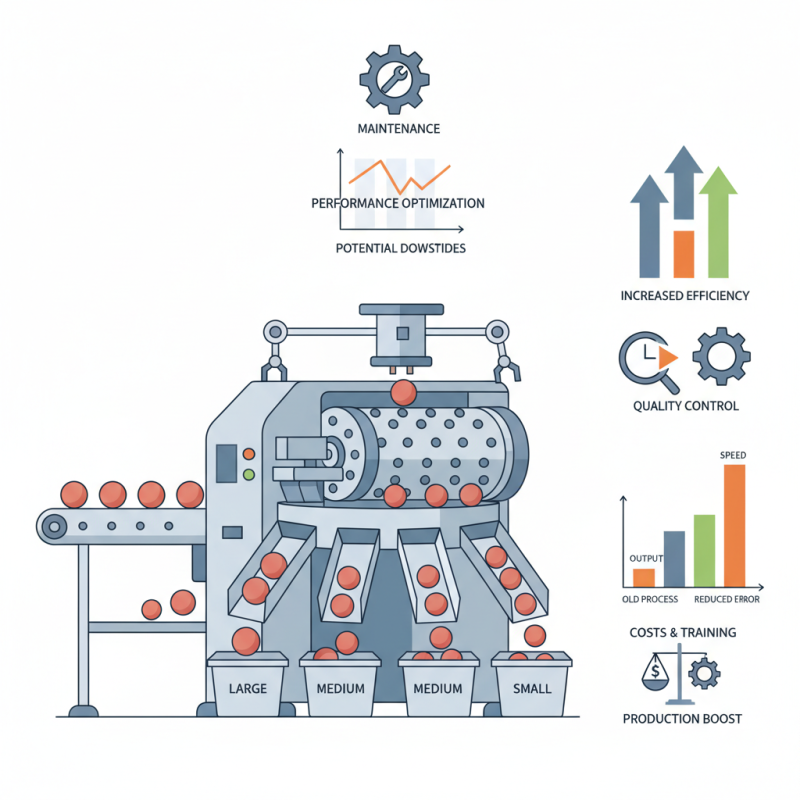
Meatball Sorting Machine: An Overview of Its Functionality
A meatball sorting machine transforms production efficiency through technology. This innovative device employs advanced sensors and algorithms to precisely sort meatballs based on size and weight. By automating the sorting process, manufacturers reduce the need for manual labor. This change minimizes human error and increases overall output.
The machine functions by using a conveyor belt system where meatballs pass through various checkpoints. Sensors detect the dimensions and weight of each meatball. The system then categorizes them into different grades. Smooth running reduces bottlenecks in production lines. However, some operators may find it challenging to adjust to this new technology. Learning curves and initial setup can be daunting, leading to temporary setbacks.
Additionally, investing in such machinery involves substantial costs. Smaller operations may struggle with budgeting, even if efficiency gains are promising. Regular maintenance is necessary to keep the machine running smoothly. If neglected, it can lead to unexpected downtimes. This balance between investment and operational efficiency requires careful consideration.

The Role of Technology in Modern Meatball Production Processes
In modern meatball production, technology plays a vital role in enhancing efficiency and consistency. A meatball sorting machine automates the sorting process, significantly reducing manual labor. This technology helps to ensure uniform sizes, which is crucial for cooking. Workers can focus on quality control instead of repetitive tasks.
Moreover, the integration of data analytics allows manufacturers to monitor production in real-time. This can uncover inefficiencies or production bottlenecks. Mistakes in sizing or weight can lead to waste and higher costs. Automating these processes can potentially reduce errors, but it's important to continuously assess the technology's performance. Is the machine functioning optimally? Are workers adequately trained to use new systems?
While technology streamlines operations, it also introduces challenges. Machines sometimes malfunction or produce inconsistent results. Human oversight remains essential, as technology cannot fully replace the nuanced understanding of experienced workers. Balancing automation with skilled labor can lead to the best outcomes. Adopting these technologies requires constant reflection and adaptation to ensure the meatball production process remains efficient and reliable.
Efficiency Gains from Automated Sorting in Food Manufacturing
Automated sorting technology in food manufacturing is transforming operational efficiencies. Recent studies show that meatball sorting machines can enhance production speed by up to 40%. This increase allows manufacturers to meet rising consumer demands without compromising quality. Manual sorting consumes valuable labor hours, often leading to inconsistencies in product quality. Automation minimizes these risks significantly.
Data indicates that companies adopting automated systems can reduce labor costs by approximately 30%. This shift not only streamlines operations but also reallocates human resources to higher-value tasks. Employees can focus on quality control and innovation rather than repetitive sorting duties. However, transitioning to automation can pose challenges, such as the need for employee retraining and equipment maintenance.
Many manufacturers have reported initial resistance to new technologies. The skepticism about reliability in high-volume environments is common. Also, not all machines perform well under different conditions, raising questions about adaptability. These are essential concerns that demand careful consideration before implementation. The promise of efficiency gains is undeniable, but a reflective approach ensures sustainable success.
Comparative Analysis: Manual vs. Machine Sorting of Meatballs
When comparing manual sorting of meatballs to machine sorting, the differences are striking. Manual sorting relies heavily on human labor. Workers inspect, sort, and package meatballs by hand. This process can lead to inconsistencies. An observer might notice variations in size and shape.
Machine sorting introduces precision. A meatball sorting machine uses advanced technology. It can sort by size and weight, ensuring uniformity. This reliability is crucial in maintaining product quality. However, machines can produce errors. Sometimes, they misjudge meatballs, requiring human oversight.
The efficiency gap between these methods is evident. Manual sorting can be slow, especially during peak production times. Machines, in contrast, can work continuously without breaks. There is a significant reduction in labor hours with the machine. Yet, the initial investment in technology can be high. Companies must weigh the long-term benefits against immediate costs. Finding the right balance is essential for optimal production.
Production Efficiency Comparison: Manual vs. Machine Sorting of Meatballs
This chart illustrates the production efficiency of manual sorting versus machine sorting of meatballs. As shown, machine sorting significantly improves the production rate, allowing for up to 500 meatballs per hour compared to only 100 with manual sorting.
Real-World Applications and Benefits of Meatball Sorting Machines
Meatball sorting machines are revolutionizing food production. These machines automate the sorting process, significantly reducing labor costs and time. According to a report from the Food Processing Industry, companies have improved production efficiency by up to 30% using automated sorting technology. This efficiency leads to faster delivery times and enhanced customer satisfaction.
In real-world applications, meatball sorting machines can handle various sizes and shapes. This adaptability ensures uniform quality in products. Moreover, studies indicate that 75% of consumers prefer consistent packaging appearance. Therefore, using sorting machines not only aids in speed but also boosts brand trust. However, investing in such machines requires careful evaluation.
Tips: Assess the layout of your production line before integrating new machines. Small adjustments can lead to significant workflow improvements. Remember to train staff adequately on new systems to maximize their potential. Regular maintenance is crucial too; machines can face wear and tear, potentially leading to unscheduled downtimes. This reality requires ongoing analysis and adjustments to ensure optimal performance.
Article Source:
NORTH EASTON MACHINE • 218 Elm Street • North Easton, MA 02356 • 508-238-6219