
How to Master the Sand Molding Process for Better Castings?
The sand molding process plays a crucial role in the foundry industry, contributing to the creation of high-quality castings. According to a report by Markets and Markets, the global foundry market is projected to reach $234 billion by 2027. This growth is partly driven by advancements in sand molding techniques. Despite its importance, many foundries still face challenges with consistency and efficiency in their molding processes.
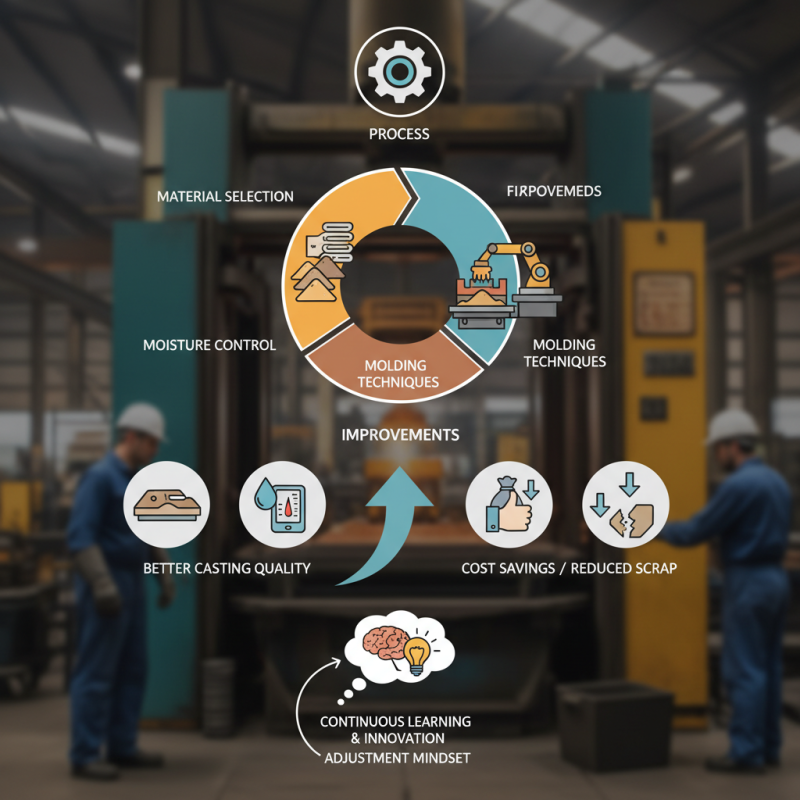
Improvements in the sand molding process can lead to significant cost savings and better casting quality. For instance, a study from the American Foundry Society noted that optimizing sand mixtures and using advanced molding technologies can reduce scrap rates by up to 30%. Yet, some facilities continue to use outdated methods, resulting in flawed castings. The need for continuous learning and innovation is apparent.
Mastering the sand molding process is not merely technical; it's a mindset. There is always room for enhancement. Factors such as material selection, moisture control, and molding techniques require careful evaluation. It is essential for foundries to reflect on their existing practices. Being open to adjustment can lead to superior outcomes and a more sustainable business model.
Understanding the Basics of Sand Molding in Casting Processes
Sand molding is a critical process in metal casting. Understanding its fundamentals can significantly improve casting quality. In sand molding, sand is mixed with a binder to create a mold. This mixture must be just right. Too much binder can lead to weak molds. Conversely, too little can cause the mold to crumble.
Creating the mold involves packing sand around a pattern. This pattern defines the final shape. It's crucial to ensure there are no gaps or air pockets. Flaws in the mold can lead to defects in the casting. Each step in the molding process requires attention to detail. Mistakes often happen, and they can affect the final product.
Temperature plays a vital role as well. The sand's ability to withstand heat is essential. If the molds are not adequately prepared, they may not hold up during pouring. Observing these aspects helps in refining the process. It's all about learning from each attempt and making adjustments. The goal is to create a mold that perfectly captures the design and integrity required for successful castings.

Key Materials Used in Sand Molding for Effective Castings
In the sand molding process, selecting the right materials plays a crucial role in achieving effective castings. Sand is the primary component. It provides the necessary shape and structure. Common sands include silica, olivine, and zircon. Each type of sand has unique properties. For instance, silica sand is most widely used due to its availability. However, it can also be less durable under high temperatures.
Binders are another essential material. They help hold the sand grains together to form molds. Clay is a traditional binder that works well. It is cost-effective and easy to use but can lead to defects if not mixed properly. Synthetic binders offer greater strength but can introduce variability in the process. Additives can enhance properties but sometimes complicate the mixture.
Water is critical too. It activates the binding properties of clay. Yet, excess moisture can cause weakness in the mold. Achieving the right water-sand ratio can be an ongoing challenge. Proper mixing techniques and material selection are vital. The goal is to minimize defects while maximizing the mold’s strength and thermal stability. Reflection on these choices can lead to continuous improvement in the casting process.
Step-by-Step Guide to Preparing Sand for Molding
The sand molding process is crucial for crafting high-quality castings. Preparing sand effectively is the first step. The sand must be clean and free from contaminants. Fine sand works better because it holds shapes well. Mixing sand with the right amounts of clay and water is vital. Aim for a consistency that retains shape but can still be compacted easily.
Tips: Test the sand mixture to ensure it compacts properly. A small sample is easy to manage. Adjust water and clay content based on your needs. Too much moisture can lead to weak molds. Likewise, too little moisture can cause cracking during casting.
Another important factor is the temperature of the mold. Warm molds help reduce the risk of cracking. However, overheating can affect the casting quality. Monitor both the environment and the mold temperature closely. Remember to evaluate each batch of sand you prepare. Each batch may react differently, leading to varying results. Being aware of these nuances can greatly improve your castings.
Techniques for Achieving High-Quality Castings in Sand Molds
The sand molding process is essential for achieving high-quality castings. Achieving optimal results requires attention to detail and technique. One key technique is ensuring uniform sand compaction. According to industry reports, uneven compaction can lead to defects, which can increase scrap rates by up to 20%.
Tips: Test the compaction in small batches. Adjust the moisture content of the sand for better adherence. A balanced mixture is vital to minimize flaws.
Another important factor is the design of the mold. Complex shapes can complicate the casting process. Simple designs may yield better results. About 30% of foundries report that mold design issues are a primary cause of defects in castings. This highlights the importance of careful planning.
Tips: Create a prototype of the mold when possible. Encourage feedback from your team. This can spot design flaws before production starts. Engage with your operators; their input often reveals hidden issues.
The sand molding process requires constant monitoring and adjustment. Regular checks on sand quality can prevent larger problems. Remember, casting is an art form that demands precision—embracing imperfections can lead to valuable insights.
How to Master the Sand Molding Process for Better Castings?
| Technique | Description | Benefits | Common Materials |
|---|---|---|---|
| Ram Sand Molding | A process where sand is compacted by ramming to create molds. | High strength and accuracy of castings. | Silica sand, clay, and water. |
| Green Sand Molding | Using moist sand that contains clay for molding. | Cost-effective and versatile for various metal types. | Green sand mixture including bentonite clay. |
| Shell Molding | A process that uses sand coated with resin to form thin molds. | Excellent surface finish and dimensional accuracy. | Resin-coated sand. |
| Sodium Silicate Sand Molding | Utilizes sodium silicate as a bonding agent for molding sand. | Faster setting time and effective for large castings. | Sodium silicate and beach sand. |
| Vacuum Molding | Sand mold is subjected to a vacuum for compaction. | Enhanced accuracy with reduced defects. | Fine sand with a suitable bonding agent. |
Common Challenges in Sand Molding and How to Overcome Them
Sand molding is a vital process in metal casting. However, common challenges often disrupt quality and efficiency. One major issue is moisture content in the sand. According to industry reports, optimal moisture levels range between 2% and 5%. Too much moisture can lead to defects like scabs and blowholes. It’s essential to regularly monitor and adjust moisture levels, which can be tricky in fluctuating environments.
Another challenge is sand compaction. Proper compaction is crucial for achieving precise mold shapes. Insufficient compaction might cause shrinkage or misalignment in the final casting. Experts recommend using vibrating tables or rammers to enhance density. Yet, over-compaction can also lead to brittleness in the mold. Finding that balance requires meticulous testing and adjustment.
Temperature control during casting presents another hurdle. Metal cooling rates must be managed to prevent thermal cracking. Reports indicate that inconsistent temperatures can reduce the casting yield by up to 30%. Companies often need to reevaluate their cooling processes. Reflection and continuous improvement in these areas help enhance the overall quality of castings.
Article Source:
NORTH EASTON MACHINE • 218 Elm Street • North Easton, MA 02356 • 508-238-6219