
Top PVC Butterfly Valve Manufacturers and Suppliers?
Choosing among top pvc butterfly valve manufacturers and suppliers requires more than comparing prices or polished product pages. A suitable valve must match the fluid, pressure, temperature, pipe standard, and operating frequency. These details matter in water treatment rooms, chemical dosing lines, irrigation networks, and industrial process plants. One incorrect elastomer can shorten service life quickly.
Tom Walski, a respected water-systems engineer, offers a useful principle: “A valve must fit the system, not merely the catalogue.” This idea should guide every supplier review. Examine PVC body quality, EPDM or PTFE seat options, shaft design, disc compatibility, torque requirements, and available actuation. Ask whether the manufacturer provides pressure-testing records, material certificates, dimensional drawings, and traceable batch information. Reliable suppliers should also explain installation limits instead of promising universal performance.
Experience reveals uncomfortable details. A low-cost pvc butterfly valve may appear efficient, yet poor alignment can cause leakage, excessive torque, or damaged seats. A premium brand can also disappoint when technical support is slow or spare parts are unavailable. That part deserves more attention.
This guide compares leading manufacturers and suppliers through practical criteria, including engineering capability, quality control, certifications, delivery consistency, customization, and after-sales support. It also considers real operating conditions, not just laboratory claims. Buyers should verify every specification independently. No supplier is perfect, and no catalogue replaces field judgment. The strongest choice is the manufacturer that combines dependable materials, documented testing, responsive expertise, and a valve design suited to the actual pipeline.
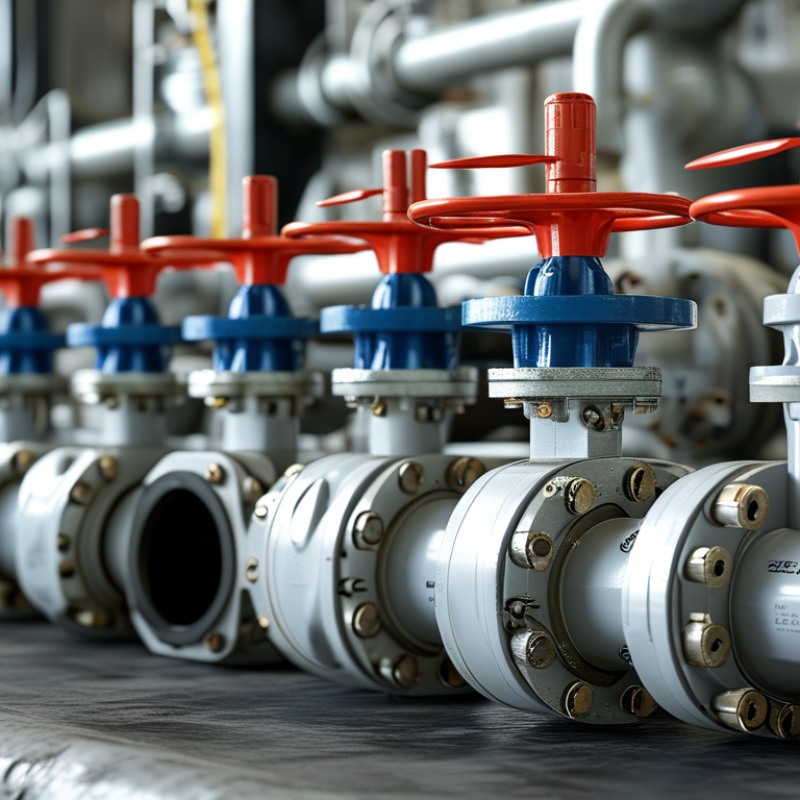
PVC Butterfly Valve Basics: PVC-U, CPVC, DN50–DN600, and PN10–PN16 Ratings
Choosing reliable PVC butterfly valve manufacturers and suppliers requires more than comparing prices. PVC-U suits many ambient-temperature water and chemical services, while CPVC handles higher temperatures and selected corrosive fluids. Always confirm the medium, temperature, concentration, and valve-seat material with the supplier. A valve that looks suitable may fail early when these details are overlooked.
DN50 to DN600 covers common building, irrigation, treatment, and industrial pipelines. Smaller sizes are often easy to operate manually, while larger valves may need gearboxes or actuators. PN10 and PN16 describe nominal pressure classes, not unlimited working pressure. Temperature can reduce the allowable rating, especially for thermoplastics.
Check flange standards, face-to-face dimensions, disc clearance, and shaft sealing before ordering. The supplier should provide pressure-test records, material certificates, torque data, and installation guidance. Useful evidence matters.
In field inspections, poor alignment has caused more trouble than the valve body itself. It can increase disc friction and damage the seat. I would not select a manufacturer from a catalogue alone. Ask for traceability, production experience, and service references for comparable DN sizes. Some product data may remain incomplete. That deserves clarification, not assumption. A careful technical review helps separate dependable supply from attractive but risky specifications.
Industry Standards: ISO 16136, EN 593, ASTM D1784, and NSF/ANSI 61
When comparing PVC butterfly valve manufacturers and suppliers, begin with the standards, not the catalog photograph. ISO 16136 addresses industrial butterfly valve design, testing, and performance. It helps buyers examine pressure ratings, leakage control, operating torque, and durability. However, compliance claims need context. A supplier should identify the tested valve size, pressure class, sealing material, and test method.
EN 593 EN 593 is mainly written for metallic butterfly valves. Some suppliers still reference it for design and testing practices. That reference may be useful, but it does not automatically prove PVC suitability. Ask for documented evidence. ASTM D1784 classifies rigid PVC and CPVC compounds by properties such as strength, impact resistance, and chemical performance. The compound grade matters. So does temperature.
For potable-water projects, NSF/ANSI/CAN 61 is especially important.
It evaluates materials and components that contact drinking water. Request a current certification scope, not just a logo on a brochure. Check whether it covers the complete valve, liner, seat, lubricant, and pressure range. Small details matter.
I have seen purchasing teams accept a material certificate too quickly. That is a weak point. A valve can use compliant PVC yet fail because of poor molding, uneven sealing, or incorrect installation. Supplier audits should review traceability, batch records, pressure-test reports, and technical support. My checklist is not perfect. Field conditions often expose gaps that laboratory reports cannot predict.
Top Manufacturers Compared by Size Range, Torque Data, Certifications, and Warranty
Top PVC Butterfly Valve Manufacturers and Suppliers?
Comparing PVC butterfly valve suppliers requires more than checking catalog prices. Experienced buyers record the full size range, from compact DN15 units to large DN600 assemblies. Some suppliers offer wider sizes, but their largest valves may have limited pressure ratings. Check the actual pressure-temperature chart.
Torque data deserves close attention. Reliable manufacturers publish breakaway, running, and seating torque values for each size. These figures should match the valve’s fluid, temperature, and actuator type. A practical review also checks the safety factor, often 1.25 to 1.5 times the calculated torque. Too much actuator power can damage the stem. Too little power can cause leakage.
Certification documents should identify the tested product, material, and production site. ISO 9001 supports quality control, while ISO 5211 confirms actuator mounting dimensions. For drinking-water service, request applicable NSF or equivalent approval. Certificates alone are not enough. Verify current dates and traceable test reports.
Warranty periods commonly range from 12 to 36 months, but coverage may exclude poor installation, incompatible chemicals, or abnormal temperatures. Read those clauses carefully.
Spare-part availability matters too. In one project review, the valve met its torque target, yet replacement seals arrived late. That weakness was easy to miss.
Suppliers should provide drawings, inspection records, material details, and responsive technical support before purchase.
Supplier Evaluation: Lead Time, MOQ, Pressure Testing, and 100,000-Cycle Service
Top PVC Butterfly Valve Manufacturers and Suppliers?
Choosing a PVC butterfly valve supplier requires more than comparing prices. Grand View Research valued the global industrial valve market at about USD 78 billion in 2023, showing intense supplier competition. That competition can hide weak testing practices. Ask for a written lead-time commitment, not a sales estimate. For standard sizes, seven to fourteen days may be reasonable. Custom actuators, special seals, or large orders can extend delivery beyond six weeks.
MOQ matters when projects use several diameters. A low MOQ reduces storage risk, but it may increase unit cost. Pressure testing should follow ISO 5208 or an equivalent documented procedure. Request test pressure, duration, leakage class, and signed records for each batch. A claim of 100,000 operating cycles needs evidence. Ask whether testing used clean water, the specified pressure, and the actual seat material. One overlooked detail can invalidate an impressive result. I would also inspect sample torque after cycling, because smooth operation at cycle one proves little.
Tip: Put lead time, MOQ, pressure test records, and cycle-test acceptance into the purchase order. Require advance notice for material changes. The 2024 MHI Annual Industry Report found that supply-chain resilience remains a major investment priority, yet many buyers still rely on informal supplier promises. That is a costly gap. A factory audit, video inspection, or independent witness test may feel excessive for small valves, but failure during shutdowns costs far more.
| Evaluation Dimension | Recommended Acceptance Benchmark | Typical Evidence to Request | Procurement Interpretation | Suggested Rating |
|---|---|---|---|---|
| Product Material | Valve body and disc should be manufactured from clearly identified PVC-U, CPVC, or another specified thermoplastic grade. Elastomer material should be stated separately. | Material datasheet, batch traceability, resin or compound declaration, and product drawings. | Accept only when the material grade is suitable for the intended fluid, temperature, pressure, and chemical exposure. | Pass when documented |
| Nominal Size Range | Common commercial availability is approximately DN50–DN600, with larger sizes requiring project-specific confirmation. | Dimensional drawing, face-to-face standard, flange drilling details, and available size list. | Confirm compatibility with the existing piping system and actuator mounting arrangement. | Project dependent |
| Pressure Rating | Many PVC butterfly valves are rated around PN6, PN10, or PN16, depending on size, temperature, material, and design. | Pressure-temperature chart, rated working pressure statement, and applicable design standard. | Do not evaluate the pressure class without checking temperature derating and the complete valve assembly. | Required |
| Lead Time for Standard Items | Approximately 15–30 working days after drawing approval and payment confirmation is a practical benchmark for standard configurations. | Formal quotation, production schedule, capacity statement, and recent delivery records with customer details removed. | Shorter lead times are credible only when the required size, seal material, connection type, and quantity are already available. | 15–30 working days |
| Lead Time for Customized Items | Approximately 30–60 working days is common when special materials, non-standard drilling, custom actuators, or new tooling are required. | Engineering timeline, drawing-approval workflow, tooling plan, and milestone schedule. | Include approval time, testing time, packing, and export documentation in the purchase schedule. | 30–60 working days |
| MOQ for Samples | One to five pieces is a reasonable benchmark for technical evaluation or pre-production sampling. | Sample quotation, sample inspection plan, and sample-to-production consistency statement. | A low sample MOQ reduces qualification risk but does not replace full production inspection. | 1–5 pieces |
| MOQ for Standard Production | Approximately 10–50 pieces per size and configuration is a common purchasing range; actual MOQ depends on tooling and inventory. | MOQ schedule by size, packing quantity, and configuration. | Compare MOQ with annual demand and avoid mixing different materials or seal specifications under one quantity commitment. | 10–50 pieces |
| Shell Pressure Test | Use a documented hydrostatic shell test based on the applicable valve standard; 1.5 times the rated pressure is a commonly specified reference value. | Pressure-test procedure, calibrated gauge records, test duration, test medium, and signed inspection report. | Test pressure, duration, and acceptance criteria must be stated rather than described only as “tested.” | Mandatory evidence |
| Seat Leakage Test | Seat testing should follow the selected standard and valve direction. A commonly used reference is approximately 1.1 times the rated pressure for certain resilient-seat test procedures. | Seat-test method, allowable leakage class, test direction, pressure, duration, and recorded results. | Specify whether the requirement is zero visible leakage, a defined leakage rate, or a standard leakage class. | Mandatory evidence |
| Pressure-Test Coverage | Every finished valve should be tested, or the supplier must provide a clearly justified sampling plan accepted by the buyer. | Serial or batch number, inspection lot, test date, operator identification, and final inspection release. | Individual test records provide stronger traceability than a generic certificate covering an entire shipment. | 100% preferred |
| 100,000-Cycle Service Test | For automated service, require a documented 100,000-cycle endurance test using the specified pressure, temperature, torque, actuator, and media conditions. | Endurance-test report, test-rig description, cycle definition, pre-test and post-test leakage results, and torque measurements. | 100,000 cycles is a project requirement, not a universal performance claim for every PVC butterfly valve. | Verify by test |
| Operating Torque Data | Supplier should provide breakaway, running, and end-of-stroke torque values across the specified pressure range. | Torque chart, calculation method, test results, safety factor, and actuator sizing sheet. | Incorrect torque data can lead to actuator failure, stem damage, or incomplete shutoff. | Required for automation |
| Temperature Suitability | PVC-U is commonly selected for moderate-temperature service; the exact limit depends on material, pressure, media, and design. Temperature derating is essential. | Pressure-temperature chart, material operating limits, and chemical compatibility table. | Do not use a nominal pressure rating at temperatures outside the supplier’s published operating range. | Check application |
| Connection Compatibility | Flanged, wafer, lugged, socket, or other connection types must match the piping standard and installation space. | Connection drawings, flange standard, bolt-hole information, gasket requirements, and installation instructions. | Dimensional mismatch is a frequent cause of otherwise avoidable installation delays. | Required |
| Quality Management | A documented quality system with inspection procedures, nonconformance control, calibration management, and batch traceability should be available. | Quality manual extract, inspection plan, calibration certificates, corrective-action records, and audit responses. | Certification alone is insufficient without product-specific inspection evidence. | Audit preferred |
| Warranty and After-Sales Support | A written warranty should define coverage, exclusions, claim documentation, response time, and replacement procedure. | Warranty terms, service-level commitment, spare-parts list, and technical support contact process. | Prefer suppliers that can support installation, actuator sizing, troubleshooting, and replacement parts. | Documented terms |
| Overall Supplier Decision | Approve only when material, pressure rating, lead time, MOQ, pressure testing, torque data, and endurance requirements are all aligned with the project specification. | Completed technical questionnaire, quotation comparison, sample inspection report, and signed quality agreement. | Use a weighted score rather than selecting solely on unit price. | Approved after verification |
Application and Cost Guide: Chemical, Water, Irrigation, and Corrosive Media Selection
Selecting a PVC butterfly valve starts with the medium, not the catalog price. PVC suits many water, irrigation, and low-pressure chemical services because it resists rust and several salts. The 2024 UNESCO World Water Development Report states that agriculture accounts for about 70% of global freshwater withdrawals. That makes reliable irrigation isolation important, especially where sand, fertilizer, and frequent cycling are present. Check pressure, temperature, flow velocity, and actuator torque together.
Chemical compatibility needs more care. Acids, alkalis, oxidizers, and solvents can affect the valve body, disc, seat, and seals differently. A compatibility chart is only a starting point. Concentration and temperature can change the result. The NACE IMPACT study estimated global corrosion costs at about 3.4% of worldwide GDP, showing why material selection deserves engineering review. Ask manufacturers and suppliers for test data, pressure ratings, seal specifications, and documented quality controls.
PVC valves often reduce purchase and maintenance costs compared with corrosion-prone metal alternatives, but a cheap unit may fail early. Installation labor, spare parts, actuator selection, and downtime can exceed the initial saving. For abrasive slurry or high-temperature service, PVC may be a poor choice. That judgment is easy to miss. Compare total ownership cost over five to ten years, and request written confirmation for the exact chemical concentration and operating temperature.
Article Source:
NORTH EASTON MACHINE • 218 Elm Street • North Easton, MA 02356 • 508-238-6219