
10 Greener Cleaning Tips for Global Buyers
Global buyers are rethinking how cleaning products affect people, water, packaging, and transport. Greener Cleaning is no longer limited to a “natural” label or a green bottle. It requires evidence across the product’s full life cycle, from raw materials and manufacturing to use and disposal.
Professor Anne Steinemann, an environmental scientist known for researching fragranced products, has warned that “fragranced consumer products emit more than 100 volatile organic compounds.” Her finding reminds buyers to examine fragrance ingredients, ventilation needs, and worker exposure. A pleasant scent does not prove safer performance. Sometimes, it hides complexity.
This guide presents ten practical Greener Cleaning tips for international purchasing teams. It considers concentrated formulas, refill systems, recyclable packaging, certified ingredients, and accurate dosage instructions. It also highlights supplier transparency, wastewater impact, product performance, and credible environmental claims. Buyers should request safety data sheets, third-party certifications, laboratory results, and clear manufacturing details. Regional requirements still matter. A product accepted in one market may need additional review elsewhere.
Small details matter. A leaking dispenser can waste litres of concentrate each month. An oversized plastic bottle can increase warehouse space and shipping emissions. Poor dosing can turn an efficient formula into unnecessary chemical waste.
No checklist is perfect. Some “eco-friendly” products may perform poorly in cold water or hard-water conditions. Others may reduce packaging but require longer transport routes. Responsible decisions need testing, comparison, and honest reflection. The strongest purchasing strategy balances cleaning power, human safety, environmental evidence, total cost, and local practicality.
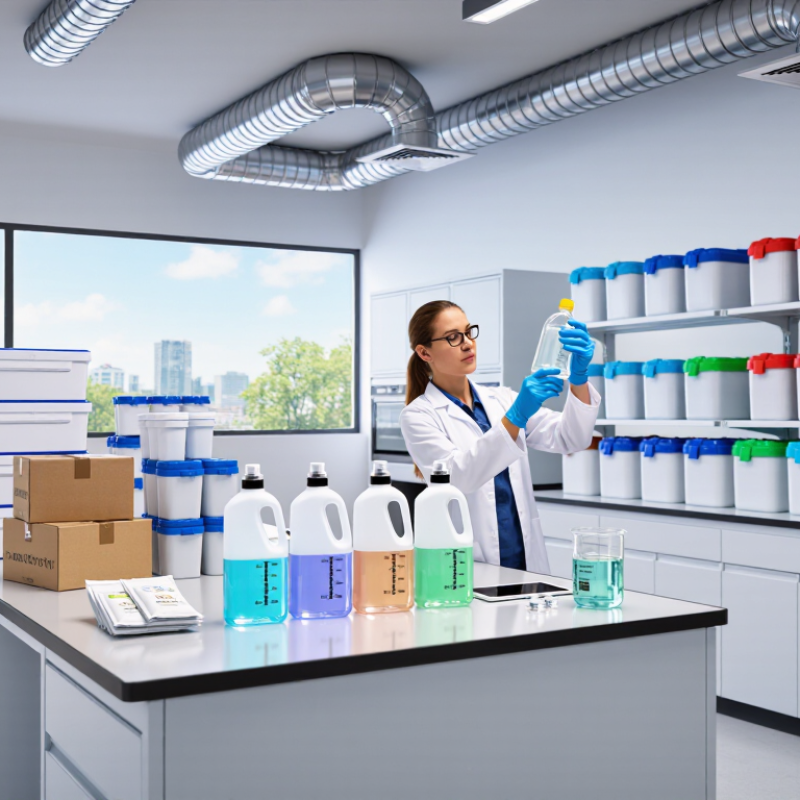
Understanding the Principles of Greener Cleaning for Global Buyers
Greener cleaning begins with principles, not packaging colour. Global buyers should assess a product across its full life cycle: raw materials, manufacturing, transport, use, and disposal. UNEP’s Global Chemicals Outlook II projects global chemical production could double between 2017 and 2030. That growth makes safer formulation and efficient dosing increasingly important.
Ten practical checks can guide purchasing decisions. Choose concentrated formulas when transport savings are verified. Use accurate dosing tools to prevent waste. Prefer readily biodegradable ingredients with credible test data. Avoid unnecessary fragrances and dyes. Check worker exposure controls during mixing and application. Select packaging with recycled content or refill potential. Require suppliers to disclose key ingredients and wastewater risks. Compare cleaning performance under local water conditions. Request independent certifications, safety data, and lifecycle evidence. Audit supplier improvements regularly, rather than trusting one attractive claim.
Small details matter. A half-filled bottle can increase shipping impacts. An over-dosed cleaner may pollute wastewater and damage surfaces. The International Resource Panel reports that global resource extraction has risen sharply and could increase by 60% by 2060 without urgent action. Buyers should therefore compare use-phase results, not only purchase prices. A refill is not automatically greener if it requires long-distance transport or creates complex waste. We still make imperfect choices. Pilot testing in real facilities, recording water use, dilution errors, packaging waste, and cleaning time can expose those weaknesses. ISO 14024-style independent ecolabel criteria can strengthen supplier evaluation, but evidence must remain current and regionally relevant.

Choosing Safer Ingredients and Biodegradable Cleaning Formulas
10 Greener Cleaning Tips for Global Buyers
Choosing safer ingredients begins with reading the full ingredient disclosure, not just the front label. Prefer readily biodegradable surfactants, plant-based solvents, and mineral builders with clear safety data. Avoid formulas containing unnecessary dyes, strong fragrances, or persistent chemicals. Safer does not mean harmless. Concentrated products can still irritate skin or eyes.
Ask suppliers how biodegradability was tested and under which recognized method. Request technical data sheets, safety data sheets, and recent batch records. Check whether the formula performs in cold water, because lower temperatures can reduce energy use. Test it on stainless steel, glass, fabric, and sealed floors before wider purchasing. Small trials reveal residue, dulling, and unexpected odors.
Packaging matters too. Choose refill systems, recyclable containers, and compact formulas that reduce transport weight. Measure cleaning results by dilution rate, water use, worker exposure, and waste volume. A product that needs twice the recommended dose may not be greener in practice. Supply chains can also change ingredients without obvious notice, so schedule periodic reviews.
Some assumptions fail.
A biodegradable formula may degrade slowly in real conditions. A plant-derived ingredient may still trigger allergies. Buyers should compare evidence, not marketing language, and keep written approval records for each market. Local disposal rules, water conditions, and workplace requirements can affect the safest choice. Better decisions come from repeated testing, transparent documentation, and honest attention to flaws.
10 Greener Cleaning Tips for Global Buyers - Choosing Safer Ingredients and Biodegradable Cleaning Formulas
| No. | Greener Buying Tip | Safer Ingredient Direction | Ingredients or Features to Review Carefully | Biodegradability Consideration | Buyer Verification Request | Useful Purchasing KPI |
|---|---|---|---|---|---|---|
| 1 | Prioritize readily biodegradable surfactants | Select surfactants supported by recognized ready or ultimate biodegradation test data. | Avoid relying only on the word “natural”; natural origin does not automatically prove rapid biodegradation. | OECD ready biodegradability methods commonly assess whether a substance reaches the required biodegradation level within the specified test period. | Request the ingredient-level test method, result, test date, and laboratory report. | Percentage of surfactant content supported by biodegradation documentation. |
| 2 | Reduce phosphorus-containing builders | Use phosphate-free or low-phosphorus formulations where cleaning performance allows. | Check total phosphorus, phosphates, and regional wastewater requirements. | Phosphorus is not primarily a biodegradability issue; excess phosphorus released to water can contribute to eutrophication. | Request total phosphorus content and a method for calculating phosphorus per recommended dose. | Grams of phosphorus discharged per 100 standard washes or cleaning cycles. |
| 3 | Choose safer chelating agents | Prefer readily biodegradable or well-characterized chelators with lower persistence concerns. | Review persistent chelators and their ability to mobilize heavy metals in wastewater systems. | Chelator performance should be assessed separately from surfactant biodegradability because some substances can persist after use. | Request environmental fate, biodegradation, and aquatic toxicity data for each chelating agent. | Chelator concentration per dose and percentage supported by environmental fate data. |
| 4 | Limit unnecessary fragrances and dyes | Buy fragrance-free or lightly fragranced formulas with transparent fragrance disclosure. | Review fragrance allergens, colorants, and substances added only for appearance or scent. | Fragrance and dye components should be evaluated individually for persistence, aquatic toxicity, and biodegradation. | Request a full ingredient list and allergen disclosure according to the destination market. | Fragrance and dye content as a percentage of total formula. |
| 5 | Avoid hazardous ingredient combinations | Use formulations designed to remain stable and safe during normal storage and dilution. | Never combine chlorine-releasing products with acids or ammonia because hazardous gases may form. | Safety is separate from biodegradability; a biodegradable ingredient can still be hazardous if misused. | Request the Safety Data Sheet, compatibility information, and transport classification. | Number of hazard pictograms and signal words required on the final label. |
| 6 | Select concentrated formulas carefully | Choose concentrates only when dosing instructions are clear and performance is validated at the lower dose. | Avoid products that appear concentrated but require excessive dosage or repeated application. | Concentration does not prove biodegradability, but lower effective dosage can reduce the total chemical load per task. | Request standardized cleaning-performance results and the recommended dose for each use case. | Milliliters or grams of product used per square meter, wash, or cleaning cycle. |
| 7 | Prefer low-temperature performance | Select formulas that deliver the required cleaning result in cold or warm water when the application permits. | Check whether performance claims apply only to high-temperature cycles or extended contact times. | Energy savings depend on the equipment, water temperature, cycle time, and local energy mix. | Request comparative test results at the intended temperature and contact time. | Kilowatt-hours consumed per 100 cleaning cycles under defined operating conditions. |
| 8 | Use safer packaging and refill systems | Consider lightweight, recyclable, refillable, or reusable packaging that matches local collection systems. | Avoid multilayer or inseparable packaging structures when they cannot be collected or recycled in the target market. | Packaging recyclability is location-dependent and should not be confused with formula biodegradability. | Request packaging material specifications, recycled-content data, and destination-market recyclability evidence. | Packaging grams per liter of usable product or per 100 cleaning tasks. |
| 9 | Check aquatic toxicity and pH | Favor formulas with documented aquatic safety and a pH appropriate for the intended surface and user exposure. | Do not assume that a neutral pH alone makes a product environmentally safe; all ingredients still require review. | Biodegradation, bioaccumulation, and aquatic toxicity are different environmental endpoints. | Request pH, aquatic toxicity data, ingredient classification, and dilution instructions. | Aquatic hazard classification and diluted-use pH range. |
| 10 | Demand transparent evidence and lifecycle data | Buy formulas supported by traceable ingredient records, reliable testing, and clearly defined environmental claims. | Treat vague claims such as “eco,” “green,” or “non-toxic” as incomplete without scope and supporting evidence. | A credible assessment should define the test method, concentration, timeframe, environmental compartment, and limitations. | Request technical data sheets, Safety Data Sheets, test reports, certificates, and claim substantiation. | Percentage of environmental claims supported by current, independently verifiable documentation. |
Evaluating Sustainable Packaging, Concentrates, and Refill Systems
Global buyers increasingly assess cleaning products through packaging, concentration, and refill design. A low-plastic bottle is not automatically sustainable. Its transport weight, recycled content, durability, and end-of-life access also matter.
The OECD’s Global Plastics Outlook reports 353 million tonnes of plastic waste in 2019. Packaging represented about 40% of that total. Concentrated formulas can reduce water, carton space, and shipping emissions, but only when users dilute them correctly. Poor instructions create waste. Refill pouches may use less material than rigid containers, yet mixed materials can complicate recycling. Simpler structures often perform better in local systems.
Refill systems need practical testing.
Can workers refill bottles without spills? Are pumps durable after repeated cleaning? Is return transport efficient? The Ellen MacArthur Foundation’s Global Commitment reports that reusable packaging remains a small share of the market, showing how difficult scale can be. Reuse is not a slogan.
Buyers should request packaging weight per use, recycled-content percentages, dilution ratios, and verified life-cycle data. UNEP’s Turning off the Tap report states that plastic pollution could be reduced by 80% by 2040 through reuse, recycling, and redesign. However, those outcomes depend on infrastructure. A refill station means little where customers lack clean water or collection services.
I would also test real household behavior, not just laboratory claims. People forget instructions. That matters.
Verifying Environmental Certifications and Supplier Transparency
10 Greener Cleaning Tips for Global Buyers
Verifying Environmental Certifications and Supplier Transparency
A greener cleaning purchase begins with evidence, not attractive packaging. Ask suppliers for current environmental certificates and the issuing body's contact details. Check the certificate number, covered products, production site, and expiration date. A certificate for one factory may not cover every facility.
Look closely at the standard behind each certification. Does it assess ingredients, energy use, wastewater, packaging, or only one process? Request the audit scope and testing method. Independent laboratory reports can clarify biodegradability, aquatic toxicity, and restricted substances. Safety data sheets should match the supplied formulation. Small differences matter.
Supplier transparency should continue beyond documents. Ask for the manufacturing address, major raw material sources, wastewater controls, and corrective action records. A responsible supplier can explain weak areas without hiding behind general claims. Consider a remote interview, then arrange a site visit when volumes justify it. Photos help, but they are not proof.
Keep records of certificates, test reports, emails, and review dates. Recheck them before each major order. A common buyer mistake is treating certification as permanent. It is not. Standards change, factories change, and product formulas can change quietly. Ask whether subcontractors are included. If answers remain vague, pause the purchase.
Perfection is uncommon. Clear evidence is essential.
Building a Practical Green Cleaning Purchasing Strategy for Global Markets
Global buyers need more than “eco-friendly” claims. They need measurable criteria, supplier evidence, and local testing. UNEP’s Global Chemicals Outlook projects chemical production could triple by 2050. Purchasing decisions therefore affect emissions, worker safety, and waste across long supply chains.
Tip: Create a weighted supplier scorecard. Measure ingredient transparency, concentrated formulas, recycled packaging, transport distance, and third-party certification. Ask for safety data sheets, lifecycle information, and factory audit records. OECD’s Global Plastics Outlook estimates plastic waste could nearly triple by 2060, while recycling may reach only 17%. Packaging reduction deserves serious attention. Still, recycled content can vary by market. Verify the actual percentage.
Tip: Pilot products in different regions before signing large contracts. Test cleaning performance on hard water, cold surfaces, and high-use floors. A refill model may work in one city but fail where collection routes are unreliable. We learned this the hard way in procurement reviews: attractive systems can create extra transport. Measure total impact, not just container weight.
Tip: Set clear contract targets. Require annual emissions data, batch traceability, responsible chemical handling, and corrective-action timelines. ISO 14001-based environmental management can support supplier evaluation, but certification alone is not proof of better performance. Review evidence. Keep questioning assumptions.
Framework references: ISO 14024 environmental labels, ISO 14001 environmental management, the UN Globally Harmonized System of Classification and Labelling of Chemicals, EU Ecolabel product criteria, and public safer-chemical procurement guidance.
Article Source:
NORTH EASTON MACHINE • 218 Elm Street • North Easton, MA 02356 • 508-238-6219