
How to Choose a Solar Surge Protector?
Choosing a Solar Surge Protector is not just a matter of matching a label to a panel. The right device depends on the system’s maximum voltage, inverter design, grounding arrangement, and exposure to lightning or switching surges. A small rooftop array near the coast may face different risks from a ground-mounted system beside an open field. Details matter.
PV safety expert John Wiles has long emphasized the importance of proper installation and protection in photovoltaic systems. A concise selection principle for this guide is: “Choose protection for the system you have, not the system you assume you have.” This is an editorial summary, not a verified direct quotation from Wiles.
A useful Solar Surge Protector should have ratings compatible with the DC or AC circuit it protects, and it should be installed at the appropriate point in the system. Check the device’s maximum continuous operating voltage, surge-current rating, protection modes, and status indicator. Then confirm that the inverter and array specifications align. A green indicator can be reassuring, but it does not replace inspection.
This guide will explain how to compare ratings, placement, and device types before purchase. It will also point out a common oversight: surge protection can reduce risk, but it cannot guarantee that equipment will never be damaged. Small details deserve a second look.
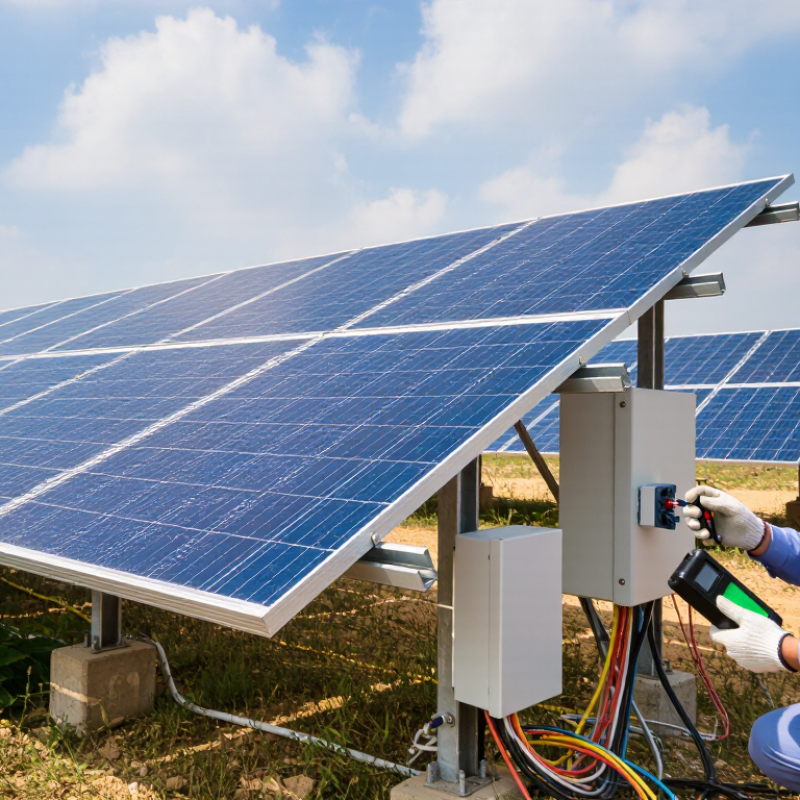
Assess the Solar System’s Voltage, Configuration, and Grounding
Before selecting a solar surge protective device, check the array’s maximum open-circuit voltage at the site’s lowest expected temperature. The device’s maximum continuous operating voltage must exceed that value, with suitable margin. NREL’s 2024 Annual Technology Baseline uses 1,500 V DC as a utility-scale PV design assumption; rooftop systems may use different voltage ranges. Match the protector to the actual system, not a generic “solar” label. Check the inverter manual and array configuration, too.
Grounding matters. A grounded array, an ungrounded array, and a transformerless inverter can require different protection arrangements. Confirm whether the DC conductors are floating, how equipment frames are bonded, and where the grounding electrode connects. Then choose an SPD rated for the DC or AC side and its installation point. IEC 61643-31 covers surge protective devices for photovoltaic installations, including DC-side requirements. A neat wiring diagram helps, but it may not show later changes made on site. Verify the installed layout before choosing. A small detail can change the answer.

Evaluate Surge Risks and Required Protection Levels
Assess the site before comparing surge protectors. A rooftop array on an open ridge faces different exposure from panels sheltered by nearby buildings. Note local storm frequency, overhead utility lines, and whether the building has external lightning protection. Long cable runs between panels, inverter, and service equipment can also affect surge paths. Small details matter.
Choose protection for both the photovoltaic DC circuit and the AC connection when the system design calls for it. Type 1 or Type 2 devices may be appropriate in different locations, but the choice depends on lightning exposure, installation layout, and applicable electrical requirements. Check the protector’s maximum continuous operating voltage against the array’s calculated cold-weather open-circuit voltage. Its voltage protection rating should also suit the inverter and connected equipment. A lower number is not automatically better if the device is mismatched.
Grounding and bonding are part of the protection, not optional finishing work. A surge device connected through a long, looping conductor may perform poorly; short, direct connections are generally preferred. I would not treat any risk score as exact. Storms ignore tidy categories. Have a qualified solar electrician review the site conditions, equipment documentation, and required protection level before installation. The roof may look simple from the ground. It often isn’t.
How to Choose a Solar Surge Protector? — Evaluate Surge Risks and Required Protection Levels
| Installation Condition | Main Surge Risk | Typical Protection Approach | Key Selection Checks |
|---|---|---|---|
| Rooftop PV system in an area with frequent thunderstorms, with an external lightning protection system | Partial lightning current may enter the PV wiring or electrical system; nearby strikes can also induce surges. | Consider a Type 1+2 PV DC SPD at the array or building entry, coordinated with the lightning protection and bonding design. Protect the AC side as required by the electrical installation design. | Confirm the SPD is intended for PV DC use and complies with IEC 61643-31 or the applicable local standard. Check the required impulse current rating (Iimp) against the lightning protection design; do not select it from a generic value alone. |
| Rooftop PV system without an external lightning protection system, but with nearby lightning exposure | Induced surges from nearby lightning and switching events can reach the inverter through DC and AC conductors. | A Type 2 PV DC SPD is commonly considered on the DC side, with coordinated AC-side surge protection where required. | Check the Type 2 nominal discharge current (In) and maximum discharge current (Imax), as well as the protection level (Up). Ratings must suit the system design and applicable standards. |
| PV array and inverter separated by a long DC cable run | Long conductors can pick up induced surges; cable length can also reduce the effective protection at the equipment. | Assess protection at both the array end and inverter end. If the cable route is long, an additional coordinated SPD near the inverter may be appropriate. | IEC-based guidance commonly calls for additional protection when the distance between an SPD and the equipment to be protected exceeds about 10 m. Confirm the applicable local rules and the manufacturer’s installation instructions. |
| Ground-mounted array with long outdoor DC cable routes | Long exposed wiring increases the opportunity for induced surges and potential differences between the array and building. | Use a coordinated protection plan for the array, cable entry, and inverter; assess bonding and earthing together with SPD placement. | Keep SPD connecting leads short and direct, follow the required conductor routing, and ensure all connected SPDs are suitable for the PV circuit voltage and earthing arrangement. |
| Any PV system with a high maximum string voltage | An SPD with an insufficient continuous operating voltage may conduct during normal operation or fail prematurely. | Select a PV DC SPD with a maximum continuous operating voltage (Ucpv) suitable for the system’s maximum cold-weather open-circuit voltage. | Calculate the maximum array Voc using the module data and the lowest expected site temperature. Ucpv must not be lower than the resulting maximum PV voltage; follow the SPD and system documentation. |
| Inverter or other sensitive equipment with a specified impulse withstand voltage | Residual surge voltage reaching the equipment may exceed its insulation withstand capability. | Choose an SPD with a protection level (Up) coordinated with the equipment’s impulse withstand rating; consider lead length and coordination with upstream or downstream SPDs. | Check the equipment documentation and ensure the effective protection voltage at the equipment is suitable. A lower stated Up alone does not replace correct installation and coordination. |
| PV system connected to a building’s AC distribution system | Surges can arrive through the utility supply or be transferred between the AC and PV circuits. | Assess AC-side SPD protection separately from PV DC protection. Type 1, Type 2, or combined protection depends on the building’s lightning protection and installation design. | For AC SPDs, verify suitability for the supply system, voltage, earthing arrangement, and applicable standard, such as IEC 61643-11. Coordinate the AC and DC protection devices. |
| System exposed to lightning risk but with no documented site assessment | Protection needs may be underestimated if local lightning exposure, building layout, cable routes, or existing lightning protection are unknown. | Complete a site-specific risk assessment before choosing SPD type and ratings; use qualified electrical and lightning protection professionals where required. | Consider local codes, lightning protection measures, array location, cable routing, earthing and bonding, and the equipment’s withstand ratings. No single SPD rating is appropriate for every installation. |
Selection note: PV DC SPDs and AC SPDs are not interchangeable. Verify the applicable standards, system voltage, polarity and earthing arrangement, short-circuit withstand requirements, backup protection, and installation instructions before purchase or installation.
Choose an SPD Type and Check Its Electrical Ratings
Choose the SPD type for the surge path, not just the panel label. Under IEC 61643-31, Type 2 devices are commonly used on PV DC circuits to limit induced surges. Type 1 or combined Type 1+2 protection may be needed where lightning currents can enter the installation, such as systems with external lightning protection. Site design matters. NOAA’s National Weather Service estimates roughly 25 million cloud-to-ground lightning flashes occur in the United States each year, underscoring why exposure deserves attention.
Check the ratings against the actual array and inverter. The SPD’s maximum continuous operating voltage, Ucpv, must exceed the array’s maximum cold-weather open-circuit voltage, not merely its sunny-day reading. Compare its protection level, Up, with the inverter’s impulse withstand rating; lower Up generally gives tighter protection. Also verify discharge-current ratings, DC polarity, short-circuit withstand, and compatibility with the grounding arrangement. IEC 61643-31 provides the relevant performance framework for PV SPDs. A tidy rating label can still hide a mismatch if the system voltage calculation is wrong.
Tips: Keep the SPD close to the equipment it protects, and keep connecting leads short. Long, looping wires can reduce protection. Have a qualified installer check coordination between DC and AC protection. That detail is easy to overlook.
Confirm Compatibility with Solar Panels and Inverters
How to Choose a Solar Surge Protector?
A solar surge protector must match the electrical conditions on the side it protects. On the panel side, check the array’s maximum open-circuit voltage, adjusted for cold weather. The protector’s maximum continuous operating voltage must safely exceed that value. Compare its protection level with the inverter’s surge withstand rating, too. Details matter.
Check current ratings, polarity, and grounding arrangement against the system documentation. Some photovoltaic arrays operate with floating conductors, so a protector designed for a different configuration may not provide suitable protection. Confirm the required backup fuse and short-circuit rating. A neat-looking match on the product label is not enough.
The inverter’s AC connection needs a compatible protector for the site’s voltage, phase, and grounding system. Do not use a DC-rated device on an AC circuit, or the reverse. Follow the inverter and protector installation instructions, and keep connecting leads short to limit added voltage during a surge. A common oversight is checking the panel voltage but not the inverter’s requirements. Recheck both sides before installation; even a careful checklist can miss a wiring detail.
Plan Installation, Inspection, and Replacement
How to Choose a Solar Surge Protector?
Plan installation before buying a device. IEA PVPS’s Snapshot of Global PV Markets 2024 estimates roughly 1.6 terawatts of solar capacity worldwide by the end of 2023. That scale makes consistent protection and maintenance planning important. Check the array’s cold-weather maximum open-circuit voltage, then select a protector with a suitable PV voltage rating. Match its type and discharge capacity to the system design, lightning exposure, and applicable electrical requirements. IEC 61643-31 covers surge protective devices for photovoltaic installations. Keep connection leads short, and coordinate protection on both DC and AC sides where the design requires it. Small details matter. Even a tidy wiring diagram can miss the actual cable route.
Set an inspection schedule during commissioning. NREL’s Best Practices for Operation and Maintenance of Photovoltaic and Energy Storage Systems emphasizes documented maintenance and inspection procedures. Record the device location, rating, installation date, and status-indicator condition. During routine service, look for a changed indicator, heat discoloration, loose connections, or damaged wiring. Inspect after a known surge or nearby lightning event, too. A protector may appear intact while its internal components have reached end of life. Replace it when its indicator shows failure, inspection finds damage, or its manufacturer’s instructions require replacement. Do not assume every unit needs replacement after the same number of years. Have a qualified technician isolate the circuit and verify grounding before work; a checklist helps, but it cannot replace careful judgment.
Article Source:
NORTH EASTON MACHINE • 218 Elm Street • North Easton, MA 02356 • 508-238-6219