How to Choose the Right Oilfield Mud Pump?
Choosing the right Oilfield Mud Pump begins with the well, not the catalogue. A pump must deliver stable flow, pressure, and reliability under changing drilling conditions. The wrong selection can create poor hole cleaning, excessive vibration, or costly nonproductive time. Small details matter. Think about abrasive solids, liner wear, pulsation, and the distance to the wellhead.
The International Energy Agency’s Oil 2024 report projects global oil demand will reach about 105.4 million barrels per day by 2030. That outlook does not predict mud-pump sales directly. However, it confirms continuing pressure on drilling contractors to improve equipment efficiency and uptime. Baker Hughes’ International Rig Count provides another useful activity indicator. Its monthly data shows why pump demand and operating conditions vary across regions. Offshore, high-pressure wells may require different specifications than shallow land wells.
Drilling educator Dr. Adam T. Bourgoyne Jr. emphasized a practical principle: “Hydraulics must be designed around the well, not around the pump.” This idea remains highly relevant. Compare triplex and quintuplex designs, maximum pressure, rated horsepower, volumetric efficiency, and spare-parts access. API Specification 7K should also guide equipment evaluation, especially for pressure-containing and drilling-system components.
There is no perfect pump.
A technically impressive unit may still be unsuitable for a remote rig with limited maintenance support. Experienced teams should review actual flow rates, pressure records, mud properties, and failure history before deciding. Cost matters, but reliability often matters more. This guide examines those trade-offs and shows how to select an Oilfield Mud Pump with evidence, caution, and practical field judgment.
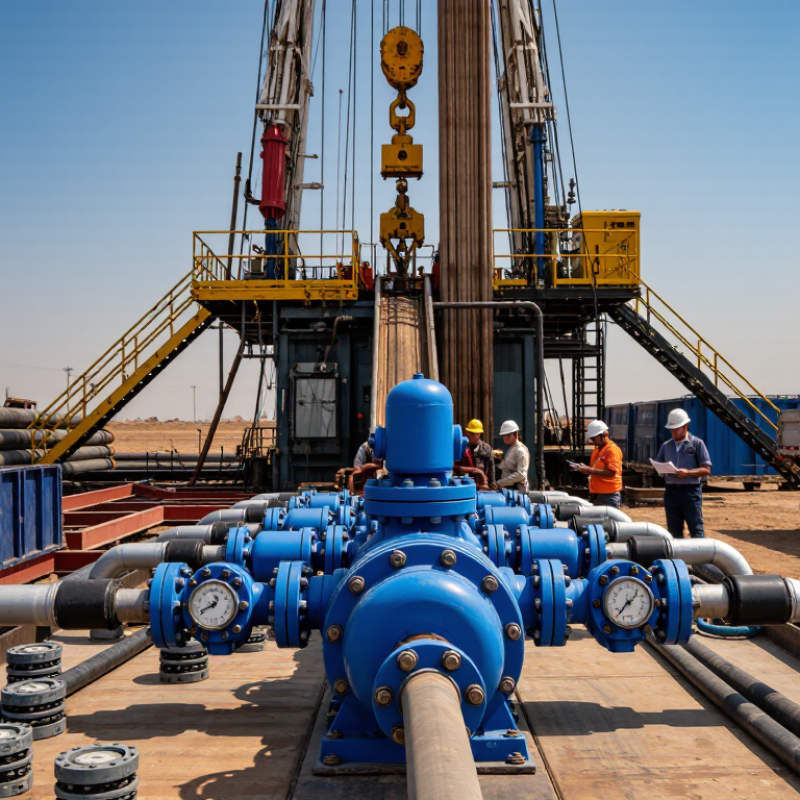
Define the Operating Conditions and Drilling Requirements
How to Choose the Right Oilfield Mud Pump?
Define the Operating Conditions and Drilling Requirements
Choosing a mud pump begins with accurate field information. Before comparing pump options, define the planned depth, hole size, mud density, flow rate, and standpipe pressure. Record the expected drilling hours and operating cycle. These details reveal the pump’s real workload. A pump selected only for maximum pressure may run inefficiently.
I once underestimated flow demand on a deep section. The pump appeared suitable on paper, but the actual pressure margin became uncomfortable. That assumption needed review.
Different drilling fluids create different demands. High-viscosity mud can increase friction and reduce effective flow. Abrasive solids may accelerate wear on liners, valves, and fluid-end components. Check the mud temperature, solids content, and chemical compatibility before final selection. Conditions change quickly.
The site environment also matters. Confirm available power, elevation, ambient temperature, installation space, and maintenance access. Calculate hydraulic requirements from the required flow and pressure, then include a practical operating margin. Avoid choosing an oversized pump without checking energy use and control range. Stroke rate should support the drilling program without creating unnecessary pulsation. Examine pressure fluctuations during similar wells, if reliable records exist. Maintenance intervals, inspection points, and replacement access should be clear to the crew. A technically strong choice can still fail when technicians cannot reach critical components safely.
Compare Mud Pump Types, Configurations, and Performance
How to Choose the Right Oilfield Mud Pump?
Compare Mud Pump Types, Configurations, and Performance
Selecting a mud pump begins with pressure, flow rate, and drilling depth. A triplex pump uses three plungers, producing smoother discharge and lower pulsation. Duplex pumps use two plungers and can offer simpler maintenance. However, their flow pulses are usually stronger. That difference matters when pressure stability affects drilling control.
Pump configuration should match the mud system, not only the rig’s rated horsepower. Check the liner size, stroke length, maximum pressure, and allowable strokes per minute. A smaller liner can raise pressure but reduce flow. A larger liner usually moves more fluid at lower pressure. In practice, the right balance depends on mud density, solids content, and required circulation rate. A pulsation dampener also helps protect surface equipment and improve pressure readings.
Field inspections should include fluid-end valves, seats, plungers, and discharge seals. Mud containing sharp solids can accelerate wear, even when laboratory figures look acceptable. Cooling, lubrication, and spare-part access deserve equal attention. A high horsepower rating is not automatically better. It may increase fuel use and mechanical stress without improving drilling performance. Operators sometimes choose excessive capacity for reassurance, then run the pump far below its efficient range. That choice can be difficult to reverse. Performance records, maintenance history, and actual well conditions provide stronger evidence than a specification sheet alone.
Evaluate Pressure, Flow Rate, and Power Specifications
How to Choose the Right Oilfield Mud Pump?
Pressure, flow rate, and power must be evaluated together, not separately. A pump rated at 5,000 psi may still underperform if its flow cannot clean the hole. API Spec 7K requires clear pressure-rating and safety information, but it does not prescribe one universal pump size. Actual selection depends on well depth, hole diameter, mud density, nozzle design, and expected pressure losses.
Start with the hydraulic requirement. If the program needs 1,000 gallons per minute at 5,000 psi, the theoretical hydraulic demand is about 2,900 horsepower. The calculation is pressure multiplied by flow, divided by 1,714. Add efficiency losses, pulsation effects, and a practical operating margin. A 3,500-horsepower input may be more realistic than the theoretical figure. Do not run continuously at the nameplate limit.
SPE drilling-hydraulics studies commonly link higher flow rates with improved annular cleaning, while excessive flow can increase equivalent circulating density and fracture risk. IADC training guidance also emphasizes monitoring standpipe pressure, stroke rate, and liner condition during operation. I once treated horsepower as the deciding number. That was a mistake. Field crews should compare the pump curve with real pressure trends, not only catalogue values. Leave room for wear. A worn liner can quietly reduce delivered flow before operators notice the problem.
Assess Materials, Reliability, Maintenance, and Safety Features
How to Choose the Right Oilfield Mud Pump?
Choosing a mud pump requires more than comparing flow rate and pressure. Assess the materials touching the drilling fluid. Abrasive solids can quickly damage liners, valves, and pistons. Corrosive additives may attack ordinary steel or unsuitable elastomers. Forged pressure-bearing parts and properly selected wetted materials offer better service life. Ask for material certificates and pressure-test records. Do not rely on appearance alone.
Reliability depends on operating history, load cycles, and parts availability. A pump should handle your required pressure without running continuously at its limit. During inspections, check vibration, bearing temperature, lubrication, and pulsation behavior. Maintenance access matters too. If technicians need excessive dismantling, small defects may remain unnoticed. I have seen clean installations fail because routine checks were inconvenient. That mistake is easy to repeat.
Tips: Match the pump to real fluid chemistry. Confirm relief devices, guards, emergency shutdowns, and safe isolation points. Keep critical spares nearby. Record pressure and vibration trends weekly. Review the manufacturer’s service data with qualified maintenance personnel. A detailed checklist helps, but it cannot replace field judgment. Always verify local safety requirements before installation.
Balance Purchase Cost, Lifecycle Value, and Supplier Support
Choosing an oilfield mud pump starts with more than its purchase price. A low-cost unit may seem attractive during budget review. However, weak fluid-end materials can create repeated downtime, unsafe pressure fluctuations, and expensive emergency repairs. Review rated pressure, flow range, liner life, power demand, and compatibility with the drilling fluid. Ask for tested performance data, not broad claims. Small details matter.
Estimate lifecycle value over several drilling campaigns. Include spare liners, valves, pistons, seals, energy use, transport, technician time, and disposal costs. A pump running at 85% capacity may last longer than one pushed continuously to its limit. That difference is easy to miss. Field records often reveal more than a sales spreadsheet. Compare maintenance intervals under similar mud density, solids content, and operating pressure. Leave room for uncertainty; actual formations rarely follow the original plan.
Supplier support can protect the investment when conditions change. Check response times, parts availability, training, installation guidance, and remote troubleshooting procedures. Request references from operations with comparable duty cycles. Speak with maintenance supervisors, not only procurement teams. Their comments may expose recurring seal failures or delayed components. I would also inspect the service network before signing. This step is sometimes skipped. It should not be. A detailed ownership model, reviewed by drilling, maintenance, and finance staff, gives the pump a fairer test than purchase cost alone.
How to Choose the Right Oilfield Mud Pump?
Balancing purchase cost, lifecycle value, and supplier support
This planning benchmark compares three common pump configurations using estimated five-year cost exposure and supplier support readiness. A higher support score reflects stronger spare-parts availability, field-service coverage, technical training, and response capability. Final selection should be confirmed with site duty cycles, operating pressure, maintenance history, and supplier quotations.



 Find Your Solutions ▶