How to Choose the Right Mechanical Bolt for Your Project?
Choosing the right Mechanical Bolt for your project can be challenging. It requires careful consideration of various factors. Mechanical bolts play a critical role in the strength and integrity of your construction. Understanding their specifications is crucial for success.
The world of mechanical bolts is diverse. Different materials and sizes serve unique purposes. Corrosion resistance, tensile strength, and load capacity are key characteristics to evaluate. A bolt that works in one situation may fail in another. Misjudging these factors may lead to structural issues.
Moreover, it's important to recognize that not every project needs the same type of mechanical bolt. Mistakes can happen if one overlooks specific requirements. Refining your selection process is necessary for better outcomes. Addressing these complexities ensures reliability in the long run. A well-informed choice can prevent future problems.
Understanding the Basics of Mechanical Bolts and Their Applications
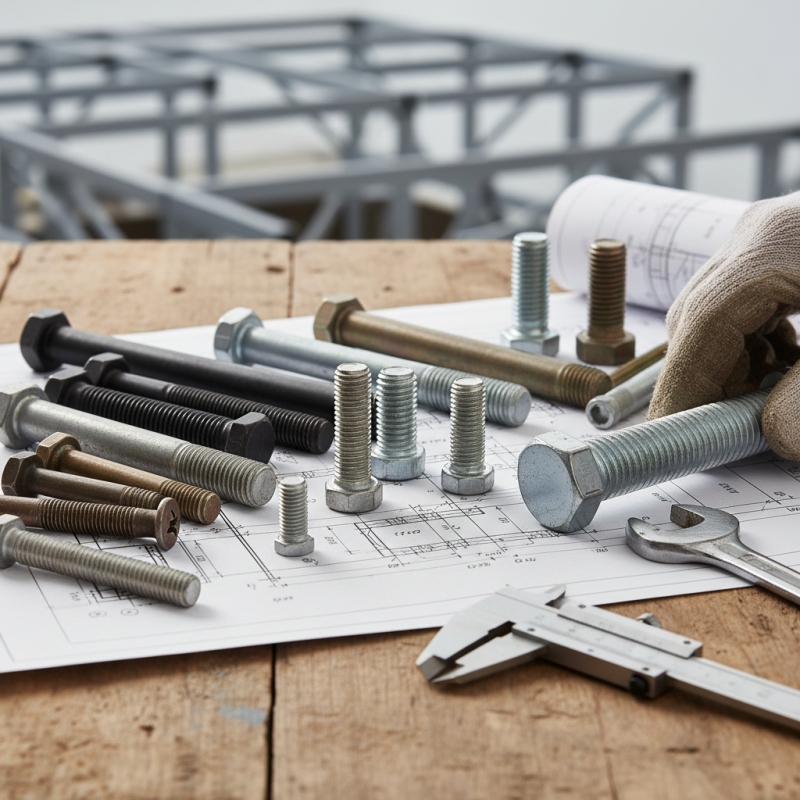
Choosing the right mechanical bolt involves understanding their various applications. Mechanical bolts are commonly used in construction, automotive, and machinery industries. Their primary function is to secure components together. The selection depends on load requirements, material types, and environmental conditions. Knowing these factors helps ensure the integrity of your project.
Different types of bolts serve distinct purposes. For instance, hex bolts work well in heavy-load applications, while lag bolts excel in wood connections. The choice of material is also crucial. Stainless steel bolts resist corrosion, while carbon steel bolts offer strength at a lower cost. Evaluating these details can be challenging. It's important to match the bolt type to the application.
Not all projects require the same bolts. Sometimes, a bolt may not hold as expected. In such cases, reassessing the application and load specifications is vital. Environmental factors can influence performance as well. Proper research can prevent future complications. Understanding these basics will enhance your selection process.
Identifying Key Specifications for Selecting Mechanical Bolts
When selecting the right mechanical bolt for your project, it is crucial to consider key specifications. Start with the diameter and length of the bolt. These factors will impact load-bearing capacity. A too-short bolt will not grip well, leading to potential failure. Conversely, a bolt that is too long may interfere with surrounding components.
Material choice also plays a significant role. Stainless steel is popular due to its corrosion resistance. However, in high-stress environments, you might consider stronger alloys. Each material has unique properties, which may affect performance under various conditions. Be mindful of these differences.
Finally, pay attention to thread type and grade. Coarse threads provide better grip in soft materials, while fine threads are ideal for more precise adjustments. The grade indicates the strength of the bolt, with higher grades typically suitable for heavy-duty applications. Do some testing and gather feedback on your selections. It’s a step often overlooked, yet crucial for ensuring long-term reliability in your projects.
Mechanical Bolt Selection Criteria
Evaluating Material Choices for Durability and Performance
Choosing the right material for mechanical bolts can significantly impact project durability and performance. Common materials include steel, stainless steel, and various alloys. Steel offers high strength and is cost-effective. However, it may corrode if not properly protected. Stainless steel resists rust, making it a popular choice for outdoor projects.
Alloy bolts can enhance performance in high-stress environments. They often withstand extreme temperatures and corrosive conditions. While alloy bolts are more expensive, they can offer greater longevity. Yet, selecting the wrong type can lead to failures and costly repairs. Understanding the specific requirements of your project is vital.
In some cases, it can be tempting to choose based on price alone. This approach might save money initially but often sacrifices reliability. Evaluating the environmental conditions and load characteristics ensures that you make informed decisions. Reflecting on previous experiences can guide future choices. A thorough assessment of material options ultimately leads to better outcomes in any project.
Assessing Load Requirements and Bolt Size for Your Project
Choosing the right mechanical bolt can significantly impact your project's success. Load requirements are crucial to consider. They dictate the type of bolt needed in various applications. Understanding the maximum load a bolt must endure is essential. This involves not just weight but also environmental factors, such as vibration and temperature.
Bolt size is equally important. It directly influences the bolt's strength and performance. Larger bolts can handle more significant loads but may also add unnecessary weight. On the other hand, underestimating the required size can lead to failure. Common mistakes include selecting a size based on assumption rather than calculations.
Mechanical properties such as tensile strength and shear strength matter. Engineers often use specific charts to match loads to bolt grades. Yet, many overlook the specifications. Gathering precise measurements and calculations ensures proper fit and function. It might be tempting to choose a standard size, but customization often yields better results. Proper assessment of both load and size can prevent costly mistakes in the long run.
Considering Environmental Factors and Corrosion Resistance in Bolt Selection
Choosing the right mechanical bolt involves understanding environmental factors and corrosion resistance. In many projects, bolts are exposed to harsh conditions. Weather, humidity, and chemicals can all impact a bolt's longevity. Poor selection can lead to failures, which can be costly.
Corrosion resistance is key in bolt selection. Different materials react differently to various environments. Stainless steel bolts, for instance, can resist rust but may not perform well in certain chemicals. On the other hand, galvanized bolts can offer good protection in outdoor settings yet could fail in acidic environments. Assessing these factors requires careful consideration.
It's not always clear which bolt to choose. Experience plays a crucial role, but sometimes it can lead to biases. A professional might favor one material based on past projects. However, each job is unique, and what worked before may not work now. Always question your choices. It's essential to reflect on each decision and gather multiple opinions when selecting bolts for any project.
How to Choose the Right Mechanical Bolt for Your Project?
| Bolt Material | Corrosion Resistance | Environmental Suitability | Typical Applications | Temperature Range (°C) |
|---|---|---|---|---|
| Carbon Steel | Low | Indoor Use | Automotive Assembly | -20 to 90 |
| Stainless Steel | High | Outdoor & Humid Environments | Marine Applications | -60 to 400 |
| Aluminium | Moderate | Lightweight Structures | Aerospace Components | -50 to 150 |
| Brass | Moderate | Indoor & Dry Environments | Electrical Components | -10 to 120 |
Article Source:
NORTH EASTON MACHINE • 218 Elm Street • North Easton, MA 02356 • 508-238-6219