How to Choose the Right Exterior Doors for Your Home?
Choosing the right Exterior Doors starts with more than color or curb appeal. A front door faces rain, sun, temperature changes, and daily use. A patio door may need to balance natural light with privacy and insulation. The best choice depends on your home, local weather, budget, and how each entrance is used.
Start with practical details. Measure the opening carefully, including the frame and threshold, and check whether the door swings inward or outward. Consider materials such as wood, fiberglass, and steel, since each has different strengths, upkeep needs, and costs. Look for clear product information about insulation, weather seals, glazing, and hardware. A well-rated door can still perform poorly if it is installed incorrectly. Details matter.
Security deserves attention, too. Check the lock, hinges, frame, and glass—not just the door panel. For a glass entry door, consider how much visibility and daylight you actually want. It is easy to focus on a showroom finish and overlook drafts at the bottom edge. That happens. Compare warranties and maintenance requirements before deciding, and ask a qualified installer to assess unusual openings or older frames. No single design suits every home, and product claims should be checked against your needs. With careful measurements and realistic priorities, you can choose a door that looks right, works reliably, and remains comfortable through changing seasons.
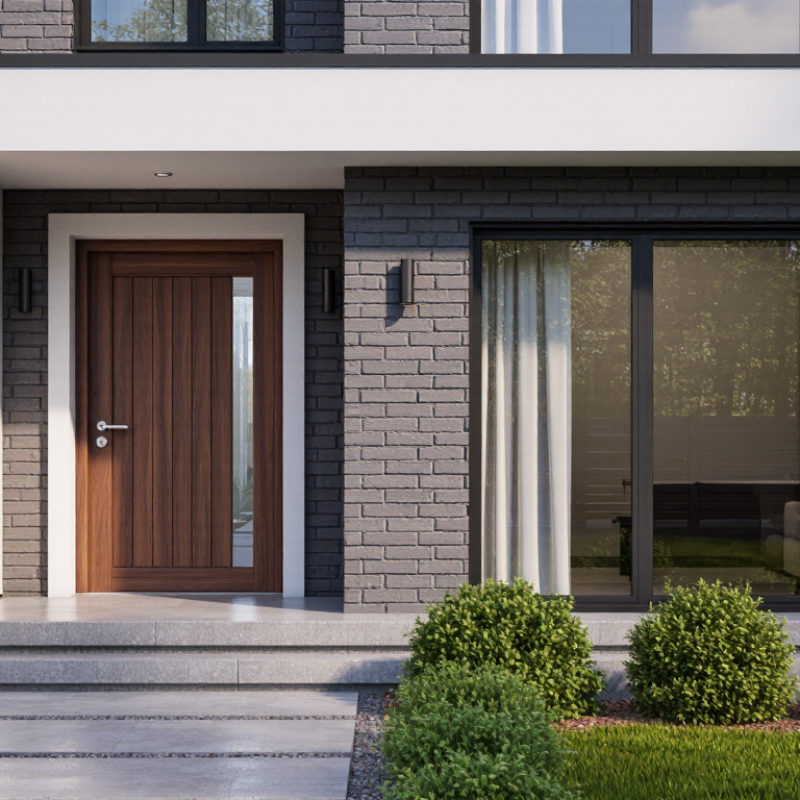
Assess Your Home’s Entry Points, Climate, and Functional Needs
Map every entry before comparing styles: the main entrance, side door, patio opening, and any door connecting the garage to living space. Note which openings face driving rain or afternoon sun. Measure the clear opening, threshold height, and swing space; a beautiful door that blocks a narrow hall is still the wrong choice. Small details matter. A glazed patio door may brighten a dark room, while a solid, weather-stripped entry door can offer more privacy.
Climate should shape the specification, not just the material. The U.S. Department of Energy estimates that heat gain and loss through windows, doors, and skylights account for 25%–30% of residential heating and cooling energy use. Compare listed U-factors and air-leakage ratings, where available. Lower U-factors generally suit colder conditions; in sunny climates, consider solar heat gain and shade. Check seals and sill drainage, too. They are easy to overlook.
Match operation to daily use: consider a wide, low-threshold opening for mobility, durable finishes for wet exposure, and a secure lockset for frequently used entrances. JLC’s 2024 Cost vs. Value report estimated a 188.1% cost recoup for a steel entry-door replacement nationally. That is a modeled resale comparison, not a promise; local prices and buyer preferences vary. I would not choose a door on resale figures alone. A quiet latch and a threshold that sheds water may matter more every day.
Compare Exterior Door Materials and Their Maintenance Requirements
Fiberglass doors suit homeowners who want a stable surface with relatively little upkeep. Most need occasional washing with mild soap and water, plus checks of the weatherstripping and hinges. Their finish can still fade or crack after years of strong sun, so inspect exposed edges each season. Not maintenance-free. A shaded entry may age differently from a south-facing door that gets afternoon heat.
Steel doors often provide good insulation when their cores and seals are well designed. Clean them gently, and touch up scratches before moisture reaches the metal and causes rust. Dents can be difficult to repair invisibly. Wood offers natural grain and can be repaired, but it asks for more attention: renew paint or stain when peeling, cracking, or bare patches appear. Check the bottom edge and frame, where rain can linger. I would not choose wood solely for its appearance without considering local exposure. A covered porch helps, but it does not erase upkeep. Compare the material, finish, installation quality, and the time you can realistically spend on care.
Evaluate Insulation, Weather Resistance, and Security Features
A well-insulated door should keep winter drafts from slipping around its edges and reduce heat transfer through the panel. The U.S. Department of Energy’s Energy Saver guidance says foam-filled steel and fiberglass doors can reach R-5 to R-6, more than five times the insulation value of typical wood doors. Check the door’s U-factor, too: lower values indicate less heat transfer. Small gaps matter. Inspect the frame, threshold, and weatherstripping, where air often sneaks through. For weather resistance, compare tested air-leakage and water-penetration ratings under AAMA/WDMA/CSA 101/I.S.2/A440. A rating helps, but correct installation still matters.
Security deserves more than a heavy-looking slab. The FBI’s 2019 Crime in the United States report found that 55.7% of burglaries involved forcible entry, while 37.8% involved unlawful entry without force. This does not mean a door alone prevents break-ins; it does show why the full assembly matters. Look for a reinforced frame, secure hinges, and a deadbolt with a strike plate fixed firmly into the framing. Glazed panels near the lock may also affect your choice. I would not treat any single rating or feature as a guarantee. A door can be well insulated and still perform poorly if its frame is loose or its threshold lets water in. Check the installation details, not just the product label.
Choose a Door Style, Size, and Configuration for Each Entrance
A front entrance should suit the house, but it also needs to work on a wet, busy day. Match the door style to the home’s architecture, then consider how each entrance is used. A glazed front door can brighten a dim hallway; a solid side door may offer more privacy. For a patio opening, sliding doors save swing space, while hinged pairs create a wider passage. Check where handles, furniture, and steps will sit before choosing the swing direction. Small details matter.
Measure the frame, not just the old door panel. Note the opening’s width, height, depth, and threshold condition. For accessible routes where ADA standards apply, the U.S. Access Board specifies at least 32 inches of clear opening. The measurement is taken with the door open 90 degrees. A wider slab does not always provide that clearance. That’s easy to miss.
Budget figures can help set expectations, but they are not promises. Remodeling magazine’s 2024 Cost vs. Value report estimated a steel entry-door replacement at $2,355, with $4,430 in resale value, or 188.1% of project cost recouped. These are national averages, not a guarantee for one home. Before deciding, compare each entrance’s exposure to rain, available clearance, security needs, and desired light. A beautiful door that blocks a walkway is still the wrong fit.
How to Choose the Right Exterior Doors for Your Home
Compare representative nominal widths for common entrance configurations. Actual sizes vary by manufacturer and location, so measure your opening before choosing a door.
A single 36-inch entry door is a common choice for a main entrance. Wider paired or sliding configurations can suit larger openings and provide a broader passage.
Set a Budget and Confirm Professional Installation Requirements
A sensible budget for an exterior door includes more than the door itself. Allow for the frame, threshold, lockset, weatherstripping, trim, and removal of the old unit. Measure the opening, but have an installer confirm the dimensions before ordering. A narrow gap or uneven floor can change the job. Compare written estimates by checking what each includes, not just the final price. It is tempting to choose the lowest figure. That can be a false saving if repairs are excluded.
Professional installation requirements depend on the opening and the door’s weight, material, and design. Ask whether the existing frame is sound and whether the installer will address flashing, insulation, and weather sealing. These details help limit drafts and moisture entry. Request a written scope, expected timeline, and details about workmanship coverage. If the threshold is soft or the surrounding trim shows water stains, ask for an inspection before setting a firm budget. Surprises happen. I would leave room for them.
Tips: Get two or three itemized estimates. Ask who handles disposal and any needed frame repairs. Confirm the door’s swing and clearance against nearby walls, steps, and furniture. Check whether local approvals are needed before work begins. Keep a small contingency; even a careful estimate can miss hidden damage.



 Find Your Solutions ▶