How to Choose the Right Drilling Rig for Your Needs?
Choosing the right Drilling Rig begins with the well, not the equipment brochure. Depth, formation pressure, hole design, terrain, and access constraints all shape the decision. A compact land rig may suit a shallow, accessible site. A remote location or deeper well can demand greater hoisting capacity, stronger pumps, and more advanced controls. Small mismatches matter. A rig that lacks adequate torque or load capacity can slow work and increase operational risk.
Industry data helps explain why one specification cannot fit every project. The U.S. Energy Information Administration’s Drilling Productivity Report tracks new-well production per rig across seven major shale regions. Its regional approach reflects a practical reality: geology and operating conditions vary. Baker Hughes’ rig-count reports track active rigs, but rig counts alone do not show whether a particular unit fits a specific well. Buyers still need to compare technical limits, crew capability, maintenance history, and mobilization costs.
As well-engineering specialist John Thorogood’s work underscores, planning the well and its equipment as one system is essential. A useful rule is: “Choose the rig around the well plan, not the well plan around the rig.” Treat that as a decision principle, not a substitute for engineering review. Before committing, check the rig’s rated depth, hook load, pump output, footprint, and support requirements against the actual program. Ask for recent inspection records. Verify what is included in the quoted rate. Even a careful shortlist can miss a site-specific constraint; that is worth reviewing with qualified drilling and safety professionals before mobilization.
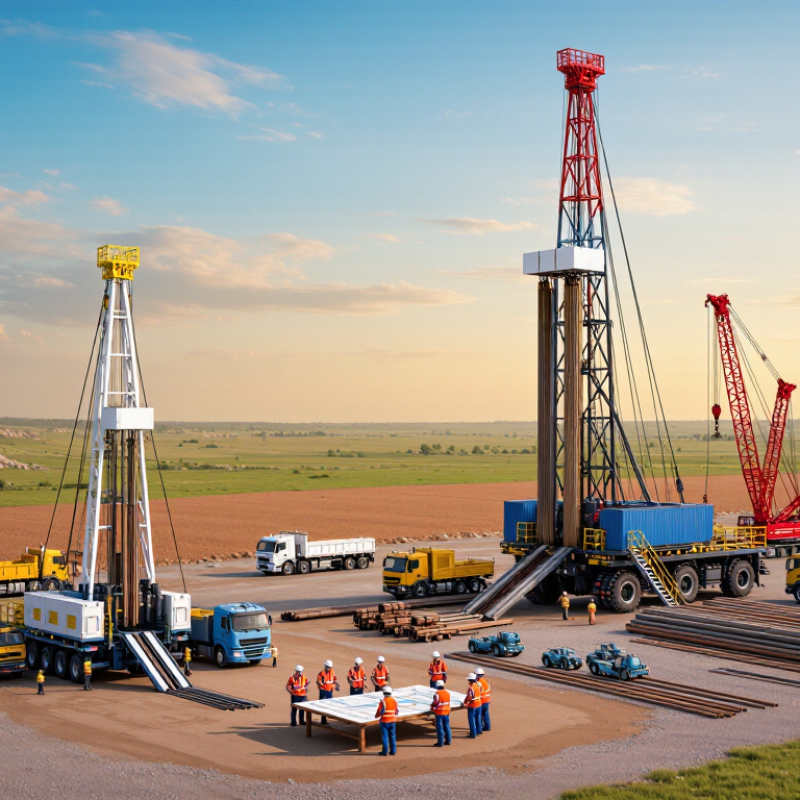
Understanding Drilling Rig Types and Their Primary Applications
Choosing a drilling rig starts with the ground, not the catalogue. Rotary rigs suit deep, continuous holes in rock. Percussion rigs work well in fractured, shallow formations. Auger rigs handle unconsolidated soil with limited water control. Directional rigs add steering for wells that must reach offset targets. The best match depends on geology, depth, diameter, access, and sample quality. A compact crawler may reach a tight site, yet sacrifice torque and lifting capacity. Small detail, major consequence.
Application changes the decision.
Water-well drilling often needs reliable circulation and clean borehole control. Mining exploration prioritizes core recovery, depth capability, and low deviation. Geotechnical work favors mobility, rapid setup, and repeatable sampling. Geothermal projects demand high-temperature components and stronger pumps.
IRENA’s Renewable Capacity Statistics 2024 records about 14.9 gigawatts of global geothermal capacity at the end of 2023. That installed base reflects demanding drilling conditions, not only larger machines. The International Energy Agency reported expected upstream oil and gas investment of about $570 billion in 2024.
Before purchase, compare pullback force, rotary torque, mast height, compressor output, and fuel use. Ask operators how the rig behaves after eight wet hours. Test maintenance access, noise, transport limits, and spare-part availability. Do not trust rated depth alone; it often assumes ideal ground and new tooling. No checklist is perfect. A site trial may expose assumptions that a specification sheet hides. A cheaper rig can become expensive when every metre takes longer.
Assessing Ground Conditions, Drilling Depth, and Project Requirements
How to Choose the Right Drilling Rig for Your Needs?
Assessing Ground Conditions, Drilling Depth, and Project Requirements
Choosing a drilling rig begins with the ground, not the machine’s advertised power. Review borehole logs, geological maps, and recent site records. Then confirm conditions in the field. Loose sand may collapse, while dense gravel can damage tooling and slow progress. Clay creates different problems when it swells or sticks. A site walk can reveal groundwater, access limits, and overhead clearance that paperwork misses. Small details matter.
Drilling depth must match the required investigation, not an optimistic estimate. Include casing length, sampling intervals, rock strength, and final hole diameter. A rig with adequate torque may still lack feed force for deep, continuous work. Check mast height, pump capacity, rod length, and lifting limits. For a 40-meter borehole, repeated rod changes can consume hours. That affects cost and crew fatigue. Sometimes a smaller rig is safer in a tight urban site.
Project requirements shape the final choice. Consider transport, noise, emissions, setup time, sample quality, and daily production targets. Ask contractors how the rig performs in comparable formations. Request maintenance records and operator qualifications. Do not rely on speed claims alone. Field teams often see schedules fail because water management was treated as an afterthought. No assessment is perfect. Initial soil data may be wrong, leaving room for harder layers, unstable walls, or unexpected groundwater.
How to Choose the Right Drilling Rig for Your Needs
Compare project priorities to guide rig selection. Scores are illustrative planning ratings, not measured performance; actual suitability depends on site investigation and equipment specifications.
Start with ground conditions and required depth, then check access constraints and production needs. Confirm the final choice with a geotechnical assessment and the rig manufacturer’s operating limits.
Evaluating Drilling Performance, Costs, Safety, and Maintenance
Choosing a drilling rig should begin with measurable performance, not catalogue claims. Track penetration rate, hole quality, fuel use, and mechanical availability. A fast rig is not efficient if it produces crooked holes or frequent delays. Field experience shows that ground conditions can change within the same site. Therefore, request performance data from comparable rock, depth, and drilling angles.
Cost analysis must include the full operating cycle. Calculate purchase or rental costs, fuel, bits, labor, transport, and planned downtime. Maintenance records often reveal the real expense. ISO 14224 supports consistent collection of equipment reliability and maintenance data. Use that structure when comparing rigs. A cheaper machine may create higher costs through difficult access to filters, hoses, or hydraulic components. I have seen maintenance assumptions fail in muddy, remote sites. They looked reasonable on paper.
Safety deserves equal weight. The International Labour Organization estimated nearly three million work-related deaths worldwide in 2023. Review guarding, emergency stops, dust control, noise exposure, and operator visibility. ICMM safety reporting also emphasizes leading indicators, not only injury totals. Ask how inspections, training, and near-miss reporting will work daily.
Tips: Build a simple cost-per-metre model. Test the rig on representative ground before purchase. Check service access with gloves on. Measure fuel and downtime for several shifts. Keep one uncomfortable question: what happens when the ideal conditions disappear?
Selecting the Best Rig and Confirming Its Compatibility with Your Project
How to Choose the Right Drilling Rig for Your Needs?
Selecting a drilling rig starts with project compatibility, not engine power. Define the required bore diameter, drilling depth, ground conditions, and daily production target. A compact rig may suit a narrow urban site, while a larger machine handles deep formations more efficiently. Check the mast height against overhead clearance. Measure gates, roads, and working platforms before delivery. A rig that cannot reach the site is useless, regardless of its specifications. Soil reports also matter. Clay, fractured rock, sand, and mixed layers require different drilling methods and tooling.
Tips: Compare torque, pullback force, rotation speed, and pump capacity. Confirm the rig supports your casing sizes and drill rods. Review fuel use, maintenance access, noise levels, and operator controls. Ask for test records and service documentation. Do not rely only on brochure figures.
Compatibility also includes transport, power supply, and site safety. Calculate the rig’s operating weight on the actual ground, especially near slopes or trenches. Confirm that stabilizers can level the machine safely. I once underestimated access width by a few centimeters, creating an avoidable delivery delay. That mistake changed my checklist. Now, I measure the narrowest entry point twice and photograph nearby obstacles. Discuss unusual conditions with an experienced technician before purchase. A practical field inspection often reveals limitations that specifications miss. Leave room for uncertainty; geological conditions rarely follow the plan perfectly.



 Find Your Solutions ▶