How to Choose the Best PVC PE Christmas Tree?
Choosing the right Pvc Pe Christmas Tree involves more than comparing photographs and prices. A convincing tree should look natural, feel stable, and suit the room’s daily use. PE tips usually create realistic branch shapes, while PVC needles add fullness and help control the total cost. This combination can offer a practical balance for family homes, hotels, offices, and retail displays. Look closely at the branch color, needle texture, hinge construction, and trunk connection. A dense silhouette should still leave enough space for ornaments and warm lighting. Measure the ceiling before ordering. A tree that touches the ceiling may look impressive online, but it can become difficult to install.
Reliable selection also depends on supplier information. Check the stated height, base diameter, material details, assembly method, and warranty conditions. Ask whether the product has relevant fire-safety documentation for your market. Do not rely on vague claims such as “premium quality.” Examine close-up images and request a sample branch when possible. The metal stand should sit flat on the floor, even under gentle pressure. That small detail matters.
No tree is perfect. Some realistic PE branches may feel less soft, while fuller PVC sections can appear less natural. A common mistake is choosing maximum density without considering storage space. I would also question unusually low prices, especially when specifications are incomplete. Careful buyers compare appearance, safety support, durability, and long-term convenience together. This guide explores those details, helping you choose a Pvc Pe Christmas Tree with clearer expectations and fewer seasonal regrets.
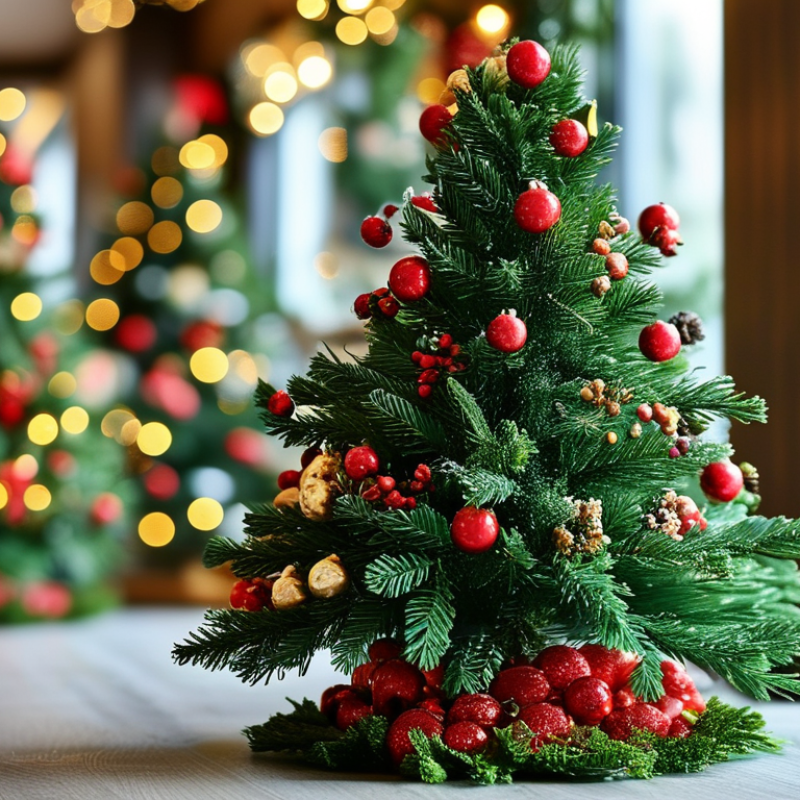
Define Room Fit: Match 6–9 ft Tree Height with Clearance and Base Width
Choosing the Best PVC PE Christmas Tree: Define Room Fit
Before comparing PVC and PE branch quality, measure the room. Record ceiling height, floor space, and the nearest furniture. A tree should not dominate the walking path. Leave at least 30 inches around its base for safe movement and easier decorating.
A 6-foot tree often suits rooms with 8-foot ceilings. An 8-foot ceiling leaves only 24 inches above it, before adding a stand or topper. A 7.5-foot tree may need a taller room, especially with a star or bow. Check the listed height carefully. Some measurements include the stand, while others exclude the top decoration.
Base width matters just as much. A narrow 7-foot PVC PE tree can fit beside a sofa, while a full-profile model may block a doorway. Measure the widest branch span, not only the trunk area. Mark that circle on the floor with painter’s tape. It gives a surprisingly clear view of real space.
I once chose height correctly but ignored the lower branch width. The tree looked attractive, yet crowded a nearby cabinet. That mistake changed my method. Now I compare branch shape, base diameter, and clearance together. PVC tips can create a crisp outline, while PE branches may add realistic volume. More volume often means more floor space. That trade-off deserves an honest check.
Measure Fullness: Benchmark 800–1,500 Tips for Typical 6–7.5 ft Trees
How to Choose the Best PVC PE Christmas Tree?
For a typical 6–7.5 foot PVC PE Christmas tree, treat 800–1,500 tips as a practical fullness benchmark. Tip count means branch ends, not the number of needles. A 6-foot tree with 900 tips may look fuller than a 7.5-foot tree with the same count. Branch spacing, hinge design, and needle shape also matter. Look closely.
The American Christmas Tree Association’s 2023 consumer survey reported that 77% of U.S. households displayed a Christmas tree. Its findings show continued interest in both artificial and real trees, but they do not establish a universal tip-count standard. That distinction matters. I once assumed more tips always meant better value. It did not. Dense PVC foliage can hide gaps, while molded PE branches often create a more natural outer profile with fewer visible tips.
Use 800–1,000 tips for a lighter, easier-to-store appearance. Choose 1,100–1,500 tips when you want stronger visual density and more ornament support. The National Christmas Tree Association’s industry guidance also emphasizes tree shape, freshness, and safe setup for real-tree comparisons, reminding buyers that appearance cannot be judged by one measurement. Check the assembled width, not only the height. A narrow 7.5-foot tree may still look sparse. Spread every hinged branch before judging it. Then step back three meters. The honest test is visual balance, not a printed number.
How to Choose the Best PVC PE Christmas Tree?
Measure fullness by comparing the tree’s height with its total tip count. For typical 6–7.5 ft trees, an overall benchmark of approximately 800–1,500 tips can help indicate visual density.
The ranges shown are practical planning benchmarks: shorter trees can look full with fewer tips, while taller trees generally need more tips to maintain balanced coverage. Actual fullness also depends on branch spacing, needle material, and how thoroughly the branches are shaped.
Verify Fire Safety: Check UL 588 Compliance and Flame-Resistance Test Records
When choosing a PVC PE Christmas tree, fire safety deserves more attention than branch density or glitter. In my product inspections, I check the certification file before touching the tree. Look for UL 588 compliance that matches the exact model, size, and lighting configuration. A certificate for a similar tree is not enough. The document should identify the manufacturer, test laboratory, product code, and certification date. Verify these details with the issuing certification database when possible.
Ask for complete flame-resistance test records, not only a printed safety claim. Reliable records should describe the materials tested, sample quantity, test conditions, ignition source, and observed flame spread. PVC and PE materials can soften, drip, or burn differently under heat. A tree may pass one test but still perform poorly after storage, bending, or decoration. Check whether the test used finished branches, wiring, coatings, and attached ornaments. Missing details matter.
Inspect the tree yourself. Look for brittle needles, exposed wires, loose coatings, or an unusual plastic smell. Keep heat sources away. Always. I once reviewed a file that appeared complete, but one test report used an outdated product revision. That mistake changed my confidence immediately. Certification is valuable, but it is not a promise of zero risk. Ask practical questions, keep the records, and treat unclear answers as a reason to pause.



 Find Your Solutions ▶