
How to Choose the Best Galvanized Grating for Your Project
Choosing the right Galvanized Grating affects safety, drainage, maintenance, and long-term project costs. It is not simply a matter of selecting the cheapest panel.
A walkway beside a cooling tower faces moisture, chemicals, and constant foot traffic. A platform inside a warehouse may require different spacing, load capacity, and surface protection. Small details matter. The correct choice begins with the working environment.
This guide explains how to compare bearing bar sizes, crossbar spacing, panel dimensions, and surface finishes. It also considers pedestrian comfort, installation requirements, and access for future maintenance. Experienced contractors often measure support spans twice before ordering. That habit prevents costly cutting and delays.
Hot-dip galvanizing provides a protective zinc coating, but it is not a universal solution. Damaged edges, trapped moisture, or aggressive chemicals can reduce service life. A qualified engineer should confirm structural loads and applicable standards. Product data should come from a traceable manufacturer, not an unclear online listing.
Some decisions remain easy to overlook. For example, a narrow opening may need close-spaced grating to prevent small tools from falling through. Wet areas may need serrated surfaces for better slip resistance. A smooth surface can look cleaner, yet perform poorly under muddy boots.
No selection process is perfect. Site conditions can change after installation. Rechecking assumptions is worthwhile. With practical measurements, verified specifications, and honest attention to risks, you can choose Galvanized Grating that performs reliably throughout the project.
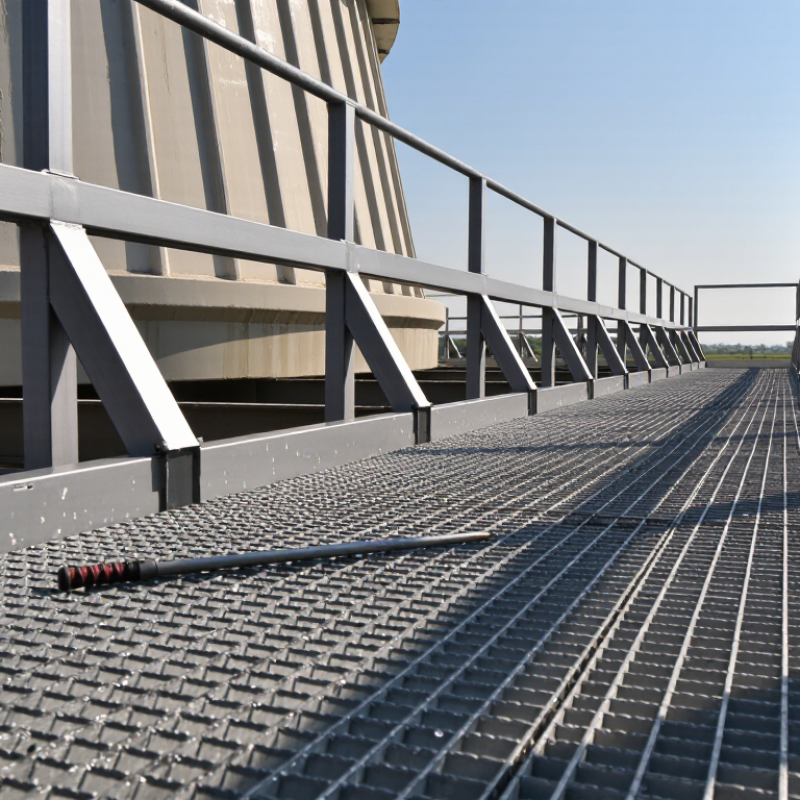
Project Requirements and Galvanized Grating Performance Goals
Choosing the best galvanized grating starts with project requirements, not catalog appearance. Define span, support spacing, pedestrian or vehicle loading, drainage, and maintenance access. A 1,000 mm span can perform differently from a 600 mm span. Record concentrated loads, rolling loads, impact, and acceptable deflection. NAAMM MBG 531 provides load tables and design guidance for metal bar grating. Use its calculations, not visual judgment. Keep every requirement measurable.
Corrosion performance needs equal attention. ISO 1461:2022 specifies a minimum average zinc coating thickness of 85 micrometres for steel over 6 mm, with a 70-micrometre local minimum. Thinner steel sections have different requirements. Confirm the actual bar thickness before ordering. The American Galvanizers Association’s corrosion-rate data show zinc loss varies from less than 1 to several micrometres per year, depending on rural, industrial, or marine exposure. Airborne salt, standing water, and trapped debris can shorten service life. They are easy to overlook.
I would also inspect cut edges, welds, bearing seats, and drainage paths. Galvanizing is strong protection, but it is not a substitute for sound detailing. A perfect selection is rare. Recheck assumptions after installation. The chosen grating should meet the load goal, coating requirement, slip resistance, and expected maintenance plan. Missing one detail can make a technically compliant product unsuitable in practice.

Grating Types, Materials, and Surface Treatments
How to Choose the Best Galvanized Grating for Your Project
Grating type should match the load, span, and working environment. Welded Grating suits platforms, walkways, and maintenance areas with repeated foot traffic. Press-locked grating offers a cleaner appearance and closer panel tolerances, but it may need careful load verification. Choose plain bearing bars for dry indoor areas. Serrated bars provide better grip where oil, rain, or mud may collect. Small openings help prevent tools from falling, while larger openings improve drainage and reduce weight. One detail is easy to miss. Check how panels will be lifted and replaced.
Tips: Compare the required load with certified load tables, not visual thickness alone. Ask for coating thickness records and material certificates. Measure support spacing on site before ordering. Leave access for bolts, clips, and future cleaning.
Material selection also affects service life. Hot-dip galvanized carbon steel is a practical choice for many outdoor structures because its zinc coating protects exposed steel. Stainless steel may suit aggressive chemical or coastal conditions, although it changes the budget significantly. Aluminum is lighter, but it is not a direct substitute for galvanized steel in every load-bearing application. Surface treatment matters after fabrication. Cutting, drilling, or welding can expose bare steel and requires suitable repair protection. A duplex system, using galvanizing with a compatible paint layer, can improve durability in severe environments. Still, paint adhesion depends on proper surface preparation. Site conditions are often messier than drawings suggest. Consult a qualified engineer when vibration, impact, fire exposure, or unusual spans are involved.
Load Capacity, Span, and Safety Requirements
How to Choose the Best Galvanized Grating for Your Project
Load Capacity, Span, and Safety Requirements
Choosing galvanized grating starts with the loads it must carry. Consider workers, stored materials, carts, maintenance tools, and occasional impact. A walkway may need less capacity than a platform supporting equipment. Do not estimate from appearance. Check the manufacturer’s load tables and confirm whether loads are distributed or concentrated.
Span changes everything. Longer spans increase deflection, even when the grating does not immediately fail. Measure the clear distance between supports, not the overall frame size. Select bearing bars with suitable depth and spacing for that distance. I have seen projects use strong grating with weak support angles. The grating was not the real problem.
Safety requirements need equal attention. Follow applicable building codes, workplace rules, and project specifications. Check opening sizes, slip resistance, edge protection, and secure fixing methods. Wet areas may require serrated surfaces, while drainage areas need openings that remain safe for footwear. Galvanizing helps resist corrosion, but damaged cut edges still need proper treatment. Inspect connections after installation. Small movement matters. When calculations seem uncertain, ask a qualified engineer to verify capacity, deflection, and support conditions before ordering. Bear in mind, field conditions rarely match drawings perfectly.
Panel Dimensions, Installation Methods, and Maintenance Needs
How to Choose the Best Galvanized Grating for Your Project
Panel dimensions should match the opening, span, and expected load. Measure the supporting frame, not only the visible gap. Bearing bars must run across the shortest span whenever possible. This reduces deflection and improves stability. Specify length, width, bearing bar depth, spacing, and surface type clearly. Serrated surfaces provide better grip in wet areas, but they may collect more debris. A small measurement error can create costly cutting work later.
Installation depends on access, movement, and future maintenance. Bolted clips allow removal for cleaning or equipment access. Welded connections provide strong restraint, but they require skilled work and coating repairs afterward. Use enough fixing points to prevent lifting, shifting, or vibration. Never assume a standard panel will fit every frame. During inspections, check loose fasteners, damaged zinc coating, blocked drainage, and early rust around cut edges. Clean mud and chemicals promptly. Repair exposed steel with a suitable zinc-rich coating. I have seen maintenance plans fail because they ignored hidden supports.
Tips: Confirm dimensions on site. Check load data with a qualified engineer. Leave practical access for removal. Inspect after severe weather. Keep spare clips available. A simple record helps.
Cost, Standards, and Supplier Selection Criteria
Choosing galvanized grating starts with the project’s real operating conditions, not the lowest quotation. A forklift aisle needs stronger load capacity than a pedestrian walkway. A wet stair landing also needs serrated surfaces for better traction. Confirm span, bearing direction, bar spacing, panel size, and expected loads before comparing prices. Small specification errors can create expensive changes later.
Cost includes more than steel. Compare material weight, fabrication, galvanizing, delivery, cutting, and installation accessories. Ask whether edge bars, support clips, and touch-up materials are included. Galvanizing standards such as ASTM A123/A123M or ISO 1461 can help define coating quality, but the required standard may depend on your region and project documents. Request coating records, dimensional checks, and load information. A low price may simply reflect missing details.
Tips: Ask for a written quotation with every assumption listed. Check supplier experience with similar spans and environments. Request samples or clear photographs of welds, cut edges, and finished surfaces. Reliable suppliers should provide traceable material records and explain realistic lead times. Do not accept vague claims about “heavy duty” performance. I have found that suppliers often answer quickly, but their technical answers may still need testing. Recheck unusual loads, corrosive exposure, and installation tolerances with a qualified engineer before approval.
How to Choose the Best Galvanized Grating for Your Project - Cost, Standards, and Supplier Selection Criteria
| Selection Dimension | Recommended Option / Typical Data | When It Is Suitable | Key Verification Point |
|---|---|---|---|
| Material | Carbon steel grating with hot-dip galvanized zinc coating | Outdoor walkways, platforms, drainage covers, industrial access areas, and moderate-to-severe atmospheric exposure | Confirm the base steel grade, welding quality, coating process, and certificate of conformity |
| Manufacturing Standard | NAAMM MBG 531 for steel bar grating design, fabrication, and terminology | Projects specified for North American engineering and construction practice | Request the applicable edition and confirm that the supplier’s drawings follow the required load tables |
| Zinc Coating Standard | ASTM A123/A123M or ISO 1461 for hot-dip galvanized fabricated steel products | General structural and access applications requiring corrosion protection | Check coating mass or thickness, visual finish, uncoated areas, and repair requirements |
| Galvanizing Repair | ASTM A780/A780M-compliant repair using an approved zinc-rich repair system or equivalent method | Cut edges, drilled holes, welding damage, and small transport or installation defects | Ensure damaged areas are cleaned and repaired according to the specified standard before service |
| Bearing Bar Size | Common choices include 25 × 3 mm, 25 × 5 mm, 32 × 5 mm, and 40 × 5 mm | Light pedestrian use through heavier industrial platforms and service areas | Select by clear span, design load, deflection limit, support condition, and required safety factor—not by size alone |
| Bearing Bar Spacing | Typical center-to-center spacing: 30, att 32, or 40 mm | 30–32 mm spacing is commonly selected where smaller openings and improved walking comfort are needed; 40 mm can reduce weight and cost | Check heel safety, tool-drop risk, drainage needs, and local accessibility requirements |
| Cross-Rod Spacing | Typical spacing: 50, 76, or 100 mm, depending on the grating system | Closer spacing provides a denser walking surface; wider spacing may improve drainage and reduce material use | Confirm the opening dimensions and whether the project restricts falling objects or footwear penetration |
| Surface Type | Plain surface or serrated surface | Plain grating suits relatively clean areas; serrated grating is preferred where oil, water, mud, or ice may reduce traction | Confirm slip-resistance requirements and whether serrations are applied to bearing bars, cross bars, or both |
| Load Category | Pedestrian traffic, maintenance trolley, equipment access, or vehicle loading | The correct grating depends on uniformly distributed load, concentrated load, span, and support layout | Obtain a stamped or signed load calculation where the grating supports people, equipment, or vehicles |
| Deflection Target | Common project limits include L/200 or L/240, subject to the governing specification | Controls vibration, user comfort, equipment stability, and perceived structural stiffness | Confirm whether the limit applies to live load, total load, or a specific project design code |
| Panel Dimensions | Panel length and width should be based on the support grid, lifting limits, access routes, and transport constraints | Smaller panels simplify handling and replacement; larger panels can reduce installation joints | Require a shop drawing showing bearing direction, support locations, cut-outs, and panel identification |
| Support Bearing | Provide adequate end bearing on structural supports; the exact minimum depends on the design standard and support detail | All platforms, walkways, trenches, and removable covers | Verify bearing length, support width, fastener clearance, and that bearing bars run in the designed span direction |
| Fixing Method | Grating clips, saddle clips, bolted clamps, or welded attachments | Clips are useful for removable panels; welding can provide permanent restraint where permitted | Specify the number and position of fixings, anti-lift protection, and corrosion repair after field welding |
| Safety Accessories | Kick plates, nosing, stair treads, handrails, toe guards, and removable lifting handles | Elevated platforms, stairs, walkways, maintenance zones, and areas with falling-object risks | Coordinate accessory dimensions with the applicable building, workplace-safety, and accessibility requirements |
| Indicative Material Cost | Approximately US$45–120 per m² for standard hot-dip galvanized steel grating, excluding freight and installation | Budget-stage comparison for standard panels with common bar sizes and spacing | Obtain a project quotation because steel weight, panel size, cut-outs, quantity, coating, and market conditions significantly affect price |
| Fabrication Cost Factors | Cut-outs, border bars, toe plates, stair nosing, special tolerances, nonstandard dimensions, and additional galvanizing work | Projects with equipment penetrations, irregular layouts, or prefabricated installation requirements | Ask for separate pricing for raw panels, fabrication, galvanizing, packaging, testing, and delivery |
| Lead Time | Often about 3–8 weeks for standard production after approved drawings; custom or high-volume orders may take longer | Planning procurement, site installation, and replacement-panel requirements | Request a written schedule covering drawing approval, fabrication, galvanizing, inspection, and shipment |
| Supplier Quality Evidence | Material certificates, galvanizing records, dimensional inspection reports, load calculations, and traceable delivery documents | Safety-critical, regulated, export, and industrial projects | Check whether documents identify the actual batch, panel numbers, standards, test results, and inspection criteria |
| Packaging and Delivery | Bundled panels with separators, clear labels, lifting points, and protection against distortion during transport | Large projects requiring staged installation or crane and forklift handling | Confirm bundle weight, lifting instructions, delivery sequence, unloading responsibility, and damage-reporting procedure |
| Total Cost of Ownership | Evaluate purchase price, installation labor, fasteners, maintenance access, replacement ease, corrosion protection, and service life | Long-term infrastructure, industrial plants, utilities, marine-adjacent, and hard-to-access locations | Choose the lowest compliant lifecycle cost rather than the lowest initial unit price |
Article Source:
NORTH EASTON MACHINE • 218 Elm Street • North Easton, MA 02356 • 508-238-6219