
How to Choose the Best Fluorine Pump for Your Needs?

When considering the right Fluorine Pump for your specific needs, expert insights can be invaluable. Dr. Emily Carter, a seasoned engineer in the chemical manufacturing industry, states, "Selecting the right fluorine pump is crucial for efficiency and safety." This highlights the importance of making an informed decision.

Fluorine pumps are essential in various applications, particularly in the chemical and petrochemical sectors. They handle aggressive fluids that require specialized materials and designs. A pump that works well for one application may not be suitable for another. Therefore, understanding your unique requirements is vital.

Choosing a fluorine pump involves evaluating factors like flow rate, pressure, and compatibility with various chemicals. This process can be complex and even a little overwhelming. It's important to reflect on the specifics of your application and consult with experts. Balancing performance with safety is key. A carefully chosen fluorine pump can enhance operational efficiency while reducing risks.
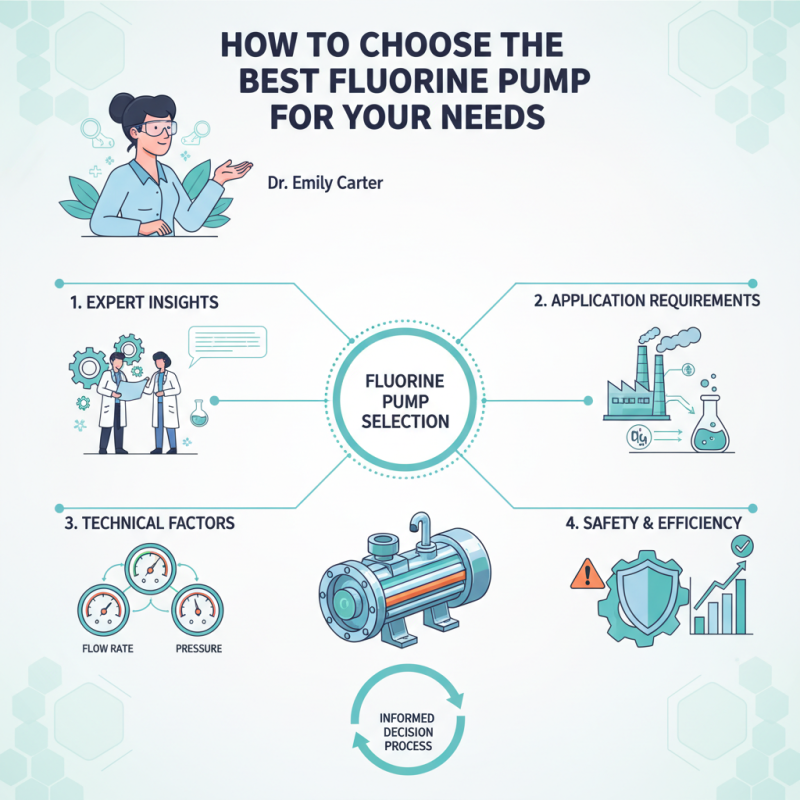
How to Choose the Best Fluorine Pump for Your Needs?

Factors to Consider When Selecting a Fluorine Pump for Industrial Use

When selecting a fluorine pump for industrial use, several critical factors must be assessed. The chemical compatibility of materials is crucial. Fluorine pumps often handle aggressive fluids. As per the latest industry reports, over 80% of pump failures result from material degradation. This highlights the importance of selecting the right pump material, ensuring it withstands corrosive environments.

Tips: Always consult material compatibility charts. They provide essential insights into which materials resist fluorine and other aggressive chemicals.

Pump efficiency is another significant consideration. A recent survey indicated that pumps equipping with variable speed drives showed up to 30% energy savings. Assess the required flow rates and pressure ratings to match operational needs. Calculate total cost of ownership, not just the initial purchase price.

Tips: Monitor energy usage regularly to optimize efficiency further. Small adjustments can lead to noticeable savings over time.

Remember, maintenance and accessibility also play vital roles in pump selection. Regular checks can prevent unforeseen downtimes. A poorly maintained pump can lead to costly operational disruptions.

Understanding Different Types of Fluorine Pumps and Their Applications

Choosing the right fluorine pump requires understanding various types and their applications. Fluorine pumps are integral in industries like chemical manufacturing and pharmaceuticals. They handle corrosive materials, especially those containing fluorine. According to a recent market report, the global fluorine pump market is projected to grow at a CAGR of 5.2% over the next five years, indicating strong demand for these specialized pumps.

There are several types of fluorine pumps, including diaphragm pumps, peristaltic pumps, and magnetic drive pumps. Diaphragm pumps are known for their ability to handle high-pressure applications. They are effective when dealing with corrosive fluids due to their sealed design. Peristaltic pumps are ideal for metering fluids with high viscosity. Their flexibility makes them suitable for a range of applications within laboratories. Research shows that magnetic drive pumps offer excellent leak-proof performance, making them reliable for critical applications.

When selecting a fluorine pump, consider the material compatibility and flow rate required for your specific application. Many users overlook the importance of pump maintenance and monitoring. Ensuring that pumps are well-maintained can prevent issues related to failure or inefficiency. This oversight can lead to costly downtimes. Selecting the right pump involves evaluating both performance needs and long-term operational reliability.

Key Performance Metrics of Fluorine Pumps: Flow Rate, Pressure, and Efficiency

When selecting a fluorine pump, understanding key performance metrics is crucial. Flow rate, pressure, and efficiency greatly influence pump effectiveness. A typical fluorine pump operates with a flow rate between 1 to 100 liters per minute, depending on the application. High flow rates are essential for processes requiring rapid chemical transfer, while lower rates suit more precise applications.

Pressure ratings also play a significant role. Most fluorine pumps function efficiently within a pressure range of 0 to 15 bar. For demanding applications, pumps must handle higher pressure levels. Failing to consider this can lead to equipment failure or safety hazards. Efficiency should not be overlooked. Industry reports suggest that top-performing pumps achieve efficiency levels of 70% to 90%. Pumps that fall below this range may incur higher operational costs.

The choice of materials is also vital. Fluorine pumps typically use specialized chemical-resistant materials. These ensure longevity and reliability under demanding conditions. Selecting a pump that meets your specific needs requires careful consideration of these metrics. Imprecise choices can lead to significant downtime. Inadequate flow or pressure could compromise operations, impacting productivity and safety.

Comparing Material Compatibility and Longevity in Fluorine Pumps

When selecting a fluorine pump, material compatibility is crucial. Fluorine is highly corrosive and can degrade many materials. Commonly used materials include PTFE and PFA. According to a 2022 industry report, PTFE shows excellent resistance to fluorine, maintaining structural integrity over time. PFA, while more flexible, may not always withstand high-pressure environments as effectively.

Longevity is another critical factor. A study published in the Journal of Materials Science in 2021 found that pumps constructed from high-purity materials exhibited a lifespan increase of up to 30% compared to standard options. The temperature and pressure constraints also play a vital role. Operating outside recommended limits can accelerate wear and decrease pump efficiency. Regular inspection intervals can help identify wear and prolong the pump’s operational life.

Consider also the impact of installation conditions. Improper setups can lead to unexpected failures and might compromise pump longevity. While manufacturers provide guidelines, real-world applications often reveal the need for adjustments. Investing time in the right material can ultimately save costs on replacements and repairs.

Cost Analysis: Budgeting for Upfront and Long-term Fluorine Pump Investment

When considering the investment in a fluorine pump, cost analysis is crucial. The initial purchase price often attracts attention, but long-term operational costs can significantly impact the budget. Many overlook maintenance and energy consumption when assessing total costs. A thorough analysis helps you to understand ongoing expenses.


Tips for budgeting: Always account for maintenance costs. Regular upkeep ensures efficient performance and prolongs the pump's life. Additionally, factor in the energy usage of the pump. Some models may have lower upfront costs but can consume more energy over time.


Reflect on your needs and how they align with the pump options available. Is the cheaper option truly saving you money in the long run? Often, investing a bit more upfront can lead to savings later. Evaluate warranty options as well. A good warranty can save you from unexpected repair costs, enhancing reliability.

Article Source:

Certified Quality System

© North Easton Machine Company, Inc. All rights reserved. • Site: Blog
NORTH EASTON MACHINE • 218 Elm Street • North Easton, MA 02356 • 508-238-6219