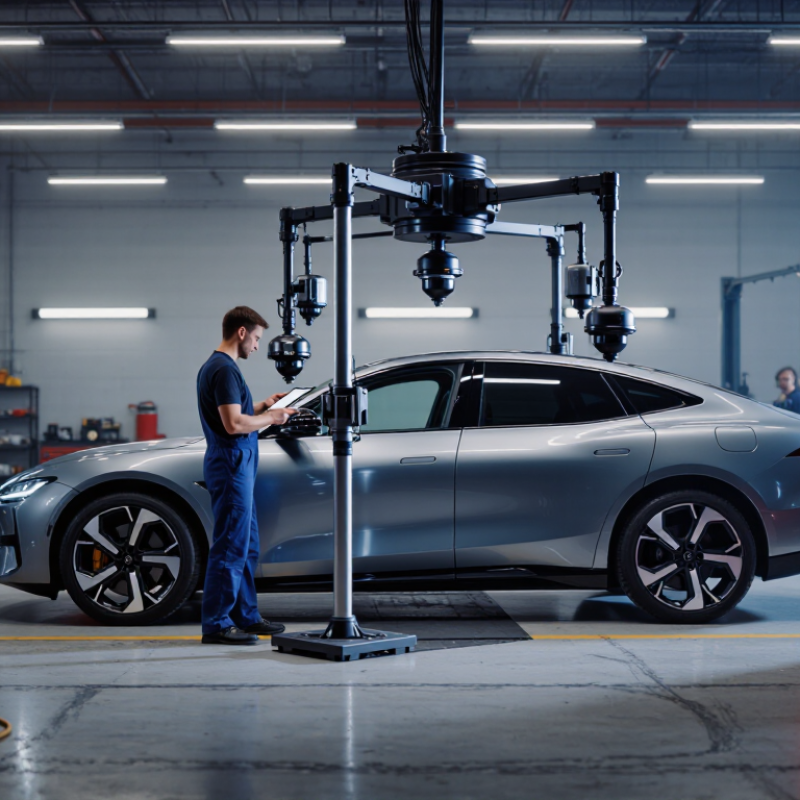
How to Choose an Intelligent Vehicle Inspection System

Choosing an Intelligent Vehicle Inspection System is not simply a camera purchase. It is a decision about inspection consistency, technician workload, and the evidence customers receive. A useful system should capture clear images under workshop lighting, identify visible damage, and connect findings to a reviewable report. It should also fit existing inspection workflows. Impressive demonstrations are not enough; ask how the system performs on dirty panels, glare, unusual vehicle shapes, and minor defects. Real workshops are less tidy than product videos.

The market is changing. The International Energy Agency’s Global EV Outlook 2024 reports nearly 14 million electric cars were sold worldwide in 2023, around 18% of total car sales. Deloitte’s 2024 Global Automotive Consumer Study also documents varied customer expectations across markets. Together, these reports point to a practical need: inspection tools must adapt to changing vehicle types without overstating what automation can detect. AI researcher Andrew Ng’s well-known phrase, “AI is the new electricity,” offers a useful lens—but not a guarantee of accuracy. A system still needs human review.

Compare detection performance, repeatability, integration, data handling, and total operating cost. Request a pilot using your own vehicles, then check results against experienced inspectors. Record false alerts and missed defects. Not glamorous, but useful. No system removes judgment; even good tools can miss damage in a shadow or reflect uncertainty as confidence. The right choice makes evidence easier to capture and verify, while keeping technicians accountable for the final assessment.

How to Choose an Intelligent Vehicle Inspection System

Define Inspection Needs and Operating Conditions

Define the decision before choosing sensors. Is the system checking exterior damage, tire condition, vehicle dimensions, or several items at once? Each task needs different camera angles, lighting, and image detail.

Start with the decision. Record vehicle types, inspection speed, daily volume, and acceptable missed detections. A system that captures clear images of a parked car may struggle with a moving truck in rain.

Operating conditions matter as much as the inspection list. Measure lane width, ceiling height, ambient light, water spray, dust, and queue length during busy periods. S&P Global Mobility reported that the average age of U.S. light vehicles reached 12.6 years in 2024, a reminder that a facility may see varied vehicle designs and condition. FHWA’s 2023 Traffic Volume Trends estimated 3.26 trillion vehicle-miles traveled nationwide.

These figures describe a broad fleet, not your site’s workload. I would not use them as sizing targets. Walk the actual lane, note glare on wet bodywork, and test representative vehicles at operating speed. Some details will be missed during an early survey; revisit the site at night or in bad weather before fixing the specification.

Compare Detection Technologies and Inspection Coverage

An intelligent vehicle inspection system should be judged by what it can detect and where it can see. High-resolution cameras capture dents, cracked lamps, and paint differences, but results depend on lighting and camera angles. Laser scanners measure vehicle dimensions and surface profiles. Thermal sensors can reveal unusual heat patterns, though they do not explain the cause. More sensors do not automatically mean better inspection.

Coverage matters. A lane-side camera may inspect body panels while missing the undercarriage, tire inner walls, or roof. Combine overhead and side views with underbody imaging when those areas matter to your workflow. No sensor sees everything. Rain, road grime, and vehicle speed can also reduce image quality, so check performance under real operating conditions.

Ask suppliers for detection limits, sample reports, and documented test results across different vehicle types. Inspect a familiar vehicle with known scratches or uneven tire wear, then compare system findings with a trained technician’s notes. This exposes blind spots early. Even a well-configured system can flag harmless reflections or miss subtle damage; teams should review uncertain alerts rather than treating every result as fact. Coverage maps need regular attention as inspection needs change.

How to Choose an Intelligent Vehicle Inspection System

Compare detection technologies by the types of defects they are suited to inspect.

Scores are an indicative qualitative capability index from 0 (limited suitability) to 5 (strong suitability), based on each technology’s sensing principle—not measured detection rates. Actual coverage depends on the component, materials, system setup, and inspection conditions. Visual imaging is suited to visible surface conditions; laser profiling to shape and dimensional checks; ultrasonic testing to internal flaws; eddy-current testing to cracks in conductive materials; and thermography to thermal anomalies.

Assess AI Capabilities, Data Handling, and System Integration

How to Choose an Intelligent Vehicle Inspection System

An intelligent vehicle inspection system should show how it performs, not just promise accuracy. Test it on your actual inspection images: scratched doors, dim service bays, glare on windshields, and varied vehicle conditions. Ask for false-positive and missed-damage rates, broken down by inspection task. NIST’s AI Risk Management Framework recommends ongoing evaluation and monitoring; a single impressive demo is not enough. No model is flawless.

Data handling deserves equal scrutiny. Ask where images are stored, who can access them, how long they are retained, and whether access is logged. IBM’s 2024 Cost of a Data Breach Report estimated the global average breach cost at $4.88 million. That figure is a reminder to assess security controls, not a prediction of your own risk. Check encryption, permissions, backup practices, and clear deletion procedures.

Integration can make or break daily use. Confirm the system can exchange inspection results with existing service or fleet software, and test what happens when a connection drops. Tips: Run a small pilot. Compare AI findings with experienced inspectors. Track corrections, syncing delays, and repeat inspections. A neat dashboard may hide messy handoffs. Notice them early.

Verify Accuracy, Safety, and Regulatory Compliance

Accuracy should be verified with vehicles that have independently confirmed measurements, not just repeated software tests. Check different body shapes, lighting conditions, sensor positions, and levels of dirt or wear. Compare system readings with a qualified technician’s findings, and record where they differ. Small errors matter. Keep calibration records and review them after maintenance or software updates. A dashboard score can look precise while hiding a weak measurement.

Safety checks deserve the same attention. Confirm that guards, warning signals, and emergency stops work before routine use. Staff should know how to pause an inspection and handle a vehicle that does not fit the normal process. Keep people clear of moving equipment. They are not obstacles. For compliance, map each inspection step to the requirements that apply in the relevant location, and retain clear, time-stamped records. Check who can access those records and how long they are kept. Requirements can change, and a system’s built-in checklist may lag behind. A periodic review with qualified compliance staff helps expose gaps before they become routine.

How to Choose an Intelligent Vehicle Inspection System - Verify Accuracy, Safety, and Regulatory Compliance

Use this checklist to compare systems during procurement and acceptance testing. Numerical thresholds below are suggested project criteria, not universal legal requirements; set final limits according to the vehicle types, inspection tasks, and applicable local rules.

Evaluation Dimension What to Verify Practical Verification Method Suggested Acceptance Evidence Relevant Standards or Guidance
Detection accuracy Check performance separately for each inspection task, such as detecting visible damage, identifying a missing component, or reading a displayed measurement. Test against an independently reviewed set of vehicles and defects. Report the confusion matrix, precision, recall (sensitivity), specificity, and false-positive rate for each task. A task-specific report with sample counts, class definitions, results, and documented limitations. Agree on minimum performance targets before testing; do not rely on a single overall accuracy figure. Documented test protocol; ISO/IEC 17025:2017 may be relevant when testing is performed by a laboratory seeking to demonstrate testing competence.
Measurement accuracy Verify dimensions, alignment, tread depth, or other numeric outputs against suitable reference equipment and stated tolerances. Compare readings across the operating range, repeat measurements, and record bias and measurement uncertainty. Confirm that reference instruments have current calibration records. Calibration or verification records, stated units and tolerances, and results showing whether measurements meet the project’s acceptance limits. ISO/IEC 17025:2017 provides requirements for the competence of testing and calibration laboratories. Applicable legal-metrology rules depend on measurement type and jurisdiction.
Repeatability and robustness Determine whether results remain consistent across repeated inspections and normal changes in lighting, vehicle position, surface condition, and operating environment. Repeat tests under representative conditions, including approved variations in positioning and illumination. Record failures, inconclusive results, and differences between repeated readings. A repeatability report with test conditions, variation ranges, and a defined procedure for handling out-of-range or inconclusive results. Use a documented, task-specific validation protocol; no single general-purpose accuracy threshold applies to every vehicle inspection task.
Representative test data Check that validation data represents the intended vehicle types, inspection locations, defect severity, and operating conditions. Review dataset composition and confirm that test vehicles or images were not reused in model training where an independent test is required. Include rare but safety-relevant cases where practicable. A dataset summary showing coverage, exclusions, class counts, and the separation of training, validation, and test data. Good validation practice requires transparent test design and traceable results; applicable sector or jurisdictional rules may add specific requirements.
Human review and escalation Confirm that staff can review flagged findings, correct records with an audit trail, and route uncertain or safety-critical cases for a manual inspection. Run workflow tests using clear defects, borderline cases, and system failures. Check that users can identify the source image or measurement behind a result. Role-based procedures, review records, and a defined manual fallback for uncertain results or unavailable equipment. Risk-management and operational procedures should be aligned with the inspection authority’s applicable rules and local procedures.
Machine and operator safety Assess moving parts, vehicle movement, access zones, electrical hazards, emergency stopping, and safe maintenance access. Complete a documented hazard assessment. Test protective measures and emergency-stop functions under the intended installation and operating conditions. Risk assessment, operating instructions, maintenance procedures, and documented safety-function test results. ISO 12100:2010 addresses machinery risk assessment and risk reduction; ISO 13850:2015 addresses emergency-stop function design principles; IEC 60204-1 covers electrical equipment of machinery.
Software and cybersecurity Review user access, secure configuration, update controls, backup and recovery, logging, and the process for reporting and addressing vulnerabilities. Inspect security documentation and access controls. Test account permissions, update procedures, recovery, and audit-log retention in a controlled environment. Documented security responsibilities, change and update records, access-control configuration, and a tested recovery procedure. ISO/SAE 21434:2021 concerns cybersecurity engineering for road-vehicle systems; its applicability to inspection equipment depends on system scope and contractual or regulatory requirements.
Privacy and data handling Identify whether images, license plates, driver information, or other personal data are collected, stored, transferred, or retained. Map data flows and review retention periods, access permissions, deletion procedures, and any third-party processing or cross-border transfer. A documented data inventory, retention schedule, access controls, and privacy notices or assessments where required. Apply data-protection law relevant to the operating location. The EU General Data Protection Regulation applies when its territorial and material scope is met.
Traceability and audit records Ensure each result can be linked to the inspection time, system configuration, relevant images or measurements, operator actions, and any later changes. Complete sample inspections and trace each report from result to source evidence. Test whether edits and re-inspections are recorded. Searchable, access-controlled records with timestamps, system or model version details, and an audit trail for corrections. Record content and retention periods should meet the requirements of the inspection program and applicable local legislation.
Interoperability and availability Confirm that the system exchanges required data with existing inspection, reporting, or maintenance processes and handles outages safely. Test supported data formats and interfaces, error handling, backup, recovery, and the manual process used during downtime. Interface specifications, successful integration-test records, and a documented downtime and recovery plan. Define interface, availability, and recovery requirements in the procurement specification; these are commonly project-specific.
Regulatory fit and acceptance Determine which inspection decisions are legally permitted to be automated and which require an authorized inspector, approved equipment, or a prescribed test procedure. Map each inspection task to the rules and procedures of the operating jurisdiction. Obtain written confirmation from the relevant authority where interpretation is uncertain. A compliance matrix identifying applicable requirements, responsible parties, evidence, and any approvals required before operational use. Requirements vary by country, vehicle class, and inspection purpose. Standards listed here do not by themselves establish legal approval for an inspection system.

Compare Total Costs, Support, and Future Scalability

A vehicle inspection system’s price is only the visible part of its cost. Compare installation, calibration, software updates, operator training, and expected downtime over several years. McKinsey projected that automotive software and electronics revenue would grow from $238 billion in 2020 to $469 billion by 2030. That shift makes upgrade costs worth checking now, not after hardware is installed. Ask for a clear schedule of recurring fees and replacement parts.

Support matters on a busy inspection lane. When a camera loses calibration or a sensor fails, delayed inspections can quickly affect daily throughput. Uptime Institute’s 2024 outage analysis found that 54% of respondents’ most recent significant outages cost more than $100,000. The report concerns data centers, not inspection facilities, but it underscores how expensive weak recovery plans can become. Check response times, remote diagnostics, parts availability, and who handles after-hours faults. Get the service terms in writing.

Plan for growth. Can the system add inspection bays, new vehicle types, or updated analytics without replacing its core equipment? I would test that claim with a small pilot and a real workload. Ask staff to inspect varied vehicles, then review error rates and time per inspection. A polished demonstration can hide awkward workflows. It is worth admitting that no forecast will capture every future need; leave room in the budget for changes you cannot yet predict.

Certified Quality System

© North Easton Machine Company, Inc. All rights reserved. • Site: Blog
NORTH EASTON MACHINE • 218 Elm Street • North Easton, MA 02356 • 508-238-6219