
How to Choose a Jacquard Driving Board in 2026?
Choosing a Jacquard Driving Board in 2026 is no longer a simple price comparison. It affects pattern accuracy, machine uptime, energy use, and maintenance planning. A small control error can distort a border pattern across hundreds of meters of fabric.
Industry evidence supports a careful approach. Textile Exchange’s Materials Market Report 2024 states that global fiber production reached approximately 124 million tonnes in 2023. This scale increases pressure on mills to reduce waste and improve production consistency. The International Textile Machinery Federation’s 2024 machinery statistics also show continued investment in modern textile equipment, although market conditions remain uneven. These reports do not identify one perfect board. They show why compatibility and long-term reliability matter more than a low purchase price.
Check the details.
A suitable Jacquard Driving Board should match the loom model, actuator configuration, communication protocol, voltage range, and required lifting capacity. Ask for tested operating records, failure-rate information, firmware support, and replacement lead times. Examine the board under realistic conditions, including high-speed weaving, dust exposure, temperature changes, and repeated pattern switching. A glossy specification sheet may hide practical weaknesses.
Cost matters, but downtime may cost more. Deloitte’s manufacturing research consistently links connected equipment and predictive maintenance with stronger operational visibility, though results depend on implementation quality. That warning deserves attention. Not every “smart” board delivers measurable savings. Mills should compare total ownership cost, installation support, diagnostic functions, and service response.
The best decision combines verified data with hands-on testing. This guide explains how to evaluate a Jacquard Driving Board in 2026, while acknowledging one uncomfortable truth: supplier claims still require independent verification.
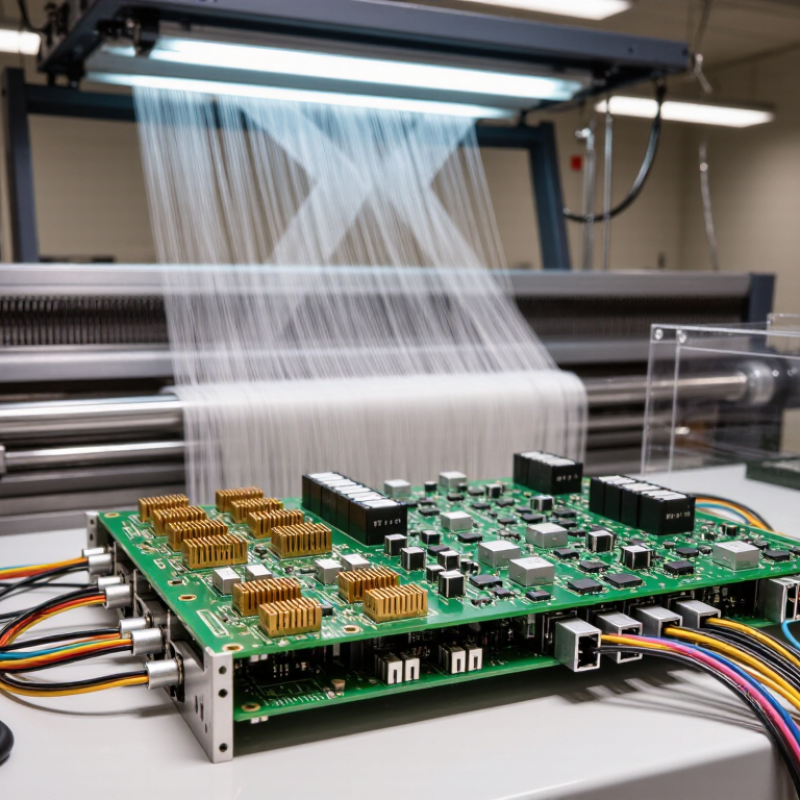
What Is a Jacquard Driving Board and Why Does It Matter?
A Jacquard driving board is the control layer between design software and the machine’s lifting mechanism. It receives pattern instructions and sends timed electrical signals to individual actuators. In practice, it connects software, sensors, and moving hooks. Think of it as the machine’s conductor. Without stable timing, hooks may rise late or miss commands. The result can be uneven sheds, broken yarn, or visible fabric defects. The board does not create the pattern alone. It makes accurate movement possible.
Its importance becomes clear during long production runs. A suitable board should match the machine’s voltage, channel count, connectors, communication protocol, and actuator requirements. Check these details in 2026, not just the advertised processing speed. A powerful board can still fail with unsuitable firmware or poor heat control. Small details matter. Look for fault codes, diagnostic access, documented testing, and strong connector design. From hands-on maintenance, I have found that checking a connector physically prevents many expensive installation errors.
Reliable selection also requires evidence. Request technical manuals, compatibility data, temperature limits, and service records. Ask whether the board recovers correctly after a power interruption. During trials, measure missed commands, surface temperature, response time, and pattern accuracy. Do not rely on a polished specification sheet alone. I once focused too much on channel capacity and overlooked service access. That mistake delayed troubleshooting. A practical evaluation should include operators and maintenance technicians, because their daily observations often reveal weaknesses that laboratory figures miss.

How to Choose a Jacquard Driving Board in 2026?
What Is a Jacquard Driving Board and Why Does It Matter?
A jacquard driving board converts loom control signals into timed electrical commands for actuator modules such as solenoids or piezoelectric elements. The waveform shows a normalized example of actuator commands across consecutive selection cycles: 1 means the actuator is commanded on, while 0 means off. When comparing boards, check timing accuracy, output-channel capacity, controller compatibility, protection features, and reliable operation at the loom’s required speed.
Which Jacquard Machine Specifications Should You Match?
How to Choose a Jacquard Driving Board in 2026?
Which Jacquard Machine Specifications Should You Match?
Choosing a jacquard driving board starts with the machine, not the board’s advertised speed. In my workshop experience, the most costly mistakes came from mismatched specifications. Record the machine’s needle count, hook count, working width, and design repeat. A board must support the full pattern capacity. Otherwise, detailed motifs may be cut or repeated incorrectly.
Check the actuator voltage and current before comparing control features. A 24-volt solenoid system should not receive a board designed for another electrical range. Confirm the connector layout, output channels, pulse timing, and grounding method. Measure the original signal with qualified equipment when records are incomplete. Small differences matter. They can cause heat, missed hooks, or uneven fabric.
The board must also match the loom’s communication method and encoder feedback. Ask whether it supports the required file format, storage capacity, and pattern transfer process. Match its response speed to the machine’s running speed, especially during fast shedding. A faster board is not always better. It may create unstable timing on an older loom. Leave room for maintenance access, cooling, and spare connections. I once focused too heavily on output density and overlooked cabinet temperature. That was a useful mistake. Keep the machine manual, wiring diagram, and test results together. Reliable selection depends on evidence, not confident guesses.
How to Compare Board Compatibility, Control Systems, and Interfaces?
How to Choose a Jacquard Driving Board in 2026?
Choosing a jacquard driving board starts with compatibility, not appearance. Check the machine’s actuator count, operating voltage, connector layout, and timing requirements. A board may support 2,000 hooks, yet fail because its pulse timing is unsuitable. Measure the existing wiring before ordering. I once trusted an old specification sheet and missed a shared ground connection. That mistake delayed testing.
Compare the control system by examining how it handles pattern files, address mapping, and fault recovery. Some systems use local memory, while others depend on a computer or network controller. Ask whether the board supports your preferred file format and whether firmware updates can be reversed. Test repeated commands at production speed. Slow bench tests can hide synchronization errors. They often do.
The interface affects daily reliability. USB is convenient for setup, but industrial networks may offer better monitoring and longer cable options. Look for clear status indicators, protected connectors, and diagnostic records showing voltage or communication faults. A practical interface should let technicians replace a module without guessing. Keep spare cables nearby. That sounds obvious, but it is often forgotten. Compatibility tables also need careful reading; “supported” may only mean basic communication, not complete access to every function. Request a sample configuration and test it with your actual pattern files before committing.
What Performance, Durability, and Maintenance Features Are Essential?
How to Choose a Jacquard Driving Board in 2026?
A reliable Jacquard driving board should deliver stable signals at high operating speeds. Check response time, channel accuracy, and synchronization with the loom controller. Small timing errors can create repeated pattern defects across an entire fabric roll. Ask for test data under realistic loads, not only laboratory conditions. Heat management also matters. Boards with efficient cooling and protected components usually maintain performance during long production shifts. Fast acceleration is useful, but smooth signal control is often more valuable.
Durability depends on more than the circuit board itself. Look for strong connectors, vibration resistance, dust protection, and stable performance during voltage changes. In my experience, loose terminals cause more downtime than dramatic electronic failures. Maintenance should be practical. Clear diagnostic lights, accessible wiring, replaceable modules, and documented fault codes reduce troubleshooting time. A maintenance team should not need specialist software for every basic inspection. Still, no board is maintenance-free. That assumption can become expensive.
Tips: Test the board with your actual harness, loom speed, and operating temperature. Inspect connectors monthly and record unusual noise, heat, or pattern faults. Keep clean spare modules in sealed storage. Do not choose only by purchase price. A cheaper board may demand more adjustments and create longer stoppages. Also, review the supplier’s technical documentation and repair support before installation. Sometimes the most impressive specification hides a weak service process.
How to Select a Reliable Jacquard Driving Board Supplier in 2026?
How to Choose a Jacquard Driving Board in 2026?
Selecting a reliable jacquard driving board supplier requires more than comparing prices. The board must match your machine, control system, voltage, and production speed. Ask for a complete compatibility sheet before discussing bulk orders. A clear supplier should explain connector layouts, output channels, communication protocols, and firmware updates.
Request a working sample. Test it with your actual harness, solenoids, and pattern files. Watch for missed selections, overheating, unstable signals, and delayed responses during continuous operation. Ask for inspection records, electrical safety documents, and production traceability. A dependable supplier can identify the testing equipment and quality checkpoints used before shipment. Ask for evidence.
Supplier experience also matters. Look for engineers who understand wiring faults, electromagnetic interference, and maintenance conditions inside a textile workshop. Their support team should provide wiring diagrams, setup instructions, and realistic troubleshooting times. Confirm spare-part availability, warranty terms, and repair procedures in writing. Vague promises are costly.
Do not choose only from a polished website. Speak with technical staff. Check whether replies remain precise after difficult questions. A small trial order can reveal packaging quality, labeling accuracy, and communication habits. I once underestimated after-sales response time, and the delay disrupted machine scheduling. That mistake changed my evaluation process. Still, sample testing cannot predict every field problem. Leave room for review after installation, and record operating data during the first production weeks.
| Selection Dimension | What to Check | Recommended 2026 Benchmark | Required Verification Evidence | Weight |
|---|---|---|---|---|
| Loom and Controller Compatibility | Compatibility with the loom model, jacquard head, control system, harness, connectors and communication protocol. | Confirmed compatibility with the exact machine configuration; all pin assignments, communication settings and firmware versions documented. | Approved compatibility list, wiring diagram, interface protocol, sample test report and written confirmation from the supplier’s engineering team. | 20% |
| Hook and Channel Capacity | Number of independently controlled hooks or channels supported by one board and the required expansion method. | Rated capacity should meet the machine requirement with at least 10% spare channels where practical. | Technical datasheet showing channel count, expansion architecture, wiring limits and a full-load demonstration. | 12% |
| Electrical Ratings | Input voltage, output voltage, peak current, continuous current, isolation and connector ratings. | All voltage and current ratings must match the loom power supply, with documented protection against overcurrent, short circuit and reverse polarity where applicable. | Electrical schematic, load test results, protection circuit description and safety test records. | 12% |
| Operating Speed and Timing | Maximum switching frequency, response time, timing accuracy and synchronization with the loom controller. | Supplier must provide tested performance at the customer’s required loom speed and pattern complexity; timing tolerance should be stated numerically. | Performance curve, oscilloscope or logic-analyzer test data, test conditions and synchronization specification. | 10% |
| Thermal and Environmental Reliability | Operating temperature, humidity, vibration, dust protection, cooling method and enclosure requirements. | Clearly declared operating and storage ranges; thermal testing at continuous rated load; protection level suitable for the installation environment. | Environmental specification, thermal imaging or temperature-rise report, vibration test information and installation requirements. | 10% |
| Quality Management | Manufacturing controls, incoming inspection, process inspection, final testing and traceability. | Documented quality system, preferably certified to ISO 9001:2015 or supported by equivalent audited procedures. | Valid certificate or audit report, inspection plan, serial-number traceability process and sample final-test record. | 10% |
| Regulatory Compliance | Material restrictions, electromagnetic compatibility and electrical safety requirements for the destination market. | Where applicable, documentation addressing RoHS Directive 2011/65/EU, REACH Regulation (EC) No 1907/2006 and relevant EMC requirements. | Declaration of conformity, material declaration, supplier declarations and applicable EMC or safety test reports. | 8% |
| Product Lifecycle and Maintainability | Component availability, firmware control, repairability, replacement procedure and backward compatibility. | Written lifecycle policy, controlled firmware releases and a replacement plan for discontinued components or board revisions. | Lifecycle statement, revision-control procedure, spare-parts list, repair instructions and change-notification policy. | 7% |
| Technical Support | Application engineering, troubleshooting, remote support, commissioning and documentation quality. | Named technical contact, complete installation documents and a defined response target for production-impacting issues. | Support procedure, escalation contacts, service-level terms, troubleshooting guide and commissioning checklist. | 5% |
| Delivery and Commercial Risk | Sample lead time, mass-production lead time, minimum order quantity, warranty and supply continuity. | Lead times stated in writing; warranty of at least 12 months is a practical minimum; payment, inspection and replacement terms clearly defined. | Formal quotation, production schedule, warranty terms, inspection agreement and business-continuity or capacity statement. | 6% |
| Total Evaluation Weight | 100% | |||
Article Source:
NORTH EASTON MACHINE • 218 Elm Street • North Easton, MA 02356 • 508-238-6219