
Why Choose the Best Candy Machine Manufacturers?
Choosing among Candy Machine Manufacturers is not just a price decision. It affects product consistency, line uptime, sanitation routines, and how quickly a factory can change from gummies to hard candies. A well-designed depositor should deliver even pieces; a reliable cooling tunnel should keep pace without crowding the line. Small details matter.
Grand View Research estimated the global confectionery market at about $233.3 billion in 2023. That scale signals opportunity, but market growth alone cannot prove that a particular machine will perform well. Buyers need evidence: documented throughput under comparable conditions, changeover times, service coverage, spare-parts access, and references from plants making similar products. Ask to see the line running. Ask what happens when a component fails. The answers may be less polished than the brochure, and that is worth noticing.
Manufacturing quality expert W. Edwards Deming is widely credited with saying, “Quality is everyone’s responsibility.” The principle applies to equipment selection: a machine’s results depend on its design, installation, operators, and maintenance. The best Candy Machine Manufacturers explain those trade-offs clearly, rather than promising that one model fits every factory. Compare total operating needs, not only purchase prices. A faster line can still be the wrong choice if cleaning takes longer or service is distant. There is no perfect supplier. A careful choice begins with honest questions and verifiable proof.
Understanding the Role of Candy Machine Manufacturers
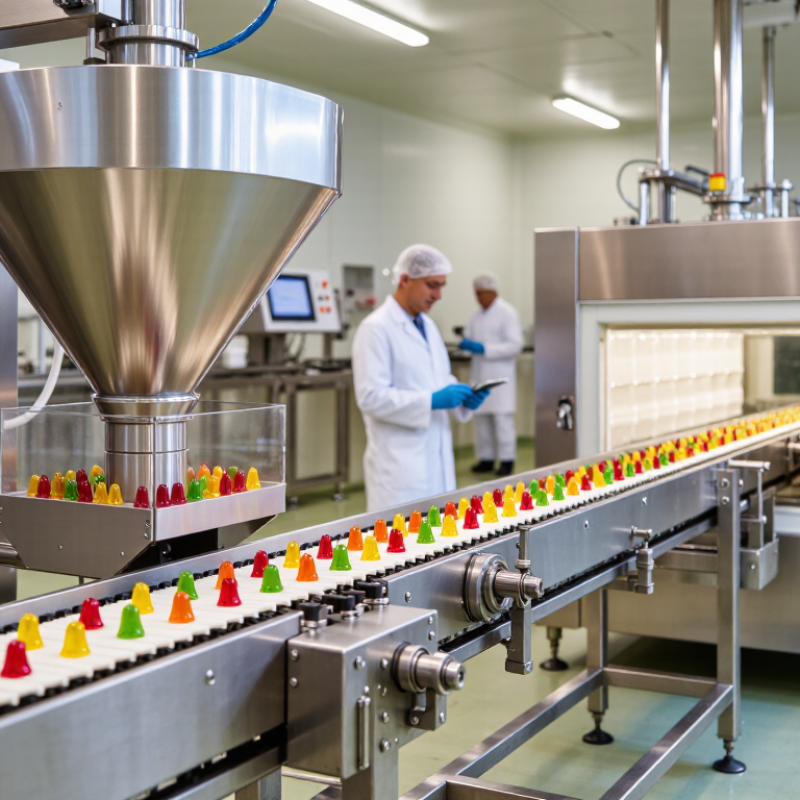
Candy machine manufacturers do more than build equipment. They turn product requirements into workable production lines, from syrup cooking and depositing to cooling, cutting, and wrapping. Their engineers help match machine speed, temperature control, and portion size to a recipe. A few degrees can change a gummy’s texture; uneven cooling can leave chocolate with visible surface marks. Small details matter.
The National Confectioners Association’s 2024 State of Treating report found that 92% of consumers believe chocolate and candy can fit into a happy, balanced lifestyle. This is not a machinery forecast. It does show why consistent quality and flexible production matter to confectionery businesses. Manufacturers also advise on cleanable surfaces, changeover time, spare parts, and operator training. Those choices affect daily output, not just installation day.
Good questions reveal expertise. Can the line handle a recipe change without long downtime? Are critical parts readily available? Can operators reach nozzles and belts for cleaning? A machine may look impressive in a demonstration and still be awkward to maintain. No line is perfect. Manufacturers should explain limitations clearly, share measurable performance data, and help buyers test products under realistic conditions.

How Manufacturing Expertise Influences Product Quality
Candy quality begins long before a piece reaches its wrapper. Experienced manufacturers understand how small changes in temperature, mixing time, or moisture can alter texture. A syrup heated too quickly may turn grainy. A cooling tunnel set unevenly can leave some pieces sticky. Details matter.
Manufacturing expertise shows in the way teams control these variables. They calibrate cookers, check depositing weights, and monitor cooling conditions throughout production. Skilled operators also know when a reading looks unusual, even if it falls within a target range. That judgment comes from repeated observation, not equipment alone. Small shifts count.
Reliable facilities keep ingredient lots traceable and record production checks, so problems can be investigated rather than guessed at. They test samples for weight, appearance, and texture, then adjust processes when results drift. Sanitation routines and equipment maintenance matter too; residue or worn parts can affect consistency. Still, no process is perfect. A checklist may miss a subtle change, so manufacturers should review results and learn from near misses. When evaluating a producer, ask how it validates settings, trains operators, and handles out-of-spec batches. Clear answers offer better evidence of quality than polished machinery on a factory tour.
Why Choose the Best Candy Machine Manufacturers? - How Manufacturing Expertise Influences Product Quality
| Manufacturing expertise area | Verifiable data or records | How it affects product quality | What to check when evaluating a manufacturer |
|---|---|---|---|
| Food-contact materials | Material specifications, supplier certificates, and documentation for food-contact components applicable to the destination market. | Helps confirm that product-contact surfaces are suitable for the intended food-processing use and can be identified through the supply chain. | Request records for product-contact parts and confirm that the documentation covers the actual machine configuration and intended market. |
| Hygienic design and cleanability | Design drawings, cleaning instructions, access points, and details of joints, seals, and product-contact areas. | Accessible, cleanable construction supports consistent sanitation and reduces the chance that product residue remains in hard-to-reach areas. | Review the machine layout and cleaning procedure; check how components are accessed, removed, and reassembled. |
| Process control and repeatability | Documented operating parameters, calibration records for relevant instruments, and test results from production or commissioning. | Controlled settings help the machine produce more consistent candy dimensions, weights, shapes, or processing conditions within the agreed specification. | Ask which parameters are monitored, how instruments are calibrated, and how results are compared with the agreed acceptance criteria. |
| Fabrication and assembly control | Inspection plans, assembly checklists, nonconformance records, and documented corrective actions. | Consistent inspection can identify fit, alignment, or workmanship issues before they affect operation or finished-product quality. | Check whether inspections are recorded, how defects are handled, and whether corrective actions are followed up. |
| Factory acceptance testing (FAT) | A written FAT protocol, test results, and a record of any open issues before shipment. | Testing before delivery helps verify agreed functions and gives both parties a documented basis for resolving issues. | Agree in advance on test conditions, acceptance criteria, responsibilities, and how unresolved items will be closed. |
| Installation and site acceptance | Installation checklist, commissioning records, operator training materials, and site acceptance test results. | Confirms that the installed machine operates under the agreed site conditions and that operators understand its use and cleaning requirements. | Clarify which utilities, site preparations, tests, and training are included in the commissioning scope. |
| Quality management system | Current quality-system certificate, its scope, and documented procedures for design, purchasing, inspection, and corrective action. | A controlled quality system supports repeatable processes and traceable handling of issues; certification alone does not guarantee machine performance. | Verify the certificate’s validity and scope, and review project-specific quality records rather than relying on certification alone. |
| After-sales support and spare parts | Service procedures, spare-parts documentation, maintenance schedules, and stated support response arrangements. | Accessible technical support and correctly specified replacement parts can help maintain machine condition and reduce avoidable production interruptions. | Confirm parts identification, maintenance responsibilities, support coverage, and the process for reporting and resolving faults. |
Assessing Equipment, Customization, and Production Capacity
Why Choose the Best Candy Machine Manufacturers?
Assessing Equipment, Customization, and Production Capacity
Candy equipment should be judged by the product it must handle, not its brochure speed. A depositor may run quickly with one syrup, then struggle with a thicker mixture or inclusions. Ask for test results using your actual recipe, target piece size, and cooling conditions. Details matter. Check changeover time, cleaning access, spare-part availability, and whether operators can adjust settings without stopping the line.
Customization matters when recipes, shapes, or batch sizes change. Useful options might include interchangeable molds, adjustable dosing, and temperature controls. Request a clear account of what is standard and what requires engineering. PMMI reported U.S. packaging machinery shipments of $10.9 billion in 2022, reflecting substantial investment in production equipment (PMMI, 2023 State of the Industry). That figure describes the wider packaging sector, not candy machines specifically, so it should not replace a plant-level assessment.
Capacity claims need careful testing. Compare rated output with sustained output after changeovers, routine cleaning, and minor stoppages. The 2021 Deloitte and Manufacturing Institute study projected that 2.1 million U.S. manufacturing jobs could go unfilled by 2030, making practical automation and easy operator training important considerations. Still, automation alone does not guarantee better output. Ask for a production trial and inspect reject rates, product consistency, and energy use. A small gap between quoted and real capacity can reshape a whole shift.
Comparing Safety Standards, Service, and Lifecycle Costs
Why Choose the Best Candy Machine Manufacturers?
Comparing Safety Standards, Service, and Lifecycle Costs
A candy line can look clean while hiding serious hazards. Hot syrup, exposed belts, and tight rollers demand documented risk assessment, fixed guards, and accessible emergency stops. Check whether the manufacturer designs to ISO 12100 principles and can explain how each hazard is controlled. Ask to see service intervals and operator training materials, not only a polished safety checklist. Small gaps matter.
Service quality becomes visible during a jam at 2 a.m. Confirm response times, spare-parts availability, and whether technicians can diagnose faults remotely. The U.S. Department of Energy’s 2014 motor-system assessment estimates that motor-driven systems use about 68% of U.S. manufacturing electricity. Its motor-system guidance also identifies 20–50% energy-saving potential in some systems through improvements such as better controls and right-sized equipment. Those figures are not candy-line guarantees, but they make motor efficiency worth checking.
Compare the full operating picture: purchase price, electricity, cleaning time, changeover losses, repairs, and expected equipment life. Request a lifecycle-cost estimate with its assumptions in writing. A lower quote may still cost more if parts take weeks to arrive or washdown damages components. I would also ask operators to review the proposed layout; manufacturers can miss awkward cleaning angles. The numbers help, but real shift experience matters.
Why Choose the Best Candy Machine Manufacturers?
Compare safety standards, service, and lifecycle costs—not just the purchase price.
This example models five-year costs in USD: a lower-price scenario totals $85,000, while a higher-efficiency scenario totals $77,500. Figures are illustrative assumptions, not vendor quotes or market averages. Compare written safety documentation, service terms, energy use, and maintenance estimates using your own operating data.
Choosing a Manufacturer to Meet Your Business Needs
Choosing a candy machine manufacturer starts with your production reality, not a catalog photograph. Estimate daily output, batch size, candy types, and available floor space. A line making hard candies needs different heating, depositing, and cooling controls than one shaping gummies. Ask for rated capacity under conditions similar to yours, not just maximum figures. Small details matter. Check belt width, washdown access, changeover time, and the space needed to open a safety guard.
Then compare the support offered after delivery. Request layout drawings, electrical requirements, operator training, spare-parts lead times, and a written maintenance schedule. A factory test using your recipe, or a similar trial material, may reveal uneven pieces or awkward cleaning points. Ask whether technicians can diagnose faults remotely, and how quickly parts usually arrive. If possible, speak with users whose production volumes resemble yours. A glossy brochure proves little. I would also inspect the quotation line by line; installation costs can strain a tight budget. No supplier will fit every need perfectly, and one drawback may be easy to miss.
What might fail first during a busy production shift?
Article Source:
NORTH EASTON MACHINE • 218 Elm Street • North Easton, MA 02356 • 508-238-6219