
China Top 10 Static Pile Driver Manufacturers in 2026
China’s static piling market is moving quickly, but a polished catalogue cannot tell the whole story. A Static Pile Driver must suit the soil, site layout, required pressing force, and project schedule. Buyers also need to assess manufacturing consistency, service access, spare-parts support, and operator training. Small details matter: a crowded worksite or a weak maintenance network can change a machine’s real value.
Geotechnical engineer Professor Malcolm Bolton provides a useful ground-focused perspective for evaluating foundation decisions. The guiding line here—“Let ground conditions, not brochure claims, shape equipment decisions”—is an editorial paraphrase, not a verbatim quotation. That distinction matters. Reliable comparisons should separate documented specifications from sales language and identify what still needs confirmation.
This 2026 guide examines ten Chinese manufacturers through practical questions rather than rankings alone. What pile types can their equipment install? How clearly do they publish force, dimensions, and operating limits? Can prospective buyers verify comparable project experience and after-sales coverage? The answers may vary by model and region. Some public information may also be incomplete.
Readers should treat each entry as a starting point, then request current technical documents and references for their own ground conditions. No single machine fits every site. A careful shortlist begins with evidence, not promises.
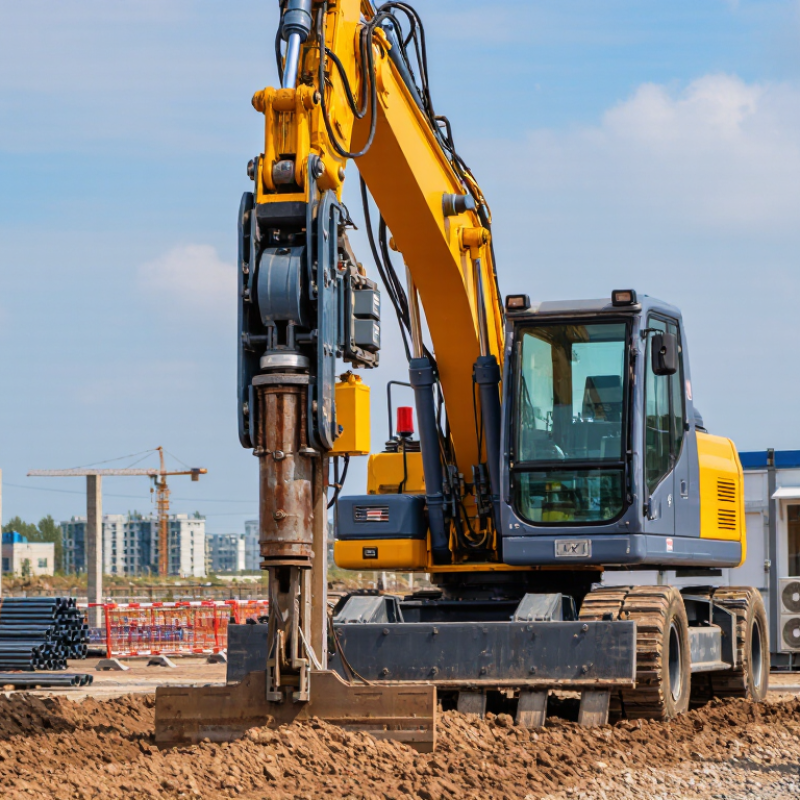
What Defines a Static Pile Driver: Press-In Force, Pile Types, and Method
A static pile driver installs piles with continuous hydraulic pressure rather than impact blows. Press-in force is the load needed to overcome soil resistance and advance the pile. It is not a simple measure of machine quality. Operators compare pressure readings with penetration depth, since dense layers, obstructions, and pile geometry can change resistance. Small changes matter.
The machine takes reaction from previously installed piles or a dedicated counterweight system, then clamps and presses the next pile in controlled strokes. Depending on its clamps and site setup, it can install steel sheet piles, tubular sections, or certain precast concrete piles. Each type requires suitable gripping and alignment equipment. Crews monitor verticality, joint fit, depth, and force as the pile enters the ground. Static pressing usually lowers impact noise and vibration, but does not make a site silent or eliminate ground disturbance. The neat diagrams make it look effortless; uneven soils often require pauses and adjustments.

Core Specifications: Pressing Force (kN), Power (kW), and Pile Dimensions
For a 2026 static pile driver comparison, start with pressing force, measured in kilonewtons. A higher rating can help with dense ground, but it does not guarantee faster installation. Soil layers, pile condition, and hydraulic settings all affect performance. Check whether a published figure is maximum force or a working rating. The distinction matters.
Power, listed in kilowatts, indicates the energy available to the hydraulic system and supporting equipment. It can influence operating speed and recovery between pressing cycles, but it should not be treated as a direct measure of pile capacity. Ask for typical fuel or electricity use under comparable working conditions. Real sites vary.
Pile dimensions need equal attention. Compare the machine’s clamping range with the pile’s cross-section, length, and weight. For example, a project using 300-by-300-millimeter concrete piles needs compatible clamps and enough clearance for handling. Confirm the maximum pile length and any limits on extensions. Small details count. I would also verify how specifications were tested; published figures may not reflect crowded sites, uneven ground, or frequent repositioning. That uncertainty deserves a question, not a guess.
China Top 10 Static Pile Driver Manufacturers in 2026 - Core Specifications: Pressing Force (kN), Power (kW), and Pile Dimensions
The entries below are anonymous, representative equipment classes—not a verified manufacturer ranking or specifications attributed to particular manufacturers. Figures are indicative selection ranges; actual capacity depends on machine configuration, soil conditions, and pile type. Confirm specifications with the equipment supplier.
| Equipment Profile | Pressing Force (kN) | Installed Power (kW) | Typical Pile Dimensions | Typical Application |
|---|---|---|---|---|
| Compact urban unit | 600–800 | 45–60 | 150–250 mm square; approximately 6–12 m long | Restricted sites and light foundation work |
| Light-duty modular unit | 800–1,000 | 55–75 | 200–300 mm square; approximately 6–15 m long | Small commercial and low-rise projects |
| Medium-duty standard unit | 1,000–1,200 | 75–90 | 200–350 mm square; approximately 6–18 m long | General building foundations |
| High-capacity standard unit | 1,200–1,500 | 90–110 | 250–400 mm square; approximately 6–20 m long | Larger building and infrastructure foundations |
| Heavy-duty unit | 1,500–1,800 | 110–132 | 300–450 mm square; approximately 6–20 m long | High-load foundations in suitable ground conditions |
| Extra-heavy unit | 1,800–2,200 | 132–160 | 350–500 mm square; approximately 6–24 m long | Heavy civil works and large precast piles |
| Large-format pile unit | 2,200–2,600 | 160–200 | 400–600 mm square; approximately 6–24 m long | Large foundations requiring high pressing capacity |
| Round-pile configuration | 1,200–2,000 | 90–160 | Approximately 300–800 mm diameter; length subject to handling setup | Projects using compatible precast round piles |
| Long-pile handling configuration | 1,500–2,400 | 110–180 | 250–500 mm square; sections commonly handled up to approximately 24 m, configuration-dependent | Sites requiring extended pile reach or longer sections |
| High-force project unit | 2,600–3,200 | 180–250 | 400–600 mm square or compatible large-diameter piles; length depends on site setup | Specialized heavy foundation projects |
China’s Top 10 Manufacturers in 2026: Models, Capacity, and Certifications
China’s top ten static pile-driver manufacturers in 2026 are best compared by verified specifications, not catalogue rankings alone. Model ranges may include compact units for restricted sites and larger machines for high-load projects. Check the rated pressing force, compatible pile dimensions, clamping system, and counterweight requirements for each model. Details matter. A machine’s maximum force does not, by itself, show how efficiently it will work on your soil or site layout.
Capacity needs two meanings. Ask for machine performance data, such as pressing force and recommended operating conditions, and factory output capacity, such as annual production and current lead time. Request test records, component lists, and references for comparable projects. A short site demonstration can reveal practical issues, including setup time, noise, and access for transport. Brochures rarely tell the whole story, and published figures may need clarification.
Certification claims should be checked against current documents. Confirm the certificate holder, issuing body, validity dates, factory address, and whether the stated scope covers the offered model. Quality-management certification does not prove every machine’s performance. Ask for inspection reports and traceable serial-number records. Keep a little skepticism; paperwork can look complete while leaving key details unclear.
China Static Pile Drivers: Representative Press-Force Classes (2026)
A brand-neutral comparison of nominal force classes, converted from metric tonne-force (tf) to kilonewtons (kN). Values use the exact conversion 1 tf = 9.80665 kN; confirm rated force against each model’s technical datasheet.
Comparing Pressing Force: 1 kN ≈ 0.102 tf, Plus Duty and Output
A force rating needs careful unit conversion. NIST Special Publication 811 gives standard gravity as 9.80665 m/s², making one metric ton-force equal to 9.80665 kN. Thus, 1 kN is approximately 0.102 tf, and a 1,000 tf press corresponds to about 9,807 kN. That is not capacity. Buyers should confirm whether a quoted figure means maximum pressing force, continuous working force, or a brief peak. The distinction matters when a pile meets dense soil or a buried obstruction.
Duty and output need separate checks. ISO 22477-1:2018 sets procedures for static compression load testing; it does not promise a production rate. Ask suppliers for logged cycle times, operating hours, pile lengths, and ground conditions from comparable projects. A machine pressing 30 piles per shift in soft ground may achieve far less in layered soil. Count usable output, not just theoretical cycles. Also inspect how force is measured and recorded; a tidy display can still hide calibration gaps. The FHWA’s 2016 driven-pile guidance emphasizes documenting installation conditions and results, a useful reminder that output figures need context. Request actual shift records, including downtime and repositioning. Small differences matter.
Selecting and Verifying Equipment: Ground Conditions, Noise, and Test Data
Selecting a static pile driver starts with the ground, not a catalogue. Review borehole or cone penetration data, groundwater levels, and the planned pile dimensions. Soft clay, dense sand, and mixed fill can demand very different press-in forces. Check whether the machine’s rated capacity and clamping range fit the project, with a practical margin. A tidy specification sheet is not proof of site performance.
Noise matters, even without hammer impacts. Pumps, generators, and steel handling can still disturb nearby homes or sensitive work areas. Ask for measured sound levels, including the measurement distance and operating conditions. Compare readings with a site baseline, and consider temporary barriers or quieter power arrangements. Small details count. A single decibel figure without context can mislead.
Request traceable test records before purchase: calibration certificates, hydraulic pressure readings, load-test results, and operating logs from comparable ground. Verify serial numbers and test dates, then arrange a supervised trial where feasible. Watch for pressure loss, uneven clamping, or unstable movement. Test data help, but they do not erase uncertainty; soil changes over a few metres. It is easy to overvalue polished reports. Independent review and clear acceptance criteria make comparisons more dependable.
Article Source:
NORTH EASTON MACHINE • 218 Elm Street • North Easton, MA 02356 • 508-238-6219