
China Top Tungsten Alloy Vibration Absorber Supplier?
A reliable China-based supplier of Tungsten Alloy Vibration Absorber components should offer more than a low price and a polished catalogue. Buyers need clear evidence of material composition, manufacturing controls, and performance testing. A sample may look dense and precisely machined, yet still behave differently under repeated vibration. Small details matter: alloy grade, dimensions, surface finish, and the conditions used during testing.
This introduction examines how to assess suppliers with practical questions, not broad promises. Can the manufacturer provide inspection records? Does it explain how absorber mass and geometry suit the application? Are tolerances confirmed before production? These checks help engineers compare offers fairly. They also reveal where a supplier’s documentation is thin. That matters.
A named expert quotation should be verified before publication. No source material here confirms a specific statement by a Tungsten Alloy Vibration Absorber specialist, so inventing one would undermine trust. Instead, this guide focuses on verifiable supplier evidence and engineering considerations. A careful comparison can narrow the field. It cannot replace testing in the intended assembly. Supplier claims deserve scrutiny, including claims that sound convincing.
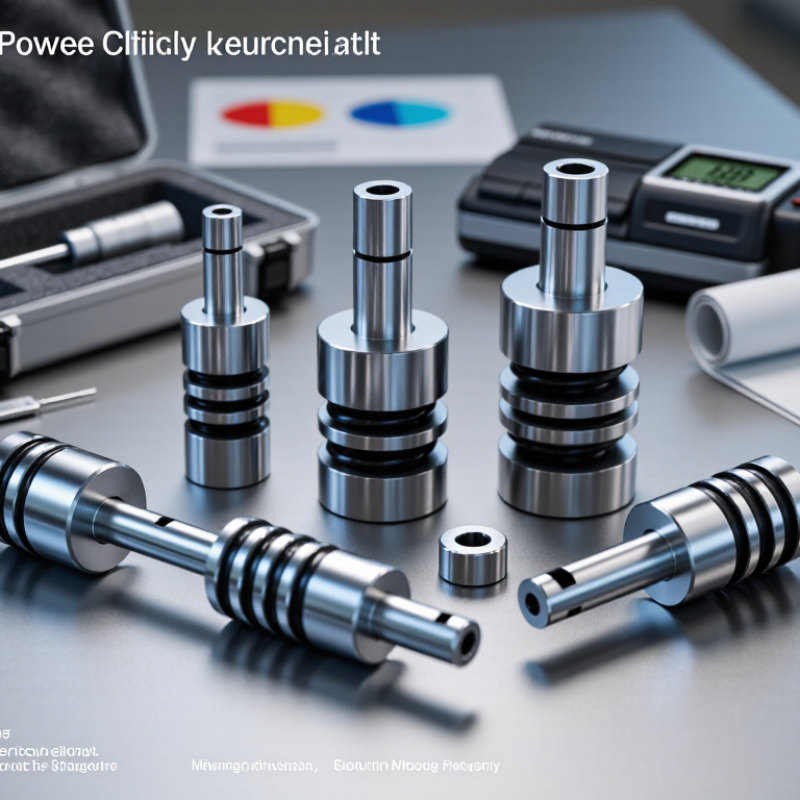
What Defines a China-Based Tungsten Alloy Vibration Absorber Supplier?
A China-based tungsten alloy vibration absorber supplier is defined by more than its factory address. It should understand how density, geometry, and mounting conditions shape vibration response. In practical work, engineers may compare a compact counterweight with a tuned absorber, then adjust mass or placement after testing. Small changes matter. A supplier worth evaluating can discuss these trade-offs clearly, request operating-speed and space limits, and explain which measurements support its recommendations. It should provide material certificates, dimensional inspection records, and repeatable test results for the actual part, not just a generic sample.
Manufacturing capability also shows in the details: controlled powder processing, stable sintering, accurate machining, and a finish suited to the assembly. Ask how batches are tracked and how defects are handled. Clear communication matters when a drawing changes or a prototype misses its target. Not every supplier has the same testing equipment, and a catalog alone proves little. This is worth remembering. A credible partner states its limits, shares relevant evidence, and works with the customer to refine the absorber through measured trials. Cost and delivery matter, but neither should replace technical fit and traceability.

How 17.0–18.5 g/cm³ Tungsten Alloys Enable Compact Mass Design
For vibration absorbers, density changes the geometry of the moving mass. ASTM B777/B777M classifies tungsten-base heavy alloys by density, with grades reaching approximately 18.5 g/cm³. Compared with steel at about 7.85 g/cm³, an equal-mass tungsten-alloy weight can occupy roughly 42–46% of the volume. That can mean a shorter insert tucked close to a motor frame or bearing housing. Small footprint matters.
The USGS Mineral Commodity Summaries 2025 estimates China produced 67,000 tonnes of tungsten in 2024, out of 81,000 tonnes worldwide. That supply concentration makes material traceability and consistent batch data practical concerns, not paperwork alone. Density helps package mass, but it does not guarantee vibration reduction. The mass location, attachment stiffness, and operating frequency still shape performance. A dense puck bolted loosely may rattle instead of control motion. Not a free win. During design reviews, compare measured part dimensions and certified alloy density against the target mass. One limitation is easy to overlook: compact alloys leave less room for fasteners, so mounting details can consume the space density was meant to save.
Compact Mass Design: Volume Required for 1 kg
Higher density means less material volume is needed for the same mass. Volumes shown are calculated as 1,000 g divided by representative density; steel and lead values are typical reference figures, while tungsten-alloy values are illustrative points within the 17.0–18.5 g/cm³ range. Actual density varies by composition.
Which W-Ni-Fe and W-Ni-Cu Grades Suit Vibration-Control Applications?
China Top Tungsten Alloy Vibration Absorber Supplier?
For vibration-control parts, grade choice depends on more than maximum density. W-Ni-Fe alloys commonly contain about 90–97% tungsten by weight and offer high mass, strength, and useful toughness. ASTM B777 classifies tungsten-based heavy alloys by density, helping engineers compare material options. W-Ni-Fe is often preferred for compact weights exposed to impact or repeated loading. W-Ni-Cu is nonmagnetic, making it suitable near magnetic sensors or sensitive instruments. It can also suit assemblies where magnetic interference matters more than peak strength.
Tips: Check the drawing first. A few millimeters of added mass can shift balance and natural frequency.
Neither alloy automatically absorbs vibration. The assembled system does the work: geometry, fasteners, contact surfaces, and the supporting structure all affect response. In a prototype, measure vibration before and after installation across the operating speed range. Compare certified density, tensile properties, and batch consistency with the relevant ASTM B777 requirements. Then test the actual part. Material data alone cannot predict every resonance, and that limitation is easy to overlook.
China Top Tungsten Alloy Vibration Absorber Supplier? - Which W-Ni-Fe and W-Ni-Cu Grades Suit Vibration-Control Applications?
| Representative Alloy | Nominal Composition by Weight | Typical Density | Magnetic Character | Vibration-Control Suitability | Selection Considerations |
|---|---|---|---|---|---|
| W-Ni-Fe 90W | About 90% tungsten, 7% nickel, 3% iron | About 16.9–17.1 g/cm³ | Generally magnetic because of the iron-containing binder | A practical high-density mass for compact counterweights, inertial blocks, and tuned vibration-control assemblies where magnetic response is acceptable. | Often selected when high mass in limited space is more important than minimizing component size or magnetic interaction. |
| W-Ni-Fe 93W | About 93% tungsten; the balance is typically nickel and iron | About 17.4–17.6 g/cm³ | Generally magnetic | Offers greater mass per volume than a 90W grade for compact vibration-control weights and precision inertial components. | Confirm the supplier’s exact binder ratio, finished-part density, and dimensional tolerances; nominal composition alone does not establish performance. |
| W-Ni-Fe 95W | About 95% tungsten; the balance is typically nickel and iron | About 17.9–18.1 g/cm³ | Generally magnetic | Useful when maximum mass in a small volume is a priority, such as in compact balancing or inertial-weight applications. | Higher tungsten content increases density, but machinability and mechanical properties depend on the specific powder-metallurgy process and product condition. |
| W-Ni-Cu 90W | About 90% tungsten, 7% nickel, 3% copper | About 16.9–17.1 g/cm³ | Typically non-ferromagnetic | A suitable candidate for dense vibration-control masses near magnetic sensors or equipment where ferromagnetic materials are undesirable. | Check the application’s magnetic-field requirements and the component’s required strength, finish, and operating environment. |
| W-Ni-Cu 95W | About 95% tungsten; the balance is typically nickel and copper | About 17.9–18.1 g/cm³ | Typically non-ferromagnetic | Combines very high mass per volume with a generally non-ferromagnetic character for compact inertial weights and vibration-control assemblies. | Specify the required density and magnetic characteristics with the manufacturer; actual values vary with composition and processing. |
Engineering note: Tungsten heavy alloys are commonly used to provide compact mass; they should not be assumed to act as high-damping materials by themselves. Vibration performance depends on the complete system, including mass, geometry, mounting, stiffness, and any damping element. Composition and density figures above are representative; confirm certified product data for the selected grade and part.
How Powder Metallurgy and ASTM B777 Guide Alloy Quality
Powder Metallurgy and ASTM B777: A Practical Guide to Tungsten Alloy Vibration Absorbers
A tungsten alloy vibration absorber depends on more than high density. Its mass, shape, mounting points, and operating frequency all affect performance.
Powder metallurgy helps produce compact, dense components from tungsten-based powders. The blend is pressed, sintered, and then machined to the required dimensions. Small differences matter. Uneven density or internal porosity can affect strength and part consistency.
ASTM B777 provides requirements for tungsten-base, high-density materials, including material classifications and specified properties. Buyers can use it as a reference when checking a material certificate, but should confirm the applicable class and current specification with the supplier.
Ask for test results tied to the delivered material, not only a general data sheet. A dense part is not automatically a good absorber. The finished assembly must be evaluated at its intended frequency and under realistic mounting conditions.
That distinction is easy to miss.
Tips: Check dimensions, density, and material documentation together. Ask how powder processing and final inspection are controlled. ASTM compliance supports material verification; it does not, by itself, prove vibration performance. A prototype test can reveal gaps that paperwork cannot.
How to Compare Suppliers by Density, Tolerances, Testing, and Lead Time
Choosing a China-based tungsten alloy vibration absorber supplier starts with the part, not the sales pitch. Define operating frequency, available space, attachment method, and expected impact energy. Then compare density by grade and finished lot; nominal values alone can hide variation. Ask for a material test report and confirm whether density is measured on production samples. Small details matter.
Tolerance claims need context. Request drawings that state dimensions, datum points, surface finish, and inspection methods. For a compact absorber, a 0.1 mm shift may affect fit or preload. Ask how the supplier handles out-of-tolerance parts, and request recent inspection records. Testing should match the application: vibration sweeps, impact cycling, and dimensional checks answer different questions.
Lead time includes more than machining. Clarify material availability, sample approval, production capacity, and packaging dates in writing. Have they built similar geometries? Can they provide a pilot lot before full production? One caution: polished samples may not represent routine output, so compare samples with batch records. Some uncertainty remains; production conditions can change, and a clear inspection plan helps catch differences early.
Article Source:
NORTH EASTON MACHINE • 218 Elm Street • North Easton, MA 02356 • 508-238-6219