
China Best PS Sheet Extrusion Line Manufacturer?
Choosing China’s best PS Sheet Extrusion Line manufacturer takes more than comparing advertised output. The right supplier should match the line to your resin, sheet thickness, width, and target production rate. Ask for a documented material trial. Watch the melt flow, sheet edges, and thickness readings—not just the machine running at top speed.
W. Edwards Deming, a quality-management expert, wrote, “Quality comes not from inspection, but from improvement of the production process.” That principle matters here. A dependable Ps Sheet Extrusion Line needs steady temperature control, consistent screw performance, and a calibrated haul-off system. Small fluctuations can show up as uneven sheet thickness or visible surface marks. Details matter.
This guide examines how manufacturers support those requirements, from screw and die design to cooling, winding, and after-sales service. Request a clear equipment configuration, real production references, and specific warranty terms. If possible, inspect a comparable line in operation. A polished brochure is not a production test. Some specifications may look impressive but prove less useful on your material; that deserves scrutiny. The strongest choice is the supplier whose engineering evidence fits your actual process, not simply the lowest quote or highest stated output.
What Is a PS Sheet Extrusion Line and How Does It Work?
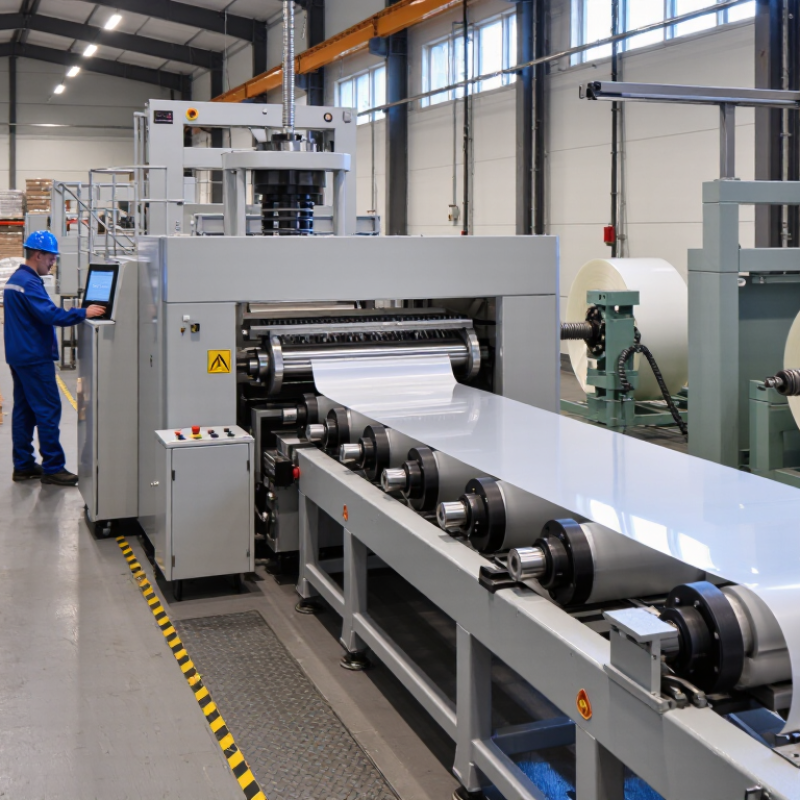
A PS sheet extrusion line turns polystyrene resin into continuous, flat sheets for packaging, display, and forming applications. Pellets enter a hopper, pass through a heated barrel, and melt as a rotating screw pushes them forward. A screen changer filters contaminants before the melt exits through a flat die. Chill rolls then cool and calibrate the sheet. Trimming and winding complete the process. The line looks straightforward, but small temperature or roll-gap changes can affect thickness and surface finish.
Material choice matters. General-purpose and high-impact polystyrene can behave differently, so operators adjust screw speed, melt temperature, and cooling conditions to suit the grade. They also check sheet width, thickness, and edge quality during production. The process is not perfectly forgiving; a stable output may still require careful tuning.
Industry figures offer context, not a PS-specific forecast. PlasticsEurope’s Plastics – the Fast Facts 2024 reports 413.8 million tonnes of plastics produced worldwide in 2023. The OECD’s Global Plastics Outlook reports 353 million tonnes of plastic waste generated in 2019. These broad figures underline why process efficiency and scrap control matter. For buyers assessing a line, practical trials with the intended resin and target sheet thickness are more useful than a headline capacity alone.

Which Factors Define a Leading PS Sheet Extrusion Line Manufacturer in China?
A leading PS sheet extrusion line manufacturer is defined by more than advertised output. The equipment must hold sheet thickness steady across its full width, even during long production runs. Buyers should ask how screw design, barrel heating zones, and die adjustment work together to control melt flow. Small temperature swings can leave visible gauge variation or uneven sheet surfaces. Details matter.
Practical testing provides stronger evidence than a specification sheet alone. Request a trial using the intended polystyrene grade, target thickness, and production speed. Check sample sheets for edge consistency, surface finish, and thickness readings taken at several points. A capable manufacturer can explain these results and identify operating limits without promising perfect performance. No line is flawless.
Also assess the haul-off, cutting, and winding systems as a connected process. Poor coordination can cause sheet tension changes, curled edges, or frequent stops. Ask about control access, spare-part availability, installation support, and operator training. Clear documentation and realistic service commitments are signs of dependable engineering. One detail is easy to overlook: a line that runs well in a factory trial may need adjustment for local raw materials, power conditions, and production habits. Good support helps close that gap.
What Equipment and Technical Features Should Buyers Compare?
China Best PS Sheet Extrusion Line Manufacturer?
Buyers should compare the complete line, not just its advertised output. PlasticsEurope’s Plastics – the Fast Facts 2023 reports 400.3 million tonnes of global plastics production in 2022. This is not a polystyrene-specific figure, but it highlights the scale of material use. Ask suppliers for measured output on your PS grade, sheet width, and target thickness. Request a trial run. Check whether the screw and barrel suit the required throughput, and whether the die allows precise lip adjustment. Stable roll temperatures matter too; uneven cooling can leave visible thickness bands or curled edges.
Compare equipment with your actual production needs. Look for online thickness measurement, adjustable haul-off speed, and clear controls for temperature and line speed. Ask for sample rolls and inspect thickness variation across the sheet, surface finish, and edge quality. Review energy use per kilogram under stated operating conditions, not only motor ratings. A brochure figure may not reflect your material or operator settings. I would also ask about changeover time and access for cleaning; these details are easy to overlook.
Tips: Put the acceptance criteria in writing before purchase. Include output, thickness tolerance, and test conditions. Then verify them during a witnessed trial.
How Do Manufacturers Support Installation, Training, and Maintenance?
Support for a PS sheet extrusion line should begin before installation. The manufacturer can review the workshop layout, power supply, cooling-water connections, and material-handling route. Clear drawings help the site team prepare foundations and leave room for maintenance access. A useful installation plan also identifies who checks alignment, wiring, and safety guards. Details matter.
Training works best beside the operating line, not only in a meeting room. Operators should learn how to set temperature zones, adjust screw speed, and monitor sheet thickness. A trainer can demonstrate what to check when edges curl or the surface shows uneven gloss. Maintenance staff need separate guidance on lubrication, filter changes, and shutdown procedures. Real production differs.
Good support continues after the first sheets are made. Ask whether the manufacturer provides troubleshooting steps, remote technical assistance, and a clear list of recommended spare parts. Photographs or short service records can help technicians diagnose recurring problems. Still, no training session covers every material variation or shift change. Even a careful handover can miss a small operating habit, so teams should keep notes and raise uncertainties early.
China Best PS Sheet Extrusion Line Manufacturer? How Manufacturers Support Installation, Training, and Maintenance
Example support-planning checklist for evaluating a PS sheet extrusion line supplier.
Counts represent the example activities listed for each support area, not measured manufacturer performance or a service guarantee. Confirm the actual scope, schedule, and terms directly with each supplier.
How Can Buyers Evaluate Suppliers for Different Production Needs?
Choosing a PS sheet extrusion line starts with the product, not the supplier’s headline output. Define sheet width, thickness range, target output, and whether recycled material will be used. PlasticsEurope reported 400.3 million tonnes of global plastics production in 2022. That figure covers all plastics, not PS sheet alone, but it shows the scale of a market where production needs vary widely.
Ask suppliers to run a material trial using your resin and target thickness. Check output stability, sheet gauge variation, edge trim, and changeover time. Request measured results, not only catalogue figures. A line making 500 kilograms per hour on one formulation may perform differently with another. Small detail, big difference. Review the screw design, temperature zones, die adjustment, and cooling-roll configuration against your actual products.
Evaluate the full support package too. Ask for a commissioning schedule, operator training plan, spare-parts list, and response times for technical support. Speak with comparable users, ideally those producing similar sheet widths and grades. I would also inspect the acceptance-test method; it is easy to overlook. Compare energy use per kilogram, but confirm the measurement conditions before treating supplier figures as comparable. A careful buyer may still miss something, so record assumptions and agreed test limits in writing.
Article Source:
NORTH EASTON MACHINE • 218 Elm Street • North Easton, MA 02356 • 508-238-6219