
China Best Aluminum Profiles for Windows Suppliers?
Choosing the best China supplier for Aluminum Profiles For Windows requires more than comparing prices or browsing polished catalogs. A reliable partner must prove consistency through samples, factory evidence, testing records, and completed projects. The strongest suppliers usually control extrusion, thermal-break assembly, surface finishing, and quality inspection closely. This reduces dimensional errors around corners, sash frames, and drainage channels.
Details matter. Richard Rogers, a respected architect known for thoughtful building design, once said, “The details are not the details. They make the design.” His observation fits aluminum window systems perfectly. A profile may look elegant in a showroom, yet fail when wall thickness, alloy grade, or thermal performance is poorly managed. Buyers should examine alloy specifications, profile tolerances, powder-coating thickness, insulation strips, and packaging methods. Ask for physical samples.
Site experience also deserves attention. A supplier serving coastal apartments may need stronger corrosion resistance than one supplying an inland residential project. A factory producing standard white frames may not handle large sliding doors reliably. Small differences become visible during installation. Sometimes, painfully.
This guide compares China-based suppliers through practical criteria, including engineering support, customization ability, production capacity, testing procedures, delivery reliability, and after-sales communication. It also considers whether a supplier can provide accurate shop drawings and respond clearly to technical questions. No supplier is perfect. However, transparent records and measurable processes reveal far more than marketing claims. The right choice should support safer installation, stable performance, and a window system that remains dependable for years.
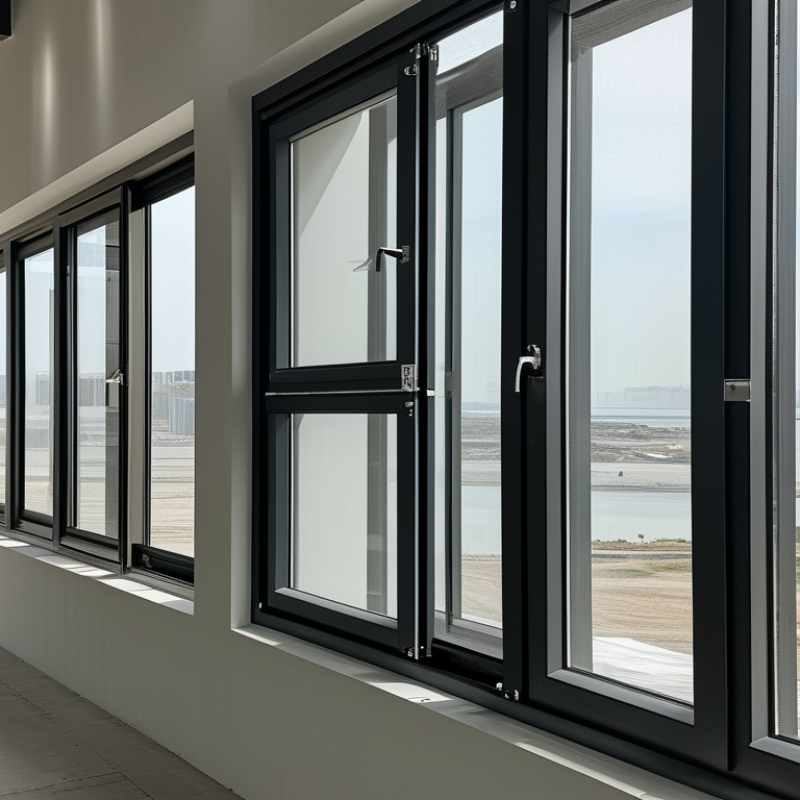
What Makes a China Aluminum Window Profile Supplier the Best Choice?
What Makes a China Aluminum Window Profile Supplier the Best Choice?
A strong China aluminum window profile supplier offers more than competitive pricing. It provides stable extrusion quality, accurate dimensions, and traceable material certificates. The International Energy Agency reported that buildings and construction consume about 30% of global final energy. Better window systems can reduce heat transfer and improve building performance.
Look for suppliers with in-house mold design, thermal-break assembly, powder coating, and inspection teams. Ask for test results covering air leakage, water resistance, wind load, and thermal performance. Standards such as EN 12207, EN 12208, EN 12210, and ASTM E283 provide useful comparison points. The International Aluminium Institute states that recycled aluminum requires about 5% of the energy used for primary aluminum production. This makes documented recycled content valuable, though the paperwork must be checked carefully. No supplier is perfect. Samples can still hide production differences.
Tips: Request two production samples from separate batches. Check wall thickness with a caliper, not by appearance. Review coating thickness, color consistency, corner cuts, and packaging before placing a large order. Confirm alloy grade, temper, tolerance, and delivery records in writing. A factory visit or independent inspection adds reliability. I have seen attractive samples fail during repeated opening tests. Cost matters, but replacement profiles cost more.
| Evaluation Dimension | Practical Benchmark | Why It Matters for Window Profiles | Recommended Verification |
|---|---|---|---|
| Aluminum Alloy | 6063 is widely used for architectural extrusions because it provides a suitable balance of extrudability, surface finish, corrosion resistance, and strength. | A consistent alloy composition helps maintain stable extrusion quality, accurate dimensions, and a uniform surface finish. | Request the alloy designation, chemical-composition report, and material certificate for each production batch. |
| Temper Selection | T5 and T6 are common tempers for architectural aluminum profiles. T6 generally provides higher strength than T5 when the design and processing route require it. | The temper affects structural performance, machining behavior, and resistance to deformation during installation. | Check the specified temper against the project drawings and verify mechanical properties through a recognized laboratory or mill certificate. |
| Profile Wall Thickness | Wall thickness must be selected according to span, wind load, frame geometry, hardware, and applicable building codes; residential systems commonly use approximately 1.2–2.0 mm in many applications. | Insufficient thickness can reduce stiffness, screw-holding capacity, and resistance to handling or wind pressure. | Approve production drawings and inspect critical wall sections with calibrated measuring equipment rather than relying only on nominal weight. |
| Thermal-Break Design | Thermally broken systems commonly use polyamide 6.6 reinforced with approximately 25% glass fiber; the strip width is selected according to the required thermal and structural performance. | A continuous thermal barrier reduces heat transfer through the frame and helps limit interior condensation risk. | Review thermal-break material data, mechanical locking details, strip continuity, and calculated frame U-value for the complete window assembly. |
| Dimensional Tolerance | Extruded profile tolerances should be defined on the approved drawing and controlled according to a recognized extrusion standard such as EN 755-9 or an equivalent specification. | Stable tolerances improve corner assembly, gasket fit, hardware alignment, glazing clearance, and interchangeability between production batches. | Request a dimensional inspection plan covering outside dimensions, wall thickness, straightness, twist, and critical interface features. |
| Surface Treatment | Common architectural finishes include anodizing and powder coating. Anodized coating thickness is specified by project requirements, while powder-coating performance is commonly referenced to AAMA 2603, 2604, or 2605, or equivalent specifications. | The correct finish improves resistance to weathering, corrosion, ultraviolet exposure, and visible surface defects. | Confirm color tolerance, coating thickness, pretreatment process, adhesion, gloss, and weathering requirements before mass production. |
| Air, Water, and Wind Performance | The complete window, not the aluminum profile alone, should be tested for air leakage, water penetration, and structural performance using applicable methods such as EN 1027, EN 12207, EN 12208, EN 12210, ASTM E283, ASTM E331, and ASTM E330. | Profile geometry, gaskets, drainage paths, hardware, glazing, and corner joints work together to determine real window performance. | Require test reports for the complete window system with dimensions and configurations comparable to the intended project. |
| Glazing Compatibility | The profile system should identify its permitted glass thickness, spacer arrangement, gasket type, and glazing method; insulated-glass compatibility depends on the specific system design. | Correct glazing support prevents glass movement, edge damage, air leakage, water entry, and installation problems. | Check glazing-pocket dimensions, setting-block locations, gasket hardness, sealant compatibility, and approved glass configurations. |
| Corrosion Protection | Pretreatment and coating selection should reflect the exposure environment, including coastal, industrial, humid, or inland conditions. | Salt, moisture, pollutants, and dissimilar-metal contact can accelerate corrosion at cut ends, fasteners, joints, and drainage areas. | Review pretreatment chemistry, corrosion-resistance testing, drainage design, fastener material, and isolation requirements for dissimilar metals. |
| Tooling and Customization | A technically capable supplier should provide controlled extrusion dies, approved profile drawings, die-trial samples, and revision management for customized sections. | Good tooling control reduces dimensional variation, surface lines, deformation, material waste, and delays during scale-up. | Approve die drawings and first-article samples before production; confirm who controls revisions and retains tooling records. |
| Quality Control System | A documented quality system should cover incoming billets, extrusion parameters, aging, machining, surface treatment, packing, and final inspection. | Process control is more reliable than visual inspection alone and helps maintain consistent quality across repeat orders. | Request inspection records, calibration certificates, nonconformance procedures, traceability documents, and pre-shipment inspection criteria. |
| Packaging and Logistics | Profiles should be protected against abrasion, moisture, impact, and contamination using suitable wrapping, separation, labeling, and export packing. | Even correctly manufactured profiles can be damaged by rubbing, condensation, or poor support during transportation and storage. | Confirm packaging drawings, bundle weight limits, profile identification, loading method, moisture protection, and inspection procedures at dispatch. |

Certified Quality System

 Find Your Solutions ▶
NORTH EASTON MACHINE • 218 Elm Street • North Easton, MA 02356 • 508-238-6219