
10 Best Steel Wire Rod Manufacturers Worldwide?
Choosing the 10 Best Steel Wire Rod Manufacturers Worldwide requires more than comparing production volume. Quality consistency, drawing performance, surface condition, delivery reliability, and traceability also matter. A bright coil may still fail during high-speed wire drawing if chemistry or cooling control varies.
World Steel Association reported 1.892 billion tonnes of crude steel production in 2023. Its World Steel in Figures 2024 report shows the scale of competition facing every Steel Wire Rod Manufacturer. OECD steel market updates also highlight persistent overcapacity and changing demand patterns. These pressures make operational resilience important, not merely factory size. Grand View Research and other market studies identify construction, automotive components, fasteners, welding products, and energy infrastructure as key wire-related demand sectors.
“The steel industry is essential to modern life,” says Edwin Basson, Director General of worldsteel. His observation is broad, but useful. Wire rod sits quietly inside many visible products. It becomes tire cord, springs, nails, mesh, and precision cable. Small defects can become expensive failures. That reality shapes this global selection.
There is no perfect ranking. Not yet.
This introduction considers manufacturers through a practical lens: product grades, tensile consistency, mill technology, certifications, geographic reach, and customer support. Public disclosures are uneven, so some comparisons remain imperfect. Company claims also require careful checking against audited reports, customer experience, and independent testing. The strongest producers are not always the largest. They are the manufacturers that repeatedly deliver dependable coils for demanding applications, across changing markets and specifications.
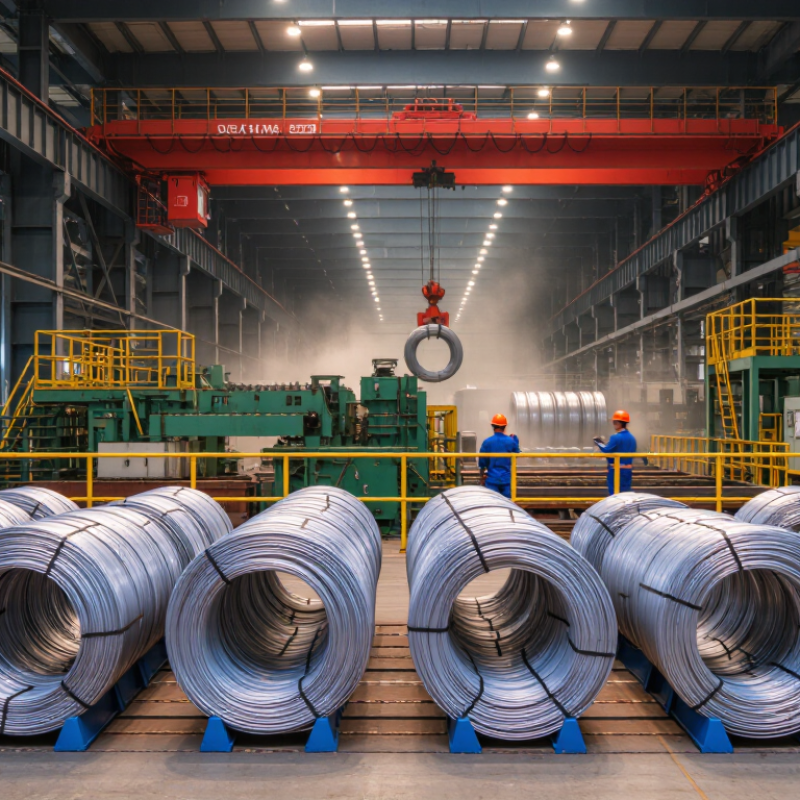
What Steel Wire Rod Is and How Leading Manufacturers Are Evaluated
Steel wire rod is a hot-rolled, coiled steel product used for fasteners, welding wire, mesh, springs, and tire cord. Its quality begins with chemistry. Carbon, manganese, sulfur, and phosphorus must remain within tight limits for each end use. Diameter control matters too. Small ovality can create unstable drawing, broken wires, or uneven coating.
A reliable manufacturer should provide heat-level traceability, mill test certificates, and consistent mechanical results. Buyers should compare tensile strength, yield behavior, surface condition, coil weight, and dimensional tolerance.
ISO 16120 defines key requirements for non-alloy steel wire rod, while ISO 9001 supports process control. However, certification alone proves little. An audit should examine billet storage, descaling, cooling control, and inspection records. The cleanest coil often reveals the strongest process discipline.
Scale also deserves careful interpretation. The World Steel Association reported about 1.89 billion tonnes of crude steel production in 2023, showing the industry’s enormous production base. Yet volume does not equal wire-drawing performance. The International Energy Agency estimates steelmaking creates roughly 7% of global energy-related emissions, so energy efficiency and verified emissions data increasingly influence supplier selection.
Rankings of the ten best manufacturers should therefore combine technical consistency, delivery reliability, environmental reporting, and customer support. Public data can be incomplete. That is the uncomfortable part. A polished website may hide uneven batch performance. A practical trial order remains more convincing than a perfect sales presentation.

Global Market Regions and Major Steel Wire Rod Production Centers
Steel wire rod production follows the movement of iron ore, energy, ports, and downstream engineering demand. The strongest production centers are concentrated in East Asia, Europe, South Asia, and North America. Each region serves different industrial needs.
East Asia remains a major manufacturing hub, supported by large blast furnaces, electric arc furnaces, and efficient export terminals. Coastal mills can receive raw materials quickly and ship rod to automotive, construction, and fastener factories.
South Asia is expanding rapidly. Growing housing projects, rail networks, and power infrastructure are increasing demand for low-carbon and high-strength grades.
Europe maintains advanced production centers near integrated steel corridors and inland transport routes. These mills often focus on consistent chemistry, surface quality, and specialty rod for welding wire, springs, bearings, and precision components. Energy costs can reshape regional competitiveness, however. That factor deserves more attention than many market lists provide.
North America benefits from strong recycling systems and electric arc furnace capacity. Production is closely linked to scrap availability, renewable power, and regional construction demand.
The Middle East and North Africa are also developing important centers, supported by infrastructure investment and accessible energy supplies. Their export potential varies with logistics and local finishing capacity.
A reliable comparison of the ten leading manufacturers should examine furnace technology, annual output, certification records, delivery performance, and product range. Website claims alone are not enough. Real purchasing decisions often depend on mill certificates, trial coils, and stable performance during drawing. Market rankings can change quickly, and that uncertainty should be stated clearly.
Profiles of the Ten Leading Steel Wire Rod Manufacturers
The ten leading Steel Wire Rod Manufacturers differ by scale, furnace technology, and customer focus. The largest integrated producer profile typically combines iron ore, blast furnaces, and high-speed rod mills. A major electric-arc producer relies more heavily on scrap and can adjust grades quickly. Another leading group specializes in low-carbon alloy rod for automotive fasteners. One focuses on tire cord, while another supplies welding wire with strict surface control. Regional producers often win through shorter delivery times.
Production scale still matters. The World Steel Association reported approximately 1.88 billion tonnes of crude steel output worldwide in 2024. However, crude steel volume does not prove wire rod quality. Mill stability, dimensional tolerance, and drawing performance matter more to processors. A European profile may emphasize certified specialty grades and energy efficiency. An Asian exporter may compete through enormous capacity and port access. A North American producer often highlights recycled content and domestic supply. These profiles are not interchangeable.
The OECD Steel Outlook 2024 identified weak demand and continuing global overcapacity as major industry pressures. The International Energy Agency also estimates steelmaking creates about 7–9% of global energy-related emissions. That makes cleaner power, higher scrap use, and transparent emissions data increasingly important. Some manufacturers publish detailed carbon figures; others provide broad claims, which deserve scrutiny. My assessment would change with verified plant-level data. Customer audits still reveal problems that brochures miss. Steel wire rod remains a technical product, not merely a commodity.
10 Best Steel Wire Rod Manufacturers Worldwide? - Profiles of the Ten Leading Steel Wire Rod Manufacturers
| Profile | Primary Manufacturing Region | Indicative Annual Wire Rod Capacity | Typical Diameter Range | Common Steel Grades | Key End-Use Applications | Production and Quality Capabilities | Typical Standards |
|---|---|---|---|---|---|---|---|
| Profile 01 | East Asia | 1.5–3.0 million metric tons/year | 5.5–25 mm | Low-carbon, medium-carbon, high-carbon, spring and bearing steel | Tire cord, wire rope, fasteners, springs and welding wire | High-speed wire rod mills, controlled cooling, continuous casting and low-inclusion production | ISO 9001, ASTM, EN and JIS specifications |
| Profile 02 | Western Europe | 0.8–2.0 million metric tons/year | 5.5–32 mm | Cold-heading, free-cutting, spring, bearing and stainless grades | Automotive components, construction mesh, bolts and precision wire | Electric-arc or integrated steelmaking, secondary metallurgy and tight dimensional control | EN 10016, EN 10263, ISO 9001 and IATF 16949-related supply systems |
| Profile 03 | North America | 0.6–1.5 million metric tons/year | 5.5–28 mm | Low-carbon, high-carbon, cold-heading and prestressed concrete grades | Structural mesh, nails, automotive wire, concrete strand and fasteners | Electric-arc-furnace production, recycled scrap utilization and automated coil handling | ASTM A510, ASTM A641, ASTM A722, CSA and ISO 9001 |
| Profile 04 | South Asia | 0.7–1.8 million metric tons/year | 5.5–25 mm | Mild steel, high-carbon, tire cord, spring and electrode grades | Reinforcement mesh, fencing, fasteners, ropes and industrial wire | Billet casting, high-speed rolling, controlled cooling and coil inspection systems | IS 7904, ASTM, EN and ISO 9001 requirements |
| Profile 05 | East Asia | 0.5–1.3 million metric tons/year | 5.5–22 mm | Carbon, alloy, stainless, bearing and ultra-clean specialty grades | Automotive wire, precision springs, bearings and electronic components | Vacuum degassing, ladle refining, electromagnetic stirring and stringent surface inspection | JIS G3505, JIS G3506, ASTM, EN and ISO 9001 |
| Profile 06 | Middle East | 0.5–1.2 million metric tons/year | 5.5–25 mm | Low-carbon, medium-carbon, high-carbon and mesh grades | Construction mesh, nails, fencing, cable armoring and general fabrication | Direct-reduced-iron or scrap-based steelmaking, continuous casting and export logistics | ASTM A510, BS 4449, EN 10016 and ISO 9001 |
| Profile 07 | Central and Eastern Europe | 0.4–1.0 million metric tons/year | 5.5–28 mm | Cold-heading, spring, high-carbon, alloy and welding grades | Automotive fasteners, wire rope, springs, electrodes and reinforcement products | Continuous casting, controlled rolling, spheroidize-annealing-compatible grades and traceability systems | EN 10016, EN 10263, ASTM and ISO 9001 |
| Profile 08 | South America | 0.3–0.9 million metric tons/year | 5.5–25 mm | Low-carbon, medium-carbon, high-carbon and prestressing grades | Construction wire, agricultural fencing, nails, cables and concrete reinforcement | Integrated or mini-mill operations, billet production, coil compacting and regional distribution | ABNT, ASTM, EN and ISO 9001 specifications |
| Profile 09 | Southeast Asia | 0.3–0.8 million metric tons/year | 5.5–22 mm | Low-carbon, high-carbon, welding and cold-heading grades | Fasteners, welded mesh, construction wire, nails and cable products | Electric-arc production, high-speed rolling, controlled cooling and container-port access | ASTM, JIS, EN, SNI or equivalent national standards |
| Profile 10 | Oceania | 0.2–0.6 million metric tons/year | 5.5–25 mm | Low-carbon, medium-carbon, high-carbon and reinforcing-wire grades | Building products, fencing, mesh, nails, springs and general engineering wire | Regional billet or integrated production, automated rolling, chemical analysis and batch traceability | AS/NZS 3679, ASTM, EN and ISO 9001 |
Manufacturing Processes, Product Grades, and Quality Standards
Choosing among the 10 best steel wire rod manufacturers requires more than comparing annual output. Manufacturing control matters.
Most mills begin with electric arc furnaces or basic oxygen furnaces. Continuous casting then produces billets with controlled chemistry. Hot rolling reduces each billet through multiple stands, often above 1,000°C. Water cooling and coiling determine surface quality and final microstructure. Mechanical descaling is important, because residual scale can damage later drawing dies.
Grade selection should match the end use. Low-carbon rods support nails, mesh, and general fabrication. High-carbon grades serve tire cord, springs, and prestressed concrete applications. Alloy and stainless grades require tighter control of chromium, nickel, manganese, or boron. EN 10016, ASTM A510, and ISO 16120 provide useful classification and testing references. Buyers should request heat-level certificates, tensile results, chemical analysis, and dimensional records.
Quality systems need evidence, not attractive wording. ISO 9001 certification supports process discipline, but it does not replace independent testing. The World Steel Association reported global crude steel production of about 1.89 billion tonnes in 2023, showing the scale of this supply chain. Yet production volume alone says little about rod consistency. A supplier should demonstrate batch traceability, ultrasonic or surface inspection, and controlled cooling data. Carbon footprint reporting also deserves attention, especially when electric power sources vary. A perfect scorecard is unrealistic. I would still verify mill samples before approving long-term supply. This distinction is easy to miss.
10 Best Steel Wire Rod Manufacturers Worldwide — Manufacturing Processes, Product Grades, and Quality Standards
Representative comparison of specified maximum carbon content across commonly used steel wire rod grades. The data is grade-based and does not represent any individual manufacturer.
Steel billets are reheated, hot-rolled through a reducing mill, controlled-cooled, and formed into coils. Surface inspection and dimensional testing follow production.
Low-carbon grades are commonly used for drawing and mesh. Medium- and high-carbon grades are used for fasteners, springs, tire cord, and high-strength wire applications.
Common references include ASTM A510/A510M, EN 10016, ISO 16120, and ISO 9001-based quality systems. Chemical limits and testing requirements depend on the specified grade.
Data note: Carbon values show representative specified maximums in percent by mass for selected grades. Actual chemistry, mechanical properties, and acceptance criteria depend on the applicable material standard and product specification.
Applications, Supply Considerations, and Manufacturer Comparison Criteria
Choosing the 10 best steel wire rod manufacturers requires more than comparing annual output.
Wire rod supports tire cord, welding electrodes, fasteners, springs, mesh, and high-strength cables. Each application demands different chemistry, diameter control, surface quality, and drawing performance.
The World Steel Association reported global crude steel production of about 1.89 billion tonnes in 2023. That scale shows supply depth, but it does not prove consistent wire rod quality.
A practical comparison should examine tensile strength, carbon range, dimensional tolerance, coil weight, and hydrogen-control procedures. Test certificates should identify heat numbers, mechanical results, and applicable standards. ISO 9001 certification helps, but independent audit records offer stronger evidence.
The OECD Steel Market Developments report has repeatedly highlighted overcapacity and uneven demand conditions. Buyers should therefore assess financial stability, export experience, and backup mills, not only quoted prices.
Supply reliability matters at the loading dock. Check port access, inland transport, minimum order quantities, and packaging for long-distance shipment.
The International Energy Agency reports that steelmaking remains a major industrial emissions source, making energy intensity and recycled content increasingly important procurement factors. Environmental data can expose vague claims. Still, carbon declarations may use different boundaries, so comparisons are imperfect.
I would request recent production samples, drawing trials, and failure records before approval. A polished brochure is not enough. Performance at the customer’s line decides the ranking.
Article Source:
NORTH EASTON MACHINE • 218 Elm Street • North Easton, MA 02356 • 508-238-6219