
2026 Best Stainless Wire Grates for Global Buyers
For global buyers, selecting Stainless Wire Grates is not just a matter of comparing prices or choosing a polished finish. Wire diameter, mesh opening, weld quality, and stainless-steel grade all shape how a grate performs in its intended setting. A small sample can reveal uneven welds or rough edges. Real service conditions matter more than a glossy catalog image.
Materials engineer Michael F. McGuire, author of Stainless Steels for Design Engineers, offers a useful technical lens for assessing material choices. The line below is an editorial summary, not a verified quotation: “Choose stainless steel for the environment it must withstand, not for its name alone.” That principle helps buyers compare corrosion exposure, heat, load, cleaning needs, and fabrication quality. Ask suppliers for clear specifications and inspect representative samples where possible. Still, a datasheet never tells the whole story. Installation, maintenance, and actual operating conditions can change performance. This guide explores practical selection factors, supplier questions, and trade-offs for international procurement. Some recommendations will depend on the application; there is no single grate that fits every project.
What Stainless Wire Grates Are and How They Are Classified
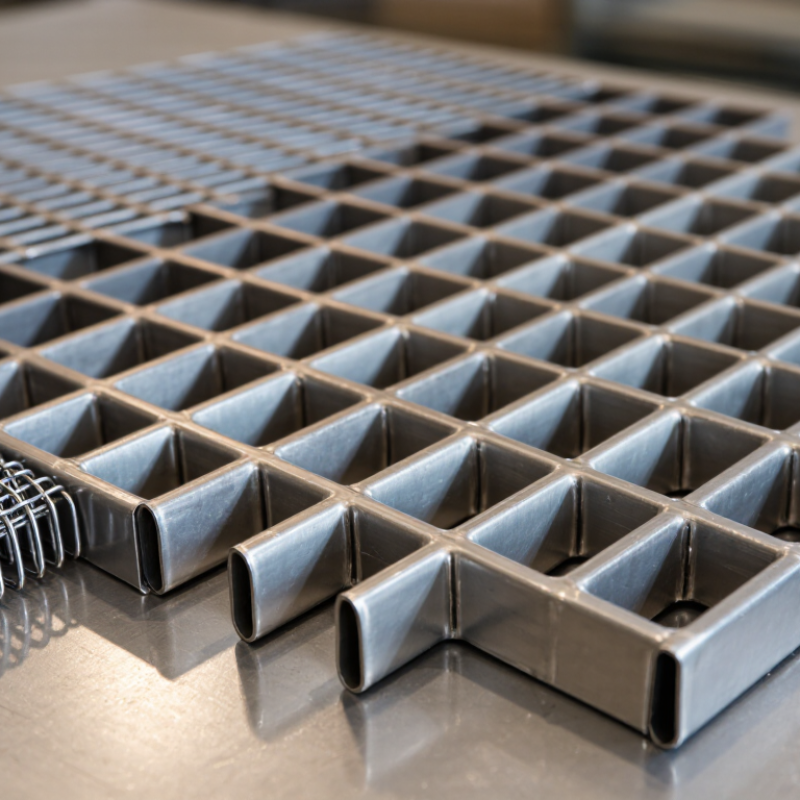
Stainless wire grates are open structures made from intersecting metal wires. They support, separate, or protect products while allowing air, water, or light to pass through. Unlike solid plates, their open spaces reduce weight and can make cleaning easier. You can see the difference clearly on a wet work surface: liquid drains through the grid instead of pooling on top. Simple, but useful.
Grates are commonly classified by wire arrangement, construction, stainless steel grade, and finish. Parallel wires joined by cross wires form a welded grate, while woven wire creates a tighter, more flexible mesh. Some products use thicker bars and wider openings for heavier loads; others have fine spacing for smaller parts or filtration tasks. These categories overlap, so a grate may not fit neatly into just one label. That distinction matters.
Material grade affects corrosion resistance, but the right choice depends on exposure, cleaning methods, and operating temperature. A grate used near salt spray may need different specifications from one used in a dry storage area. Surface finish also matters: smooth, polished wire can be easier to wipe, while a rougher finish may suit less visible applications. Ask for wire diameter, opening size, load information, and material documentation. A product description alone can leave gaps, and buyers should verify the details against the actual working conditions.

Materials, Grades, and Key Performance Properties
For a stainless wire grate, the right material depends on its working environment, not just its price. Grade 304 suits many indoor and general-purpose applications. It offers useful corrosion resistance and is widely available. Grade 316 adds molybdenum, which improves resistance to salts and chlorides. That can matter near coastal air or in washdown areas. Grade 430 is magnetic and often less costly, but it generally resists corrosion less effectively. Small details matter. Weld quality, surface finish, and cleaning practices can influence service life as much as the grade itself.
Performance also depends on construction. Thicker wire and closer spacing may support heavier loads, but the frame and support span matter too. A grate that looks sturdy on a sample can flex when installed across a wider opening. Check load requirements, wire diameter, spacing, weld integrity, and operating temperature before comparing quotations. Stainless steel is not stain-proof; deposits and trapped moisture can still cause discoloration. There is no universally perfect grade, and quote sheets can make the choice look simpler than it is. For global sourcing, request material documentation and confirm that stated grades match the intended service conditions.
Design Features and Manufacturing Processes
2026 Best Stainless Wire Grates for Global Buyers
Design Features and Manufacturing Processes
A well-designed stainless wire grate balances strength, drainage, and easy cleaning. Wire diameter and spacing affect load support, airflow, and how easily debris passes through. For example, tighter spacing can help support small items, while wider openings may improve drainage. The right choice depends on the grate’s use and expected load. Details matter. Buyers should confirm dimensions, edge shape, and mounting points against their equipment drawings. Stainless steel grades such as 304 or 316 may suit different environments, but actual performance depends on exposure and maintenance. A grade name alone is not a guarantee.
Manufacturing usually begins with wire drawing, straightening, and cutting to length. Wires are then formed and joined, often by resistance welding, before the grate is trimmed and finished. Weld consistency matters: uneven joints can create sharp spots or weaken the panel. Finishing may include cleaning, passivation, or electropolishing, depending on the specification. Ask suppliers how they inspect welds, flatness, and opening sizes, and request sample measurements when tolerances are important. Not every polished surface stays pristine in service. There is a trade-off. Packaging also deserves attention; stacked grates need separation to limit scratches during long-distance shipping. A clear drawing and a practical sample check can prevent expensive misunderstandings, though samples may not reveal every production variation.
| 2026 Best Stainless Wire Grates for Global Buyers - Design Features and Manufacturing Processes | |||||
|---|---|---|---|---|---|
| Grate Design | Typical Construction | Material Selection | Design Features | Manufacturing Process | Buyer Checks |
| Welded wire grate panel | Longitudinal and cross wires joined at their intersections; supplied as flat panels or fabricated sections. Wire diameter and opening size depend on the application. | 304 stainless steel is commonly used for general indoor and outdoor applications. 316 stainless steel is often selected where exposure to chlorides or more demanding corrosive conditions is expected. | Open construction allows drainage and airflow. Panel dimensions, wire spacing, perimeter framing, and edge treatment can be specified for the installation. | Wire straightening and cutting; fixture alignment; resistance welding at intersections; panel trimming; optional frame attachment; cleaning and finishing. | Confirm wire diameter, spacing, overall dimensions, flatness, weld consistency, edge condition, and whether the panel requires a supporting frame. |
| Woven wire grate panel | Wires are interlaced in a regular pattern to form a flexible mesh panel. Construction details vary with wire size and mesh opening. | 304 and 316 stainless steel are common options; grade selection should reflect the service environment and cleaning chemicals. | Fine, uniform openings can suit screening, filtration, guards, and light-duty platforms. A separate frame or support may be needed to control deflection. | Wire drawing or preparation; loom weaving; cutting to size; edge securing or framing; inspection for mesh uniformity and damaged wires. | Check mesh count or opening size, wire diameter, weave type, usable panel size, edge security, and required support spacing. |
| Heavy-duty welded grate with perimeter frame | Welded wire panel reinforced with a stainless steel border or support members. Member sizes and spacing are selected for the intended load and span. | 304 may suit many general environments; 316 may be appropriate for marine or chloride-exposed service. The complete assembly should use compatible stainless materials. | Frame helps maintain panel shape and provides attachment points. Load performance depends on wire size, support layout, span, welds, and installation. | Panel welding; frame cutting and forming; assembly welding; dimensional correction; finishing and inspection of joints and edges. | Request application-specific load and deflection verification. Confirm clear span, support locations, fastening method, frame dimensions, and any required test documentation. |
| Perforated or expanded stainless grate panel | Perforated sheet has punched openings; expanded metal is slit and stretched into a mesh pattern. These are sheet-metal grating constructions rather than woven wire. | Stainless sheet is available in grades such as 304 and 316. Select the grade based on corrosion exposure, temperature, and cleaning conditions. | Opening shape and open area depend on the pattern and sheet thickness. Formed edges or a frame can improve handling and installation. | Sheet leveling; punching or slitting and stretching; cutting; optional forming and frame attachment; deburring and surface cleaning. | Specify sheet thickness, opening pattern, open area, panel size, edge finish, and whether the design is suitable for the required span and load. |
| Custom cut-to-size grate | Welded, woven, perforated, or expanded construction fabricated to project drawings or measured site dimensions. | Grade and finish should be stated clearly. Stainless steel surface appearance can vary with the starting material and finishing method. | May include notches, holes, borders, clips, hinges, or other project-specific details. Tolerances should be agreed before production. | Drawing review; material preparation; cutting and forming; welding or edge finishing as required; dimensional inspection; protective packing. | Provide drawings with units, tolerances, material grade, finish requirements, quantity, application conditions, and packaging or marking needs. |
| General specification note: Product dimensions, load capacity, corrosion performance, and tolerances depend on the complete design and operating conditions. Obtain project-specific drawings and technical data before selection; do not infer a safe working load from the grate type alone. | |||||
Common Applications Across Industries
Stainless wire grates serve different jobs across food processing, manufacturing, laboratories, and building projects. In bakeries and commercial kitchens, open wire surfaces let hot air circulate around trays and products. Staff can inspect both sides without lifting every item. In washdown areas, smooth, corrosion-resistant surfaces are easier to clean, though the right alloy still depends on chemicals, temperature, and cleaning routines. Small details matter.
Factories use grates as machine guards, drying racks, and platforms for parts moving through production. A stable frame and suitable wire spacing help prevent smaller components from slipping through.
In laboratories, grates may support glassware or containers during drying, but they should not be treated as load-rated flooring unless tested for that use. Not always.
Outdoor and marine settings bring different demands. Salt spray and standing water can speed corrosion, so buyers should check material grade, weld quality, and maintenance needs rather than relying on the word “stainless” alone. Architects also specify wire grates for screens, walkways, and ventilation panels, where appearance and drainage matter alongside strength. A very open pattern may shed water well, but feel less comfortable underfoot. That trade-off is easy to overlook on a drawing. The best selection starts with the actual load, cleaning method, exposure, and required opening size.
How Global Buyers Evaluate Suppliers and Product Standards
Global buyers should evaluate stainless wire grates against their actual use, not only a catalog description. Confirm the stated steel grade, wire diameter, mesh opening, overall dimensions, and load requirements. Ask how the supplier checks weld strength and surface finish. Terms such as “corrosion-resistant” need context: moisture, cleaning chemicals, heat, and outdoor exposure can change performance. Request material certificates and traceability records, then compare them with the quoted specifications.
Tips: Request a sample from the same production process as the order. Measure the openings, inspect several welds, and check for sharp edges or uneven spacing. Ask for clear photos of packaging, too; grates can bend during long-distance transport.
A capable supplier should explain inspection methods, production tolerances, and how defects are handled. For example, ask whether dimensions are checked on every unit or by sampling, and what happens when a result falls outside tolerance. Review test reports carefully and confirm what each test actually measures. Standards and acceptance criteria may differ by destination and application, so buyers should specify their own requirements in writing. A sample can look excellent, yet bulk production may vary; that detail is easy to overlook. Compare lead times, packing methods, and communication quality alongside price, and keep approved drawings with the purchase records.
Article Source:
NORTH EASTON MACHINE • 218 Elm Street • North Easton, MA 02356 • 508-238-6219