
What Is the Best Roller Table Conveyor for 2026?

What is the best Roller Table Conveyor for 2026? There is no single model that suits every operation. The right choice depends on the products being moved, the available floor space, and the pace of work. A light carton line has different needs from a station handling heavy, rigid pallets. Small details matter.

This guide compares the features that shape a practical purchase: load capacity, roller diameter and spacing, conveyor width, frame strength, and drive options. It also considers accumulation, operator access, maintenance, and the conditions around the line. Picture a box catching at a transfer point or a pallet leaving too little clearance for a worker. Those moments reveal whether a design fits real production, not just a specification sheet. Check the manufacturer’s load ratings and installation guidance, then test the proposed layout with representative products where possible.

A lower purchase price may not mean a lower operating cost. Spare parts, cleaning access, noise, and downtime deserve a place in the comparison. So does future flexibility. Still, it is easy to overestimate how much capacity a line will need; forecasts can miss the mark. Use measured throughput and actual product dimensions rather than assumptions. The best choice for 2026 is the conveyor that handles today’s work reliably and can adapt sensibly as requirements change.
What Is the Best Roller Table Conveyor for 2026?

Define Roller Table Conveyors and Their Main 2026 Applications

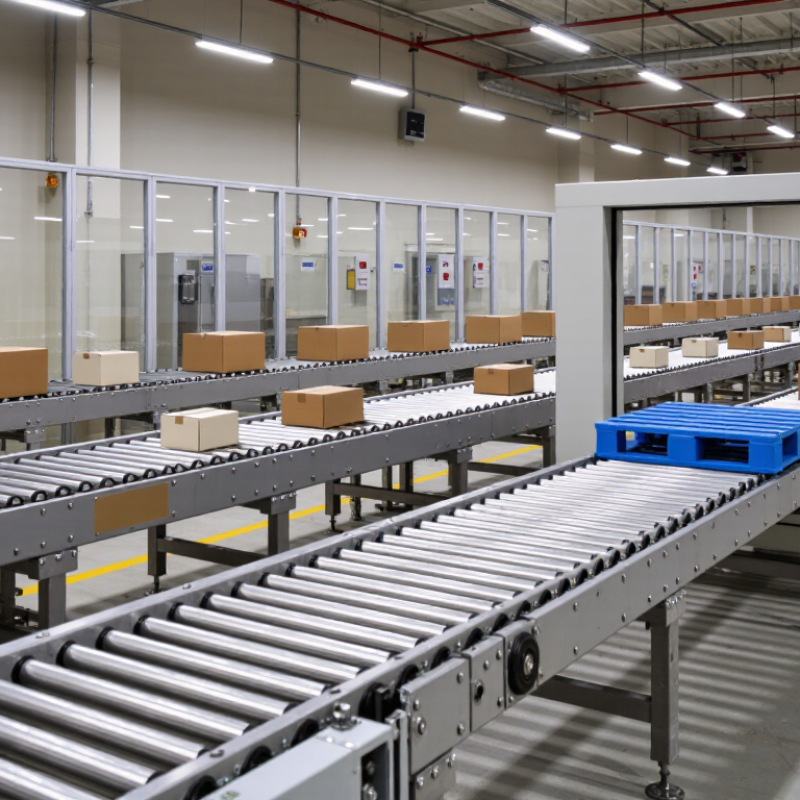
A roller table conveyor moves cartons, totes, or other stable loads across a row of rotating rollers. Each roller supports the load while allowing it to travel forward. Gravity models use a slight incline; powered models use motors to control movement and spacing. They are simple. Yet roller diameter, spacing, and load weight all affect smooth travel.

In 2026, these conveyors remain useful in packing areas, warehouses, assembly lines, and shipping zones. Workers can move cartons between inspection, labeling, and dispatch stations without carrying every item by hand. Powered sections can help regulate flow where several workstations share a line. Gravity sections suit short transfers when loads roll freely. Not every load rolls. Soft packages, unstable items, or products with uneven bases may catch between rollers, so another conveyor type could work better.

Tips: Check the smallest package, not just the average one. Its base should span enough rollers to stay supported. Measure the actual load weight, including packaging, and consider dust or moisture around the line. A conveyor that looks efficient on a drawing may create awkward reaches or bottlenecks in daily use; test the route with real loads before fixing the layout.

Compare Gravity, Powered, and 24 V Motor-Driven Roller Designs

What Is the Best Roller Table Conveyor for 2026?

The right roller table depends on load weight, travel distance, and how often items need to stop. Gravity conveyors use a slight slope or a manual push to move cartons. They suit short transfer points, packing stations, and simple storage lanes. They need no drive motor, but slope and roller spacing matter. A carton with a soft or uneven base may hesitate or skew. Test with the actual load, not an empty box.

Powered roller conveyors keep loads moving without relying on a slope. They work well where products travel longer distances or operators need a steady flow. Drive type, roller diameter, and load capacity should match the heaviest item. Add controls where stopping or accumulation is required. More components mean more maintenance. Not always a problem.

A 24 V motor-driven design can provide controlled movement, often with individually managed zones. This can reduce unnecessary roller motion and help prevent cartons from crowding at transfer points. Check how the system handles jams, gaps, and mixed package sizes. Confirm that the load’s underside contacts enough rollers, especially for narrow cartons. A quiet test run can hide issues; run a fully loaded line and watch each transfer. It is easy to over-specify controls, and I would revisit that choice after observing a typical shift.

Size Roller Pitch Using the Three-Roller Support Rule

For a roller table conveyor, size roller pitch from the load’s actual contact length, not its label length. The three-roller support rule means the load should rest on at least three rollers at once. As a practical check, keep pitch at or below one-third of the shortest rigid base dimension traveling along the conveyor. A carton with a 600 mm base length, for example, calls for pitch no greater than 200 mm. A slightly tighter pitch can reduce rocking, especially when cartons are light or their bottoms flex.

This rule is a starting point, not a guarantee. Measure the carton’s underside, then test the heaviest and smallest loads at joints, transfers, and accumulation zones. MHI’s 2024 Annual Industry Report found that 55% of respondents planned to increase supply-chain technology investment over the following five years. That trend makes dependable conveying more important, but smarter controls cannot fix poor mechanical support. Small cartons behave differently. I have seen a good nominal pitch fail when a taped seam or sagging panel became the true contact surface.

Tips: Measure the usable base length, divide by three, then choose the next tighter available pitch. Test a real load by hand before ordering. A neat calculation can still miss a weak carton.

What Is the Best Roller Table Conveyor for 2026? — Size Roller Pitch Using the Three-Roller Support Rule

For stable support, size the roller pitch so that at least three rollers sit beneath the shortest load: maximum pitch = shortest load length ÷ 3. For example, a 600 mm load calls for a pitch of 200 mm or less. Confirm the final layout against load shape, weight, and conveyor design requirements.

Assess Load Capacity, Speed, Controls, and Conveyor Safety Standards

A roller table conveyor should match the real load, not just the average package. Check the rated capacity per roller and per conveyor section, then account for concentrated loads, uneven cartons, and items that may bridge several rollers. A steel fixture can create a sharp point load. Leave a practical margin; the exact margin depends on duty cycle and load variation. A walkthrough with actual products often reveals issues that a clean spreadsheet misses.

Set speed to match the upstream and downstream equipment. If cartons arrive faster than workers can clear them, congestion builds quickly. Keep it steady. Variable-speed controls can help with different product sizes, but operators need clear, accessible stop controls and simple status indicators. Avoid controls that require guesswork. For safety, assess pinch points, exposed drive components, emergency-stop access, and safe clearing procedures. Check applicable conveyor safety standards and local requirements during design and installation, not after a near miss. Guarding and training matter, though they can feel like details until the line is busy. I would review the layout with operators before finalizing it; they may spot awkward reaches or blocked walkways that were missed in planning.

Select the Best Conveyor by Throughput, Layout, and Total Cost of Ownership

The best roller table conveyor for 2026 is the one that fits your actual flow, not the highest advertised speed. Start with peak throughput: count units per minute, note their spacing, and include heavier loads or uneven arrivals. A line handling 30 cartons per minute may still bottleneck if workers feed it in bursts.

That number matters.

Next, measure the route on the floor. Record straight runs, turns, transfer points, and space for maintenance access. Check carton dimensions against roller pitch; small packages can wobble when the gaps are too wide.

Small gaps matter.

For accumulation, confirm whether the system needs powered zones or can use gravity, and consider how often items will stop and restart.

Compare total cost of ownership, not purchase price alone. Include installation, power use, replacement rollers, controls, labor, and likely downtime. Ask who will inspect bearings and clear jams, and how quickly common parts can be replaced.

A simple layout may cost less to maintain than a faster, more complex one.

Still, estimates can miss real operating habits: observe a busy shift before settling on capacity. Then compare options using the same load, speed, and operating-hour assumptions.

Certified Quality System

© North Easton Machine Company, Inc. All rights reserved. • Site: Blog
NORTH EASTON MACHINE • 218 Elm Street • North Easton, MA 02356 • 508-238-6219