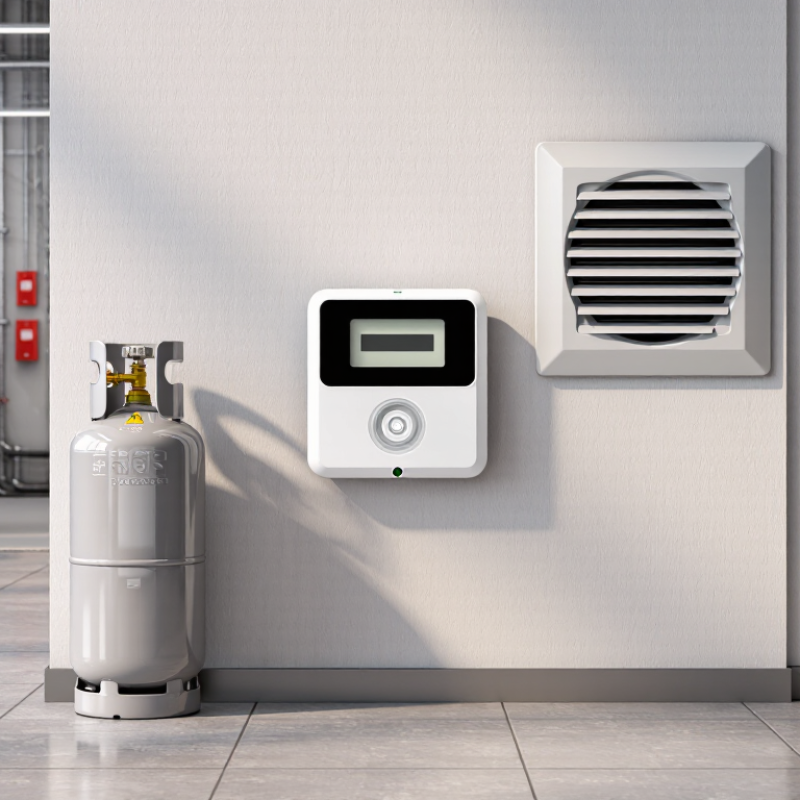
What Is the Best LPG Gas Detector in 2026?

Choosing the best Lpg Gas Detector in 2026 requires more than comparing prices, sensor types, and alarm volumes. LPG remains widely used for cooking, heating, transport, and industrial operations. The World LPG Association’s 2024 Statistical Review reported global LPG demand above 330 million tonnes. This scale makes dependable leak detection a practical safety requirement, not a luxury.

Market data also shows stronger demand for connected monitoring. MarketsandMarkets’ 2024 Gas Detection Equipment Market report forecasts continued growth through 2029, driven by industrial safety rules, wireless systems, and hazardous-area monitoring. However, market growth does not guarantee better protection. A detector may respond quickly in a laboratory, yet perform poorly near a cold floor, a blocked vent, or a dusty cylinder store.

Trevor Kletz, a respected process-safety expert, said, “If you think safety is expensive, try ignorance.” His warning still fits LPG protection. The best device should match the gas behavior, room layout, ventilation, temperature, and maintenance capability. Compliance with standards such as IEC 60079-29-1 and NFPA 58 can strengthen selection decisions, but standards alone cannot identify every site-specific weakness. Sensor calibration matters. Alarm placement matters more than many buyers expect. Staff response matters most.

No ranking is perfect. That deserves honest attention. This guide compares Lpg Gas Detector options using detection technology, response time, alarm clarity, certification, battery life, connectivity, and long-term service requirements. It also considers real installation details, such as whether an alarm can be heard across a workshop or seen beside a sleeping area.

What Is the Best LPG Gas Detector in 2026?

What LPG Is: Propane–Butane Vapors and Their 1.8–2.1% LEL Range

What Is the Best LPG Gas Detector in 2026?

The best LPG gas detector in 2026 should detect propane and butane vapors quickly. LPG is not one single gas. It usually contains different proportions of propane and butane, depending on supply and use. These vapors are heavier than air. They can settle near floors, drains, cabinets, and low corners.

The lower explosive limit, or LEL, is especially important. LPG may become ignitable at roughly 1.8–2.1% concentration in air. This range can vary with the propane–butane mixture and testing conditions. A reliable detector should offer a clear early warning before the atmosphere reaches the LEL. Look for a stable sensor, audible and visual alarms, regular calibration support, and a display that shows gas concentration plainly. In practice, confusing alerts are a serious weakness. No detector is perfect.

Tips: Install sensors low, but follow the manufacturer’s placement guidance. Avoid hiding them behind appliances or storage boxes. Test the alarm regularly, and record calibration dates. Never rely on smell alone, because odor can fade or become difficult to notice. A small error in placement can delay detection.

How LPG Detectors Sense Leaks: Catalytic, Semiconductor, and Infrared Sensors

Choosing the best LPG gas detector in 2026 starts with understanding its sensing method. Catalytic sensors burn a tiny gas sample on a heated bead and measure the resulting temperature change. They respond well to propane and butane, but need oxygen to work. Silicone compounds, sulfur, and heavy vapors can reduce their accuracy. They are practical, yet easily overlooked during maintenance.

Semiconductor sensors use a heated metal-oxide surface. LPG changes the surface’s electrical resistance, triggering an alarm. These sensors are compact and affordable, but humidity, temperature shifts, cleaning chemicals, and cooking fumes may cause false readings. In a busy kitchen, that matters. Infrared sensors measure how LPG absorbs specific infrared wavelengths. They do not consume the gas and can operate without oxygen. They also resist sensor poisoning better, although they usually require more power and careful optical design.

In field inspections, detector placement often matters as much as sensor type. LPG is generally heavier than air, so a low wall position may detect accumulation earlier. Ventilation patterns can change that result. A detector near a fan may respond slowly. A certified instrument should be tested with a known gas concentration and checked on the manufacturer’s schedule. No sensor is perfect. I once assumed a quiet reading meant a safe room, but airflow had simply moved the gas elsewhere. A layered approach, combining fixed detection, routine inspection, and manual leak checks, gives technicians stronger evidence than one alarm alone.

Key 2026 Benchmarks: EN 50194-1, UL 1484, and IEC 60079-29-1

What Is the Best LPG Gas Detector in 2026?

The best LPG gas detector should match the correct safety standard, installation setting, and gas behavior. EN 50194-1 focuses on electrically operated detectors for flammable gases in domestic premises. It examines alarm performance, response time, fault indications, and basic operating reliability. For household LPG use, this scope is highly relevant. LPG is heavier than air, so placement near low areas often matters. Always follow the detector’s instructions and local installation rules.

UL 1484 is another important benchmark for residential gas detectors. It addresses construction, electrical safety, alarm functions, and performance testing for household applications. IEC 60079-29-1 serves a broader technical purpose. It defines performance requirements for detectors of flammable gases, including measurement behavior, response characteristics, and testing conditions. It may suit more demanding environments, but its presence does not automatically make a product suitable for every home.

Look beyond the printed standard number. Check the exact edition, certification scope, sensor lifespan, self-test function, power backup, and audible alarm level. A useful detector should clearly report faults, not silently age. No detector is perfect. Dust, poor placement, blocked vents, or an exhausted sensor can reduce protection. In practical checks, testing the alarm regularly is easy to forget. That small habit may matter more than a crowded specification sheet. A professional installer can also verify gas type, mounting height, ventilation, and interaction with other safety equipment.

How to Compare Alarm Response, 85 dB Alerts, Battery Life, and Accuracy

The best LPG gas detector in 2026 should respond quickly, sound clearly, and remain dependable between tests. LPG is heavier than air, so placement near potential leak areas matters. Follow the installation instructions carefully, especially around floors, cylinders, and ventilation. A detector that reacts within seconds during a certified test is more useful than one with impressive packaging. Response time can vary with gas concentration, airflow, temperature, and sensor age.

An 85 dB alarm should be loud enough to wake someone nearby, even through a closed door. Test it from bedrooms and living areas, not only beside the device. Battery life also deserves close attention. A long-life battery reduces maintenance, but it can still weaken sooner in cold rooms or during frequent alarms. Accuracy is harder to judge at home. Look for documented testing, clear calibration guidance, and recognized safety certification. Avoid trusting vague claims such as “professional grade.” They are not proof.

Tips: Press the test button monthly. Replace batteries when indicated, or sooner if the alarm sounds weak. Keep vents unobstructed and never paint over the detector. Use an approved test method rather than releasing LPG indoors. I have found that placement is often overlooked, even when the detector itself is accurate. A low-cost unit in the wrong location may provide less protection than a carefully installed model. Read the manual again after installation. Small details are easy to miss.

What Is the Best LPG Gas Detector in 2026?

Comparison of alarm response, 85 dB alerts, battery life, and LPG detection accuracy using representative non-brand residential detector specifications.

How to read the chart: Scores are normalized to a 0–100 scale, where faster response, louder alarms, longer battery life, and tighter detection tolerance receive higher scores. An 85 dB alarm is a practical minimum benchmark for audibility at approximately one metre.

Detector profile Alarm response Sound output Battery life Detection tolerance
Basic residential 30 seconds 85 dB 12 months ±10% LEL
Balanced residential 15 seconds 85 dB 24 months ±5% LEL
High-performance residential 10 seconds 90 dB 36 months ±3% LEL

Which LPG Detector Is Best for Homes, RVs, Kitchens, and Industrial Sites

The best LPG gas detector in 2026 depends on the space, not the loudest alarm. LPG is heavier than air, so leaked gas can collect near floors, cabinets, or vehicle storage areas. For homes, choose a detector certified for domestic combustible-gas detection, such as EN 50194-1 or an equivalent national standard. Place it near likely leak sources, but follow the installation manual. Placement matters.

Kitchens need fast response without confusing steam, cooking fumes, or cleaning chemicals with gas. A combustible-gas detector cannot replace a carbon-monoxide alarm. NFPA’s Home Structure Fires report found cooking equipment was involved in about 53% of reported home fires from 2017 to 2021. That figure is not LPG-specific, but it shows why kitchen monitoring deserves careful planning. Test the alarm monthly, and replace it when its service-life indicator expires.

RVs need low-voltage compatibility, battery protection, and certification for mobile environments. A detector with a bright alarm indicator helps during night-time leaks. Industrial sites require more than a household alarm. Select fixed detectors with calibration access, fault monitoring, and relay or 4–20 mA outputs. IEC 60079-29-1 provides performance guidance for flammable-gas detectors. In practice, missed calibration remains a serious weakness. A sensor may look operational while drifting quietly. NFPA 58 also emphasizes safe LP-Gas installation and handling, so detector placement should support, not replace, proper maintenance, ventilation, and leak checks. Do not improvise.

What Is the Best LPG Gas Detector in 2026? - Which LPG Detector Is Best for Homes, RVs, Kitchens, and Industrial Sites

Detector Type Best Application Target Gas Typical Sensor Technology Typical Alarm Threshold Power and Connectivity Recommended Installation Main Advantages Important Limitations Relevant Safety Considerations
Domestic Plug-In LPG Detector Homes, apartments, utility rooms, and small kitchens Propane, butane, or LPG mixtures Semiconductor gas sensor; some higher-grade units use catalytic-bead or infrared sensing Commonly set around 10% to 20% of the lower explosive limit (LEL), depending on the design AC mains power; battery backup may be included; some units provide relay, app, or audible alerts Install low on the wall because LPG vapor is heavier than air. Keep near, but not directly above, likely leak sources and follow the installation manual. Simple installation, continuous monitoring, loud local alarm, and suitable coverage for ordinary residential spaces Not normally suitable for outdoor exposure, hazardous industrial zones, or areas with heavy condensation and dust Choose a detector tested to the applicable residential gas-alarm standard, such as EN 50194 where relevant. Never use it as a substitute for appliance maintenance.
Battery-Powered Portable LPG Detector Temporary accommodation, workshops, camping, inspections, and travel Propane and butane; some devices also detect methane or refrigerant gases Semiconductor sensor with a handheld display or audible indication Usually a manufacturer-defined alarm point; the displayed value may be relative rather than laboratory-grade concentration Replaceable or rechargeable batteries; portability is the main feature Use for spot checks and temporary monitoring near cylinders, regulators, hoses, and appliances. Do not leave it in a location where it can be damaged. Flexible, easy to move, useful for checking several areas, and independent of mains power Battery life, sensor warm-up time, cross-sensitivity, and calibration stability can vary significantly Confirm that the device is specifically rated for LPG. A portable detector should not be treated as a permanently installed life-safety alarm unless approved for that use.
RV and Caravan LPG Alarm Motorhomes, caravans, campervans, and marine-style compact living spaces Propane and butane; some models additionally detect carbon monoxide Dedicated LPG sensor, sometimes combined with an electrochemical carbon-monoxide sensor Typically near 10% to 20% LEL for combustible gas, subject to the product standard and configuration Usually 12 V DC from the vehicle electrical system; low-power standby operation is common Mount close to the floor and near LPG appliances or cylinders, while avoiding direct drafts, water, and areas immediately beside ventilation openings. Designed for mobile vibration, compact interiors, 12 V systems, and continuous protection while occupants sleep Vehicle power interruptions, poor placement, dust, humidity, and blocked ventilation can reduce protection Look for compliance with an applicable recreational-vehicle gas-alarm requirement, such as UL 1484 in relevant markets. LPG and carbon monoxide are different hazards and require suitable sensing elements.
Kitchen LPG Detector with Solenoid Shut-Off Residential kitchens, restaurants, food-service areas, and commercial cooking spaces Propane, butane, or the LPG blend used by the installation Fixed combustible-gas sensor connected to an alarm controller and an automatic gas shut-off valve Often configured for a low-percentage-LEL pre-alarm or alarm; exact settings must follow local code and the system design Mains-powered controller, backup supply in some systems, audible/visual alarm, and normally closed solenoid valve Place the sensor low because LPG settles near floor level. Install the shut-off valve in an accessible section of the gas pipe by a qualified professional. Can warn occupants and stop gas flow automatically, reducing the duration of a leak Requires correct valve sizing, commissioning, periodic testing, and protection against false alarms from cleaning chemicals or aerosols The valve must be compatible with the fuel, pressure, pipework, and emergency-reset procedure. Automatic shut-off systems should not impede required manual isolation points.
Fixed Outdoor LPG Detector LPG cylinder cages, loading areas, external plant rooms, and storage compounds Propane, butane, and LPG vapor Catalytic-bead, infrared, or other industrial combustible-gas sensor in a weather-resistant enclosure Common alarm stages are set below 20% LEL, with higher-level shutdown or evacuation alarms determined by the risk assessment 24 V DC or industrial power; relay outputs, 4–20 mA, Modbus, beacon, siren, or control-panel integration may be available Install at low points, pits, drains, or enclosed areas where heavier-than-air gas could accumulate. Account for wind, ventilation, and vapor migration. Continuous monitoring, integration with emergency shutdown systems, and better durability than domestic detectors Open-air dilution, wind direction, rain, icing, dust, and sensor poisoning can affect detection performance Use equipment with the required ingress protection and hazardous-area certification where applicable. A standard household alarm is not a replacement for an industrial gas-detection system.
Industrial Fixed LPG Gas Detection System Refineries, bottling plants, warehouses, process areas, and large commercial facilities Propane, butane, LPG vapor, and other specified combustible gases Industrial catalytic-bead or infrared point detector; open-path infrared may be used for selected large areas Multi-stage alarms are commonly configured around 10% and 20% LEL, but the final values depend on the process hazard analysis and local regulations 24 V DC, dedicated gas panel or safety PLC, 4–20 mA, relay, digital bus, horns, beacons, ventilation, and emergency shutdown interfaces Design the detector layout through a documented risk assessment. Place sensors near credible release points and low-level accumulation zones, with additional units around pits and confined spaces. Scalable coverage, event logging, automatic ventilation or shutdown, fault monitoring, and integration with emergency procedures Higher purchase and maintenance costs; requires engineering, calibration, bump testing, documentation, and trained personnel Equipment selection may need to meet IEC 60079 requirements and the hazardous-area classification. Alarm settings must be coordinated with site emergency-response procedures.
LPG Detector with Wireless or Smart Alerts Connected homes, remote cabins, rental properties, and facilities requiring centralized notifications Propane and butane; optional carbon monoxide sensing depends on the device Usually a semiconductor sensor with a wireless gateway, Wi-Fi, cellular, or low-power radio connection Typically based on a fixed alarm threshold near a low percentage of LEL; exact calibration and notification delays vary Battery or mains power; smartphone notifications, gateway integration, and local audible alarm may be available Install according to LPG vapor behavior and the manufacturer’s coverage instructions. Maintain reliable network and gateway placement. Remote notifications, alarm history, multiple-detector monitoring, and convenient status checks Internet, gateway, cloud-service, battery, and cybersecurity failures can prevent remote alerts; local audible alarm remains essential Do not rely solely on a mobile notification for immediate danger. Test local alarms regularly and verify that the device still operates during network loss.
Selection note: LPG vapor is generally heavier than air and can collect near floors, pits, drains, and other low points. Alarm thresholds, sensor placement, certification requirements, and maintenance intervals vary by jurisdiction, fuel composition, building layout, and application. Always follow local fire and gas-safety regulations and the detector manufacturer’s installation instructions.

Certified Quality System

© North Easton Machine Company, Inc. All rights reserved. • Site: Blog
NORTH EASTON MACHINE • 218 Elm Street • North Easton, MA 02356 • 508-238-6219