
What Is the Best Copeland Scroll Compressor in 2026?
The best Copeland Scroll Compfressor in 2026 is not automatically the newest or highest-capacity model. It is the model that fits the system’s refrigerant, voltage, cooling load, and operating conditions. A compressor selected for a small rooftop unit may be a poor match for a low-temperature refrigeration rack. Even a model with impressive efficiency figures can disappoint if the system regularly runs outside its intended operating envelope.
A careful comparison should begin with the equipment’s actual duty. Check capacity at the required conditions, approved refrigerants, electrical requirements, sound expectations, and compatibility with existing controls. Then compare published performance data and installation guidance from Copeland, rather than relying on a product name or sales claim alone. Details matter. A few degrees of temperature difference can change the result.
This guide will compare suitable Copeland scroll options for common 2026 applications and explain where each may fit. Product availability and specifications can change, so confirm current documentation before purchase or installation. No named expert quotation is included because no verifiable source was provided; inventing one would weaken the reliability of the comparison. The selection may still involve trade-offs. That is worth acknowledging.
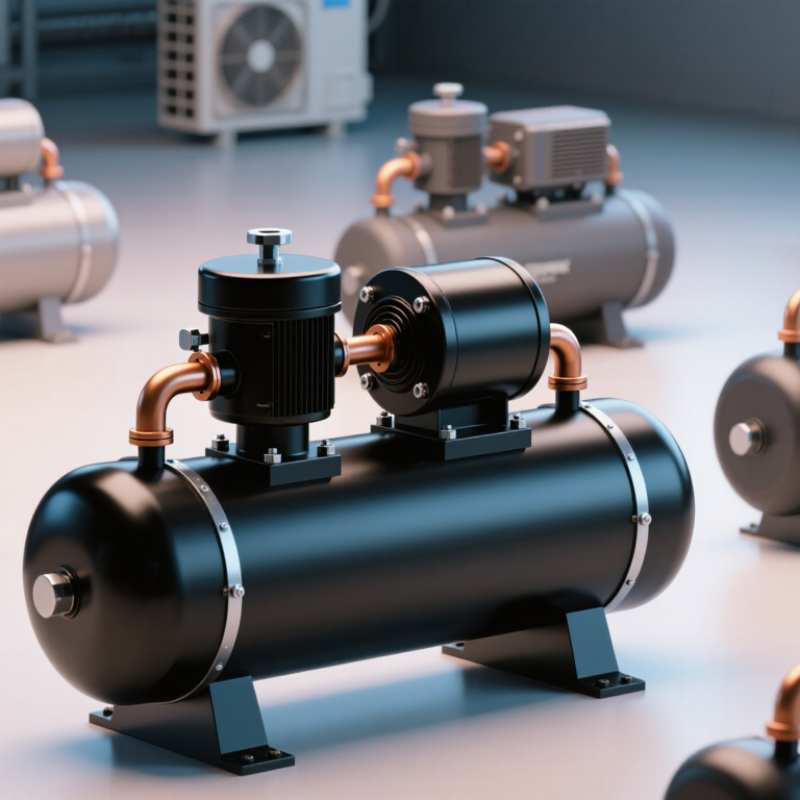
Define Performance with AHRI 540-2020 Capacity, Power, and COP Ratings
What Is the Best Copeland Scroll Compressor in 2026?
The “best” scroll compressor is the one that delivers suitable capacity with lower input power under your actual operating conditions. AHRI Standard 540-2020 provides a consistent framework for reporting compressor performance, including capacity and power. COP is capacity divided by power. For example, 100 kW of cooling capacity divided by 25 kW of input equals a COP of 4.0. This is an illustrative calculation, not a product rating. Compare published results only at matching refrigerant, evaporating and condensing temperatures, and rating conditions. Small differences matter.
Tips: Check AHRI 540-2020 performance data at the temperatures your system will actually see. A compressor rated well at one point may perform differently during a hot afternoon or low-load operation. Look at capacity and power together, then confirm that the selected unit meets the system’s required operating envelope. Keep the test conditions beside each comparison. Easy to overlook.
A single COP number cannot settle every selection. Noise, control range, reliability history, and service access also affect real-world suitability, though they are not captured by that ratio alone. I would be cautious about calling any one model “best” without application-specific data. The AHRI rating method makes comparisons more disciplined, but field performance still depends on installation and system design.

Match Copeland ZR, ZP, and ZB Series to AC, Heat-Pump, and Refrigeration Loads
The best scroll compressor in 2026 depends on the load, not just the model name. ZR series units are commonly matched to comfort-cooling systems, where steady operation and capacity suited to the building matter. ZP series models serve many heat-pump applications, including systems that must handle changing outdoor conditions. ZB series compressors are designed for refrigeration duties, where maintaining cabinet or room temperatures is the priority. These are useful starting points, not universal rules.
Check the equipment data before choosing. Compare required capacity at the actual evaporating and condensing temperatures, then confirm refrigerant, voltage, and operating limits. A unit that looks right on a nominal-capacity chart may perform differently on a hot afternoon or during a cold-start cycle. Fit matters. The surrounding controls, piping, and airflow also affect reliability, so compressor replacement should follow the system manufacturer’s approved specifications.
Tips: Record the existing model, refrigerant, and electrical details before ordering. Match the compressor to the application envelope, not merely the physical dimensions. For heat pumps, review low-ambient operation and defrost requirements. For refrigeration, check the expected temperature range and run time. Small detail, big difference. If the application is unusual, have a qualified HVAC or refrigeration technician verify the selection; product tables can be easy to misread, and I would not rely on a series label alone.
What Is the Best Scroll Compressor in 2026? Match Scroll Compressor Types to AC, Heat-Pump, and Refrigeration Loads
| Compressor Application | Typical Load | Why This Type May Fit | Key Selection Checks | Important Limitations |
|---|---|---|---|---|
| Air-conditioning scroll | Comfort cooling in residential, commercial, or packaged air-conditioning equipment. | Designed for air-conditioning operating conditions; scroll compression provides continuous compression and has relatively few moving parts. | Match cooling capacity to the system at the specified indoor and outdoor design conditions. Check voltage, phase, frequency, operating envelope, refrigerant approval, and required controls. | A cooling-duty model is not automatically suitable for heating operation or low-temperature refrigeration. Capacity and efficiency vary with the exact model and operating conditions. |
| Heat-pump scroll | Reversible systems that provide heating and cooling, including operation at low outdoor temperatures where supported by the system design. | Intended for heat-pump duty, where operating pressures and temperatures can differ between heating and cooling modes. | Verify the approved heating and cooling operating ranges, design-point capacity, discharge-temperature limits, defrost strategy, refrigerant, and compatibility with the reversing valve and system controls. | Not every air-conditioning compressor is approved for reversible heat-pump service. Low-ambient heating capability depends on the complete system, not the compressor alone. |
| Medium-temperature refrigeration scroll | Refrigerated display cases, walk-in coolers, and other medium-temperature refrigeration systems, when the selected model is designed for that duty. | Refrigeration-specific designs can accommodate operating conditions associated with medium-temperature cooling and may be used in single- or multi-compressor systems. | Check the required evaporating and condensing temperatures, refrigerant, capacity at the design point, oil-management requirements, ambient range, and any approved parallel-operation arrangement. | Do not assume suitability for low-temperature freezing, air-conditioning, or heat-pump service. Confirm the model’s application envelope and system design requirements. |
Selection note: There is no universally best scroll compressor. Compare published performance at the actual design conditions, and confirm refrigerant approval, electrical specifications, operating limits, and equipment compatibility for the exact model.
Compare EER, SEER2, and Part-Load Efficiency Under Rated Conditions
Choosing a scroll compressor in 2026 starts with matched-condition data, not a single headline number. EER measures cooling output against electrical input at one defined operating point. SEER2 estimates seasonal performance under a prescribed test profile. Neither is a compressor-only score; ratings belong to a matched system.
For a fair comparison, hold capacity, refrigerant, voltage, indoor airflow, and outdoor test conditions constant. Ask for the exact rating table and identify whether figures are equipment ratings or compressor-map results. Small changes in condensing temperature can shift power noticeably. Check the rated point, too. A high EER at full load does not guarantee strong seasonal results when demand falls. That’s easy to miss.
Part-load efficiency deserves its own check. Review power and capacity at several loads, plus cycling behavior if the unit cannot modulate. A modulating design may reduce temperature swings and start-stop losses, but controls and installation matter. Look for measured data near your climate’s common conditions, not just a laboratory peak. Comparisons still have limits. Test methods simplify real homes, and field performance can drift with airflow, refrigerant charge, and maintenance. Use the same test basis, then weigh sound, service access, and operating hours against the efficiency difference. A neat chart is not enough.
What Is the Best Copeland Scroll Compressor in 2026?
Compare EER, SEER2, and part-load efficiency under rated conditions
How to read this chart: These are U.S. federal minimum SEER2 ratings for split-system central air conditioners, not ratings for individual compressors. The applicable minimum depends on region and system capacity.
SEER2 measures seasonal efficiency; EER or EER2 describes efficiency at specified test conditions. Part-load performance depends on the complete matched system and its operating conditions. A fair compressor comparison requires certified, model-specific system data—these baseline figures cannot identify a “best” compressor.
Federal minimums shown took effect January 1, 2023. Source: U.S. Department of Energy, central air conditioner efficiency standards.
Check Refrigerant Compatibility Against the EPA’s 2025 GWP-700 Equipment Limit
Choosing the best scroll compressor in 2026 starts with the refrigerant, not the catalog price. EPA’s Technology Transitions rule sets a GWP limit of 700 for covered new residential and light-commercial air-conditioning and heat-pump equipment. The limit does not apply identically to every equipment category. Check the exact equipment type and compliance date. EPA’s refrigerant data lists R-410A at 2,088 GWP, R-32 at 675, and R-454B at 466. Both lower-GWP options fall below 700, but that does not make them interchangeable in a compressor.
Confirm the exact compressor model is approved for the refrigerant, oil, operating envelope, and system controls. A mismatch can raise discharge temperatures or undermine reliability, even when the refrigerant meets the threshold. Review manufacturer engineering data and AHRI certification listings where applicable; verify the complete system combination, not just the compressor label. I would not call one model “best” from a nameplate alone. Field conditions matter.
Tips: Before ordering, record the refrigerant, voltage, capacity, and design temperatures. Then check the model’s published application guide and the applicable EPA rule. Keep the documentation with the service file. It is easy to miss a transition date.
Verify Operating Envelope, Sound, Reliability, and Serviceability for 2026
The best scroll compressor in 2026 is the one that fits the system’s real operating envelope, not just its catalog rating. Check expected suction and discharge pressures, refrigerant, ambient temperatures, and part-load hours against published performance data. AHRI Standard 540 provides a consistent framework for rating positive-displacement refrigerant compressors, making like-for-like comparisons more useful. Still, a rating point cannot represent every hot afternoon or low-load night.
Sound and serviceability deserve a site-level check. Compare sound data under the same test conditions, then consider the compressor’s location, vibration isolation, and nearby reflective surfaces. DOE Better Buildings guidance estimates HVAC uses about 40% of energy in commercial buildings, so efficiency differences can matter across long operating hours. Reliability is less tidy: review warranty terms, application limits, and available field-service records, not just a headline life estimate. Leave room to inspect electrical connections and access service valves. Small details matter. A spreadsheet can still miss a troublesome start-up, or a cramped service bay. Before choosing, ask for documented performance at the site’s design extremes and confirm that qualified technicians can obtain replacement components without excessive delay.
Article Source:
NORTH EASTON MACHINE • 218 Elm Street • North Easton, MA 02356 • 508-238-6219