
What Is the Best Aluminum MIG Welder in 2026?
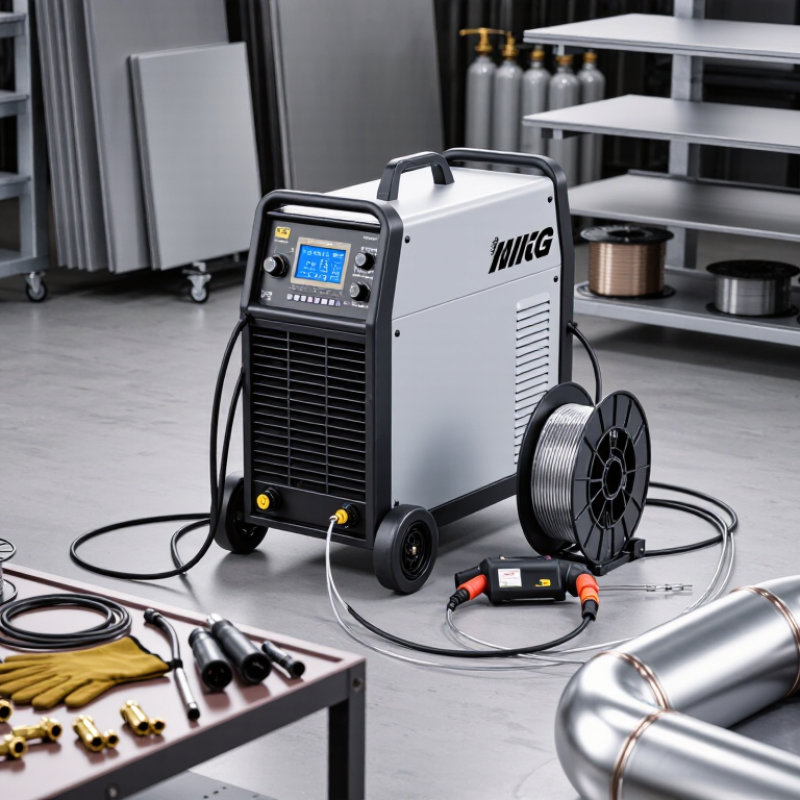
Choosing the best Aluminum MIG Welder in 2026 depends on the work, not the biggest number on a specification sheet. A machine that handles thin aluminum panels may struggle with thicker plate or long production runs. Wire feeding matters, too. Aluminum wire is soft, so a spool gun or push-pull system can help prevent bird-nesting and frustrating feed interruptions.
Welding educator Jody Collier’s practical teaching can be paraphrased this way: “Clean material and steady wire feeding matter as much as machine power.” That is not a verified verbatim quotation; it captures a useful principle for comparing equipment. The right setup also depends on alloy, filler wire, joint design, and material thickness. Small details count. A dirty edge, worn liner, or poorly adjusted drive roll can spoil an otherwise capable machine.
This guide compares welders by output range, wire-feed options, setup flexibility, and real-world usability. It also considers what beginners may overlook, including shielding-gas choices and the learning curve of aluminum welding. Product claims deserve a closer look; advertised capacity does not guarantee easy, consistent results. There is no perfect pick for every shop. A careful match between your projects and a welder’s capabilities is a better starting point than buying extra power you may never use.
How Aluminum MIG Welding Differs From Steel Welding
What Is the Best Aluminum MIG Welder in 2026?
How Aluminum MIG Welding Differs From Steel Welding
Aluminum pulls heat away from the weld pool much faster than steel. ASM Handbook property data puts 6061 aluminum’s thermal conductivity near 167 W/m·K, compared with roughly 50 W/m·K for low-carbon steel. That difference can make starts feel cold, then suddenly leave a thin edge too hot. Aluminum also expands more as it heats, so parts may distort even when the bead looks tidy. The right machine needs stable output and reliable wire feeding, not just a high amperage rating.
The surface oxide complicates matters. Pure aluminum melts at about 660°C, while its oxide melts above 2,000°C, a contrast described in AWS welding references and NIST material data. Clean the joint well; otherwise, the arc may cross a stubborn film while the metal beneath it softens. Aluminum wire is also softer than typical steel wire, so feeding setup matters. A spool gun or push-pull system can reduce bird-nesting. It still takes adjustment.
Tips: Degrease the joint, then brush it with a dedicated stainless-steel brush. Use 100% argon and test on scrap of the same thickness. Watch the puddle, not only the machine display. A slightly messy first bead is useful feedback; aluminum rarely rewards copying steel settings.
| Comparison Dimension | Aluminum MIG Welding | Steel MIG Welding | What to Look for in a Welder |
|---|---|---|---|
| Base-metal melting point | Pure aluminum melts at about 660°C (1,220°F). | Pure iron melts at about 1,538°C (2,800°F); steel melting ranges vary with alloy and composition. | Prioritize stable arc control and adjustable output. A lower melting point does not mean aluminum is always easier to weld: heat moves away from the weld area quickly. |
| Oxide layer | Aluminum oxide melts at roughly 2,050°C (3,720°F), far above the melting point of aluminum itself. Clean the joint and remove oxide before welding. | Steel also forms surface oxides and contamination, but it does not have the same large gap between the melting points of the base metal and its oxide. | Choose a machine with a stable arc and suitable wire-feed control; careful surface preparation remains essential regardless of machine features. |
| Thermal conductivity | Pure aluminum conducts heat at about 237 W/m·K at room temperature. | Carbon steel is typically around 45–60 W/m·K at room temperature, depending on grade and condition. | For aluminum, look for enough output and duty cycle for the material thickness and joint. Heat can spread quickly, especially in thicker parts. |
| Density and distortion | Density is about 2.70 g/cm³. Aluminum expands by roughly 23 µm/m·°C near room temperature. | Carbon steel density is about 7.85 g/cm³, with thermal expansion around 12 µm/m·°C near room temperature. | Useful controls include adjustable voltage and wire-feed speed. Tack welding, joint restraint, and heat management are also important for limiting distortion. |
| Wire feeding | Soft aluminum wire can buckle or bird-nest in a conventional long push-feed setup. A spool gun or push-pull system can improve feeding reliability. | Steel wire is generally stiffer and is commonly fed through a standard MIG gun and liner. | For regular aluminum work, check compatibility with a spool gun or push-pull gun, the required drive rolls, and a suitable liner. |
| Shielding gas | 100% argon is commonly used for aluminum MIG welding. Argon-helium blends may be used for some thicker sections and applications. | Solid-wire steel MIG commonly uses argon-CO₂ or argon-oxygen mixtures; flux-cored processes may use different shielding requirements. | Confirm the machine and torch setup can use the gas and flow-control equipment appropriate for the chosen wire and process. |
| Polarity | Solid-wire aluminum MIG is normally run on direct current electrode positive (DCEP). | Solid-wire steel MIG is also normally run on DCEP. | Verify the machine supports the required DC output and polarity configuration. Polarity alone does not make a welder suitable for aluminum. |
| Common filler wires | 4043 and 5356 are widely used aluminum filler-wire families. The correct choice depends on the base alloy, service conditions, and required properties. | ER70S-6 is a commonly used solid wire for general-purpose mild-steel welding. | Check that the wire-feed system, drive rolls, liner, and contact tips are compatible with the selected wire diameter and material. |
| Pulse capability | Pulse MIG can help control heat input and metal transfer in suitable aluminum applications, but it is not required for every job. | Pulse MIG is also used for steel applications, depending on the material, position, and desired weld characteristics. | Consider pulse only if it suits the work and budget. A correctly configured conventional process can still be appropriate for many aluminum jobs. |
| Practical selection priorities | Match output to thickness, plan for reliable soft-wire feeding, use suitable shielding gas, and clean the material carefully. | Match output and wire-feed range to the steel thickness and process; select wire and shielding gas for the application. | The best choice depends on material thickness, duty cycle, available power, frequency of aluminum work, compatible feeding equipment, and budget—not on a single universal specification. |
| Important note | The figures shown are typical reference values, not welding settings. Actual parameters depend on alloy, thickness, joint design, position, wire diameter, and the welding procedure. Follow the filler-metal and equipment manufacturers’ instructions and applicable welding codes. | ||

Certified Quality System

 Find Your Solutions ▶
NORTH EASTON MACHINE • 218 Elm Street • North Easton, MA 02356 • 508-238-6219