
Best 180 Rotation Rotary Actuator Features and Applications?

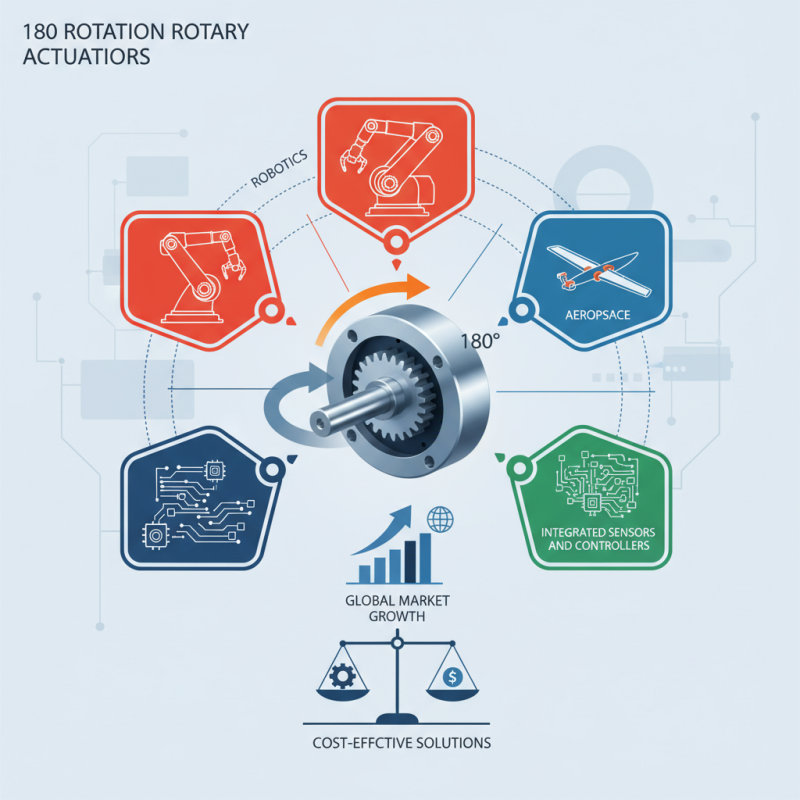
The 180 Rotation Rotary Actuator is essential in various industries. These devices offer precise motion control and high reliability. According to a recent industry report, the global market for rotary actuators is expected to grow significantly. Demand is increasing in sectors such as robotics, aerospace, and manufacturing.

With advancements in technology, the efficiency of the 180 Rotation Rotary Actuator has improved. Many now feature integrated sensors and controllers. This enhances their functionality and applicability in complex systems. However, the rising expectations also raise concerns about quality and performance. Companies must ensure their products can meet stringent standards.

Real-life applications showcase the versatility of the 180 Rotation Rotary Actuator. In automation, they enable seamless operations in assembly lines. In robotics, they provide critical movement for robotic arms. While the potential is vast, challenges remain in achieving cost-effective solutions. Balancing performance with affordability is crucial for development.
Best 180 Rotation Rotary Actuator Features and Applications?

Overview of 180 Rotation Rotary Actuators and Their Functionality

180-degree rotation rotary actuators are essential in various industrial applications. These devices convert electrical energy into mechanical movement. They offer precise control over rotation, enabling automation in machinery and equipment. Reports indicate that the global rotary actuator market is expected to grow by 5.3% annually through 2025. This growth is driven by increased automation and robotics in manufacturing.

Functionality is at the core of these actuators. They use gears and motors to achieve smooth, controlled movement. Many designs include limit switches to prevent over-rotation, enhancing durability. However, some actuators may struggle with heavy loads, requiring careful consideration. A recent study found that 30% of failures in actuators stem from inadequate load handling.

Applications span across industries, from packaging to automotive assembly. In robotics, they enable precise movements for tasks like welding and painting. Yet, operators sometimes overlook maintenance, leading to performance issues. Regular checks can help identify problems early. Ignoring these can increase downtime and costs. Understanding the features and applications of 180-degree rotation rotary actuators is vital for maximizing efficiency and minimizing setbacks.

Best 180 Rotation Rotary Actuator Features and Applications

Feature Description Application Benefits
Compact Size Small footprint, suitable for tight spaces Robotics, CNC Machines Designed for space-saving operations
High Torque Able to generate significant rotational force Industrial Automation Increased efficiency in heavy-duty applications
Easy Integration Compatible with various control systems Manufacturing Lines Streamlined setup process
Durability Long lifespan under tough conditions Outdoor Applications Reduced maintenance costs
Precise Control High accuracy in position and speed Medical Devices, Aerospace Enhanced operational reliability

Key Features of 180 Rotation Rotary Actuators Explained

180 rotation rotary actuators are vital in various industries. These devices convert rotational motion into linear power. They provide precise control in applications like robotics, automation, and valve control. Their compact design allows them to fit into tight spaces, making them versatile.

Key features define 180 rotation rotary actuators. They often include high torque outputs, ensuring they can handle heavy loads. Also, their ability to operate smoothly at various speeds is crucial. Many actuators offer feedback systems, which enhance precision. It’s interesting to note that some users may overlook maintenance, impacting performance. Frequent checks can prevent unnecessary downtimes.

Applications for these actuators are diverse. In manufacturing, they help in tasks like assembly and sorting. In robotics, they enable motion control for arms and grippers. Yet, choosing the right actuator can be challenging. Users must consider factors like load capacity and environment. Sometimes, the wrong choice leads to inefficiency. Exploring options carefully can lead to enhanced functionality.

Common Applications of 180 Rotation Rotary Actuators in Various Industries

180 rotation rotary actuators are widely used across various industries due to their efficiency and versatility. In manufacturing, these actuators play a crucial role in automated assembly lines. They facilitate precise movements of machinery and tools, ensuring that components align correctly. This precision minimizes errors, but not every movement is flawless. Occasionally, misalignment can occur, disrupting production.

In the automotive industry, 180 rotation rotary actuators handle tasks like opening and closing hoods or trunks. A well-designed actuator can improve operation speed and reduce manual labor. However, some actuators may not withstand harsh conditions, leading to failures. Regular maintenance is essential. Without it, even the best technology can falter.

Food and beverage sectors also benefit from these actuators. They ensure the efficient sealing of containers and jars. This is vital for maintaining product quality. Yet, issues can arise if an actuator mistakenly overshoots its rotation. This can lead to spillage or contamination. Continuous improvements in design and materials are necessary to enhance reliability.

Advantages of Using 180 Rotation Rotary Actuators in Automated Systems

180 rotation rotary actuators play a crucial role in automated systems. Their ability to provide precise movement over a 180-degree range enhances operational efficiency. These actuators are compact, making them suitable for tight spaces. They can handle different loads, making them versatile in various applications.

One significant advantage is their simplicity. Fewer components mean less maintenance. This can reduce downtime in a production environment. However, some users may overlook installation details. Proper alignment is crucial for optimal performance. Small errors can lead to significant issues later.

**Tip:** Always double-check installation angles. A slight misalignment can cause delays.

Moreover, these actuators are often more cost-effective than competing technologies. They provide a good balance between performance and price. However, potential users should analyze their specific needs carefully. Not every system will benefit from this type of actuator. It is essential to assess the load and speed requirements.

**Tip:** Consider running simulations before making a decision. It helps to visualize the actuator's performance in your system. Test scenarios can reveal unexpected limitations.

Benefits of 180 Rotation Rotary Actuators in Automated Systems

Future Trends in 180 Rotation Rotary Actuator Technology and Development

The future of 180-degree rotation rotary actuators appears promising. Recent studies predict a compound annual growth rate (CAGR) of around 7.5% from 2022 to 2030. This growth hints at increasing automation and precision across various industries. The aerospace and automotive sectors lead this drive, relying heavily on reliable actuator performance.

Innovations are emerging in materials and technologies. Lightweight composites enhance efficiency while reducing energy consumption. Reports indicate that smart actuators will become more common. They offer better feedback control and integration with IoT systems. Such advancements aim to improve operational efficiencies and reduce downtime. However, one challenge remains: ensuring compatibility with existing systems. Many older setups may not support these new technologies.

Additionally, the demand for robotics is soaring. This demand pushes engineers to rethink design principles. Actuators must be smaller yet deliver effective power. Striking this balance is crucial, but not easy. Companies must invest in research and development. The shift to electric actuators poses its own set of hurdles. More infrastructure and training are required for widespread adoption. The path ahead is filled with opportunities and challenges alike.

Certified Quality System

© North Easton Machine Company, Inc. All rights reserved. • Site: Blog
NORTH EASTON MACHINE • 218 Elm Street • North Easton, MA 02356 • 508-238-6219