
Top Balloon Blower Suppliers for Wholesale Buyers
Choosing the right suppliers for wholesale balloon equipment takes more than comparing unit prices. A Balloon Blower may look similar across product listings, yet airflow, motor durability, nozzle design, and operating noise can vary. For event companies, retailers, and party-supply distributors, those differences affect setup time and customer experience. Small details matter.
A useful supplier review starts with clear specifications. Check voltage and plug type, recommended duty cycle, included accessories, carton dimensions, and warranty coverage. Ask whether replacement parts are available and how the supplier handles damaged shipments. If possible, test a sample with different balloon sizes; a short demonstration may reveal awkward controls or excessive heat. Photos alone cannot tell you everything.
Wholesale buyers should also compare minimum order quantities, lead times, packaging options, and communication quality. Request written quotations that separate product cost from freight and other stated charges. Then compare suppliers using the same requirements, rather than choosing the lowest number on a page. That takes a little longer.
Experience matters, but no supplier should be judged by polished claims alone. Look for consistent specifications, direct answers, and product documentation that matches the model being offered. Reviews can help, though they may not reflect your workload or market. A machine suited to occasional shop use may struggle during a busy event season. There is no perfect checklist, and buyers sometimes discover missing needs only after ordering. Careful questions and a modest sample order can reduce avoidable surprises before a larger purchase.
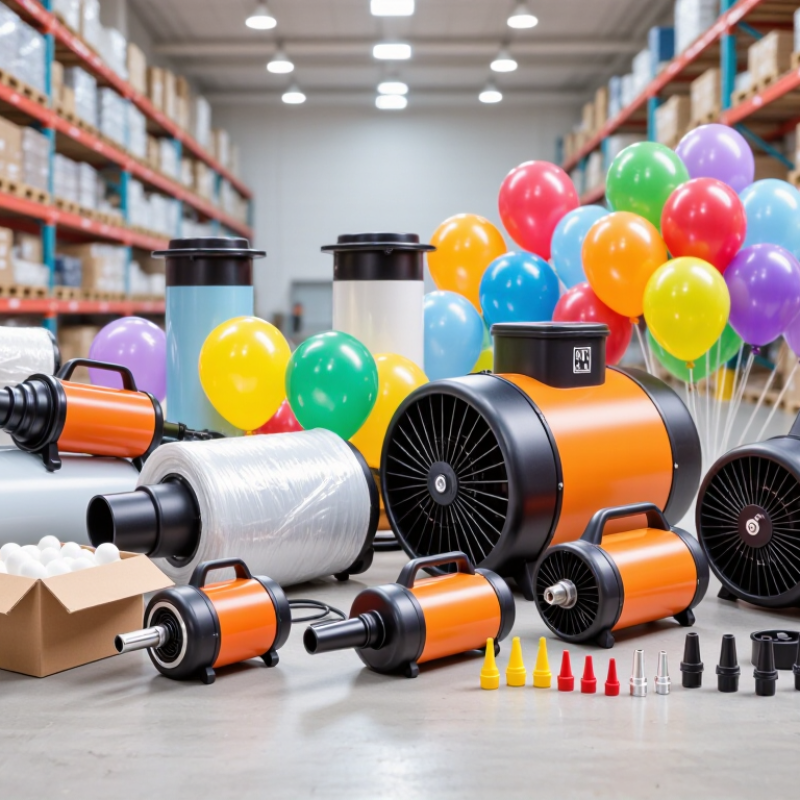
What Balloon Blowers Are and How They Work
A balloon blower is an electric air pump designed to inflate balloons quickly with room air. It is not a helium tank. Inside, a motor turns a small fan that draws air through an intake and pushes it toward the nozzle. When a balloon’s opening fits over the nozzle, airflow fills the balloon. Releasing the switch stops the motor; the balloon still needs to be tied or sealed by hand. Air moves fast. That is why a blower can save time when preparing many decorations.
Tips: Match the nozzle to the balloon opening and hold the neck firmly in place. Inflate gradually, especially with thin latex, and stop before the material looks stretched or feels tight. Check the manufacturer’s instructions for duty cycle and cooling breaks.
For wholesale buyers, compare airflow, noise, nozzle options, cord length, and the number of balloons the unit can handle comfortably. A dual-nozzle model may speed up work, but it does not suit every setup. Ask suppliers for clear operating specifications and sample units when possible. Test with the balloon sizes you actually use. A blower can make inflation easier, but it cannot prevent every burst; room temperature and balloon quality matter too. I would not judge a unit by speed alone.
Top Balloon Blower Suppliers for Wholesale Buyers - What Balloon Blowers Are and How They Work
| Equipment Type | How It Works | Typical Applications | What Wholesale Buyers Should Check | Important Operating Note |
|---|---|---|---|---|
| Electric balloon inflator | An electric motor drives a fan that moves air through an outlet and into a balloon. | Event decorators, party shops, balloon artists, and businesses preparing many air-filled balloons. | Confirm the intended duty cycle, outlet configuration, voltage and plug type, included accessories, and availability of replacement parts. | Most standard electric balloon inflators use ambient air; they do not make balloons float. |
| Dual-nozzle electric inflator | Two outlets allow two balloons to be inflated at the same time when the unit is designed for simultaneous use. | High-volume decorating work and balloon preparation where faster throughput is useful. | Check whether both outlets can run simultaneously, how airflow is controlled, and whether the nozzle size suits the balloon necks being used. | Actual output depends on the inflator, balloon size, and operating method; verify performance with the intended balloon range. |
| Electric inflator with foot switch | A foot pedal or switch activates airflow, leaving the operator's hands available to hold and position the balloon. | Repeated inflation tasks, balloon installations, and workstations where hands-free activation is convenient. | Ask whether the foot switch is included, confirm cord length and electrical compatibility, and review cleaning and maintenance instructions. | Use the switch and nozzle as directed; avoid running equipment beyond its stated operating limits. |
| Hand-operated balloon pump | A piston moves air through the pump as the handle is pushed and, on double-action models, pulled back. | Small jobs, travel kits, outdoor events, and situations without access to mains power. | Compare pump action, handle comfort, nozzle fit, construction, and whether replacement seals or other service parts are available. | Manual pumps inflate with air and require repeated strokes; they are generally slower than electric inflators for large batches. |
| Foot-operated balloon pump | Pressing a foot pedal compresses a chamber and forces air through the attached nozzle. | Portable use and low-volume inflation when an electric outlet is unavailable. | Check pedal stability, hose and nozzle connections, portability, and whether the pump is suitable for the expected workload. | Inflation speed and effort vary by pump design and balloon size. |
| Helium cylinder with regulator | A regulator controls the release of compressed helium from a cylinder into a balloon; it is different from an air balloon blower. | Filling balloons intended to float, subject to balloon material, size, and helium volume. | Verify cylinder and regulator compatibility, local transport and storage requirements, refill arrangements, and supplier safety documentation. | Compressed-gas cylinders require proper handling and secure storage. Follow the regulator instructions and applicable safety rules. |
| Wholesale supplier evaluation | Suppliers may offer different equipment configurations, accessories, packaging, and support arrangements. | Purchasing for resale, event services, rental operations, or multiple work locations. | Request written specifications, sample availability, order minimums, lead times, warranty terms, certifications relevant to the destination market, and spare-part support. | Compare products using the same requirements and confirm all specifications and commercial terms in writing before ordering. |

Certified Quality System

 Find Your Solutions ▶
NORTH EASTON MACHINE • 218 Elm Street • North Easton, MA 02356 • 508-238-6219