
Best Aluminum Extrusion Profile Manufacturers in China
Choosing among the best Aluminum Extrusion Profile manufacturers in China takes more than comparing prices. A clean, bright finish can catch the eye, but the real test is whether dimensions stay consistent across repeated orders. Buyers should examine alloy options, die-making capability, tolerances, surface treatment, inspection records, and communication during sampling. Ask for a cut sample. Check the corners, wall thickness, and finish under ordinary light.
As extrusion engineer Li Wei puts it, “A reliable profile begins with a clear drawing and ends with repeatable quality.” That is a practical guide, not a substitute for supplier audits or documented test results. A capable manufacturer should explain how it controls billet temperature, extrusion speed, cooling, and finishing. It should also tell you what it cannot produce reliably. That answer matters.
The manufacturers in this guide are assessed through practical buyer considerations: production range, technical support, quality practices, customization, and export experience. No shortlist is perfect. Some suppliers may excel at architectural sections yet lack the right capacity for intricate industrial parts. Others may offer strong tooling support but need closer review on delivery consistency. Request current certifications, relevant project references, and a written specification before placing an order. Then compare like with like.
Small details reveal a lot. Does the supplier confirm the alloy and temper? Are inspection criteria agreed before production? Can it explain how packaging protects long profiles from scratches and bending? A polished presentation is useful, but evidence is better. Use this overview as a starting point, verify each claim directly, and choose a partner whose process fits your application—not just your target price.
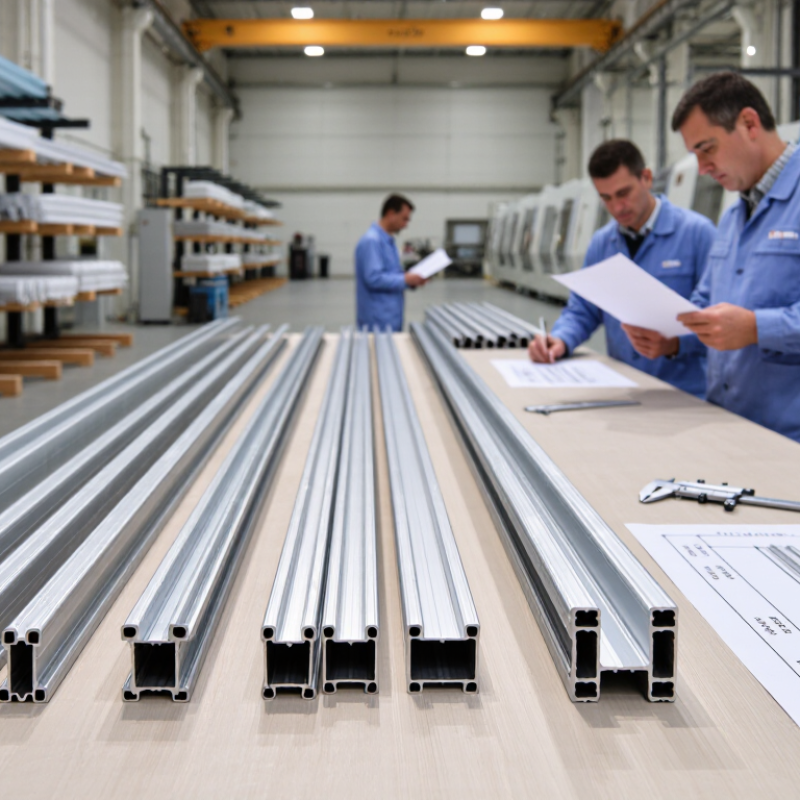
What Aluminum Extrusion Profiles Are and How They Are Made
Aluminum extrusion profiles are long components with a consistent cross-section, such as a T-slot, channel, or hollow tube. They appear in window frames, machine guards, solar structures, and equipment enclosures. Their shape can combine strength with low weight. Small design choices matter.
To make a profile, a heated aluminum billet is pressed through a shaped steel die. The emerging metal takes the die’s cross-section, then cools and is cut to length. It may be stretched to improve straightness and heat-treated to reach specified properties. Some profiles receive anodizing or powder coating for added surface protection. Results depend on alloy, die design, and process control; complex shapes can require careful adjustment.
Tips: Share a clear cross-section drawing, alloy and temper requirements, and acceptable tolerances. Check wall thickness and straightness, not just the outside dimensions. A detail that looks minor on paper can affect fit during assembly. I would still review a sample before approving a large production run.

China’s Aluminum Extrusion Manufacturing Landscape
China’s aluminum extrusion manufacturing landscape combines large production hubs, specialist processors, and export-focused workshops. Capabilities differ widely. Some factories handle billet heating, extrusion, quenching, stretching, and aging in-house. Others rely on outside partners for machining or surface finishing. That distinction affects lead time and quality control.
A useful supplier review starts with the profile itself. Ask about alloy and temper options, die design, dimensional tolerances, and inspection methods. For a window frame, for example, check wall thickness at corners and request sample sections before approving a production run. Anodizing and powder coating can also change appearance and dimensions. Request finish samples, process records, and clear details about which steps happen on-site. Production capacity alone tells little.
Tips: Send a drawing with tolerances, annual volume, and finish requirements. Ask how the factory tracks each batch from billet to packed profile. Compare sample measurements with the drawing. Small differences matter. Also ask what happens when a die needs adjustment; the answer can reveal how carefully the team manages revisions.
Criteria for Evaluating Aluminum Extrusion Profile Manufacturers
Choosing an aluminum extrusion profile manufacturer requires more than comparing quotations. Start with technical fit: alloy options, temper control, profile size limits, and tolerance capability. Ask which standards guide inspection and request sample measurement reports. A capable supplier should explain how it controls wall thickness, straightness, and surface finish. Check cut ends and corners for burrs, dents, or uneven edges. Small details matter. A clean brochure proves little.
Production consistency deserves close attention. Ask how dies are designed, maintained, and replaced, then compare trial samples with approved drawings. Review records for dimensional checks, batch identification, and surface treatment, if required. Also assess communication: clear answers about tooling costs, minimum quantities, and delivery schedules can prevent costly surprises. A missed update can disrupt installation plans. Price deserves scrutiny, but the lowest quote may omit packaging or inspection work. No supplier is flawless. One limitation is that a strong sample cannot prove every future batch will match; request a realistic quality plan and agree on how deviations will be handled.
Criteria for Evaluating Aluminum Extrusion Profile Manufacturers
Suggested weighting for a buyer-side evaluation framework. These percentages are planning weights, not measured industry data.
Compare suppliers using documented evidence, such as inspection records, technical capabilities, production plans, certification scope, finishing specifications, and export references. Adjust the weights to suit your project.
Notable Aluminum Extrusion Profile Manufacturers in China
China’s extrusion sector includes large integrated plants and specialist producers serving construction, transport, electrical, and industrial markets. The International Aluminium Institute reported roughly 70.6 million tonnes of global primary aluminium production in 2023, with China contributing about 41.5 million tonnes. These figures describe primary metal, not extrusion output, but they show the scale of the country’s aluminium supply base. A notable manufacturer is not simply one with large presses. Look for clear evidence of die-design capability, alloy control, dimensional inspection, and consistent delivery.
Ask for sample inspection records and the applicable alloy and temper details. For a window frame, check wall thickness, corner fit, and surface finish under ordinary light. For a heat sink, request dimensional tolerances and thermal-performance data. A polished catalogue is not proof of production consistency. I would compare trial batches before committing to a long production run; it takes extra time, but can reveal uneven coating or profile warping.
Tips: Share drawings with tolerances, intended use, finish, and annual volume before requesting quotations. Ask how the factory manages die maintenance and batch traceability. Verify claims with recent test reports or a factory audit. Be cautious when specifications are vague; even experienced buyers can overlook small differences that affect assembly.
Best Aluminum Extrusion Profile Manufacturers in China - Notable Aluminum Extrusion Profile Manufacturers in China
| Evaluation Area | Relevant Industry Fact | What to Check with a Manufacturer | Why It Matters |
|---|---|---|---|
| Alloy and temper | 6063 is widely used for architectural and general-purpose extrusions; 6061 is commonly selected where higher strength is required. Temper, such as T5 or T6, affects mechanical properties. | Confirm the alloy and temper against the drawing, application, and applicable material specification. Request material test documentation for the production batch. | Alloy and temper influence strength, formability, corrosion behavior, and suitability for the intended use. |
| Profile design and tooling | Extrusion dies are designed for the required cross-section. Profile complexity, wall thickness, and dimensional requirements affect die design and production feasibility. | Ask for a design-for-manufacturing review, die ownership terms, sample approval steps, and confirmation of critical dimensions before mass production. | Early technical review can identify design constraints and reduce revisions after tooling begins. |
| Dimensional control | Permissible dimensions and tolerances depend on the product standard, profile geometry, and purchase specification; there is no single tolerance that applies to every extrusion. | Specify tolerances on the approved drawing and ask which inspection methods and measuring equipment are used for critical features. | Clear, agreed tolerances help ensure parts fit and function in the final assembly. |
| Product standards | China's GB/T 5237 series covers aluminum alloy building profiles, including product requirements for different surface-treatment categories. GB/T 6892 covers industrial aluminum and aluminum-alloy extruded profiles. | Identify the standard and edition required by the project, and verify that the offered product category and test documentation match it. | Using the correct standard makes product requirements and inspection criteria more precise. |
| Surface finishing | Common finishes include anodizing, powder coating, and mill finish. Appearance, coating performance, and applicable requirements differ by finish and service environment. | Specify finish type, color, gloss or appearance requirements, coating thickness or performance criteria where applicable, and the inspection method. | A complete finish specification helps align appearance and durability expectations. |
| Quality management and inspection | ISO 9001 is a quality-management-system standard. Certification alone does not establish that a particular profile meets its drawing or performance requirements. | Review the scope and validity of relevant certificates, inspection plans, traceability practices, and sample inspection records for comparable products. | Process controls and product-specific inspection evidence provide a stronger basis for evaluating consistency. |
| Fabrication and packing | Extruded profiles may require secondary operations such as cutting, drilling, machining, or assembly. Long profiles also need packaging suited to handling and transport. | Confirm the required operations, cut-length tolerances, protection between finished surfaces, bundle dimensions, and shipment packaging. | Defined finishing and packing requirements can reduce damage and extra work after delivery. |
This comparison is a manufacturer-selection checklist, not a company ranking. Confirm current standards, certificates, and product requirements directly against the project specification.
How to Select a Manufacturer for Your Project
Choosing an aluminum extrusion manufacturer starts with the part, not a sales claim. Share a dimensioned drawing that shows wall thickness, critical tolerances, alloy, temper, and intended use. Ask which details may need adjustment for smooth extrusion; thin walls and sharp corners can complicate production. Request a sample made with the proposed die, then measure key dimensions and inspect the cut ends. Small details matter. A clear inspection report should identify measurement points, tools, and acceptable variation, rather than simply calling the sample “good.” Compare surface-finish options using a physical sample, since photographs can hide color shifts or minor marks.
Check how the manufacturer controls each production stage, from billet heating and extrusion to finishing and packing. Ask how often dimensions are checked, how defects are recorded, and whether batches can be traced to production records. Also confirm die charges, ownership terms, minimum order quantities, sample costs, and realistic lead times in writing. A low quote can leave important setup or packaging costs unclear. Communication is another practical test: send one technical question and note whether the reply addresses it directly. There is no perfect checklist; I would still want a trial run before committing to a large order, especially when the profile has tight tolerances or a visible finish.
Article Source:
NORTH EASTON MACHINE • 218 Elm Street • North Easton, MA 02356 • 508-238-6219